"I am tired of receiving 'customizable' brochures that lack a single data point on retention time or footprint," notes one senior municipal engineer evaluating vendor bids. Prefabricated wastewater treatment plants (WWTPs) are factory-built systems delivering 1–500 m³/h capacity with 90–98% BOD/COD removal. Key prefabricated specifications for 2025 include 5,000 PSI precast concrete or carbon steel construction, 24-hour aeration retention for extended aeration, and footprints as small as 0.5 m²/m³/h for modular designs. Compliance with ISO 16075-2 and local discharge limits (e.g., <30 mg/L TSS) requires flow-specific sizing—this guide matches plant specs to project needs.
Prefabricated Wastewater Plant Specifications by Flow Rate: 2025 Engineering Data
Prefabricated WWTP flow rates from 1 to 500 m³/h map to specific tank volumes, footprints, and power draws. A 10–50 m³/h unit typically needs 240–1,200 m³ tank volume, a 25–110 m² footprint, and 7.5–22 kW. These units commonly serve industrial parks, small municipalities, and food processing sites.
Flow rate sets the hydraulic design of a prefabricated WWTP. It dictates aeration-tank volume and clarifier surface area needed for biological stability. Extended aeration uses a 24-hour retention time for complete oxidation and nitrification. MBR systems can cut that to 6–12 hours because biomass concentrations are higher. Energy use for these modular units typically ranges from 0.1 to 0.5 kWh/m³ at 20 °C, driven mainly by aeration efficiency and tank-wall material.
| Flow Rate (m³/h) | Avg. Tank Volume (m³) | Footprint Range (m²) | Power Req. (kW) | Typical Application |
|---|---|---|---|---|
| 1–10 | 24–240 | 5–25 | 1.5–5.5 | Small housing, remote camps, temporary sites |
| 10–50 | 240–1,200 | 25–110 | 7.5–22 | Industrial parks, small municipalities, food processing |
| 50–200 | 1,200–4,800 | 110–450 | 30–90 | Large industrial EPC projects, urban districts |
| 200–500 | 4,800–12,000 | 450–1,100 | 110–250 | Regional municipal hubs, high-volume manufacturing |
Process choice follows these flow bands. WSZ series prefabricated underground WWTPs for space-constrained sites often use Moving Bed Biofilm Reactor (MBBR) technology at 50–200 m³/h to absorb influent-strength swings without larger tanks. Membrane Bioreactor (MBR) systems fit when footprint must stay minimal at higher flows, because they remove the need for secondary clarifiers. Peak hourly flow factors of 2.5x to 3.0x average daily flow also matter; without that buffer, hydraulic washout of biomass is likely.
Steel vs. Concrete: Material Performance and Lifespan Comparison
Carbon steel and precast concrete remain the two primary materials for prefabricated WWTP construction. Carbon steel (epoxy-lined, $800–$1,200/m³ cap., 15–25 year lifespan) suits temporary or modular mobile units. Precast concrete ($1,000–$1,500/m³ cap., 30–50 year lifespan) suits permanent municipal infrastructure. Carbon steel systems are typically sandblasted to SSPC-SP10 and coated with high-build epoxy (minimum 12–16 mils) to resist hydrogen sulfide (H₂S) and low-pH industrial influent. Precast concrete at 5,000 PSI resists chemical attack and buoyancy in high-groundwater sites, though logistics and install cost more.
| Material | Corrosion Resistance | Lifespan (Years) | Maintenance Needs | Typical Cost ($/m³ cap.) |
|---|---|---|---|---|
| Carbon Steel (Epoxy) | Moderate (pH 6–9) | 15–25 | Annual coating inspection | $800–$1,200 |
| Stainless Steel (304/316) | High (pH 4–11) | 30–40 | Low; periodic cleaning | $1,500–$2,200 |
| Precast Concrete | High (pH 5–10) | 30–50 | Joint sealing (5-year cycle) | $1,000–$1,500 |
| Fiberglass (FRP) | Very High (pH 2–12) | 20–30 | Minimal; check UV wear | $900–$1,400 |
Procurement choice often turns on site permanency. Steel fits temporary or modular mobile units because it travels well and is easy to modify. For permanent municipal infrastructure, concrete's 50-year lifespan lowers total cost of ownership despite higher CapEx. Most municipal plants we size for permanent service run concrete for exactly this reason. In coastal sites or high-salinity brine service, stainless steel or FRP is mandatory to avoid structural failure within the first decade. Steel needs recoating every 7–10 years to limit pitting. Concrete needs chemical-resistant liners only when pH stays below 5.0.
Compliance Benchmarks: EPA, ISO, and Local Standards for Prefab WWTPs
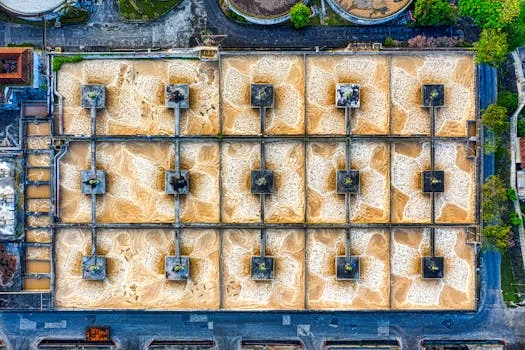
Under 40 CFR 133.102, EPA secondary treatment sets a 30-day average BOD₅ and SS limit that shall not exceed 30 mg/L for municipal and general industrial discharge. ISO 16075-2 Category B suggests average BOD ≤10 mg/L and TSS ≤10 mg/L for restricted urban and processed-food irrigation reuse; Table 1 in that standard does not set an NH₄-N limit. China GB 18918-2002 Grade 1-A sets BOD₅ and SS at 10 mg/L daily mean, with NH₃-N at 5 mg/L (8 mg/L when water temperature is ≤12 °C). Meeting discharge limits is the primary performance metric for any prefabricated plant. Engineers size BOD, TSS, and nutrient modules to the permit, not to brochure claims.
The EPA 40 CFR Part 503 standards define Class B biosolids requirements, which most extended aeration prefab plants meet through controlled aerobic digestion. For water reuse, ISO 16075-2 Category A tightens averages further (BOD ≤5 mg/L, TSS ≤5 mg/L) and often needs tertiary steps such as UV disinfection or ultrafiltration. That is why some process plans push effluent well below minimum discharge limits: reuse or low-dilution receiving waters demand it, even when a basic permit looks easy to meet.
| Standard | BOD Limit (mg/L) | TSS Limit (mg/L) | NH₄-N Limit (mg/L) | Applicable Plant Type |
|---|---|---|---|---|
| EPA Secondary Treatment | <30 | <30 | N/A | Municipal / General Industrial |
| ISO 16075-2 (Reuse) | <10 | <10 | <5 | Agricultural / Urban Reuse |
| China GB 18918-2002 (Grade A) | <10 | <10 | <5 (8) | High-standard Municipal |
| Medical Standard | <20 | <20 | <15 | Hospitals / Clinics |
Meeting these standards needs the right process modules. HydropureWater medical WWTP specs include enhanced disinfection chambers to neutralize pathogens for healthcare discharge rules. For industrial spikes such as high-strength food-processing loads, size an equalization tank for 6–10 hours of average flow to prevent biological shock. Engineers should also reference Minnesota's MPCA compliance standards for industrial prefab WWTPs for cold-climate nitrification rates and tank insulation needs.
Footprint and Site Constraints: How to Fit a Prefab Plant on Your Site
Prefabricated plant footprints range from 0.5 to 2.0 m² per m³/h of treatment capacity. A 100 m³/h plant therefore needs roughly 50 to 200 m². MBR systems sit at the low end (0.5–0.8 m²/m³/h). Conventional extended aeration with circular clarifiers sits at the high end. Those figures cover primary treatment units and often exclude access roads and buffer zones.
Beyond the tanks, plans must include OSHA 1910.141 compliant walkways (minimum 1.5m width) for operator safety and a 3m clearance radius for crane access during install or major equipment swaps. For extreme space limits, WSZ series prefabricated underground WWTPs for space-constrained sites can cut the visible footprint by 60% by using the vertical soil profile. That approach needs at least 2m excavation depth and structural reinforcement for soil and hydrostatic loads. Many jurisdictions also require a 10m setback from property lines for noise and odor rules.
Cost Breakdown: Prefabricated WWTP Pricing by Capacity and Material (2025 Data)
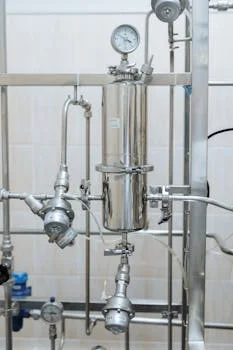
A 100 m³/h precast concrete prefab WWTP carries CapEx of $1,100–$1,600/m³/h, O&M of $0.10–$0.18/m³, and a 5–7 year payback. A carbon steel unit at the same capacity runs $800–$1,100/m³/h, $0.15–$0.22/m³ O&M, and 3–5 year payback. CapEx in 2025 tracks material cost and mechanical complexity; steel still offers the lowest entry price for small-to-mid capacity. O&M must enter the 20-year lifecycle math. Energy, chemical dosing (phosphorus removal or disinfection), and sludge disposal typically make up 70% of annual O&M.
| Capacity (m³/h) | Material | CapEx ($/m³/h) | O&M Cost ($/m³) | Est. Payback (Years) |
|---|---|---|---|---|
| 20 | Carbon Steel | $1,200–$1,500 | $0.25–$0.30 | 4–6 |
| 100 | Carbon Steel | $800–$1,100 | $0.15–$0.22 | 3–5 |
| 100 | Precast Concrete | $1,100–$1,600 | $0.10–$0.18 | 5–7 |
| 500 | Concrete/Modular | $700–$1,000 | $0.08–$0.15 | 3–4 |
A typical ROI frame compares onsite treatment with offsite hauling or municipal surcharges. For a 100 m³/h industrial facility, moving from offsite disposal to a prefab plant can save $50,000 to $120,000 per year and pay back in 3 to 5 years. Budget also for site preparation ($10,000–$50,000), environmental permitting ($5,000–$20,000), and operator training ($2,000–$10,000). For emerging-market projects, Regional cost benchmarks for prefab WWTPs in Latin America help adjust labor and material rates.
How to Select the Right Prefabricated Wastewater Plant: A Decision Framework
Selecting a prefabricated WWTP starts with influent chemistry and effluent limits. Undersizing or wrong materials fail first. Characterize raw wastewater for BOD, TSS, Total Dissolved Solids (TDS), and Fats, Oils, and Grease (FOG). If FOG exceeds 50 mg/L, specify DAF systems for industrial wastewater with high FOG or TSS as pretreatment to protect the biology downstream.
- Define Influent and Effluent: Determine peak flow (m³/h) and required removal percentages. Use pressure flotation systems for high-efficiency TSS removal in prefab plants if influent solids swing hard.
- Match Process to Goals: Select MBR systems for reuse-quality effluent in compact prefab designs when the goal is irrigation or cooling-tower makeup. Use MBBR for high-strength industrial waste.
- Select Material: Choose steel for rapid deployment (8–12 weeks) or concrete for long-term municipal assets (30+ years).
- Size with Buffer: Reference the flow rate tables in this guide and add a 20% capacity buffer for future facility expansion.
- Verify Vendor Compliance: Request third-party test reports (ISO 17025) for BOD/TSS removal. Reject vendors who cannot state aeration retention time.
Red flags include vague aeration rates untied to lbs of BOD, no sludge management plan, and electrical panels lacking UL/CE marks. A solid proposal includes a mass balance, a detailed P&ID, and a maintenance schedule for all rotating equipment. Clear prefabricated specifications beat brochure language every time.
Who This Specification Guide Is For
This guide fits municipal engineers sizing permanent plants above 50 m³/h, EPC contractors bidding modular packages for industrial parks or remote camps, and procurement teams comparing steel versus concrete quotes. Look elsewhere if you need a containerized unit under 1 m³/h or a full custom activated-sludge plant above 500 m³/h—the prefab format stops being economical past that range.
For a sizing review tied to your flow, effluent target, and site constraints, send your influent data and required discharge limits to our engineering team. Request a prefab WWTP specification review and we will return a matched flow-rate band, material recommendation, and CapEx range within two business days.
Frequently Asked Questions
Can prefabricated plants handle industrial wastewater with high TDS?
Yes, but carbon steel tanks need specialized epoxy lining when TDS exceeds 1,500 mg/L to slow corrosion. Precast concrete plants can typically tolerate TDS up to 3,000 mg/L without extra liners if sulfate stays within standard limits. Confirm influent sulfate (SO₄) below 250 mg/L before specifying concrete for high-TDS service. Match liner chemistry to the full ion profile, not TDS alone.
What is the typical lead time for a prefab WWTP?
Standard lead times are 8–12 weeks for steel-packaged systems and 12–16 weeks for precast concrete modules. Expedited manufacturing (4–6 weeks) is often available for a 20–30% price premium when blowers and control panels are in stock. Most projects we ship fall into the 10-week steel band. Lock long-lead electrical gear early to protect that schedule.
Are prefab plants scalable if my facility grows?
Modular designs scale by adding parallel treatment trains. A 100 m³/h plant can move to 200 m³/h with a second identical module. Non-modular, single-tank designs are hard to expand and often need full replacement. Specify modular skids from day one if growth above 30% is likely within 10 years. Leave civil stubs and power capacity for the next train.
Do these systems require a full-time operator?
Modern MBR and MBBR prefab plants are often fully automated with PLC systems. They need only weekly inspections and basic maintenance such as blower oil and chemical levels. Manual systems or those with complex sludge dewatering may need one operator per shift. Plan for at least 0.25 FTE per MBR skid at 50 m³/h. Remote alarming cuts call-outs if the PLC is commissioned well.
How do I verify a vendor's BOD removal claims?
Always request third-party performance verification reports, such as EPA ETV or equivalent ISO certifications. Do not rely on lab-scale data; require full-scale results under similar influent conditions. Ask specifically for the aeration HRT (hours) and MLSS (mg/L) at which the removal rate was measured. Compare those operating points to your peak load case before you sign.