How Pressure Flotation Systems Work: Mechanism, Microbubble Tech & Process Flow
A meat processing facility in the Midwest recently faced escalating municipal surcharges due to effluent Total Suspended Solids (TSS) exceeding 1,200 mg/L. Traditional gravity clarifiers failed to capture the emulsified fats and fine colloidal proteins, leading to a "cloudy" discharge that violated local environmental permits. This scenario is common in industries dealing with high-FOG (fats, oils, and grease) or low-density solids. Pressure flotation systems provide the technical solution by utilizing microbubbles (20–100 μm) generated by a pressure pump to achieve 92–97% TSS removal, effectively meeting EPA and ISO 14001 effluent standards when properly sized.
The core mechanism of a pressure flotation system involves the direct pressurization of wastewater (or a portion of it) to 3–6 bar. At these pressures, air solubility increases significantly according to Henry's Law. When this pressurized liquid is released into the flotation tank at atmospheric pressure, the sudden pressure drop causes the dissolved air to precipitate as millions of microbubbles. Unlike the large, turbulent bubbles produced by coarse aerators, these microbubbles have a high surface-area-to-volume ratio, which is critical for the effective attachment to suspended particles. The adhesion process is governed by the hydrophobicity of the solids and the zeta potential; often, a pH-controlled pipe system is used upstream to adjust the wastewater chemistry, ensuring that the particles and bubbles have compatible surface charges for maximum attachment efficiency.
Technically, pressure flotation differs from traditional Dissolved Air Flotation (DAF) in its approach to pressurization. While DAF systems for high-efficiency TSS and FOG removal typically recirculate 15–30% of clarified effluent back through a saturation vessel, pressure flotation systems often involve the direct pressurization of the influent stream or use a specialized pressure pump to mix air and water without the need for external compressors or line mixers. The process flow typically follows this sequence:
- Coagulation Tank: Addition of metal salts (e.g., PAC) to destabilize colloidal suspensions.
- Reaction Tank: Flocculant addition to grow "flocs" that are easily captured by bubbles.
- Flotation Tank: The primary separation zone where microbubbles lift flocs to the surface.
- Sludge Shoveling Machine: A center-drive or chain-driven skimmer that removes the floating sludge blanket into an overflow weir.
- Sedimentation Zone: A conical bottom designed to automatically drain any heavy solids that settle despite the flotation process.
Pressure Flotation System Specifications: 2025 Engineering Data & Performance Benchmarks
Engineering specifications for pressure flotation units are defined by the hydraulic loading rate, the solids loading rate, and the physical dimensions of the flotation and reaction tanks. For industrial engineers, matching these specs to the waste stream’s specific gravity is the difference between a compliant system and an operational failure. Standard systems range from small-scale 0.5 m³/h units to large industrial configurations capable of handling 300 m³/h.
| System Model (Ref) | Treatment Volume (m³/h) | Reaction Tank (L) | Flotation Tank (m³) | Electric Power (kW) | Operation Weight (t) | Retention Time (min) |
|---|---|---|---|---|---|---|
| PF-Low (PAL-013) | 0.5 – 1.0 | 120 | 1.1 | 2.3 – 3.1 | 4.5 | 60 – 130 |
| PF-Mid (PAL-053) | 2.5 – 5.0 | 600 | 4.6 | 4.3 – 5.8 | 10.7 | 55 – 110 |
| PF-High (PAL-103) | 7.5 – 10.0 | 1,170 | 8.5 | 7.3 – 9.1 | 19.5 | 50 – 68 |
| PF-Industrial (Custom) | 50 – 100 | 5,000+ | 45.0 | 15.0 – 22.0 | 65.0 | 25 – 45 |
Performance benchmarks for these systems are highly dependent on influent quality. According to 2024 industrial wastewater data, pressure flotation achieves 92–97% TSS removal for solids with a specific gravity near 1.0. For food processing applications, FOG removal typically ranges between 85% and 95%. COD reduction is often a secondary benefit, typically yielding a 70–85% reduction if the COD is particulate-bound rather than dissolved. To maintain these benchmarks, influent must be maintained at a pH between 6.5 and 8.5 and a temperature below 40°C. High temperatures reduce air solubility, which directly lowers the air-to-solids (A/S) ratio, potentially causing the sludge blanket to sink.
The Air-to-Solids (A/S) ratio is the most critical engineering parameter. It is defined as the mass ratio of air released to the mass of solids removed. For typical industrial waste, an A/S ratio of 0.01 to 0.05 kg-air/kg-solids is required. If the influent TSS exceeds 3,000 mg/L, the system may require a higher A/S ratio or a larger flotation surface area to prevent the sludge blanket from becoming too heavy for the microbubbles to support.
Pressure Flotation vs. DAF vs. CAF: Comparison Table & Use-Case Matching
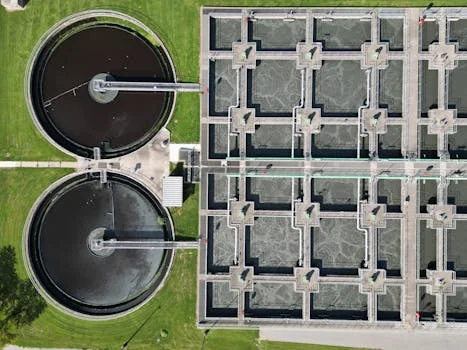
Choosing the correct flotation technology requires an analysis of the wastewater's physical properties and the desired effluent quality. While pressure flotation, Dissolved Air Flotation (DAF), and Cavitation Air Flotation (CAF) all use air to assist separation, their methods of bubble generation and their efficiency profiles vary significantly. For instance, learn how CAF systems compare to pressure flotation for oily wastewater where high-turbulence microbubble generation may be more energy-efficient but less effective at removing fine colloidal flocs.
| Feature | Pressure Flotation | Dissolved Air Flotation (DAF) | Cavitation Air Flotation (CAF) |
|---|---|---|---|
| Bubble Generation | Direct Pressurization (3-6 bar) | Recirculation Saturated Air | Mechanical Aerator/Cavitation |
| Bubble Size (μm) | 20 – 100 | 30 – 100 | 500 – 1,000 |
| Energy Use (kWh/m³) | 0.15 – 0.40 | 0.10 – 0.25 | 0.05 – 0.15 |
| TSS Removal (%) | 92 – 97% | 90 – 95% | 60 – 80% |
| FOG Removal (%) | 85 – 95% | 80 – 90% | 70 – 85% |
| Op. Cost ($/m³) | $0.15 – $0.35 | $0.10 – $0.30 | $0.05 – $0.12 |
| Best Use Case | Small-flow, high-FOG/Colloidal | Large-flow, standard industrial | Oily waste, high-turbulence |
Pressure flotation is the preferred choice for small-to-medium flow rates (0.5–50 m³/h) where the wastewater contains high concentrations of emulsified fats or colloidal solids that require precise chemical conditioning. DAF systems are the industry standard for larger municipal or pulp and paper applications due to their lower energy consumption per cubic meter when handling high volumes. CAF systems, while less efficient at removing fine solids, are excellent for petrochemical applications where the goal is bulk oil removal without the complexity of high-pressure pumps or saturation tanks. For a deeper dive into standard DAF parameters, refer to detailed DAF system specifications and selection criteria.
Engineering Calculations for Pressure Flotation System Sizing
To accurately size a pressure flotation system, engineers must calculate the required air mass based on the solids loading. Relying on "rule of thumb" sizing often leads to undersized air saturation systems, resulting in high effluent turbidity. Follow these steps for preliminary sizing:
- Calculate Solids Loading Rate (SLR):
SLR (kg/h) = Flow Rate (m³/h) × Influent TSS (mg/L) × 10⁻³
Example: 10 m³/h flow with 1,000 mg/L TSS = 10 kg/h of solids. - Determine Required Air Flow Rate (Qa):
Using a standard A/S ratio of 0.02 for food processing:
Qa (kg/h) = A/S Ratio × SLR = 0.02 × 10 kg/h = 0.2 kg/h of air.
- Calculate Flotation Tank Volume:
Retention time should be 15–30 minutes. For a 10 m³/h system at 30 minutes:
Volume = 10 m³/h × 0.5 h = 5.0 m³.
- Adjust for Temperature: Air solubility decreases by approximately 20% for every 10°C increase above 20°C. If the wastewater is 40°C, the air saturation pressure must be increased or the recirculation rate adjusted to maintain the target A/S ratio.
Limitations of this calculation include wastewater with TSS concentrations exceeding 3,000 mg/L or FOG levels above 5%. In such cases, the sludge blanket becomes too voluminous for standard "shoveling" mechanisms, and a primary settling stage or grease trap must be installed upstream to reduce the load on the flotation unit.
Cost Analysis & ROI: Pressure Flotation System Budgeting for 2025
Budgeting for a pressure flotation system requires accounting for both the initial capital expenditure (CAPEX) and the ongoing operational expenditure (OPEX). In 2025, capital costs for a 0.5–10 m³/h system typically range from $15,000 to $50,000, while high-capacity industrial systems (10–50 m³/h) can cost between $80,000 and $200,000, depending on the material of construction (e.g., SS304 vs. SS316) and the level of automation.
OPEX is driven primarily by electricity and chemical consumption. Energy costs generally fall between $0.10 and $0.30 per cubic meter treated. Chemical costs—including coagulants like Polyaluminum Chloride (PAC) and flocculants like Polyacrylamide (PAM)—account for 30% of total operational costs, ranging from $0.02 to $0.08 per cubic meter. Utilizing PLC-controlled chemical dosing for flotation system optimization can reduce chemical waste by up to 20% by adjusting dosages in real-time based on influent flow sensors.
ROI Calculation Example: A dairy plant processing 20 m³/h of wastewater was paying $120,000 annually in TSS and FOG surcharges. By installing a $180,000 pressure flotation system with annual operational costs of $25,000, the plant achieved a net annual saving of $95,000.
Payback Period = $180,000 / $95,000 = 1.89 years.Beyond direct savings, the system ensures compliance with ISO 14001, avoiding potential legal fines and reputational damage associated with environmental non-compliance.
Troubleshooting Common Pressure Flotation System Problems
Operational issues in pressure flotation systems usually manifest as either poor effluent quality or mechanical failures in the sludge removal system. Diagnosing these requires a systematic approach to water chemistry and air saturation physics.
- Poor TSS Removal: This is often caused by an insufficient A/S ratio. Check the pressure pump for a drop below 3 bar. If pressure is stable, verify the pH; most coagulants are highly sensitive to pH drift. Ensure the dosing pumps are calibrated.
- Sludge Carryover: If the sludge blanket is breaking apart and flowing over the clean water weir, the retention time may be too low (flow rate too high) or the skimmer speed is too high, causing turbulence. Reduce the skimmer frequency to allow the blanket to thicken.
- Bubble Coalescence: If bubbles appear large and clear rather than "milky," they are coalescing. This usually indicates the presence of surfactants or a failure in the pressure release valve. In food processing, high levels of certain cleaners can interfere with bubble formation, requiring the addition of a specialized anti-foam agent or a change in cleaning chemicals.
- pH Drift: Inspect the pH probes for fouling, which is common in high-FOG environments. Clean probes weekly with a mild acid solution to ensure the pH-controlled pipe system remains accurate.
For systems experiencing frequent chemical imbalances, integrating an automatic chemical dosing system can stabilize the flocculation process, preventing the "pin-floc" issues that lead to poor flotation performance.
Frequently Asked Questions
What is the difference between pressure flotation and DAF systems?
Pressure flotation typically involves direct pressurization of the influent or a specialized pump to dissolve air, whereas DAF (Dissolved Air Flotation) systems use a recirculation loop where 15–30% of treated water is saturated with air and reintroduced to the main stream. Pressure flotation is often more compact and suited for smaller, high-concentration streams.
How do I calculate the air-to-solids ratio for my wastewater?
The A/S ratio is calculated by dividing the mass of air dissolved (based on pressure and temperature) by the mass of solids in the influent. For most industrial applications, a ratio between 0.01 and 0.05 kg-air/kg-solids is standard. Higher ratios are required for high-TSS or very buoyant solids like grease.
What are the typical TSS removal rates for pressure flotation systems?
Well-engineered pressure flotation systems consistently achieve 92% to 97% TSS removal. Efficiency depends heavily on the effectiveness of the upstream coagulation and flocculation stages, as well as maintaining a stable pH between 6.5 and 8.5.
How much does a pressure flotation system cost for a 10 m³/h flow rate?
A standard 10 m³/h pressure flotation system in 2025 typically costs between $40,000 and $65,000 for the equipment. Total installation costs, including civil works and piping, can bring the total project budget to $80,000–$110,000.
What are the most common problems with pressure flotation systems, and how do I fix them?
The most common issues are poor floc formation due to pH drift and bubble coalescence from surfactant interference. Solutions include recalibrating pH probes, adjusting chemical dosages via an automated system, and ensuring the saturation pressure remains above 3 bar to maintain microbubble size.