MBR Market in 2026: Headline Numbers and Why They Disagree
The global membrane bioreactor (MBR) market is valued at USD 3,437.5 million in 2026 and is projected to reach USD 4,934.5 million by 2033, expanding at a 5.3% CAGR (Coherent Market Insights, 2026). A competing forecast puts the same 2026 market at USD 5.43 billion at a 7.75% CAGR through the forecast horizon — a roughly USD 2 billion gap that procurement engineers cannot ignore when they size a 2026 budget. Asia Pacific accounts for 41.8% of 2026 demand, driven by municipal upgrades, stricter discharge rules, and industrial reuse in China, India, Indonesia, and Vietnam.
The two forecasts diverge because they are built from different data. The 5.3% figure is a bottom-up model: it tracks installed equipment revenue by application (municipal vs industrial), configuration (submerged vs side-stream), and product (hollow fiber, flat sheet, multi-tubular) and is anchored to publicly reported municipal capex programs. The 7.75% figure aggregates top-down membrane equipment revenue across all formats, including ancillary modules, cassettes, and replacement cycles — which inflates the base. For a procurement engineer, the 5.3% CAGR is the defensible anchor for conservative capacity budgeting; the 7.75% figure is a reasonable ceiling for vendor pricing benchmarks in APAC and reuse-driven segments. For a wider read on adjacent membrane categories, see the broader 2026 membrane technology market outlook.
| Metric | Conservative forecast (Coherent, 2026) | Aggressive forecast (competing, 2026) |
|---|---|---|
| 2026 market size | USD 3,437.5 million | USD 5.43 billion |
| 2033 market size | USD 4,934.5 million | Higher than conservative |
| CAGR (2026–2033) | 5.3% | 7.75% |
| Methodology | Bottom-up application modeling | Top-down membrane revenue aggregation |
| Best use | Capacity budgeting, long-range CAPEX | Vendor pricing benchmarks, APAC volume scenarios |
Where the Growth Is Coming From: Application and Configuration Segments
Municipal wastewater treatment is the largest 2026 application segment, holding the dominant share because of urbanization in APAC, MENA, and Sub-Saharan Africa — regions where the urban population continues to add tens of millions of residents per year and where aging secondary plants cannot meet tightening discharge limits. Industrial wastewater treatment is the fastest-growing slice: food and beverage, pharmaceutical, textile, and electronics fabs are retrofitting MBR for reuse-grade effluent, where the cost of fresh water now exceeds USD 2–4 per m³ in many jurisdictions and pushes the reuse payback below 36 months. The configuration split favors submerged MBR in 2026 new builds because aeration energy runs 10–20× lower than side-stream crossflow designs, and most vendors — including an integrated MBR membrane bioreactor system — now ship submerged-only product lines.
On product form factor, hollow fiber leads by installed base because of low unit cost and high packing density, but flat sheet is gaining share in industrial reuse where physical cleaning and individual module swap-out matter more than packing density. Multi-tubular remains a niche for high-pressure or viscous feeds such as oil and gas produced water and certain chemical streams. Submerged flat-sheet PVDF has become the default specification for 2026 reuse projects because the modules tolerate air-scour cleaning and recover flux faster after fouling events than hollow fiber — a detail that frequently shows up in 5-year lifecycle cost models.
| Segment | 2026 share / position | 2026 CAPEX driver |
|---|---|---|
| Municipal wastewater | Largest application segment | Urbanization, discharge compliance |
| Industrial wastewater | Fastest-growing application | Reuse economics, fab effluent rules |
| Submerged configuration | Dominant in 2026 new builds | Energy cost (10–20× lower than side-stream) |
| Side-stream configuration | Niche | High-solids chemical, produced water |
| Hollow fiber | Largest installed base | Low unit cost, high packing density |
| Flat sheet (PVDF) | Fastest-growing in reuse | Cleanability, module-level replacement |
| Multi-tubular | Niche | High-pressure, viscous feeds |
The Four 2026 Demand Drivers Reshaping the MBR Market
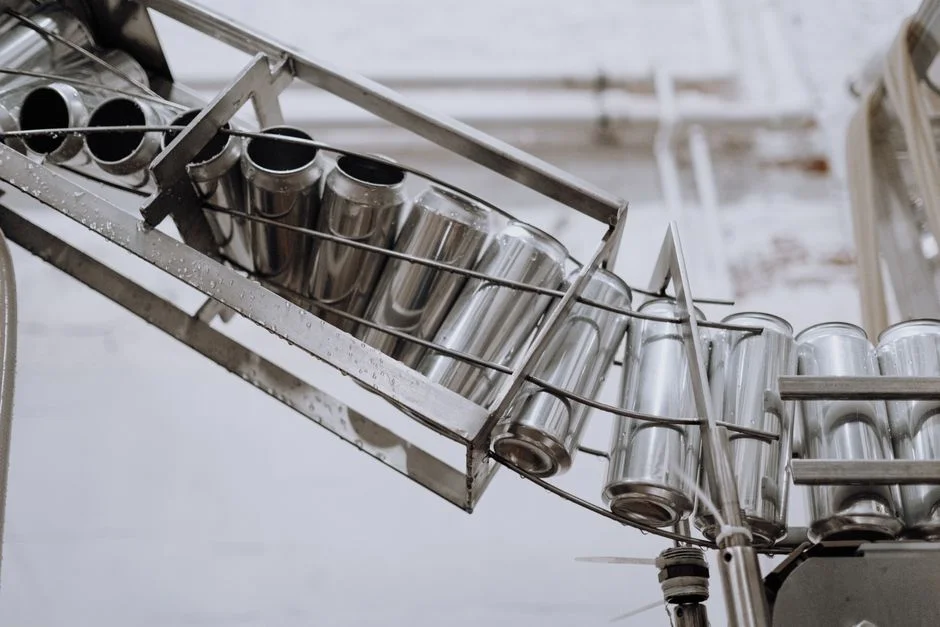
MBR demand in 2026 is being pulled forward by four specific regulatory and industrial forces — not by generic "water scarcity" rhetoric. PFAS pretreatment is the first: MBR is now routinely specified upstream of GAC, RO, and ion exchange to strip biosolids and protect downstream PFAS-selective media, a configuration detailed in the 2026 PFAS removal technology buyer's guide. Industrial water reuse is the second: semiconductor fabs, hyperscale data centers, and combined-cycle power plants are driving MBR adoption for reuse-grade effluent where turbidity must stay below 1 NTU and TSS below 10 mg/L — a quality band MBR holds without tertiary filtration. The 2026 industrial water reuse market outlook breaks down the volumetric case for these segments.
Hospital and medical effluent is the third driver, with discharge standards tightening under the EU Urban Wastewater Treatment Directive (91/271/EEC), the U.S. EPA hospital effluent guidance, and China's GB 18466 series — pushing operators from conventional activated sludge to MBR + ozone or chlorine dioxide polishing, as covered in the hospital wastewater treatment guide for 2026. Stricter discharge limits generally are the fourth: many jurisdictions now require effluent below COD 50 mg/L, TSS 10 mg/L, and ammonia 5 mg/L on a routine basis, which is exactly the operating envelope where MBR outperforms a conventional activated sludge process followed by a clarifier. These four drivers overlap in 2026 municipal tenders: a single WWTP upgrade may now be justified simultaneously by PFAS loads from a nearby industrial park, reuse contracts with a data center, and a hospital on the collection network.
Regional Outlook: Why Asia Pacific Owns 41.8% of the 2026 MBR Market
Asia Pacific's 41.8% share in 2026 is structural, not cyclical. China, India, Indonesia, and Vietnam are simultaneously building new municipal capacity to serve urban migration and tightening effluent rules on industrial parks — a combination that doubles the addressable spend per project. North America grows more slowly but at a higher average selling price, dominated by PFAS-driven retrofits and semiconductor fab buildouts in the U.S. Southwest, where the largest 2026 fab clusters each require their own reuse loop. Europe is stable and replacement-driven, with MBR adoption tied to UWWTD compliance and the Industrial Emissions Directive (2010/75/EU) for sectors such as food, pulp and paper, and chemicals.
Middle East and Africa is the emerging segment. Municipal megaprojects in the Gulf, hospitality-driven reuse in tourism economies, and oil and gas produced-water treatment in North Africa are the headline 2026 spend categories. Procurement teams working Gulf projects should expect a different supplier mix than APAC — see the 2026 buyer's guide for wastewater treatment plant manufacturing in Abu Dhabi for vendor landscape detail. Regional pricing divergence matters: a packaged MBR plant quoted in APAC will land at roughly 60–75% of the same skid shipped to MEA once logistics, duty, and engineering oversight are loaded, while EU and North American ASPs sit 20–40% above the APAC baseline.
From Market Data to 2026 Buying Decisions: CAPEX and OPEX Benchmarks
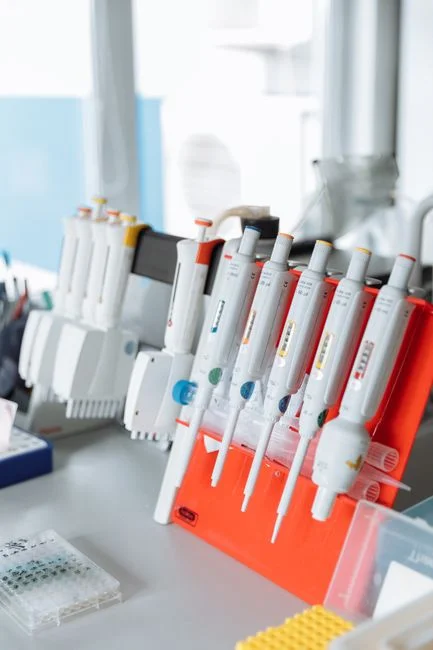
For a packaged MBR system sized at 1,000–10,000 m³/day, 2026 CAPEX runs roughly USD 150–400 per m³/day of installed capacity, scaling upward with effluent quality targets, automation level, and structural/containerization choices. Below 500 m³/day, containerized skid prices compress; above 50,000 m³/day, civil-build configurations dominate and the per-m³/day figure falls back to the lower end of the range. A typical integrated MBR membrane bioreactor system with PLC/SCADA and remote monitoring now lands in the USD 220–320 per m³/day band for municipal flows — the midpoint most 2026 tenders benchmark against.
OPEX runs USD 0.08–0.22 per m³ treated in 2026, with aeration energy at 0.3–0.6 kWh/m³ typically accounting for 40–60% of the total. Submerged flat-sheet configurations cut that energy load sharply versus legacy side-stream designs, and the DF series flat-sheet PVDF MBR module is specified for that reason on reuse-heavy projects. Membrane replacement is the second-largest lifecycle cost: PVDF flat-sheet modules typically run 5–8 years before flux decline forces changeout, while hollow fiber runs 4–6 years — a delta that flips the total cost of ownership in favor of flat sheet when downtime, cleaning chemical consumption, and labor are priced in. The buy decision is now straightforward: MBR is cost-competitive with sequencing batch reactor (SBR) plus tertiary filtration whenever reuse value or footprint constraints are priced in, and it is the lower-risk choice when effluent limits fall below COD 50 mg/L on a routine basis.
| Parameter | 2026 benchmark | Notes |
|---|---|---|
| Packaged MBR CAPEX | USD 150–400 per m³/day | Scales with effluent quality and automation |
| Mid-range skid CAPEX | USD 220–320 per m³/day | Most 2026 municipal tenders |
| OPEX | USD 0.08–0.22 per m³ | Aeration = 40–60% of OPEX |
| Aeration energy | 0.3–0.6 kWh/m³ | Submerged cuts this 10–20× vs side-stream |
| PVDF flat-sheet module life | 5–8 years | Air-scour cleanable |
| Hollow fiber module life | 4–6 years | Higher packing density, shorter cycle |
| Vs SBR + tertiary | Cost-competitive with reuse or footprint priced in | Lower-risk below COD 50 mg/L |
2026–2030 Outlook: What the Growth Trajectory Means for Buyers
Capacity tightness is the headline 2026 risk. MBR module suppliers in China, Japan, and Germany are adding lines through 2027, but lead times for hollow fiber and flat-sheet PVDF modules may still stretch in 2026 H2 if APAC municipal tenders stack against industrial orders. Price direction is split: hollow fiber is flat to modestly downward as APAC supply scales, while flat-sheet PVDF pricing is stable because raw material costs and quality-controlled lamination lines constrain price competition. The technology watch for 2027+ bids is AI-driven membrane fouling prediction and energy-recovery aeration — both of which are moving from pilot to commercial in 2026 and will separate premium vendors from baseline suppliers. Procurement teams should lock 2026 module pricing now via framework agreements, specify flat-sheet PVDF for reuse projects, and require PLC/SCADA integration as a baseline deliverable rather than a priced option. Predictive maintenance capability — covered in the 2026 guide for predictive maintenance system suppliers for wastewater plants — is the differentiator that will define 2027 bids.
Frequently Asked Questions
What is the MBR market size in 2026?
The global MBR market is valued at USD 3,437.5 million in 2026 under the conservative Coherent Market Insights forecast, with a competing forecast placing it at USD 5.43 billion in the same year. The gap reflects bottom-up application modeling versus top-down equipment revenue aggregation.
What CAGR is the MBR market forecast to grow at through 2033?
5.3% CAGR from 2026 to 2033 under the conservative forecast, reaching USD 4,934.5 million. A more aggressive forecast cites 7.75% CAGR. Procurement teams should anchor long-range capacity planning on 5.3% and use 7.75% as a ceiling for vendor pricing in APAC and reuse-driven segments.
Which region leads the global MBR market in 2026?
Asia Pacific leads with 41.8% share in 2026, driven by municipal upgrades and industrial reuse demand in China, India, Indonesia, and Vietnam. North America follows with higher ASPs tied to PFAS retrofits and semiconductor fab buildouts.
What is the typical CAPEX for a packaged MBR system in 2026?
USD 150–400 per m³/day of installed capacity, with mid-range containerized skids for municipal flows landing at USD 220–320 per m³/day. Pricing scales with effluent quality targets, automation level, and structural versus containerized configuration.
How long do MBR membrane modules last before replacement?
PVDF flat-sheet modules typically run 5–8 years before flux decline forces changeout; hollow fiber modules run 4–6 years. Flat sheet's longer cycle, combined with module-level replacement and air-scour cleanability, typically delivers a lower total cost of ownership for reuse projects despite higher upfront module cost.