Why PFAS Treatment Is Now a 2026 Engineering Priority
PFAS treatment stopped being optional on April 10, 2024, when the U.S. EPA finalized the National Primary Drinking Water Regulation (NPDWR) under 40 CFR 141.900, setting maximum contaminant levels (MCLs) of 4 ng/L for PFOA and PFOS, 10 ng/L for PFHxS, HFPO-DA (GenX), and PFNA, and a hazard index of 1 for any mixture of four additional PFAS. Public water systems must complete initial monitoring by 2026 and achieve compliance by 2029, but the rule has already cascaded into industrial discharge permits, NPDES renewals, and supplier audits in 2026. In the EU, the REACH universal PFAS restriction proposal (Feb 2023, ECHA dossier updated 2025-08) carries 2026–2027 phase-in milestones covering roughly 12,000 substances, with industrial emitters facing tightened discharge consent values under the Industrial Emissions Directive (2010/75/EU). China is updating GB 8978-1996, and the 2025 draft amendment lists PFOA and PFOS among priority pollutants for the first time.
The reason PFAS cannot be addressed by conventional treatment is thermodynamic: the C–F bond carries a bond dissociation energy near 485 kJ/mol, the strongest single bond carbon forms in a commercial molecule. Activated sludge, MBR, and SBR systems consistently remove less than 20% of total PFAS, with even lower removal for short-chain species like PFBA, PFBS, and TFA (verified across multiple municipal and industrial wastewater studies, including the ScienceDirect review on selective PFAS adsorbents, 2024-09). Any 2026 PFAS treatment train must therefore be built around selective adsorption, membrane rejection, or destructive oxidation — not biology.
Six PFAS Removal Technologies Compared: What Works in 2026
A specifier in 2026 is choosing among six mature or near-mature technologies, and the only honest way to compare them is side-by-side on the metrics that drive CAPEX and OPEX decisions: removal efficiency across the chain-length spectrum, influent tolerance, installed cost, operating cost, media replacement interval, and best-fit industry. The table below compresses those variables into a single matrix an engineer can hand to procurement.
| Technology | Long-chain (C8–C14) removal | Short-chain (C2–C7) removal | Influent tolerance | CAPEX ($/m³/day treated) | OPEX ($/m³ treated) | Best-fit industry |
|---|---|---|---|---|---|---|
| Granular Activated Carbon (GAC) | 90–98% | 30–70% (PFBA, TFA poor) | Low–moderate; DOM and competing anions reduce capacity 30–60% | $200–$600 | $0.30–$1.20 | Textile, paper, food processing, landfill leachate pretreatment |
| Anion Exchange Resin (IX) | 95–99% | 85–95% (including PFBA, GenX) | High; tolerates DOM but sensitive to sulfate | $350–$900 | $0.80–$2.50 | Semiconductor, electroplating, PFAS chemical manufacturing |
| Reverse Osmosis (RO) | >99% | 90–99% (including TFA at optimized pressure) | Requires pretreatment; fouls on FOG, hardness, silica | $800–$1,800 | $0.50–$1.50 | Any industry needing 4 ng/L compliance; pairs with an industrial RO system for PFAS concentration |
| Nanofiltration (NF) | 95–99% | 70–90% (TFA limited) | Higher flux, lower pressure than RO; loose selectivity | $500–$1,200 | $0.30–$0.90 | Landfill leachate, mining, paper mill effluent |
| Foam Fractionation | 60–90% | 20–50% | Best on high-surfactant matrices (AFFF, plating rinsewater with surfactants) | $150–$400 | $0.20–$0.70 | AFFF-impacted groundwater, metal-finishing |
| Foam-Assisted DAF + Adsorbent | 70–90% | 40–60% | Tolerates FOG and TSS; combines removal with sludge thickening | $200–$500 | $0.40–$1.00 | Food processing, textile, dairy, slaughterhouse |
The headline numbers anchor the comparison: GAC at 20 mg/L dose reaches 92.5–95.3% removal for six PFAS with perfluorocarbon chain lengths of 4–8 in clean water (Lee et al., 2024), but DOM and inorganic anions can drop that figure by 30–60% in real effluent. Ion exchange resins (Purolite PFA694E, DOWex PSR-2) close the short-chain gap, capturing >95% of PFBA and GenX that GAC misses, at 2–5× higher media cost. RO and NF remain the only true full-spectrum barriers effective on ultra-short chains including TFA, but they produce a PFAS-concentrated reject stream 10–50× stronger than the feed — a brine problem, not a destruction problem, which is why the 2026 buyer-grade train always pairs membranes with downstream destruction.
Granular Activated Carbon and Engineered Adsorbents: The Workhorse, With Caveats
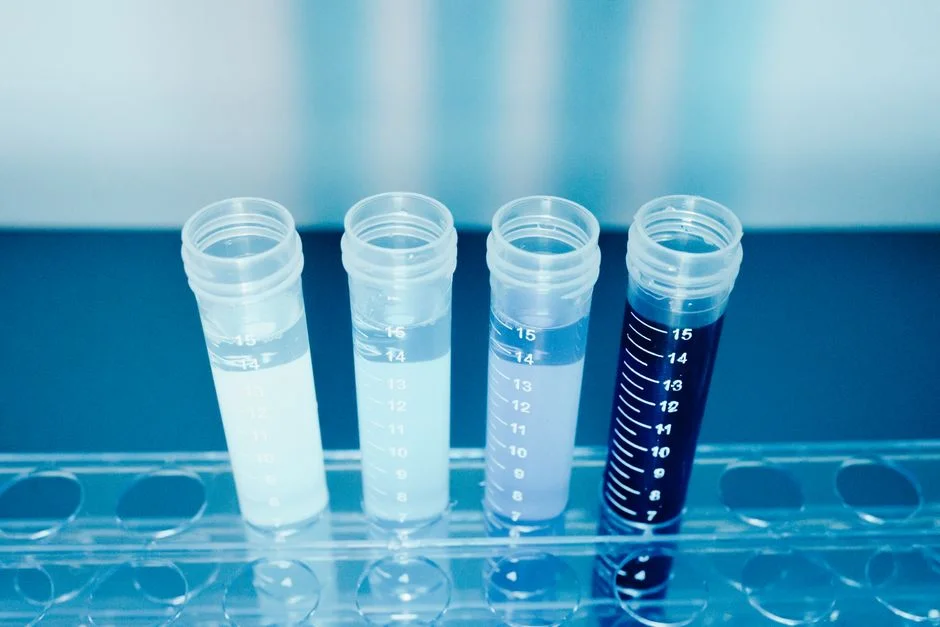
GAC remains the default first stage in roughly 70% of industrial PFAS pilots reviewed in 2025, but it fails in two predictable ways that the engineering specification must address. First, dissolved organic matter (DOM) causes electrostatic repulsion, pore blocking, and competitive inhibition at the carbon surface, with field data showing 30–60% capacity loss when TOC rises above 5 mg/L (Appleman et al., 2013; Wang et al., 2015a,b). Second, sulfate, chloride, and nitrate compete for the same active sites, with documented capacity reductions of 20–40% in high-ionic-strength matrices (Du et al., 2014; Umeh et al., 2023). The result is a typical GAC bed life of 3–6 months treating surface water at 10 ng/L influent, versus 12–18 months in clean groundwater, before breakthrough of PFOA/PFOS triggers media changeout.
2026 adsorbent innovations are closing the short-chain gap. Ionic liquid-grafted activated carbon — the approach the Lee et al. 2024 study evaluated in clean water — adds anion exchange sites to the carbon surface, increasing selectivity for PFBA, PFBS, and GenX even in the presence of 10 mg/L TOC. Engineering specifications for a GAC stage in 2026 typically run: empty bed contact time 10–30 minutes, media dose 5–50 mg/L depending on matrix TOC, backwash frequency weekly, and a multi-media filter as GAC guard bed for TSS and FOG removal. GAC alone is rarely sufficient when short-chain PFAS (PFBA, PFBS, TFA) dominate the influent — at which point anion exchange or RO must be added downstream.
Membrane Concentration Trains: RO, NF, and the Brine Problem
RO and NF are concentration steps, not destruction steps, and 2026 engineering specifications treat them as such. Industrial RO systems for PFAS applications operate at 10–30 bar with 80–95% permeate recovery, while NF runs at 15–40 bar on sulfonated polyethersulfone or piperazine-based membranes for looser selectivity at lower pressure. A 100 m³/day RO at 85% recovery produces 15 m³/day of PFAS concentrate enriched 10–50× over the feed, and that reject cannot be discharged, deep-well injected indefinitely, or shipped off-site as a sustainable long-term solution.
Membrane selection is driven by chain-length profile: thin-film composite polyamide RO is the default for full-spectrum rejection including TFA, while tighter NF (NF270, NF90) is acceptable when the target list is limited to PFOA, PFOS, and GenX. Pretreatment is non-negotiable — a DAF pretreatment stage ahead of RO membranes is standard practice for plating, textile, and food streams carrying FOG, TSS, or surfactants that would otherwise foul the membrane within days. RO permeate meets the 4 ng/L NPDWR MCLs in well-designed systems; the engineering problem has shifted entirely to what happens to the 15 m³/day of concentrate.
Concentrate Destruction: Supercritical Water Oxidation, Electrochemical, and Plasma
Closing the loop on PFAS concentrate means selecting a destruction technology sized to the reject stream, and 2026 buyers are choosing among three engineered options. Supercritical water oxidation (SCWO) operates above 374°C and 221 bar with residence times under 60 seconds, achieving >99.99% destruction of PFOA, PFOS, and short-chain PFAS to fluoride ion and CO₂; commercial skids are sized for 5–20 m³/day at $2M–$8M installed CAPEX. Electrochemical oxidation using boron-doped diamond anodes runs at 3–8 V cell voltage with 90–99% mineralization depending on chloride content (which can be beneficial as a supporting electrolyte), at $400K–$1.5M for an equivalent capacity cell. Plasma-based destruction, particularly gliding-arc systems, is the 2026 emerging option with the smallest footprint and CAPEX under $1M, but it remains largely pilot-scale with energy consumption per kg PFAS destroyed 2–4× higher than SCWO.
The dominant current practice — landfill or hazardous-waste incineration of liquid concentrate, spent resin, or spent GAC — is increasingly under regulatory pressure. The EU's 2025 update to the Stockholm Convention lists PFOA and PFOS for elimination with very limited derogations, and several U.S. states have moved to restrict land disposal of PFAS-bearing wastes as of 2026. For any facility designing a 10–20-year asset, destruction is no longer optional.
2026 Cost Benchmarks and Decision Framework for Industrial Buyers
A complete 50 m³/day PFAS train — GAC polishing + anion exchange + RO concentration + SCWO destruction — runs $1.2M–$4.5M total installed CAPEX depending on automation level, concentrate handling philosophy, and whether the SCWO is sized for the RO reject alone or for combined concentrate plus spent media. OPEX lands at $2–$8 per m³ treated, with the cost split running roughly 40% media replacement, 30% energy, 20% concentrate destruction, and 10% labor.
| Question | If yes → | If no → |
|---|---|---|
| Short-chain PFAS (PFBA, PFBS, TFA, GenX) present above 100 ng/L? | Specify IX or RO in addition to GAC | GAC alone may be sufficient |
| Effluent target is <10 ng/L (NPDWR-aligned) for any PFAS? | RO + concentrate destruction required | GAC + IX may meet higher thresholds |
| Flow rate >200 m³/day? | Two-stage RO with NF pretreatment is more cost-effective than IX at scale | IX is competitive for <50 m³/day |
| Concentrate disposal access limited or regulated? | On-site destruction (SCWO or electrochemical) sized to RO reject | Off-site incineration may bridge 2–3 years |
Industry-specific defaults hold in 2026: textile and paper mills typically run GAC + RO with off-site concentrate disposal; electroplating and semiconductor fabs pair IX + RO + SCWO because of the high ionic strength and short-chain load; landfill leachate uses NF + electrochemical oxidation; food processing can rely on GAC alone if total PFAS is below 100 ng/L. Bench- and pilot-scale testing is mandatory before full-scale design — influent matrix variation between two plating lines in the same industry routinely shifts GAC bed life by a factor of three.
Frequently Asked Questions
What is the most effective PFAS removal technology in 2026? Reverse osmosis paired with concentrate destruction is the only barrier effective across the full PFAS spectrum including ultra-short chains like TFA, achieving >99% rejection for long-chain and 90–99% for short-chain species, with GAC and IX upstream to extend membrane life. (Per the technology comparison matrix above.)
Can PFAS be destroyed or only removed? PFAS can be destroyed, not just separated, by supercritical water oxidation (>99.99% destruction at >374°C, >221 bar, <60 s residence time), electrochemical oxidation with boron-doped diamond anodes (90–99% mineralization), or plasma systems (pilot scale in 2026). Landfill disposal is being restricted under the 2025 Stockholm Convention update.
What is the cost to treat PFAS in industrial wastewater? A complete 50 m³/day train runs $1.2M–$4.5M CAPEX and $2–$8 per m³ OPEX, with media replacement (40%), energy (30%), concentrate destruction (20%), and labor (10%) as the main cost buckets. (Per the 2026 cost benchmark above.)
Does the 2026 EPA PFAS rule apply to industrial discharges? The NPDWR (40 CFR 141.900) applies directly to public water systems with monitoring starting 2026, but its MCLs are flowing into NPDES industrial discharge permits and supplier audit requirements in 2026, making 4 ng/L PFOA and 10 ng/L GenX de facto compliance targets for industrial facilities.
Why does activated carbon lose performance for short-chain PFAS? Short-chain PFAS (PFBA, PFBS, TFA) have lower hydrophobicity and weaker van der Waals interaction with carbon surfaces, while DOM and competing inorganic anions (sulfate, chloride, nitrate) further reduce capacity by 30–60% in real effluent, dropping removal from 92.5–95.3% in clean water (Lee et al., 2024) to 30–70% in field conditions.