Why Textile Wastewater Is a Reuse Opportunity, Not a Discharge Problem
A textile wastewater recycling system in 2026 is a staged treatment train — equalization, coagulation/DAF, biological (typically MBR), and polishing RO — that reclaims 60–95% of process water for reuse in dyeing, rinsing, or boiler feed. RO concentrate can be sent to a mechanical vapor recompression (MVR) crystallizer for full zero-liquid-discharge (ZLD) operation where site water-stress or ZDHC compliance demands it.
A mid-size dye house processing 50–100 m³/day discharges 70–90% of its intake water when no recycling is fitted, and that stream carries most of the plant's dissolved salt load, residual dye, and thermal energy. Three contaminant classes define the design envelope: (1) suspended solids and fibre lint at 200–600 mg/L TSS, (2) colour and dissolved organics with COD typically 800–3,000 mg/L, and (3) high salinity and temperature — NaCl/Na₂SO₄ concentrations of 5,000–8,000 mg/L and discharge temperatures of 60–80 °C from hot wash-off and dye-bath drain-downs. The 2023 review in Biomass Conversion and Biorefinery (Springer) frames dye-laden effluent as the chief industrial water-pollution vector, which is why regulators and buyers now treat it as an asset class rather than a waste line.
Compliance pressure in 2026 is no longer voluntary. ZDHC MRSL conformance, Bluesign approval, the EU's Zero Discharge of Hazardous Chemicals commitment, Bangladesh Department of Environment effluent rules, and India CPCB discharge norms under the 2024–2026 revision cycle have become buying-decision triggers. Sustainability leads who cannot demonstrate a credible reuse loop are losing contracts to mills that can — regardless of whether local discharge law is enforced today.
The 2026 Standard Process Train for a Textile Recycling System
A proven 2026 train for a 50–200 m³/day dye house runs equalization → screening → coagulation/DAF → biological (MBR) → RO → sludge dewatering, with chemical dosing metered across stages 2–4. Each stage has parameter windows that can be written directly into an RFQ; the table below consolidates them.
| Stage | Equipment | Key Parameters | Design Performance |
|---|---|---|---|
| 1. Equalization & cooling | EQ tank, often with heat-recovery coil | HRT 8–24 h; pH 6–9; T ≤40 °C downstream | Hydraulic and thermal buffering; protects biological stage |
| 2. Screening & DAF | Rotary bar screen, industrial DAF system for textile pre-treatment, PLC-controlled coagulant and pH dosing | Screen 2–5 mm; DAF hydraulic loading 4–25 m³/h per m²; micro-bubble 0.3–0.8 mm; PAC 100–300 mg/L + polyacrylamide 1–3 mg/L | TSS removal 80–95%; colour reduction 50–70% |
| 3. Biological | MBR (default where footprint constrained) — integrated MBR system for textile effluent | MLSS 8,000–12,000 mg/L; HRT 6–10 h; DO 1.5–2.5 mg/L | COD removal 85–95%; partial decolourization via co-metabolism |
| 4. MBR polish | Submerged flat-sheet PVDF MBR module or hollow-fibre | Pore size 0.1–0.4 µm; flux 10–20 LMH; backwash + CIP cycle | Turbidity <1 NTU; SDI typically <3, protecting downstream RO |
| 5. RO (where reuse touches dye bath) | Industrial RO system for textile water reuse | Single-pass recovery 70–90%; two-pass with recirculation up to 95%; salt rejection >99% monovalent | Conductivity <200 µS/cm; permeate ready for Tier 2 reuse |
| 6. Sludge handling | Plate-and-frame filter press for textile sludge | Cake target 25–35% DS; chamber pressure 6–15 bar | Volume reduction >90% vs. thickened sludge |
Headworks flow begins with a rotary bar screen for headworks to strip fibre lint that would otherwise blind downstream DAF nozzles, and chemical conditioning is best handled by an automated dosing system for coagulant and pH control to keep coagulant demand stable across variable dye recipes. The September 2025 iScience special-issue call corroborates the convergence on filtration, UV, and RO as the reuse technologies to standardise on, which lines up with the train above.
Matching Treatment Intensity to End-Use Water Quality
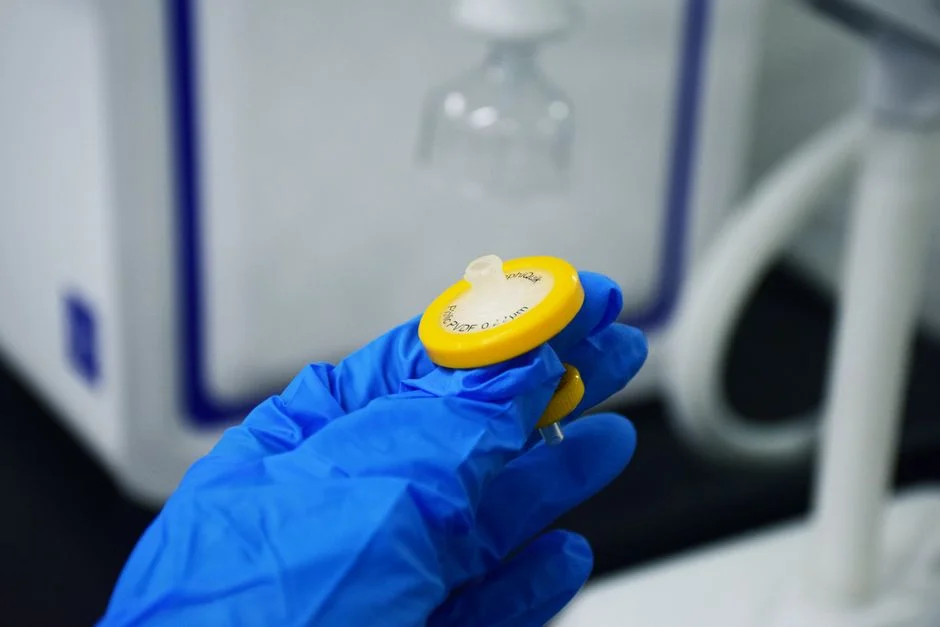
Over-treating reused water is the single fastest way to inflate CAPEX. The right polishing level is set by where the water re-enters the process, not by a generic purity target. A dye house typically has three reuse tiers and each maps to a different polishing configuration.
| Reuse Tier | End Use | Treatment Required | Effluent Targets |
|---|---|---|---|
| Tier 1 | Washing, soaping, floor cleaning | MBR + optional multi-media filter for RO pre-treatment stand-in | Turbidity <5 NTU; COD <100 mg/L; visible colour removed |
| Tier 2 | Dye-bath make-up, print wash | MBR + RO (+ mixed-bed polish if blend critical) | Conductivity <200 µS/cm; hardness <20 mg/L as CaCO₃; TDS <150 mg/L |
| Tier 3 | Boiler feed, cooling-tower make-up | RO + mixed-bed or EDI | Silica <0.02 mg/L; conductivity <0.1 µS/cm |
The hard rule is salt control, not just purity. Reactive-dye shade drift on cotton is overwhelmingly driven by residual NaCl/Na₂SO₄ in the make-up water; if reclaimed water enters the dye bath, RO is non-negotiable. If reclaimed water only enters post-dye rinses, MBR alone is usually sufficient. Mills that skip this step and recycle RO permeate into the dye bath without a conductivity ceiling consistently report batch-to-batch shade variation that overshadows any savings on fresh-water intake.
Reuse Loop Configurations: MBR-Only vs. MBR+RO vs. Full ZLD
Configuration choice is the board-level decision. The table below aligns recovery rate, CAPEX tier, and the operational driver that justifies each loop — water tariff, discharge permit cost, or ZDHC/Bluesign pressure.
| Configuration | Water Recovery | CAPEX (USD per m³/day) | OPEX Driver | Best Fit When |
|---|---|---|---|---|
| A. MBR-only recycle | 60–80% | ~$300–600 | Energy 1.0–1.5 kWh/m³; chemical $0.05–0.10/m³ | Rinse/scrub loops only; no salt-sensitive reuse |
| B. MBR + RO recycle | 85–95% | ~$700–1,200 | Energy 1.5–2.5 kWh/m³; chemical $0.08–0.15/m³; membrane amortisation | Dye-bath make-up required; local water tariff $1.5–3/m³ |
| C. Full ZLD (MVR crystalliser) | 95–99% | ~$2,000–4,000 | 0.4–0.6 t steam per t water evaporated; salt handling/disposal | Water tariff >$3–5/m³, constrained discharge permit, or ZDHC/Bluesign zero-discharge audit |
The MBR-Only option is best paired with a submerged flat-sheet PVDF MBR module running at 0.1 µm and 10–20 LMH, which delivers 10–20× lower energy than external-loop cross-flow designs and tolerates the suspended solids that reactive-dye effluent leaves behind after DAF. MBR+RO then layers an industrial RO system for textile water reuse that handles both the conductivity target and the colour polish. Full ZLD only makes economic sense when at least one of the three triggers in the table is binding — a quick rule of thumb from 2025 field data is that a 100 m³/day plant pays back MBR+RO within 3–5 years on water savings alone at tariffs above $2/m³, but ZLD needs either a punitive discharge cost or a sustainability mandate to justify the 2–4× CAPEX premium.
2026 Cost Benchmarks and Vendor-Selection Framework
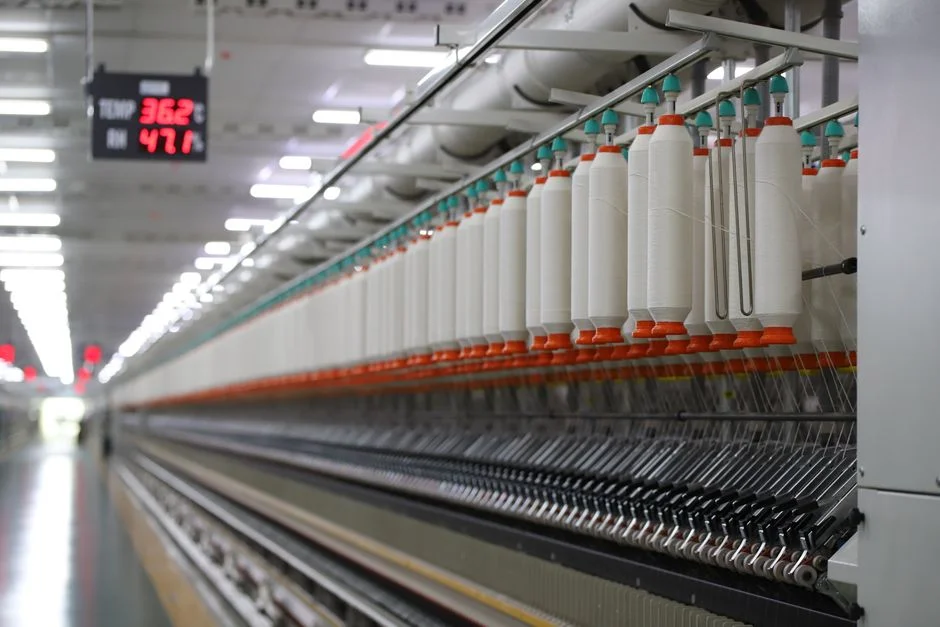
Defensible numbers for a board memo come from three buckets: CAPEX by configuration, OPEX by cost line, and a vendor-qualification checklist that prevents a low bid from becoming a year-two retrofit bill. Benchmarks below are turnkey, mid-size 100 m³/day plant reference, South Asia cost base (HydropureWater field data, 2026).
| Item | MBR-Only | MBR + RO | Full ZLD (MVR) |
|---|---|---|---|
| CAPEX (USD per m³/day) | $300–600 | $700–1,200 | $2,000–4,000 |
| Turnkey, 100 m³/day plant | $30,000–60,000 | $70,000–120,000 | $200,000–400,000 |
| Specific energy (kWh/m³ treated) | 1.0–1.5 | 1.5–2.5 | 4–6 (MVR dominates) |
| Chemical dosing ($/m³) | $0.05–0.10 | $0.08–0.15 | $0.10–0.20 |
| Membrane replacement (amortised) | 5–8% of CAPEX/yr | 8–12% of CAPEX/yr | 10–14% of CAPEX/yr |
| Steam demand (t/t water evaporated) | — | — | 0.4–0.6 |
Vendor qualification, in priority order, should check: (1) in-house biological and membrane integration rather than a system integrator buying skids from third parties; (2) documented textile references within the last 36 months — request named sites and contactable operators; (3) local service footprint with stocked spares, not a regional office hours away from your plant; (4) a complete compliance documentation package — FAT, SAT, performance guarantee curves tied to influent ranges, and ZDHC/Bluesign audit-ready records; (5) remote-monitoring capability via SCADA or IoT, including trend logging on transmembrane pressure, RO differential pressure, and MBR flux — the three leading indicators of membrane failure. A supplier whose MBR, DAF, and RO trains share a common control philosophy will commission faster and fault-find faster than a vendor that bolts three brands together.
Frequently Asked Questions
What is the best treatment for textile dye wastewater in 2026? A coagulation/DAF plus MBR plus RO train, achieving 85–95% water recovery and consistent RO permeate conductivity under 200 µS/cm. Adsorption-only or coagulation-only systems remain common in older plants but cannot meet ZDHC or buyer audit standards.
How much water can a textile recycling system recover? 60–80% with an MBR-only loop, 85–95% with MBR plus RO, and 95–99% with a full ZLD configuration including MVR crystallisation.
Is RO mandatory for textile water reuse? Only when reclaimed water enters the dye bath or any salt-sensitive process. MBR-only is sufficient for rinse, soaping, and floor-cleaning loops where TDS drift is tolerable.
What does a 100 m³/day textile recycling plant cost in 2026? Turnkey budgets run $30,000–60,000 for MBR-only, $70,000–120,000 for MBR+RO, and $200,000–400,000 for full ZLD with MVR — exclusive of civil works and site-specific effluent taxation.
Which compliance standard should a 2026 textile mill target? The practical stack is ZDHC MRSL at the chemistry level, local discharge rules (India CPCB, Bangladesh DoE, EU BREF) at the effluent level, and Bluesign or a brand-specific water-stewardship requirement at the audit level — all three are now commonly requested by global apparel buyers. For a deeper read on reuse-driven membrane cost economics, the flat-sheet MBR membrane cost guide for 2026 provides a current ROI breakdown, and the 2026 membrane technology market outlook covers regional supply-side context. For buyers also evaluating discharge-side compliance, the colour discharge compliance guide outlines how Kenya's 2026 EMCA colour limits compare with the textile-reuse targets in this article.