Kenya's Legal Framework for Color in Industrial Effluent
Color in Kenyan industrial effluent is governed by the Environmental Management and Co-ordination Act (EMCA, Cap 387, 1999) and operationalized through the Environmental Management and Co-ordination (Water Quality) Regulations, 2006, issued as Legal Notice No. 120. The numeric effluent quality standards sit in Schedule VI of those regulations, where color appears alongside BOD, COD, TSS, pH, residual chlorine, and total suspended solids. NEMA enforces Schedule VI through effluent discharge licenses; KEBS supplies the laboratory test methods under KS EAS 12 (general water quality) and KS EAS 824:2019 (drinking-water reuse compatibility), and is the typical third-party laboratory cited on inspection reports.
The applicable numeric value depends on the discharge route — public sewer, land irrigation, surface watercourse, or on-site reuse. A facility that quotes "EMCA 15 Pt-Co" without naming the regulation, schedule, and route is signaling weak due diligence to a NEMA auditor. The defensible citation on an audit form reads: "Schedule VI, Legal Notice 120/2006, [route], read at 465 nm per APHA 2120B." EAC partner states (Uganda, Tanzania, Rwanda) follow broadly parallel schedules, but Kenyan facilities are bound by Kenyan legal text alone — referencing East African Community framework directives without the corresponding NEMA clause is not a defense.
Color Discharge Limits by Discharge Route (2026 Snapshot)
Schedule VI defines four discharge routes, each with a different color ceiling and a non-negotiable test method. Compliance is determined at the permitted outfall, after all treatment, by an accredited laboratory.
| Discharge route | Color limit | Units / definition | Test method |
|---|---|---|---|
| Public sewer (municipal) | 15 | Pt-Co true color (filtered) | APHA 2120B at 465 nm, 0.45 µm filtration |
| Land application / irrigation | 50 | Pt-Co apparent | APHA 2120B, centrifuged or filtered |
| Surface watercourse (river, lake, sea outfall) | 100 | Pt-Co apparent | APHA 2120B, unfiltered |
| On-site cooling or process reuse | 15 | Pt-Co true color | APHA 2120B / KS EAS 824:2019 |
For textile and dye-bearing streams, NEMA increasingly accepts the ADMI tristimulus method (APHA 2120E), but 1 ADMI is approximately 1 Pt-Co only below 200 units; above that, ADMI and Pt-Co diverge because the human-eye visual comparison saturates while the tristimulus calculation does not. KEBS reports must carry a numeric Pt-Co (or ADMI) value — entering "colorless" on the NEMA monthly return is rejected on sight. Where the discharge license specifies KS EAS 824:2019, the analyst must additionally confirm compliance with the reuse-specific organoleptic thresholds.
True Color vs Apparent Color vs ADMI: Why the Test Method Matters
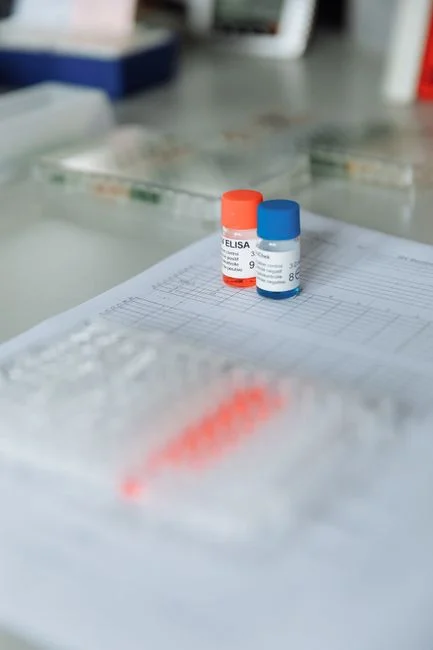
True color is measured on a sample that has been centrifuged or passed through a 0.45 µm membrane filter, pH-adjusted to 7.6, and read against platinum-cobalt standards at 465 nm. Apparent color is measured on the unfiltered sample, so it includes both dissolved chromophores and the optical scatter from suspended and colloidal solids. A 50 NTU turbidity that reads 80–150 Pt-Co apparent will frequently return below 20 Pt-Co once filtered — a difference that decides whether a facility passes or fails.
The ADMI tristimulus method (APHA 2120E) was developed for textile and dye-house effluents where reactive azo dyes produce complex hues that defeat the human-eye comparison in APHA 2120B. ADMI is computed from spectral absorbance at 590, 540, and 438 nm and is essentially independent of hue, which is why NEMA laboratories report it as a supplementary value for dye streams.
Interpret any lab report in three steps: (1) check whether the sample was filtered — if yes, the value is true color; (2) check the wavelength and method number — 465 nm with visual comparison is APHA 2120B, ADMI requires the tristimulus calculation; (3) check the units — Pt-Co, ADMI, and Hazen are used interchangeably in older KEBS paperwork but are not numerically equivalent above 200 units. The most common compliance dispute in Kenya is a facility passing 15 Pt-Co true color but failing 100 Pt-Co apparent because the permit was written for apparent and the lab filtered, or vice versa. Lock the method and the filtration step into the discharge permit during renewal, not after the first non-conformance.
Unit Operations for Color Removal: What Actually Works
Industrial color removal requires a combination of technologies tailored to the specific chemical nature of the chromophores. The table below pairs each technology with realistic removal performance and dosing, drawn from textile and food plant operating data (HydropureWater field data, 2026).
| Unit operation | Apparent color removal | Dose / operating range | Best position in train |
|---|---|---|---|
| Coagulation / flocculation (alum, PAC, polyacrylamide) | 40–65% | 50–300 mg/L coagulant, 1–5 mg/L polymer | Pre-DAF or primary |
| Dissolved air flotation (DAF) | 50–70% | 5–8 bar saturator, 20–30% recycle | After coagulant dosing, before biological |
| Activated sludge (CAS / MBR) | 30–50% | SRT 15–25 d, MLSS 3,000–6,000 mg/L | After DAF, before polishing |
| Granular activated carbon (GAC) | 80–95% | EBCT 15–30 min, replace 6–12 mo | Polishing, after biological |
| Ozonation (O₃) or O₃/H₂O₂ | >95% on azo dyes | 2–8 mg O₃ per mg color (Pt-Co) | Final polish before discharge |
| Fenton (Fe²⁺ / H₂O₂) | 70–90% | pH 2.8–3.2, H₂O₂/Fe molar 5–10 | Pre-biological, for high-COD streams |
Selection by influent band: 200–500 Pt-Co responds to DAF unit for color and TSS pre-treatment with PAC and anionic polymer dosing, with biological MBR polishing; 500–2,000 Pt-Co needs coagulation + sedimentation + GAC; 2,000–5,000 Pt-Co is the working zone for coagulation + DAF + ozone or O₃/H₂O₂; above 5,000 Pt-Co, treat upstream with anaerobic (UASB) and Fenton, then polish on GAC. Biological treatment alone rarely achieves sub-50 Pt-Co true color because the chromophores are usually recalcitrant organics, dye intermediates, or humic substances rather than biodegradable COD. The downstream cost is real: DAF and coagulation generate 2–6 kg dry sludge per 1,000 m³ treated, so a filter press for color-laden sludge is normally sized into the OPEX envelope. A full color-polishing train (coag + DAF + GAC) typically adds $0.08–$0.35 per m³ in chemical and energy OPEX, with ozone at the upper end. For plants where the dose changes hourly, a PLC-controlled coagulant and flocculant dosing skid keeps the polymer-to-color ratio inside the operating window and prevents the overdosing that produces re-stabilized colloids and high apparent color at the outfall.
Sector-Specific Color Loads and Compliance Risk in Kenya
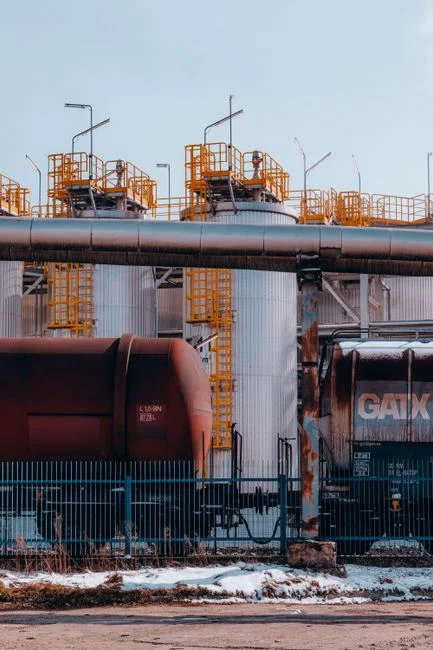
Different industrial sectors generate distinct types of chromophores that dictate the required treatment train. Textile and dye houses under KEBS KS EAS 968 typically run 500–5,000 Pt-Co of influent color, dominated by reactive azo dyes that resist biological oxidation and pass through CAS virtually unchanged — these facilities need ozone or Fenton polishing to hit the 15 Pt-Co sewer limit. Pulp and paper mills covered by KS EAS 825 sit at 1,000–3,000 Pt-Co from lignin-derived chromophoric organics; coagulation + aerobic biological + GAC is the standard train, with the GAC step sized for the lignin fraction rather than trace organics. Tanneries discharge 800–2,500 Pt-Co from vegetable- and chrome-tanning liquors, but sulfide and chromium pretreatment is the first compliance problem — see the breakdown of Kenya's sulfide discharge limits under NEMA for the parallel sulfur and chrome limits that gate the color discussion. Food and beverage plants are milder at 200–1,500 Pt-Co (caramelization pigments, plant polyphenols, beet and turmeric washes); DAF + biological MBR is normally sufficient for 50 Pt-Co apparent to sewer. Pharmaceutical effluent is the deceptive case: only 100–800 Pt-Co, but with high COD and recalcitrant active ingredients that push the train toward advanced oxidation rather than conventional biological polishing.
Sampling, Monitoring, and NEMA Inspection Documentation
The sampling point must be the final discharge after all treatment, at the location named on the effluent discharge license. NEMA inspectors verify the outfall in person and will reject any report drawn from a sidestream or intermediate tank. Use 24-hour flow-weighted composite samplers, not grab samples, because color drifts sharply with production shift changes; a single grab at the wrong hour can put a compliant plant out of compliance on paper. Online colorimeters such as the Hach Lico or WTW CarboVis at 455–465 nm are accepted by NEMA as supplementary continuous evidence and let the operator see a color excursion inside one production shift instead of after the monthly KEBS report arrives. Records must be kept for five years per the EMCA records-retention clause, and every report has to show the test method, the units (Pt-Co or ADMI), and the detection limit — "below detection limit" is not a discharge limit and will be returned. For a broader view of the operating cost of running these trains, see the industrial wastewater OPEX breakdown 2026.
Frequently Asked Questions
What is the exact legal color limit for industrial effluent in Kenya?
15 Pt-Co true color (after 0.45 µm filtration) for discharge to a public sewer or for on-site reuse, and up to 100 Pt-Co apparent color for discharge to a surface watercourse, both per Schedule VI of the NEMA Water Quality Regulations, 2006 (Legal Notice No. 120), enforced under EMCA Cap 387.