Why Tampa’s Wastewater Treatment Costs Are Unique in 2026
Tampa’s population growth is projected to add 3.3 million new residents by 2030, intensifying demand for industrial pretreatment systems and driving significant competition for local contractors and specialized equipment (Florida Office of Economic and Demographic Research, 2024).
In 2026, Tampa industrial wastewater treatment plant costs range from $200,000 for a 50 GPM compact MBR system to $300 million+ for a 5 MGD municipal plant. These figures are influenced by Tampa-specific drivers including ERU fees ($1,237 per unit), nutrient removal penalties ($0.50–$1.20 per 1,000 gallons for TN/TP exceedances), and stringent pretreatment requirements for high-strength waste. A local brewery recently faced fines of $10,000 per day after repeated TSS violations, illustrating the high cost of non-compliance in the Hillsborough County region.
The Howard F. Curren Advanced Wastewater Treatment Plant, which maintains a 60 MGD capacity, enforces strict pretreatment limits of 30 mg/L for Total Suspended Solids (TSS) and 25 mg/L for Biochemical Oxygen Demand (BOD) before industrial effluent is permitted to enter the municipal collection system. According to the Tampa Industrial Wastewater Program Annual Report, 42% of local facilities violated TSS limits in 2023, leading to increased oversight and more frequent audits. Tampa Bay Water’s $181 million surface water plant expansion (2026–2028) signals a rising baseline for infrastructure costs, with municipal projects now frequently exceeding $300 million for 5 MGD facilities.
Tampa’s designation as a "sensitive watershed" under the Florida Department of Environmental Protection (FDEP) necessitates advanced nutrient removal for any facility discharging directly or indirectly to Tampa Bay or the Hillsborough River. These regulations mandate Total Nitrogen (TN) levels below 3 mg/L and Total Phosphorus (TP) below 0.1 mg/L.
Tampa Wastewater Treatment Plant Costs by Sector: CAPEX and OPEX Benchmarks
The following sectors have specific wastewater treatment plant costs in Tampa.Food processing facilities in Tampa typically face CAPEX requirements of $350,000 to $1.2 million for dissolved air flotation (DAF) systems designed for 50–200 GPM flows. These facilities often deal with high-strength waste streams where Chemical Oxygen Demand (COD) averages 3,000 mg/L. Operational expenses (OPEX) in this sector range from $0.80 to $1.50 per 1,000 gallons, primarily driven by the chemical coagulants and polymers required to separate Fats, Oils, and Grease (FOG). To better understand these variables, how Tampa food processors can apply similar cost models can provide a framework for evaluating long-term operational sustainability.
The metal finishing industry, including electroplating and anodizing shops, requires CAPEX investments between $200,000 and $800,000 for chemical precipitation and filtration systems (10–100 GPM). OPEX is notably higher here, ranging from $1.20 to $2.00 per 1,000 gallons, due to the intensive pH adjustment and heavy metal removal processes. pH violations accounted for 28% of all Tampa industrial wastewater cases in 2023, making automated monitoring a critical budget item. Tampa metal finishing facilities can compare cost benchmarks to other industrial hubs to identify potential savings in chemical procurement and sludge disposal.
Healthcare facilities and hospitals in the Tampa Bay area are increasingly adopting MBR systems for Tampa’s pathogen and nutrient limits. These systems require a CAPEX of $250,000 to $600,000 for 20–80 GPM capacities. OPEX averages $0.90–$1.40 per 1,000 gallons, reflecting the power consumption of high-efficiency blowers and periodic membrane cleaning.
| Sector | Flow Range (GPM) | CAPEX Range | OPEX per 1,000 gal | Key Technology | Tampa Compliance Risk |
|---|---|---|---|---|---|
| Food Processing | 50–200 | $350K–$1.2M | $0.80–$1.50 | DAF / Biological | FOG & COD Limits |
| Metal Finishing | 10–100 | $200K–$800K | $1.20–$2.00 | Chem-Precipitation | pH & Heavy Metals |
| Hospitals | 20–80 | $250K–$600K | $0.90–$1.40 | MBR | Pathogens/Bacteria |
| Manufacturing | 100–300 | $400K–$1.5M | $0.70–$1.30 | Aerobic/Anaerobic | TSS Exceedances |
Tampa’s Pretreatment Technology Showdown: DAF vs. MBR vs. Chemical Dosing
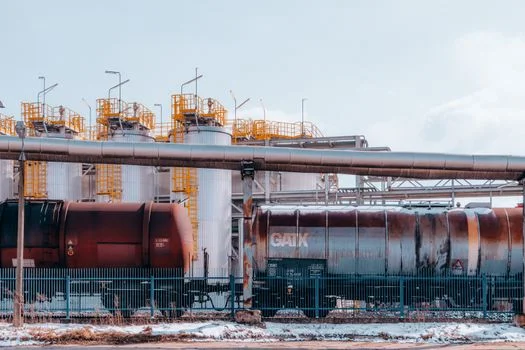
Dissolved Air Flotation (DAF) systems in Tampa remain the primary choice for removing fats, oils, and grease (FOG) with 92–97% efficiency, typically requiring a CAPEX of $180,000 to $500,000 for units processing 50–300 GPM. Using Tampa-validated DAF systems for FOG and TSS removal allows facilities to meet the city’s 100 mg/L FOG limit reliably. OPEX for DAF units averages $0.60 to $1.10 per 1,000 gallons, with the bulk of costs attributed to polymer consumption and the electricity required for the recycle pump and air compressor.
Membrane Bioreactor (MBR) systems offer superior effluent quality, achieving 99% pathogen removal and TSS levels below 10 mg/L. MBR systems carry a 30–50% higher CAPEX than DAF, ranging from $250,000 to $800,000 for 20–200 GPM flows. The OPEX for MBR is also higher ($0.80–$1.40 per 1,000 gallons) due to the necessity of membrane replacement every 5 to 7 years.
For facilities with lower flow rates or those only needing pH correction, Tampa-compliant chemical dosing for pH and heavy metals provides the most economical entry point. Skid-mounted chemical dosing systems cost between $30,000 and $80,000 and can achieve 70–90% TSS removal when paired with a basic clarifier.
| Technology | CAPEX (100 GPM) | OPEX per 1,000 gal | TSS Removal | Pathogen Removal | Tampa Best Fit |
|---|---|---|---|---|---|
| DAF Systems | $220,000 | $0.85 | 92–97% | Low | Breweries, Food |
| MBR Systems | $450,000 | $1.20 | >99% | High (99%) | Hospitals, Reuse |
| Chem-Dosing | $55,000 | $0.65 | 70–90% | Minimal | Metal Finishing |
How Tampa’s ERU Fees and Nutrient Limits Impact Your Total Project Cost
Tampa’s Wastewater Capacity Fee is a significant factor in total project costs.Tampa’s Wastewater Capacity Fee is currently set at $1,237 per Equivalent Residential Unit (ERU), a one-time charge assessed on all new connections to the sanitary sewer system. For industrial facilities, the city calculates ERUs based on flow, with 1 ERU assigned for every 250 gallons per day (GPD) of capacity. For example, a medium-sized manufacturing plant planning for 100,000 GPD of discharge would face an immediate, one-time fee of $494,800.
Florida DEP’s 2025 nutrient limits add an additional layer of operational cost, estimated at $0.50 to $1.20 per 1,000 gallons. These costs stem from the need for tertiary treatment technologies, such as denitrification filters or specialized chemical precipitation for phosphorus.
A case study involving a Tampa-based craft brewery demonstrates the impact of proactive onsite treatment. By installing an MBR system capable of 200 GPM, the facility was able to treat its high-strength waste to meet pretreatment limits, which allowed the city to reclassify their discharge strength. This move reduced their ERU assessment by 40%, saving the company over $300,000 in connection fees and eliminating the risk of the $10,000-per-day fines that have plagued other local beverage producers.
Tampa Wastewater Treatment ROI Calculator: 3 Scenarios for Industrial Buyers
A Tampa food processing plant processing 200 GPM can achieve an ROI of 3.2 years by upgrading from a basic DAF system to an MBR system. While the MBR requires an additional $250,000 in upfront CAPEX, it virtually eliminates the risk of TSS and BOD exceedance fines.
In the metal finishing sector, a facility discharging 50 GPM can see an ROI in as little as 1.8 years by installing an automated chemical dosing system. With a CAPEX of $50,000, the system prevents the pH fluctuations that lead to 28% of Tampa's industrial violations.
A local hospital scenario involves installing an 80 GPM MBR system with a CAPEX of $300,000. By meeting the 99% pathogen removal threshold onsite, the hospital avoids $200,000 in ERU fees through capacity credits offered by the city for high-quality effluent.
| Scenario | CAPEX | Annual OPEX | Annual Compliance Savings | ROI (Years) |
|---|---|---|---|---|
| Food Processing (200 GPM) | $700,000 | $110,000 | $220,000 | 3.2 |
| Metal Finishing (50 GPM) | $50,000 | $12,000 | $28,000 | 1.8 |
| Hospital (80 GPM) | $300,000 | $45,000 | $73,000 | 4.1 |
Frequently Asked Questions
What is the average cost per gallon for a Tampa industrial wastewater treatment plant in 2026?
CAPEX typically ranges from $4 to $20 per gallon of daily capacity. OPEX averages $0.50–$1.50 per 1,000 gallons.
How do Tampa’s ERU fees compare to other Florida cities?
Tampa’s $1,237 per ERU is approximately 15–20% higher than Orlando ($1,050) or Miami ($1,100).
What is the