Wastewater Treatment Plant Cost in Baghdad: 2025 CAPEX, OPEX & Tech-Specific Breakdown for Industrial Buyers
In Baghdad, wastewater treatment plant costs vary widely by technology and capacity. For industrial buyers, CAPEX ranges from IQD 1.2B (small DAF systems for 50 m³/day) to IQD 15B (large MBR plants for 1,000 m³/day), with OPEX adding 15–25% annually. Key cost drivers include Iraq’s 20% import tariffs on equipment, energy subsidies (reducing OPEX by ~10%), and compliance with Iraq’s 2023 discharge limits (e.g., COD < 125 mg/L, TSS < 30 mg/L). This guide breaks down costs by technology, capacity, and compliance needs to help buyers avoid overpaying or under-specifying.Why Baghdad’s Wastewater Treatment Costs Are Unique: 5 Local Factors Driving CAPEX and OPEX
Iraq's unique economic and environmental conditions significantly alter the typical cost structure of wastewater treatment plants compared to global averages. Industrial buyers in Baghdad must account for several local factors that directly impact both capital expenditure (CAPEX) and operational expenditure (OPEX). These factors explain why relying on global cost averages, such as "$10 per gallon," can lead to severe budgeting inaccuracies.Firstly, Iraq’s 20% import tariffs on foreign wastewater equipment, including critical components like membranes and specialized pumps, increase CAPEX by 15–25% compared to domestically sourced alternatives (per Iraq Customs Law No. 23 of 1984). This necessitates careful consideration of local manufacturing capabilities versus imported advanced technologies.
Secondly, energy subsidies, offering industrial users electricity at approximately IQD 0.05/kWh, can reduce OPEX by an estimated 10%. However, this benefit may not fully apply to facilities reliant on private generators, which are common in Baghdad due to grid instability and typically cost around IQD 0.25/kWh, significantly increasing daily operational energy expenses.
Thirdly, Baghdad’s high ambient temperatures, frequently reaching 45°C in summer, directly impact the efficiency and cooling requirements of biological wastewater treatment systems like Membrane Bioreactors (MBR). These elevated temperatures can increase cooling costs by 12–18% compared to operations in more temperate climates, as indicated by 2023 Iraq Meteorological Data, adding a specific environmental burden to OPEX.
Fourthly, local labor costs, with skilled operators earning between IQD 1.5M–IQD 3M/month, are approximately 30% lower than averages in Gulf Cooperation Council (GCC) countries. While this reduces OPEX, it often necessitates additional investment in training programs for advanced, PLC-controlled systems, such as modern Dissolved Air Flotation (DAF) units, to ensure competent operation and maintenance.
Finally, Iraq’s 2023 Water Resources Law imposes stringent discharge limits for industrial effluent, including Chemical Oxygen Demand (COD) below 125 mg/L and Total Suspended Solids (TSS) below 30 mg/L. Non-compliance can result in substantial fines, reaching up to IQD 50M annually, or even facility shutdowns. Therefore, equipment selection must prioritize technologies capable of consistently meeting these specific regulatory benchmarks, directly influencing both initial CAPEX and ongoing compliance costs.
| Factor | Impact on CAPEX/OPEX | Specifics (Baghdad, 2025) |
|---|---|---|
| Import Tariffs | +CAPEX | 20% on foreign equipment (e.g., membranes, pumps), increasing CAPEX by 15–25% vs. domestic alternatives (Iraq Customs Law No. 23 of 1984). |
| Energy Subsidies | -OPEX | IQD 0.05/kWh for industrial users, reducing OPEX by ~10% (may not apply to private generators). |
| Ambient Temperatures | +OPEX | 45°C in summer, increasing cooling costs for biological systems (e.g., MBR) by 12–18% vs. temperate climates (2023 Iraq Meteorological Data). |
| Local Labor Costs | -OPEX | IQD 1.5M–IQD 3M/month for skilled operators, 30% lower than GCC averages; requires training for advanced systems (e.g., PLC-controlled DAF). |
| Compliance Fines | +Risk/Cost | Fines up to IQD 50M/year for non-compliance with Iraq’s 2023 Water Resources Law discharge limits (e.g., COD < 125 mg/L, TSS < 30 mg/L). |
Baghdad Wastewater Treatment Plant Costs: CAPEX Breakdown by Technology and Capacity
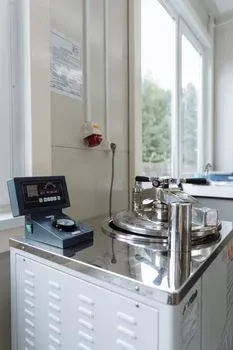
Conventional activated sludge systems, which typically include primary and secondary treatment followed by chlorination, represent the lowest initial CAPEX option. For capacities ranging from 50–1,000 m³/day, these systems cost between IQD 1.2B and IQD 8B. While economically attractive upfront, conventional systems demand the largest physical footprint, generally requiring 0.5–1 m² per m³/day of treated water, and often necessitate additional tertiary treatment stages to meet Iraq’s stringent discharge limits.
Dissolved Air Flotation (DAF) systems, primarily used for industrial pretreatment to remove high concentrations of suspended solids, fats, oils, and greases (FOG), fall into a mid-range CAPEX category. For capacities between 50–500 m³/day, a DAF system for high-solids industrial wastewater in Baghdad can cost from IQD 800M to IQD 3B. DAF systems are highly effective at achieving up to 95% TSS removal, making them ideal for industries like food processing and petrochemicals where influent has high solids content. However, DAF typically serves as a pretreatment step and requires downstream biological treatment for full compliance with COD and ammonia limits.
Membrane Bioreactor (MBR) systems represent the highest CAPEX option, but offer superior effluent quality and a significantly reduced footprint. For capacities from 100–1,000 m³/day, MBR systems for Baghdad’s space-constrained industrial sites can cost from IQD 3B to IQD 15B. This cost includes advanced membrane modules, sophisticated PLC controls, and integrated disinfection. MBR systems boast the smallest footprint, typically requiring only 0.2–0.3 m² per m³/day, and produce near-reuse-quality effluent (TSS < 1 mg/L), often meeting Iraq’s 2023 discharge limits without further tertiary treatment.
| Technology | Capacity (m³/day) | CAPEX (IQD, 2025) | Footprint (m²/m³/day) | Effluent Quality (COD/TSS) | Compliance (Iraq 2023) |
|---|---|---|---|---|---|
| Conventional Activated Sludge | 50–100 | 1.2B – 2.5B | 0.8–1.0 | 150-200 / 40-60 | No (often requires tertiary) |
| Conventional Activated Sludge | 500–1,000 | 5B – 8B | 0.5–0.7 | 120-150 / 30-50 | Borderline/No |
| DAF Systems | 50–100 | 800M – 1.5B | 0.3–0.5 | 200-300 / 5-15 (pre-treat) | No (primary/secondary) |
| DAF Systems | 200–500 | 2B – 3B | 0.2–0.4 | 150-250 / 2-10 (pre-treat) | No (primary/secondary) |
| MBR Systems | 100–250 | 3B – 7B | 0.2–0.3 | 20-50 / <1 | Yes |
| MBR Systems | 500–1,000 | 10B – 15B | 0.1–0.2 | 10-30 / <1 | Yes |
OPEX in Baghdad: Energy, Labor, Chemicals, and Maintenance Costs by Technology
Annual operating expenses (OPEX) for wastewater treatment plants in Baghdad typically represent 15–30% of the initial CAPEX, varying significantly based on technology, energy sources, and specific chemical requirements. Understanding these ongoing costs is critical for a complete financial assessment, extending beyond initial capital investment.The annual OPEX as a percentage of CAPEX generally ranges from 15–25% for conventional activated sludge systems, 18–28% for DAF systems for high-solids industrial wastewater in Baghdad, and 20–30% for MBR systems. MBR’s higher percentage is primarily due to the need for membrane replacement every 5–8 years, a significant maintenance cost.
Energy costs are a major OPEX component, heavily influenced by Baghdad’s dual energy market. Using subsidized grid power at IQD 0.05/kWh can dramatically reduce costs compared to private generators at IQD 0.25/kWh. Conventional systems consume 0.3–0.5 kWh/m³, translating to IQD 0.015–IQD 0.125/m³. DAF systems typically use 0.5–0.8 kWh/m³ (IQD 0.025–IQD 0.20/m³), while MBR systems, with their aeration and membrane scouring requirements, are the most energy-intensive, consuming 0.8–1.2 kWh/m³ (IQD 0.04–IQD 0.30/m³).
Labor costs for skilled operators in Baghdad range from IQD 1.5M–IQD 3M/month, with most industrial plants requiring 1–2 operators per shift. MBR systems, due to their advanced PLC controls and membrane maintenance protocols, often require more specialized training for their operators compared to DAF or conventional systems, influencing the skill level and potentially the higher end of the salary range.
Chemical costs also contribute to OPEX. For DAF systems, coagulants and flocculants are essential, adding IQD 0.05–IQD 0.15/m³ to operational costs. Disinfection, typically achieved with chlorine or chlorine dioxide generators for Iraq’s disinfection compliance, adds another IQD 0.03–IQD 0.10/m³. For phosphorus removal, additional chemical dosing can add IQD 0.05–IQD 0.10/m³ to the OPEX.
Maintenance costs vary significantly by technology. While conventional and DAF systems typically have infrequent major maintenance events, MBR membranes require replacement every 5–8 years. This can be a substantial expense, ranging from IQD 500M to IQD 2B for a 500 m³/day MBR system, making it a critical factor in long-term financial planning.
| Cost Component | Conventional | DAF System | MBR System | Notes (Baghdad, 2025) |
|---|---|---|---|---|
| Annual OPEX (% of CAPEX) | 15–25% | 18–28% | 20–30% | MBR higher due to membrane replacement every 5–8 years. |
| Energy Consumption (kWh/m³) | 0.3–0.5 | 0.5–0.8 | 0.8–1.2 | |
| Energy Cost (IQD/m³) | 0.015–0.125 | 0.025–0.20 | 0.04–0.30 | Based on IQD 0.05/kWh (subsidized grid) to IQD 0.25/kWh (private generator). |
| Labor (Operators/shift) | 1–2 | 1–2 | 1–2 (more training) | IQD 1.5M–IQD 3M/month per skilled operator. MBR requires more specialized training. |
| Chemical Cost (IQD/m³) | 0.01–0.05 (chlorine) | 0.05–0.15 (coagulants/flocculants) | 0.01–0.03 (cleaning) | Additional for phosphorus removal (IQD 0.05–0.10/m³). Disinfection via chlorine dioxide (IQD 0.03–0.10/m³). |
| Major Maintenance | Infrequent | Infrequent | Every 5–8 years | MBR membrane replacement: IQD 500M–IQD 2B for a 500 m³/day system. |
Compliance in Baghdad: How Iraq’s 2023 Discharge Limits Impact Equipment Selection and Costs
For Chemical Oxygen Demand (COD), the limit is < 125 mg/L. Conventional activated sludge systems may struggle to consistently meet this without additional tertiary treatment, which adds significantly to CAPEX and OPEX. In contrast, MBR systems for Baghdad’s space-constrained industrial sites are inherently designed to achieve very low COD levels, often below 50 mg/L, without requiring extensive add-ons.
Total Suspended Solids (TSS) discharge is capped at < 30 mg/L. While DAF systems for high-solids industrial wastewater in Baghdad are highly effective at achieving 95% TSS removal, reducing levels to 2-10 mg/L as a pretreatment step, they still require subsequent biological treatment to address other parameters. MBR systems excel here, consistently producing effluent with TSS < 1 mg/L, far exceeding the regulatory requirement.
Ammonia levels must be < 10 mg/L. Meeting this limit typically requires biological nitrification and denitrification processes, which can increase the CAPEX of conventional systems by 15–20% due to the need for additional reactor volumes and aeration control. MBR systems, with their integrated biological processes, are well-suited for efficient nitrogen removal, often achieving ammonia levels below 5 mg/L.
Phosphorus discharge is limited to < 2 mg/L. Achieving this often necessitates chemical dosing, such as with ferric chloride or alum, which adds IQD 0.05–IQD 0.10/m³ to the operational expenditure. While some biological phosphorus removal can occur in advanced biological systems, chemical precipitation is often required for consistent compliance.
The penalties for non-compliance are severe, ranging from IQD 10M to IQD 50M annually or even facility shutdowns, as stipulated by the 2023 law. Therefore, selecting robust and reliable equipment that can consistently meet these limits is not just an environmental imperative but a crucial financial decision. Technologies like MBR offer a higher degree of certainty in meeting multiple stringent parameters simultaneously, reducing the risk of fines and operational disruptions.
MBR vs. DAF vs. Conventional: Which Technology Fits Your Baghdad Facility?
Selecting the optimal wastewater treatment technology for an industrial facility in Baghdad hinges on a critical evaluation of effluent quality requirements, available space, and budgetary constraints, with Membrane Bioreactors (MBR), Dissolved Air Flotation (DAF), and conventional activated sludge each offering distinct advantages. Each technology presents a unique balance of CAPEX, OPEX, footprint, and treatment efficacy, making a tailored approach essential for procurement decisions.For facilities with ample space and strict budget constraints, conventional activated sludge systems offer the lowest initial CAPEX. However, they typically require a larger footprint (250–350 m² for a 500 m³/day plant) and often need tertiary treatment to meet Baghdad’s 2023 discharge limits for COD, TSS, and ammonia. These systems are best suited for large petrochemical plants or facilities where land availability is not an issue and the effluent quality allows for a phased approach to compliance.
DAF systems are a strong choice for industrial facilities with high concentrations of suspended solids, fats, oils, and greases in their influent, such as food processing plants or slaughterhouses. A DAF system for high-solids industrial wastewater in Baghdad (500 m³/day) has a mid-range CAPEX (IQD 2B–IQD 3B) and a moderate footprint (100–200 m²). While highly effective at TSS removal (achieving 2-10 mg/L), DAF primarily acts as a pretreatment step and typically requires downstream biological treatment to meet full COD and ammonia compliance, increasing the overall system complexity and CAPEX.
MBR systems represent the most advanced option, ideal for urban sites with severe space constraints and high effluent quality requirements. A 500 m³/day MBR system for Baghdad’s space-constrained industrial sites has the highest CAPEX (IQD 10B–IQD 15B) but the smallest footprint (50–100 m²). MBR technology consistently produces near-reuse-quality effluent (COD 10-30 mg/L, TSS < 1 mg/L, Ammonia < 5 mg/L), ensuring full compliance with Iraq’s 2023 regulations and making it suitable for sensitive applications like hospitals or facilities seeking water reuse for irrigation or cooling towers. For more insights on how MBR systems handle hospital wastewater in similar climates, refer to our article on Hospital Wastewater Treatment in Shiraz 2026.
| Technology | CAPEX (IQD, 500 m³/day) | OPEX (IQD/m³) | Footprint (m²) | Effluent Quality (COD/TSS/Ammonia) | Compliance (Iraq 2023) | Best For |
|---|---|---|---|---|---|---|
| Conventional Activated Sludge | 5B – 8B | 0.15 – 0.25 | 250–350 | 120-150 / 30-50 / 15-25 | Borderline/No | Large facilities with ample space, lower budget constraints, and willingness for tertiary treatment for full compliance. Petrochemical plants. |
| DAF Systems | 2B – 3B (for pretreatment) | 0.20 – 0.30 | 100–200 | 150-250 / 2-10 / 20-30 | No (pre-treatment) | Industrial pretreatment for high-solids effluent (e.g., slaughterhouses, food processing) before biological treatment. |
| MBR Systems | 10B – 15B | 0.30 – 0.40 | 50–100 | 10-30 / <1 / <5 | Yes | Urban sites with severe space constraints, high effluent quality requirements (e.g., for reuse), and strict compliance needs. Hospitals. |
How to Reduce Wastewater Treatment Costs in Baghdad: 5 Proven Strategies
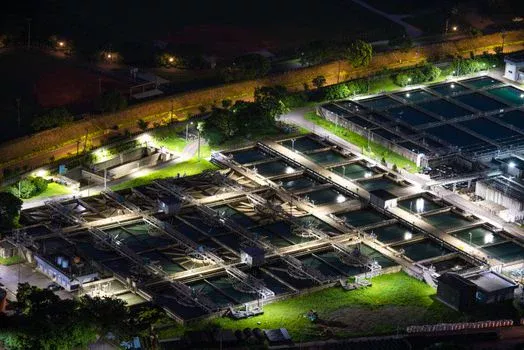
Firstly, leverage Iraq’s energy subsidies by prioritizing grid power (IQD 0.05/kWh) over private generators (IQD 0.25/kWh). This can cut overall OPEX by 10–15%, making a substantial difference in long-term operational costs, especially for energy-intensive biological systems.
Secondly, consider modular design for your wastewater treatment plant. Starting with a smaller system (e.g., 200 m³/day) and expanding capacity as demand grows can reduce initial CAPEX by 20–30%. This approach minimizes upfront investment risk and allows for flexible scaling.
Thirdly, local sourcing for civil works and non-critical components like piping and tanks can help avoid Iraq’s 20% import tariffs. Partnering with Iraqi suppliers for these elements can lead to significant CAPEX savings, focusing imported budgets on specialized equipment such as membranes or advanced control systems.
Fourthly, implement automation, particularly with PLC-controlled systems. For instance, automated chemical dosing to reduce