What Is a Wet Limestone FGD Scrubber and How Does It Work?
A wet limestone flue gas desulfurization scrubber is an air pollution control system that removes over 99% of sulfur dioxide (SO₂) from industrial flue gases. The unit sprays a limestone slurry (CaCO₃) into the flue gas inside an absorber tower. SO₂ absorbs into the slurry droplets and reacts to form calcium sulfite, which forced air then oxidizes into a stable, saleable gypsum byproduct (CaSO₄·2H₂O).
The core reaction runs as: SO₂ + CaCO₃ + ½O₂ + 2H₂O → CaSO₄·2H₂O + CO₂. Holding four parameters in range is what separates a working scrubber from a >99% unit. Absorber sump pH sits at 5.0–5.5 for the fastest SO₂ absorption kinetics. Liquid-to-gas (L/G) ratio is held between 15–25 L/m³ to keep reagent in contact with the gas. Gas velocity runs 3–4 m/s with a residence time of 2–6 seconds so the absorption and oxidation steps actually finish. A 500 MW unit typically circulates over 20,000 gpm of slurry to treat that flue gas volume; most plants we size for 300 MW units run closer to 12,000 gpm.
Wet vs Dry vs Seawater FGD: Performance, Cost, and Application Comparison
Fuel sulfur content, plant size, location, and how you handle the byproduct decide which FGD technology wins. Wet limestone systems give the highest removal but need real infrastructure; dry and seawater systems cover narrower cases with different cost shapes.
Wet limestone FGD is the benchmark for large, high-sulfur coal-fired plants. It holds >99% SO₂ removal, moderate CAPEX, and the lowest $/ton of SO₂ removed because limestone is cheap. The operational pain point is gypsum dewatering and disposal logistics. Dry FGD injects a dry sorbent such as hydrated lime and fits smaller boilers (<100 MW) or lower-sulfur fuels. CAPEX is lower and wastewater simpler, but removal drops to 85–90% and reagent cost pushes lifecycle spend up. Seawater FGD uses the natural alkalinity of seawater to neutralize SO₂ and is only viable at coastal sites. It removes reagent cost but needs large seawater pumps and aeration basins, and the slightly acidic discharge must be monitored before ocean release.
| Parameter | Wet Limestone FGD | Dry FGD | Seawater FGD |
|---|---|---|---|
| SO₂ Removal Efficiency | >99% | 85–90% | 95–99% |
| Reagent Consumption | ~115 kg/MW·h (limestone) | ~150 kg/MW·h (lime) | None |
| Byproduct | Saleable Gypsum | Dry Waste for Disposal | Treated Seawater Discharge |
| CAPEX | Moderate | Low | High (marine works) |
| OPEX | Low | High (reagent cost) | Moderate (power for pumps) |
| Ideal Application | Large power plants, high-S coal | Small industrial boilers, low-S fuel | Coastal plants only |
Key Design Parameters for High-Efficiency FGD Scrubber Operation
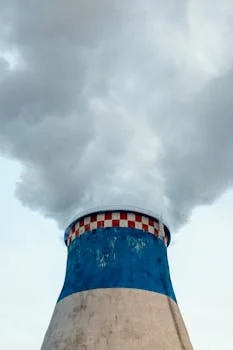
Reviewing an FGD scrubber design means verifying three non-negotiable metrics against the actual flue gas: L/G ratio, slurry pH, and gas residence time. Miss any one and removal falls off the table.
L/G ratio is the slurry flow per unit of flue gas. For 3-5% S coal, set 20-25 L/m³ to deliver enough alkaline reagent for complete absorption. Hold slurry pH between 5.0 and 5.5; below that range efficiency collapses, above it scale and plugging start. Residence time must be at least 2 seconds, set by tower height and gas velocity, to allow mass transfer and reaction to finish. Supporting factors matter too: 10–15 spray nozzles/m² to prevent gas bypass, droplet size 1,000–2,000 μm to balance surface area against entrainment, and 1–2 Nm³ of oxidation air per kg of SO₂ to convert calcium sulfite fully to gypsum. Chloride concentration in the slurry also needs to stay in spec to limit corrosion of wetted internals.
Compliance Mapping: FGD Systems and Global Emission Standards
Compliance drives most FGD investment decisions. A properly designed wet limestone FGD scrubber is sized to clear, not just meet, the strictest SO₂ limits in the major jurisdictions a buyer operates in.
In the United States, EPA New Source Performance Standards (NSPS) Subpart Ja sets 26 mg/dscm for coal-fired utility units. Wet FGD outlets consistently run below 20 mg/Nm³, which gives a real compliance margin. The EU Industrial Emissions Directive (IED) 2010/75/EU sets BAT-AELs for SO₂ between 100–200 mg/Nm³; wet scrubbers routinely land under 50 mg/Nm³. For international builds, the World Bank Environmental, Health, and Safety (EHS) Guidelines recommend greater than 95% SO₂ control for new thermal power, easily cleared by wet FGD. Continuous Emissions Monitoring Systems (CEMS) are mandatory across these jurisdictions and feed real-time data to regulators.
| Standard | SO₂ Emission Limit | Required Removal Efficiency | Wet FGD Performance |
|---|---|---|---|
| EPA NSPS Subpart Ja | 26 mg/dscm | >97% (varies by fuel) | < 20 mg/dscm (>99%) |
| EU IED 2010/75/EU (BAT-AEL) | 100–200 mg/Nm³ | 90-97% | < 50 mg/Nm³ (>98.5%) |
| World Bank EHS Guidelines | N/A (Sector Specific) | >95% (new plants) | >99% |
Integrating FGD Scrubbers with Downstream Air Pollution Control
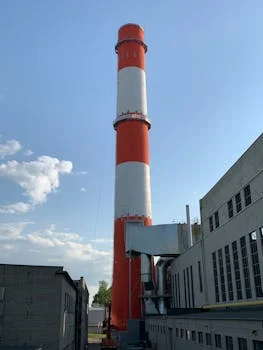
An FGD scrubber handles acid gases but not particulate matter, so it sits inside a larger air pollution control (APC) train. The gas leaving a wet scrubber is saturated and carries fine droplets plus any uncollected PM, which sets the requirements for what comes next.
A pulse jet baghouse is usually the downstream PM device after an FGD because it handles moist gas well and holds outlet concentrations below 10 mg/Nm³, clearing EPA and EU particulate limits. Integration design hinges on managing inlet dust loading to the bags and picking filter media rated for saturated, sometimes acidic conditions. Filter velocity below 2 m/min is the safe ceiling for stable pressure drop and long bag life in this service. Duct insulation and sometimes reheat between the scrubber outlet and the particulate collector prevent condensation and acid corrosion. For projects that also need to handle the broader wastewater train from the scrubber blowdown, our Flue Gas Desulfurization (FGD) Scrubber System is specified alongside HydropureWater's other treatment units. Plants running parallel wastewater lines, for example hospital wastewater treatment in Cameroon, often reuse the same control philosophy for chemistry and CEMS.
Who This Is For and When to Look Elsewhere
Wet limestone FGD fits plant engineers and EPC contractors sizing air pollution control for coal-fired units above ~100 MW, or any high-sulfur fuel stream that needs >99% SO₂ removal and a saleable gypsum outlet. Dry FGD is the better pick when the unit is small, the fuel is low-sulfur, and wastewater handling is constrained. Seawater FGD only makes sense at coastal sites with room for marine works and aeration basins.
Selection checklist before you commit:
- Fuel sulfur content and the resulting stoichiometric limestone demand (kg/MW·h)
- Available footprint for the absorber tower, oxidation tank, and gypsum dewatering area
- Gypsum offtake agreement or disposal route confirmed before tender
- Source water quality and chloride control plan for the slurry loop
- Materials of construction for wetted parts (alloy-clad steel, FRP, or nickel alloys for high-chloride service)
- CEMS scope, data reporting, and the regulatory limit you must clear
Main cost drivers are limestone reagent consumption, oxidation air blower power, slurry recirculation pump power, and gypsum dewatering. Send flue gas flow, SO₂ inlet concentration, and fuel analysis to scope a system; you can request a sized proposal for an FGD scrubber system here, or request a free quote for preliminary sizing against your project parameters.
Frequently Asked Questions
What is the typical SO₂ removal efficiency of a wet limestone FGD system?
A well-designed and operated wet limestone FGD system consistently achieves over 99% SO₂ removal efficiency. That level of performance is contingent on holding the design operating parameters, specifically an absorber pH of 5.0–5.5, an L/G ratio of 15–25 L/m³, and a gas residence time of 2–6 seconds, in their target ranges. Operating outside those bands drops removal quickly.
Can FGD scrubbers handle high-sulfur coal?
Yes. Systems are engineered for fuels with 3-5% sulfur content by raising the L/G ratio to 20-25 L/m³, scaling reagent dosing capacity, and increasing oxidation air volume so >99% removal is maintained and scaling is controlled. Alloy materials are typically specified for critical wetted parts to handle the more corrosive chloride-rich conditions those fuels produce.
Is gypsum from FGD systems reusable?
Yes. After washing and dewatering, the gypsum byproduct from limestone FGD is high-quality and typically meets ASTM C471/C472M standards for use in wallboard manufacturing. That makes it a revenue stream instead of a disposal cost, which materially improves OPEX for any plant that secures a gypsum offtake.
What maintenance does a wet FGD scrubber require?
Routine maintenance focuses on wear components: inspecting and cleaning spray nozzles, calibrating pH and density probes, and servicing recirculation slurry pumps. The absorber tower itself has no moving parts and needs little upkeep, though internal inspections for erosion and scale buildup are recommended annually to keep the unit at design performance.
How long does an FGD system last?
With proper materials of construction such as fiber-reinforced plastic and alloy-clad steel, plus a proactive maintenance program, an FGD system has a design life exceeding 20 years. In most installations that lifespan matches the operational life of the power plant it serves, so the scrubber is sized as a once-through capital decision rather than a mid-life retrofit.