Hospital Wastewater Treatment Process in Shiraz: The 2026 Compliance Baseline
Shiraz hospitals face influent COD of 300–800 mg/L against an Iranian discharge cap of 100 mg/L COD, 30 mg/L BOD, and 30 mg/L TSS. A compliant hospital wastewater treatment process in Shiraz pairs MBR biology with ozone or chlorine dioxide disinfection.
Zomorodi et al. (2025) found 87% of Shiraz hospital effluent samples carrying multidrug-resistant (MDR) E. coli, with 63% of those isolates producing carbapenemase. Untreated hospital discharge therefore feeds Iran's antimicrobial resistance (AMR) problem instead of diluting it. According to the WHO fact sheet on antimicrobial resistance, bacterial AMR was associated with more than 4.7 million deaths globally in 2021, which is why regulators now scrutinize hospital outfalls.
Conventional activated sludge delivers only a 1–2-log pathogen reduction, while WHO-aligned practice for hospital effluent targets at least a 6-log cut. Shiraz Medical Sciences University hospitals paid roughly $120,000 in fines during 2023 for non-compliant effluent, so the compliance gap carries a direct price. The table below sets the IEPO discharge targets against measured Shiraz effluent quality.
| Parameter | IEPO Standard (mg/L) | Typical Shiraz Hospital Effluent (mg/L) | AMR Risk Significance |
|---|---|---|---|
| COD | ≤ 100 | 300–800 | High organic load can support bacterial growth and AMR gene transfer. |
| BOD | ≤ 30 | 150–400 | Similar to COD, indicates nutrient availability for microbes. |
| TSS | ≤ 30 | 120–250 | Can shield bacteria and ARGs from disinfection processes. |
| MDR E. coli Prevalence | N/A (Pathogen Reduction Target) | 87% (Zomorodi et al., 2025) | Direct indicator of AMR contamination. |
| Carbapenemase Production | N/A (Pathogen Reduction Target) | 63% of MDR isolates (Zomorodi et al., 2025) | Indicates resistance to critical last-resort antibiotics. |
Every row in that table has design consequences. Organic load at COD 300–800 mg/L means the biology must cut concentrations roughly threefold to eightfold before discharge, and TSS above 120 mg/L physically shields embedded bacteria from oxidants. Plants we audit in Fars Province usually sit near the lower end of these ranges once screening and equalization are repaired, which is the cheapest capacity upgrade available.
Shiraz Hospital Wastewater Characteristics: Influent vs. Effluent Benchmarks
Hospital influent in Shiraz swings with patient census, procedure mix, and disinfectant and pharmaceutical use, so design values must come from site sampling rather than textbook averages. A 205-sample dataset from Shiraz hospitals shows pH holding between 6.0 and 8.8 while antibiotic residues persist right through conventional trains. Ciprofloxacin appears at 50–200 μg/L, metronidazole at 30–150 μg/L, and vancomycin at 10–80 μg/L, keeping resistance selection active downstream of the plant. Daily flow ranges from 50 to 500 m³ with morning-shift peaks, which makes equalization a design requirement rather than an option.
| Parameter | Influent Range (Shiraz Hospitals) | Typical Effluent Range (Conventional Treatment) | AMR Relevance |
|---|---|---|---|
| pH | 6.0–8.8 | 6.5–8.5 | Affects biological process efficiency and disinfectant efficacy. |
| BOD (mg/L) | 150–400 | 30–150 | Nutrient source for microbial growth, including resistant strains. |
| COD (mg/L) | 300–800 | 100–300 | Indicates persistent organic pollutants that may harbor ARGs. |
| TSS (mg/L) | 120–250 | 30–120 | Can protect bacteria and ARGs from inactivation. |
| Total Coliform (MPN/100mL) | >106 | 103–105 | Indicator of fecal contamination and potential pathogen presence. |
| Ciprofloxacin (μg/L) | 50–200 | 10–50 | Persistent antibiotic residue, driving AMR selection. |
| Metronidazole (μg/L) | 30–150 | 5–30 | Another common antibiotic residue contributing to AMR. |
| Vancomycin (μg/L) | 10–80 | 2–10 | Important for understanding resistance to glycopeptides. |
| Flow Rate (m³/day) | 50–500 (with peak loads) | Variable | Impacts residence time and treatment efficiency. |
| Temperature (°C) | 20–35 | 20–35 | Influences microbial activity in biological treatment. |
Two readings from that table drive sizing. Temperature between 20 and 35°C keeps nitrifiers active year-round in Shiraz, so the biology is rarely the limiting stage—solids are, because TSS leaving conventional plants at 30–120 mg/L still shields bacteria from disinfectant contact. Read as a design brief, the influent column says the train must buffer flow, remove solids early, and finish with disinfection sized for the antibiotic residue load.
Hospital Effluent COD and BOD Removal in Shiraz: MBR vs. DAF vs. Ozone
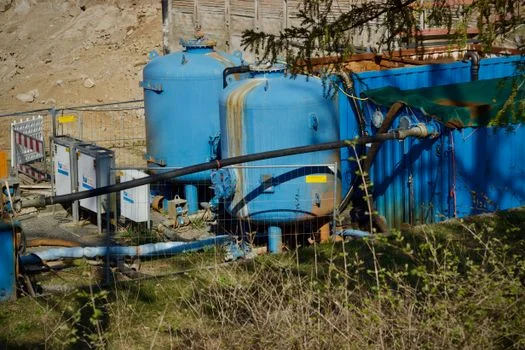
MBR, DAF, and ozone each close a different fraction of the Shiraz compliance gap. MBR systems reach up to 95% COD removal and a 6-log pathogen reduction, at 0.8–1.2 kWh/m³ and the highest maintenance exposure of the three. DAF units strip up to 90% of TSS for $50K–$300K installed, deliver roughly 3-log pathogen reduction, and rely on chemical coagulants with limited effect on dissolved pollutants and ARGs. Ozone supplies a 6-log pathogen kill and 99.9% ARG removal at $0.30–$0.50/m³ operating cost, but only after upstream stages control solids.
| Technology | AMR Reduction (Log Scale) | Footprint (m²) | CAPEX ($/m³) | OPEX ($/m³) | Compliance with Iranian Standards | Notes |
|---|---|---|---|---|---|---|
| MBR Systems | 5–6+ log (Pathogens), Significant ARG Reduction | Compact | High | Moderate to High (Energy) | Excellent | Superior effluent quality, high energy use, membrane maintenance. Link: /product/2-mbr-integrated-wastewater-treatment.html |
| DAF Systems | 2–3 log (Pathogens), Limited ARG Reduction | Moderate | Low to Moderate | Low to Moderate (Chemicals) | Partial (TSS, BOD/COD dependent on config) | Effective for solids removal, requires chemical coagulants. Link: /product/4-dissolved-air-flotation-daf-machine.html |
| Ozone Disinfection | 6+ log (Pathogens), 99.9% ARG Removal | Small | Moderate | High (Energy, Maintenance) | Excellent (Disinfection) | Requires pre-treatment, high operational cost. Link: /product/11-chlorine-dioxide-generator.html |
| Hybrid Systems (e.g., DAF + MBR + Ozone) | >6 log (Pathogens), >99.9% ARG Removal | Variable (Modular) | Very High | High (Energy, Chemicals, Maintenance) | Excellent (Zero Discharge) | Most effective for AMR and zero-discharge, highest initial investment. Link: /blog/4535-arsenic-wastewater-treatment-system-2025-engineering-specs-hybrid-daf-ro-mbr-design-zero-discharge-compliance.html |
DAF deserves its own note in this comparison. It needs chemical coagulants, adds sludge volume that must then be dewatered, and leaves dissolved COD and ARGs essentially untouched, so it earns its place as pretreatment rather than as the whole answer. Ozone, conversely, is nearly all downstream benefit: a small-footprint contact system that follows whatever solids removal precedes it.
Hybrid trains stack those strengths: DAF ahead of MBR and ozone reaches more than 6-log pathogen removal and above 99.9% ARG removal, at the highest CAPEX of $1.2M–$2.1M. For most Shiraz hospitals, the decision comes down to how much of the antibiotic residue and ARG burden the board wants removed versus what the discharge permit actually demands.
MBR System for Hospital AMR Control in Iran: Sizing and Energy Data
MBR systems deliver 5–6+ log pathogen reduction plus significant ARG reduction inside a single biological stage, which is why they anchor most hospital AMR control designs in Iran. Membrane filtration physically retains biomass and much of the free DNA carrying resistance genes, so permeate reaches downstream oxidants with fewer targets. The trade-off is energy: 0.8–1.2 kWh/m³, roughly double conventional activated sludge aeration. Many procurement teams searching for a hospital wastewater treatment process Shiraz engineers can standardize on end up comparing MBR quotations against DAF-plus-disinfection packages before committing.
According to compiled MBR design data (Wikipedia), typical hydraulic retention times run 3–10 hours, and recent practice holds mixed liquor near 10–15 g/L with 10–20 days solids retention. Eliminating the secondary clarifier also shrinks footprint, which matters on crowded hospital sites. Our integrated MBR wastewater treatment units ship configured for that operating window.
Step-by-Step Process Design for a Shiraz Hospital Train
A robust Shiraz hospital train runs screening, equalization, biology, polishing, and disinfection in series, with each stage protecting the one after it. The reference flow for a 50–500 m³/day hospital is:
Process Flow Diagram: Screening → Equalization → Biological Treatment (A/O or MBR) → Sedimentation/Filtration → Disinfection (Ozone/ClO₂) → Discharge/Reuse
Screening: Rotary mechanical bar screens (GX Series) with 3–6 mm spacing remove rags and plastics before they reach MBR membranes or DAF recycle pumps. Link: /product/13-rotary-mechanical-bar-screen-gx.html
Equalization: A dedicated tank holding 4–6 hours of retention absorbs the 50–500 m³/day flow swings and the 20–35°C diurnal temperature drift, keeping the downstream biology stable through morning peaks.
Biological treatment: An anoxic/oxic (A/O) activated sludge arrangement removes about 85% of BOD and COD; MBR raises that to roughly 95% while adding pathogen and ARG retention. Key biological design parameters are hydraulic retention time and MLSS concentration, both set from the influent table above. Teams wanting a general refresher on staged treatment before specifying equipment can follow the wastewater treatment process steps walkthrough in our Quito compliance guide.
Disinfection: Ozone at 5–10 mg/L with 10–15 minutes of contact, or chlorine dioxide from HydropureWater generators, closes the ≥6-log pathogen requirement and attacks ARGs surviving filtration. Link: /product/11-chlorine-dioxide-generator.html
Polishing and discharge: Sedimentation or filtration after the biology protects the disinfection stage, and finished effluent either meets IEPO limits for discharge or feeds the reuse train described next. Most commissioning problems we see trace back to skipped polishing, not to the biology.
Zero Discharge Hospital Wastewater Design in Iran: The Hybrid MBR-RO Route
Zero discharge hospital wastewater design in Iran combines DAF pretreatment, MBR biology, ozone disinfection, and reverse osmosis polishing, at $1.2M–$2.1M CAPEX for a 500 m³/day hospital. The RO stage reclaims water at COD ≤ 10 mg/L and TSS ≤ 1 mg/L, meeting WHO-aligned reuse quality. That water serves irrigation of green spaces, cooling tower makeup, and toilet flushing, cutting fresh water demand by 30–40%. Hospitals weighing reuse economics can compare our hybrid DAF-RO-MBR zero-discharge design write-up from an arsenic-removal project.
The premium over a discharge-compliant MBR plant buys water security and removes the fine exposure entirely. RO concentrate still needs handling—evaporation, brine disposal, or contracted haulage—so the zero-discharge budget must carry that line from day one.
CAPEX and OPEX Breakdown: Cost Models for Shiraz Hospital Systems
Budget planning for Shiraz hospitals spans $80K for a compact 50 m³/day DAF-plus-disinfection package to $2.1M for a 500 m³/day hybrid MBR-RO zero-discharge plant. MBR systems occupy the middle band at $300K–$1.2M depending on capacity. Operating cost components run energy at $0.15–$0.40/m³, chemicals at $0.10–$0.25/m³, sludge disposal at $0.05–$0.15/m³, labor at $0.05–$0.10/m³, and AMR monitoring at $0.02–$0.05/m³. Payback typically lands at 2–3 years for DAF systems and 3–5 years for MBR, driven mainly by avoided fines that can exceed $120,000 per year.
| System Type | Capacity (m³/day) | Estimated CAPEX ($) | Estimated OPEX ($/m³) | Key OPEX Components | Payback Period (Years) |
|---|---|---|---|---|---|
| Compact DAF + Disinfection | 50 | 80,000 – 150,000 | 0.45 – 0.60 | Energy, Chemicals, Sludge Disposal | 2 – 3 (based on avoided fines) |
| MBR System | 100 | 300,000 – 600,000 | 0.60 – 0.80 | Energy, Membrane Maintenance, Chemicals, Sludge Disposal | 3 – 5 (based on avoided fines) |
| Hybrid MBR-RO (Zero Discharge) | 500 | 1,200,000 – 2,100,000 | 0.70 – 1.00+ | Energy (high for RO), Chemicals, Membrane Replacement, Sludge Disposal, AMR Monitoring | 4 – 6 (based on avoided fines and potential water reuse savings) |
Two hidden line items decide real OPEX. Sludge handling runs 10–20% of operating spend, and MBR membranes need replacement every 5–7 years, so quotation review should lock in membrane pricing and warranty terms up front. A five-point selection checklist keeps the comparison honest: confirm design flow against metered peaks, fix the effluent target (discharge versus reuse), price membrane and chemical consumables over five years, check sludge disposal routes, and verify AMR monitoring scope.
Compliance Checklist: Iranian IEPO and WHO Standards for Shiraz Hospitals
Shiraz facility managers audit against two rulebooks at once: IEPO discharge limits and WHO-aligned AMR practice. The checklist below condenses both, plus the documentation trail inspectors ask for.
- Iranian Environmental Protection Organization Standards:
- COD: ≤ 100 mg/L
- BOD: ≤ 30 mg/L
- TSS: ≤ 30 mg/L
- Fecal Coliform: ≤ 1000 MPN/100 mL
- pH: 6–9
- WHO AMR Guidelines:
- Pathogen Reduction: ≥ 6-log reduction
- Antibiotic Residue Limits: e.g., Ciprofloxacin ≤ 1 μg/L (specific limits apply)
- AMR Monitoring: Quarterly PCR testing for ARGs recommended
- Action Steps for Non-Compliance:
- Upgrade disinfection to ozone or ClO₂.
- Integrate tertiary filtration (e.g., MBR or RO).
- Implement hybrid treatment systems (e.g., DAF + MBR).
- Conduct detailed influent and effluent analysis.
- Documentation Requirements:
- Daily effluent discharge logs.
- Quarterly AMR monitoring reports.
- Annual independent third-party effluent quality audits.
When effluent fails these limits, the corrective sequence is: characterize influent and effluent fully, upgrade disinfection to ozone or ClO₂, then add tertiary filtration (MBR or RO) or a full hybrid train. Documentation—daily discharge logs, quarterly PCR-based AMR reports, annual third-party audits—converts compliance into evidence a regulator accepts.
Next Steps for Shiraz Procurement Teams
Shiraz hospitals below roughly 100 m³/day with irrigation or cooling demand usually land on DAF plus ozone, while larger teaching hospitals with reuse mandates justify MBR or the hybrid MBR-RO route. Buyers benchmarking against another regional cost model can read our sibling guide, Industrial Wastewater Treatment in Faridabad: 2026 Specs & Costs. For packaged delivery across the clinic-to-hospital capacity range, the Medical & Hospital Wastewater Treatment System covers screening through disinfection in one skid.
Send flow rate, pollutant profile, and the target discharge or reuse standard with your inquiry, then request a quote against your design basis for sizing and budget numbers on a Shiraz installation.
Frequently Asked Questions
What are the biggest risks of untreated hospital wastewater in Shiraz?
Untreated Shiraz hospital wastewater chiefly spreads antimicrobial resistance: 87% of effluent samples carried MDR E. coli and 63% of those isolates produced carbapenemase (Zomorodi et al., 2025). Discharging it into municipal systems accelerates AMR, harder-to-treat infections, and an estimated 15–20% rise in healthcare costs according to WHO data. Downstream aquatic ecosystems and communities absorb the remaining exposure. Treatment closes the pathway at the source.
How much does a hospital wastewater treatment system cost in Shiraz?
CAPEX in Shiraz runs from about $80,000 for a compact DAF-plus-disinfection system at ≤50 m³/day to over $2.1M for a hybrid MBR-RO zero-discharge plant at 500+ m³/day. MBR systems occupy the $300K–$1.2M middle band. OPEX averages $0.45–$0.80 per cubic meter, covering energy, chemicals, sludge disposal, labor, and AMR monitoring. The financing case usually rests on avoided fines plus reuse savings.
What is the best treatment technology for AMR mitigation in Shiraz hospitals?
Hybrid trains combining DAF pretreatment, MBR biology, and ozone or ClO₂ disinfection give the strongest AMR mitigation, reaching up to 99.9% AMR reduction. MBR alone already delivers significant ARG reduction and 5–6+ log pathogen inactivation, at 0.8–1.2 kWh/m³. Conventional activated sludge manages only about 70% AMR reduction, which is why upgrades concentrate on the biological and disinfection stages.
Does ozone disinfection remove antibiotic resistant bacteria in hospital wastewater?
Ozone disinfection removes antibiotic resistant bacteria from hospital wastewater to beyond 6-log when dosed at 5–10 mg/L with 10–15 minutes of contact, and it strips 99.9% of antibiotic resistance genes. It also oxidizes residual antibiotics such as ciprofloxacin, attacking the selection pressure behind resistance. Solids must be controlled first, because TSS shields bacteria from ozone contact.
Can Shiraz hospitals reuse treated wastewater?
Yes, when effluent meets WHO-aligned reuse quality such as COD ≤ 10 mg/L and TSS ≤ 1 mg/L. MBR followed by reverse osmososis reaches that grade reliably. Reclaimed water then serves irrigation of green spaces, cooling tower makeup, and toilet flushing, cutting fresh water consumption by 30–40%. Reuse economics matter most for hospitals with large cooling loads.
What are the penalties for non-compliant hospital effluent in Shiraz?
Fines reached $120,000 annually for Shiraz hospitals in 2023 data, and repeat or severe violations can trigger mandatory upgrades or temporary facility closure. The Iranian Environmental Protection Organization escalates from financial penalties to operational restrictions as violations repeat. Budgeting treatment CAPEX against that fine schedule is usually the decisive comparison for hospital boards.
How does an MBR system for hospital AMR control in Iran handle antibiotic residues?
An MBR system for hospital AMR control in Iran cuts dissolved antibiotic residues such as ciprofloxacin from 50–200 μg/L toward 10–50 μg/L while retaining the biomass that carries sorbed antibiotics. Longer sludge age extends biodegradation contact time on those compounds. Pairing MBR with ozone then oxidizes what biology cannot break, the standard answer for residue-driven resistance selection.
What does zero discharge hospital wastewater design in Iran include?
Zero discharge hospital wastewater design in Iran includes screening, equalization, DAF or MBR treatment, ozone disinfection, RO polishing, and brine handling, at $1.2M–$2.1M CAPEX for a 500 m³/day site. Every cubic meter is treated to COD ≤ 10 mg/L and TSS ≤ 1 mg/L for on-site reuse. Nothing discharges to sewer or receiving waters.