Mexico City industrial wastewater discharge is governed by NOM-001-SEMARNAT-2021. Monthly COD limits run 60-150 mg/L and monthly TSS limits run 20-100 mg/L by receiving-body class; plants still often design to a COD ceiling below 200 mg/L and TSS below 30 mg/L. True color and acute toxicity apply from March 2026. As of 2026, PROFEPA inspections call for continuous telemetry data, and high-consumption sectors such as automotive and beverage face a 15-30% water reuse quota. Treatment cost runs from $0.80/m³ for basic sedimentation up to $3.50/m³ for an MBR system with reuse polishing, with payback periods of 3-7 years on reuse projects.
How NOM-001-SEMARNAT-2021 Reshapes Compliance for Industrial Facilities in Mexico City
NOM-001-SEMARNAT-2021, published in the DOF on 11 March 2022, replaces NOM-001-SEMARNAT-1996 and shifts organic control from BOD₅ to COD. Monthly COD now sits at 60-150 mg/L by receiving-body class, far tighter than the 1996 BOD₅ bands that allowed up to 150-200 mg/L in many zones; design briefs that still cite COD below 200 mg/L treat that figure as a conservative ceiling. A facility manager running legacy equipment sized for the 1996 limits now faces monthly TSS of 20-100 mg/L by class, with many Mexico City plants targeting below 30 mg/L, while PROFEPA telemetry audits check pH, flow, and turbidity continuously. In Iztapalapa, a textile finishing plant was fined 1.8 million MXN when its primary sedimentation tanks let TSS slip above the new 30 mg/L threshold, even though the plant had stayed compliant for two decades under the old regime.
PROFEPA's 2025 enforcement protocols replaced periodic manual sampling with continuous telemetry logs for pH, flow, and turbidity. That shift means industrial wastewater treatment in Mexico City must include PLC-controlled chemical dosing for PROFEPA compliance so discharge parameters stay inside the regulated band across every shift. For the automotive and beverage sectors the National Water Plan also enforces a mandatory 15-30% water reuse quota, which effectively turns a discharge permit into a reuse mandate.
Penalties are tied to the Unidad de Medida y Actualización (UMA). As of 2026, fines can reach 50,000 UMAs, roughly $2.5 million MXN, or 2% of annual facility revenue, whichever is higher. PROFEPA can also order temporary or permanent closure of production lines that cannot show a credible roadmap to NOM-001-SEMARNAT-2021 compliance. The technical comparison below frames the size of that shift.
| Parameter | NOM-001-1996 (Industrial) | NOM-001-2021 (Industrial) | Inspection Focus (2026) |
|---|---|---|---|
| COD (Chemical Oxygen Demand) | 250 - 500 mg/L | < 200 mg/L | Real-time telemetry logs |
| TSS (Total Suspended Solids) | < 150 mg/L | < 30 mg/L | Automated turbidity sensors |
| True Color | Not strictly regulated | < 100 Pt-Co units | Spectrophotometric analysis |
| Toxicity | Qualitative | Acute toxicity units (TUa) | Mandatory bioassays |
| Fines | Fixed per violation | Up to 2% of annual revenue | Revenue-linked penalties |
Official Table 1 values are receptor-specific: monthly COD 60-150 mg/L and monthly TSS 20-100 mg/L. True color is set as spectral absorption maxima of 7.0, 5.0, and 3.0 m⁻¹ at 436, 525, and 620 nm, not Pt-Co; color and acute toxicity (≤2 UT at 15 minutes) apply from March 2026. The table above keeps common plant design ceilings used in Mexico City procurement briefs.
Sector-Specific Compliance Roadmaps: Food Processing, Textile, and Automotive
Food processing plants in Mexico City face a 95% removal requirement for Fats, Oils, and Grease (FOG) and routinely see BOD₅ above 2,000 mg/L in dairy and meat lines. The cleanest roadmap pairs high-efficiency DAF systems for TSS and FOG removal as a primary stage with downstream aerobic biological treatment. DAF units in food plants use micro-bubbles to float emulsified fats, and the clarified water keeps fouling off downstream biological membranes (HydropureWater field data, 2025).
Textile producers struggle with the new true-color limit. Conventional coagulation rarely meets the spectral absorption caps, so facilities are moving to MBR systems for near-reuse-quality effluent. MBR combines biological degradation with ultrafiltration (pore size <0.1 μm), which strips complex dye molecules and surfactants from the stream. A textile plant in the State of Mexico reported cutting COD from 1,200 mg/L to 140 mg/L and bringing color inside the March 2026 NOM spectral limits with an integrated MBR system, removing the risk of a PROFEPA fine.
Automotive plants in the northern corridors focus on heavy-metal precipitation and oil-water separation. NOM-001-SEMARNAT-2021 sets monthly zinc at 10 mg/L and monthly lead at 0.2 mg/L for river-class receptors; many paint shops still design to tighter internal specs. The roadmap uses chemical precipitation tanks paired with DAF for emulsified cutting fluids and paints, and most plants are now adding RO systems for water reuse and ultra-pure effluent to feed cooling towers and paint booths and close the water loop. The same playbook applies to wastewater treatment compliance in Guadalajara, where water scarcity is equally acute.
| Sector | Primary Pollutants | Recommended Technology | Target Effluent (NOM-001-2021) |
|---|---|---|---|
| Food Processing | FOG, BOD₅, TSS | DAF + Activated Sludge | BOD₅ <150 mg/L, FOG <15 mg/L |
| Textile | Dyes, Surfactants, COD | MBR + Ozone/Carbon | Color <100 Pt-Co, COD <200 mg/L |
| Automotive | Zinc, Nickel, Emulsified Oil | Chemical Dosing + DAF + RO | Zn <2 mg/L, Oil <15 mg/L |
Equipment Selection Guide: DAF vs. MBR vs. Chemical Dosing for Mexico City Plants
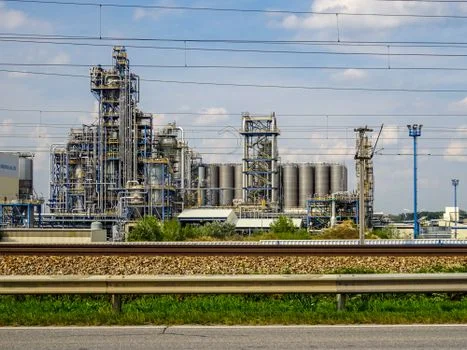
Dissolved Air Flotation (DAF) systems remove 92-97% of Total Suspended Solids (TSS) using micro-bubbles between 20 and 50 microns. For a Mexico City plant with limited footprint, DAF is the workhorse pre-treatment step. A 50 m³/h DAF unit typically runs a CAPEX of $120,000-$250,000 and an OPEX of $0.15-$0.30/m³, driven mostly by polymer consumption and the saturation pump. DAF is excellent for high FOG and TSS, but it cannot pull dissolved organics or color down to reuse grade.
Membrane Bioreactor (MBR) systems are the benchmark for hitting NOM-001-SEMARNAT-2021 and the 15-30% reuse quotas at the same time. CAPEX for a 50 m³/h MBR runs $300,000-$1,000,000, and OPEX lands at $2.50-$3.50/m³ once membrane cleaning (CIP) and extra aeration are included. The effluent profile is the payoff: TSS below 1 mg/L and BOD below 5 mg/L, ready for tertiary polishing or direct non-potable reuse. With municipal water in Mexico City at $2.00-$4.50/m³, the ROI case against buying potable water is straightforward. The same logic drives food processing wastewater treatment standards in tight urban basins elsewhere in Latin America, where MBR is increasingly the default choice.
Automatic chemical dosing systems are the connective tissue for PROFEPA compliance. Sized at $20,000-$50,000, these PLC units read influent pH and turbidity and trim coagulant and flocculant flow on the fly. For a 2026 PROFEPA audit, a PLC-controlled system is no longer optional; it is the only way to generate the continuous data log the inspector will request. Most plants pair the dosing skid with a cellular gateway so alerts reach the plant manager before a discharge violation occurs (HydropureWater field data, 2025).
| Equipment | CAPEX (50 m³/h) | OPEX ($/m³) | Removal Efficiency (TSS) | Footprint |
|---|---|---|---|---|
| DAF System | $120K – $250K | $0.15 – $0.30 | 92% – 97% | Medium |
| MBR System | $300K – $1M | $2.50 – $3.50 | > 99% | Small (Compact) |
| Auto-Dosing | $20K – $50K | $0.05 – $0.15 | N/A (Process Aid) | Very Small |
Water Reuse in Mexico City: ROI Calculations and System Sizing for 15-30% Quotas
Industrial water reuse quotas in Mexico City sit between 15% and 30% of total consumption, depending on how the National Water Plan classifies a facility as a high-volume consumer. To size a reuse project, the engineering question is "Water Cost Avoidance" against a tariff that climbs 8-12% per year. A combined MBR system for near-reuse-quality effluent with RO polishing typically pays back in 3-7 years on that math; the same model underpins water treatment ROI calculations for industrial facilities in cooling-tower duty.
Walk through a 1,000 m³/day beverage plant. A 20% reuse mandate means 200 m³/day back to crate washing, cooling towers, and floor cleaning. Apply the ROI formula: Payback Period = CAPEX / [(Annual Water Savings × Cost/m³) - Annual OPEX]. If the CAPEX on a 200 m³/day MBR+RO system is $800,000 and municipal water costs $3.50/m³, annual savings are $255,500. Subtract an OPEX of $1.20/m³ ($87,600/year) and the net annual saving is $167,900, which gives a payback period near 4.7 years. Beyond the dollars, the plant secures its social license to operate in a water-stressed basin.
System sizing has to budget for the reject stream. RO typically recovers about 75% of feed, so to deliver 20 m³/h of reuse water the upstream MBR must feed the RO at roughly 27 m³/h. Skipping that mass balance is the most common engineering failure we see on reuse retrofits, and it is what leaves plants short of their 15-30% quota during peak production months.
Selection Framework: 5 Steps to Choose a Wastewater Treatment System for Mexico City
A robust selection starts with a 24-hour composite sampling audit to capture peak hydraulic and organic loads across shifts. A single grab sample hides the spikes that under-size equipment and trigger PROFEPA excursions, so most plants we work with run a full week of composite testing before committing CAPEX. The five steps below carry a Mexico City project from audit to commissioning.
- Audit Influent Quality: Run a 7-day characterization measuring COD, TSS, FOG, and true color, using a lab accredited under NOM-001-SEMARNAT-2021 methods.
- Define Your Reuse Target: Decide whether the goal is just hitting discharge limits or also meeting the 15-30% reuse quota; that choice drives a DAF (discharge) versus an MBR+RO (reuse) configuration.
- Evaluate Total Cost of Ownership (TCO): Use TCO = CAPEX + (OPEX × 10 years) + Scheduled Maintenance. A cheaper DAF line can carry a higher TCO than an MBR once chemical and sludge disposal costs are added.
- Verify Telemetry Compatibility: Confirm any PLC-controlled chemical dosing for PROFEPA compliance can export data in the formats Mexican authorities expect, such as MQTT or JSON over a cellular gateway.
- Pilot Testing: For textile or automotive effluent, run a 2-week pilot on a mobile unit to confirm chemistry and membrane flux before signing off on the full CAPEX.
"The most expensive wastewater system is the one that fails a PROFEPA audit six months after installation. Engineering for the 2021 standards requires a 20% safety margin on all removal efficiencies to account for seasonal influent variability." — HydropureWater Technical Engineering Team.
For packaged plants with limited civil works, an Underground Package Sewage Treatment Plant (WSZ Series) is worth a look on small industrial flows where footprint pushes the design. Most Mexico City retrofits we size, however, run at the heavier end of the table above and still need a DAF or MBR train in front of any packaged unit.
Who this is for: plant engineers and EPC contractors sizing treatment trains for food, textile, or automotive sites in Mexico City. Who should look elsewhere: municipal-only utilities and pure potable-water projects, which are covered on different product pages. Next step: send your influent characterization and target flow to request a sized proposal and CAPEX range.
Frequently Asked Questions
What are the key differences between NOM-001-SEMARNAT-1996 and 2021?
The 2021 standard replaces BOD₅ with COD at monthly limits of 60-150 mg/L by receiving-body class, sets monthly TSS at 20-100 mg/L, and adds true color as spectral absorption limits plus acute toxicity testing from March 2026. Design ceilings of COD below 200 mg/L and TSS below 30 mg/L remain common in Mexico City plant briefs. It also pushes reuse quotas in stressed basins like Mexico City, shifting focus from end-of-pipe discharge to closed-loop water management.
How much does a DAF system cost for a 50 m³/h plant in Mexico City?
A high-quality DAF system for a 50 m³/h plant typically runs a CAPEX of $120,000-$250,000. Operating costs fall between $0.15 and $0.30 per cubic meter of treated water, driven mainly by polymer consumption and the saturation pump's electricity draw.
What are PROFEPA's real-time monitoring requirements for 2026?
PROFEPA requires facilities to keep digital logs of pH, flow rate, and turbidity. High-risk sectors are expected to install telemetry that streams data to inspectors in near real time, replacing snapshot sampling with continuous compliance evidence.
Can I reuse treated wastewater for industrial processes in Mexico City?
Yes, and for many sectors it is now mandatory under the 15-30% quota. To hit process-quality water for cooling towers or boilers, an MBR system followed by Reverse Osmosis (RO) is the standard technical recommendation, with effluent TSS below 1 mg/L and BOD below 5 mg/L.
What are the penalties for non-compliance with NOM-001-SEMARNAT-2021?
Penalties reach up to 50,000 UMAs, about $2.5 million MXN, or up to 2% of annual company revenue. For persistent violations, PROFEPA can order partial or total closure of the industrial operation.