Evaporative cooling tower water treatment balances TDS (typically <2,500 mg/L for most industrial systems), chlorides (<500 mg/L where stainless steel is present), and pH (7.0–9.0) to limit scaling, fouling, corrosion, and Legionella growth. Chemical-free options such as pulsed electric fields (for example EVAPCO Pulse~Pure), UV, and ozone report 95%+ microbiological control. They also show about 30% lower OPEX than continuous biocide programs, with payback often under 24 months on systems >500 m³/h.
Why Evaporative Cooling Tower Water Treatment Fails
Cooling-water programs fail when TDS, hardness, pH, or biocide residual leave the control band long enough for scale, biofilm, or pitting. Near 2,500 mg/L TDS, chlorides above 500 mg/L on 304 stainless, or pH outside 7.0–9.0, heat-transfer losses of 10–25% are common. PEF, UV, or ozone often cut OPEX about 30% above 500 m³/h, with payback frequently under 24 months.
Unplanned downtime from cooling tower failures can exceed $500,000 per incident at large facilities. In a 2025 case study, a 1,000-ton tower at a semiconductor fab lost 15% efficiency from calcium carbonate scale on heat-exchange surfaces. That loss forced a partial shutdown, emergency cleaning, and production shortfalls.
Three cost drivers show up on most plant ledgers. Inadequate treatment raises energy use 10–25% because scale and fouling cut heat transfer, as noted in EPA Section 6.3 guidance. Annual spend on biocides, scale inhibitors, and corrosion inhibitors often runs $50,000–$200,000 for a typical industrial loop, per Veolia data. Severe pitting or crevice corrosion can push equipment replacement above $1 million, a range frequently cited by NACE International for industrial infrastructure.
Fouling in fill media—biofilm plus solids—cuts heat-transfer efficiency 30–50%, per ASHRAE 2024 guidelines. Fans and pumps then run harder and wear faster. Public-health exposure compounds the OPEX hit: 2023 CDC data reported that 12% of cooling towers tested positive for Legionella pneumophila. An outbreak brings health impact, reputational damage, and fines; penalties under EU Directive 2010/75/EU can reach about $250,000 for non-compliance.
Cooling Tower Water Chemistry: Critical Parameters to Control
Cooling tower water chemistry control starts with TDS, chlorides, hardness, and pH set to the metallurgy and cycles of concentration you actually run. Most industrial loops keep TDS at or below 2,500 mg/L, chlorides at or below 500 mg/L on stainless circuits, and pH between 7.0 and 9.0 so LSI stays near neutral.
| Industry Sector | Maximum Allowable TDS (mg/L) | Maximum Allowable Chlorides (mg/L) | Maximum Allowable Hardness (mg/L as CaCO₃) | Source/Standard |
|---|---|---|---|---|
| Power Plants | ≤2,000 | ≤300 | ≤200 | EPA 40 CFR Part 423 |
| Data Centers | ≤1,500 | ≤250 | ≤150 | ASHRAE Technical Bulletin |
| Chemical Processing | ≤2,500 | ≤500 | ≤300 | GB/T 50050-2017 (China) |
| General Manufacturing | ≤2,500 | ≤500 | ≤450 | Industry Best Practice |
pH should stay between 7.0 and 9.0. Alkaline water (pH >9.0) drives calcium carbonate scale; acidic water (pH <7.0) accelerates metal loss. Langelier Saturation Index is LSI = pH − pHs, where pHs is the saturation pH for calcium carbonate. Most towers target LSI between −0.5 and +0.5 so the water is neither strongly scaling nor strongly corrosive.
Chlorides drive localized attack. 304 stainless is vulnerable above about 500 mg/L chlorides; 316 stainless usually tolerates up to about 1,000 mg/L. Carbon steel in older loops is safer below about 150 mg/L chlorides. For biology, Heterotrophic Plate Count should stay below 10,000 CFU/mL per AWWA practice. UK HSE HSG274 Part 1 (2024) sets total viable count at not greater than 1×10⁴ CFU/mL and Legionella at not detected or ≤100 CFU/L. Earlier EU practice often used an action level near 1,000 CFU/L. CDC guidance (updated January 2025) stresses automated residual control and annual offline clean-and-disinfect cycles for cooling towers.
Chemical vs. Chemical-Free Treatment: Specs and ROI
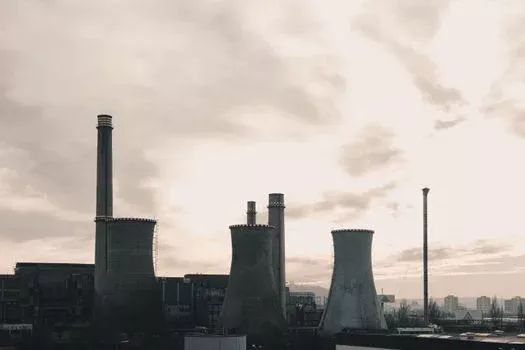
Plant teams choosing between chemical dosing and chemical-free packages should compare CapEx, OPEX per cubic metre, blowdown recovery, Legionella control consistency, and compliance burden side by side. CapEx for basic chemical skids often sits at $50K–$150K, while advanced PEF, UV, or ozone packages commonly run $150K–$500K before integration.
| Metric | Traditional Chemical Dosing | Chemical-Free (e.g., Pulsed Electric Field, UV, Ozone) |
|---|---|---|
| CapEx (Initial Cost) | Lower ($50K–$150K for basic systems) | Higher ($150K–$500K for advanced systems) |
| OPEX (per m³ treated) | $0.50–$2.00 (chemicals, labor, blowdown) | $0.20–$0.80 (electricity, minimal labor) |
| Water Recovery (Blowdown) | 30%–40% (high blowdown for TDS/biocide control) | 50%–80% (reduced blowdown, higher cycles of concentration) |
| Energy Use (kWh/day) | Moderate (pumps for dosing, high blowdown) | Low to Moderate (electricity for PEF/UV/Ozone unit) |
| Legionella Control | Effective with consistent biocide dosing; risk of under/over-dosing | Highly effective (99.9% kill rate for PEF/UV); continuous, consistent control |
| Maintenance | Regular chemical handling, pump calibration, safety protocols | Less hazardous; electrode cleaning for PEF, lamp replacement for UV |
| Compliance Risk | High (biocide discharge limits, chemical storage, handling) | Low (no hazardous chemical discharge, reduced reporting burden) |
| Typical ROI Period | N/A (ongoing cost) | 12–36 months (due to OPEX/water savings) |
Chemical programs typically cost $0.50–$2.00 per m³ because biocides, inhibitors, labor, and blowdown never stop. PEF units such as EVAPCO Pulse~Pure often land at $0.20–$0.80 per m³ with 50% or higher water recovery through higher cycles of concentration (EVAPCO data). Lower blowdown opens a path to advanced blowdown treatment with evaporation crystallization when zero-liquid-discharge targets apply.
Pulsed electric field systems deliver short high-voltage pulses, typically 10–50 kV/cm, that open pores in microbial membranes and kill cells. A 2024 study in Water Research reported a 99.9% Legionella kill rate for PEF under test conditions. Where blowdown reuse is planned, chemical-free pretreatment ahead of RO systems for cooling tower blowdown recovery also cuts membrane fouling from oxidant demand and solids.
Most plants we size still keep a backup chemical train for upset conditions. Pairing PEF or UV with an Automatic Chemical Dosing System covers residual polishing, pH trim, and emergency shock without returning to full-time biocide feed.
Payback Period (years) = CapEx / (Annual OPEX Savings + Annual Water Savings). A $250,000 Pulse~Pure package that saves $100,000 per year in chemicals and labor plus $20,000 in water and discharge fees pays back in 2.1 years ($250,000 / $120,000). Chemical-free trains also ease biocide discharge limits under EU REACH and China’s GB 8978-1996 by cutting continuous toxicant load.
Do UV Systems Cut Chemical Disinfection Byproducts?
UV disinfection reduces reliance on continuous oxidant biocides, so plants form fewer halogenated disinfection byproducts in recirculating water and blowdown. UV does not add chlorine, bromine, or non-oxidizing biocides during normal operation. Byproduct risk then tracks only the residual chemical polish you still dose for corrosion or emergency shock.
For cooling loops that discharge to a sensitive sewer or reuse blowdown, that shift matters. CDC cooling-tower guidance (January 2025) still calls for automated disinfectant residual control and annual offline cleaning, so UV rarely stands alone. Most designs we review keep a small oxidant or chlorine-dioxide capability for basin cleaning and startup, then run UV or PEF as the steady-state microbial barrier.
How Do Low-Pressure and Medium-Pressure UV Compare?
Low-pressure UV lamps deliver nearly monochromatic output near 254 nm and suit steady microbial control at lower power when transmittance is high. Medium-pressure lamps emit a broader UV spectrum and handle higher flows or lower UV transmittance. The tradeoff is more energy use and more frequent lamp and sleeve maintenance.
Neither UV class removes hardness or chlorides, so scale and corrosion chemistry still need blowdown, inhibitors, or softening. When advanced oxidation is required for organics in make-up or blowdown, UV is paired with hydrogen peroxide or ozone (UV-AOP) rather than used alone. For basin shock after a positive Legionella culture, plants still use oxidant protocols—or a chlorine dioxide generator for water disinfection—because UV treats flowing water, not thick biofilm on fill.
Step-by-Step Troubleshooting: Scaling, Corrosion, and Biofouling
Cooling tower troubleshooting should move from water analysis to deposit ID before any acid clean or biocide shock. Wrong chemistry on galvanized steel or scaled fill often costs more than the original fouling.
- White Rust (Zinc Corrosion)
- Symptom: White, powdery deposits on galvanized surfaces, often with red rust from underlying steel.
- Cause: High pH (>8.5), high alkalinity, and/or chlorides >200 mg/L with low hardness, stripping the zinc passivation layer.
- Diagnostic: 1) Check pH, alkalinity, and chlorides in recirculating water. 2) Run XRD on deposits to confirm zinc oxide. 3) Inspect galvanized parts for localized attack.
- Solution: Hold pH at 7.0–8.0. Raise calcium hardness to support a protective film. Cut chlorides with blowdown or pretreatment. Switch critical parts to 316 stainless if control cannot stay tight.
- Calcium Carbonate Scaling
- Symptom: Hard, brittle, off-white deposits on exchangers, fill, and piping, with falling heat-transfer rates.
- Cause: Supersaturated calcium carbonate from high pH, hardness, alkalinity, and temperature.
- Diagnostic: 1) Measure pH, total hardness, and alkalinity. 2) Calculate LSI (LSI > +0.5 signals scaling tendency). 3) Inspect exchanger tubes and fill.
- Solution: Automate blowdown on conductivity/TDS. Dose phosphonate or polymer inhibitors if you stay on chemicals. For chemical-free trains, add side-stream filtration or PEF. Clean existing scale with sulfamic or citric acid under controlled pH.
- Legionella Outbreaks
- Symptom: Positive Legionella results on routine tests, or a cluster of Legionnaires’ disease linked to the site.
- Cause: Warm water (20–45°C; CDC cites 25–45°C / 77–113°F as the favorable growth band), stagnant legs, biofilm, nutrients, and weak biocide residual.
- Diagnostic: 1) Culture cooling water and biofilm per ISO 11731. 2) Review dosing logs and water-quality trends.
- Solution: Shock chlorination at 10–50 mg/L free chlorine for 6 hours, or use chlorine dioxide. Hyperchlorinate at 2–5 mg/L free chlorine for 24 hours if contamination persists. CDC offline emergency protocols target at least 20 ppm free available oxidant, then hold about 10 ppm for 24 hours before drain-and-clean. Long-term control uses PEF, UV, or a steady 0.5–1.0 mg/L free chlorine residual plus biofilm removal. An Automatic Chemical Dosing System keeps residual setpoints stable between manual checks.
- Fill Media Fouling
- Symptom: Lower airflow, higher fan power, uneven water distribution, and visible slime or debris on fill.
- Cause: Biofilm, suspended solids (dirt, dust, silt), and scale.
- Diagnostic: 1) Inspect fill for blockage and slime. 2) Measure pressure drop across the pack. 3) Test suspended solids and HPC.
- Solution: High-pressure wash at 1,000–2,000 psi for mechanical removal. Use citric acid for scale and sodium hypochlorite for biofouling. Install side-stream filtration for cooling tower fouling prevention (for example a 100–200 micron filter) and keep disinfection continuous. CDC likewise recommends filtration when particle load is high.
Regional Compliance Checklist: EU, US, and China
Regional cooling-tower compliance hinges on Legionella action levels, biocide discharge rules, and local registration or testing mandates that differ across the EU, US, and China. Missing one jurisdiction’s paperwork can stop a tower even when water chemistry is in band.
| Region/Standard | Key Parameters & Limits | Discharge Requirements | Specific Considerations |
|---|---|---|---|
| EU Industrial Emissions Directive 2010/75/EU | Legionella: <1,000 CFU/L (action level) | Biocide discharge limits (REACH) | Mandatory Legionella risk assessments & management plans. Water reuse targets (20% by 2030). |
| US EPA 40 CFR Part 423 (Power Plants) | TDS: <2,000 mg/L (guideline) | Chlorides: <500 mg/L (guideline) | State-specific Legionella laws (e.g., New York’s Part 4). US-specific cooling tower water treatment compliance often involves local permits. |
| China GB/T 50050-2017 (Cooling Water Quality) | TDS: <2,500 mg/L | Hardness: <450 mg/L (as CaCO₃) | GB 8978-1996 for wastewater discharge: COD <100 mg/L, Ammonia <15 mg/L. |
In the EU, Industrial Emissions Directive 2010/75/EU pushes discharge performance and Legionella management, with an action level commonly set near <1,000 CFU/L. Water-reuse policy aims toward 20% by 2030, and REACH tightens biocide use—favoring PEF, UV, and ozone where they hold counts. UK sites following HSE HSG274 Part 1 (2024) work to a stricter Legionella target of not detected or ≤100 CFU/L.
US rules mix federal and state layers. EPA 40 CFR Part 423 guides many power-plant permits toward TDS below 2,000 mg/L and chlorides below 500 mg/L, subject to NPDES limits. States such as New York (Part 4) add registration, maintenance plans, and routine testing. EPA’s August 2024 final guidance also defines how antimicrobial products may claim planktonic Legionella pneumophila reduction in cooling-tower water.
China’s GB/T 50050-2017 caps industrial cooling-water TDS below 2,500 mg/L and hardness below 450 mg/L as CaCO₃. Blowdown discharged as wastewater still faces GB 8978-1996 limits such as COD typically below 100 mg/L and ammonia nitrogen below 15 mg/L, so blowdown treatment is part of the compliance design—not an afterthought.
Selection Checklist and Next Step
Use this short checklist before you freeze a treatment package:
- Confirm metallurgy limits for chlorides, pH, and LSI at your target cycles of concentration.
- Set microbial targets: HPC/TVC ≤10,000 CFU/mL and Legionella at the stricter of local law or HSE ≤100 CFU/L where UK practice applies.
- Decide chemical, chemical-free, or hybrid control for steady state versus emergency shock.
- Size side-stream filtration and blowdown recovery (RO or evaporation) against make-up cost and sewer limits.
- Automate residual, pH, and blowdown; CDC flags manual-only residual control as a common weak point.
- Budget CapEx versus OPEX: chemical skids $50K–$150K; PEF/UV/ozone packages $150K–$500K; model payback with real water and chemical invoices.
- Map EU REACH, US state Legionella rules, and China GB discharge limits before equipment award.
Who this is for: plant engineers, EPC water leads, and procurement teams sizing or retrofitting industrial cooling-water treatment. Who should look elsewhere: owners seeking only potable UV reactors or swimming-pool chlorination packages without open recirculating towers. Next step: share design flow, make-up analysis, and metallurgy on our request a quote form so we can size dosing, PEF/UV, and blowdown recovery together.
Frequently Asked Questions
What causes scaling in open recirculating cooling towers?
The primary cause is rising dissolved mineral concentration—especially calcium carbonate—as pure water evaporates and cycles of concentration climb. When solubility limits are exceeded, minerals precipitate on hot surfaces. High pH and temperature lower carbonate solubility further, so scale forms faster on exchangers and fill unless blowdown, inhibitors, or pretreatment hold LSI in band.
How effective are chemical-free pulsed electric fields for Legionella control?
Pulsed electric field systems can reach about a 99.9% Legionella kill rate under published test conditions, including a 2024 Water Research study cited in industry comparisons. Pulses disrupt cell membranes without continuous biocide feed, which stabilizes control between dose cycles. Plants still need biofilm cleaning and a documented water-management plan; PEF complements, rather than replaces, annual offline disinfection where regulators require it.
What water recovery rates can advanced cooling tower treatment achieve?
Advanced chemical-free treatment with tighter fouling control often reaches 50%–80% water recovery by supporting higher cycles of concentration. Traditional chemical programs commonly recover only 30%–40% because blowdown must flush both TDS and spent biocide. Side-stream filtration, blowdown RO, and PEF or UV lower the solids and microbial load that force early blowdown.
What pH range keeps cooling towers stable?
Most industrial cooling towers run best between pH 7.0 and 9.0. Below 7.0, corrosion rates on steel and copper rise quickly. Above 9.0, calcium carbonate scale risk climbs, especially at high hardness and temperature. Holding LSI between −0.5 and +0.5, not only pH, is the practical decision rule on operating logs.
How can I cut cooling tower water treatment operating costs?
Shift steady-state microbial control to PEF, UV, or ozone where CapEx allows, and reserve chemicals for trim and emergencies—many sites see about 30% OPEX reduction from chemical purchase and handling alone. Raise cycles of concentration with filtration and blowdown recovery to cut water and sewer fees. Fix scale and biofilm early; a 10–25% energy penalty from fouled exchangers often dwarfs treatment chemical cost.