Why Beira’s Industrial Discharge Problem Is Worse Than You Think
Industrial wastewater treatment in Beira currently relies on factory-level pre-treatment because the 2012 EU-funded municipal plant (€19.25 M) has been offline since Cyclone Idai (March 2019). Mobile 50–500 m³/h DAF or MBR packages deliver COD <120 mg/L and TSS <35 mg/L—limits set by Mozambique’s 2022 donor financing rules—at CAPEX $350–550 per m³/h and 18-month payback versus tanker disposal.
The collapse of the municipal sanitation infrastructure has left Beira’s industrial sectors, particularly in the Machanga and Mangae zones, in a regulatory and operational vacuum. According to AFD project data, Cyclone Idai damaged approximately 85% of the city’s sewer network, rendering the Estação de Tratamento de Águas Residuais (STEP) non-functional. As of 2025, while rehabilitation efforts are ongoing, the city lacks a centralized buffer for industrial loads. Provincial sampling from 2023 indicates that industrial zones discharge approximately 22,000 m³/day of effluent directly into the Chiveve River or coastal estuaries, with 70% of samples exceeding a Chemical Oxygen Demand (COD) of 500 mg/L.
For project engineers, the financial pressure is as acute as the environmental risk. Factories currently paying for private tanker services to haul high-strength waste to distant disposal sites face costs of roughly $0.90/m³. In contrast, implementing on-site industrial wastewater treatment in Beira through containerized systems reduces these costs to approximately $0.35/m³ when CAPEX is amortized over a five-year period. This $0.55/m³ margin is often the difference between a viable EPC bid and a rejected proposal in donor-funded industrial upgrades.
Mozambique Industrial Effluent Limits You Must Meet in 2025
New industrial projects in Sofala Province must comply with the World Bank Group’s 2022 Environmental, Health, and Safety (EHS) Guidelines due to donor financing requirements from institutions like the EU and World Bank.
Compliance is no longer governed solely by local municipal bylaws, but by the "blending rules" of international financiers such as the EU and World Bank. Any project receiving donor funding must adhere to the World Bank Group’s 2022 Environmental, Health, and Safety (EHS) Guidelines, which are significantly more stringent than historical Mozambican standards. Failure to meet these parameters results in the withholding of loan tranches and potential fines from the Provincial Directorate of Land, Environment and Rural Development (DPTADER) reaching MZN 50,000 ($780) per recorded incident.
The following table outlines the primary discharge parameters that must be achieved before effluent leaves the factory gate, whether it is discharging to a (currently broken) sewer or a surface water body:
| Parameter | Donor/World Bank Limit (2025) | Sofala Provincial Requirement | Typical Untreated Food Effluent |
|---|---|---|---|
| Biological Oxygen Demand (BOD5) | 30 mg/L | <50 mg/L | 800–1,500 mg/L |
| Chemical Oxygen Demand (COD) | 120 mg/L | <150 mg/L | 1,500–3,500 mg/L |
| Total Suspended Solids (TSS) | 35 mg/L | <50 mg/L | 400–1,200 mg/L |
| Oil and Grease | 10 mg/L | <15 mg/L | 150–500 mg/L |
| pH Range | 6.0–9.0 | 6.5–8.5 | 4.5–11.0 |
| Temperature | <3 °C increase | <35 °C | 25–45 °C |
For seafood processors near the Port of Beira, specific attention is required for Total Nitrogen (TN) and Phosphorus (TP) to prevent localized eutrophication in the estuary. Self-monitoring is now a mandatory condition for operational licenses, requiring at least two laboratory-verified samples per week. This regulatory pressure has shifted the focus from simple primary screening to multi-stage treatment trains capable of handling high tropical ambient temperatures.
Proven Treatment Trains for Seafood, Beverage and Textile Plants in Beira
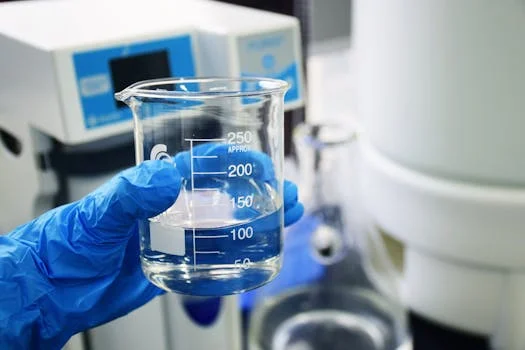
Beira’s tropical coastal climate—marked by high humidity and salinity—requires treatment trains that deliver high removal efficiency while resisting environmental stress.
Selecting a treatment train for Beira requires balancing high removal efficiencies with the resilience needed for a tropical coastal climate (high humidity and salinity). Standard activated sludge plants often fail here due to large footprints and sensitivity to the fluctuating organic loads common in seasonal seafood processing. Instead, three specific technology combinations have emerged as the standard for 2025 donor-compliant bids.
For high-fat applications like fish processing, containerised DAF units paired with Chlorine-dioxide disinfection are the most effective. This train removes up to 92% of TSS and 85% of COD at influent temperatures of 30 °C. The use of Chlorine-dioxide is preferred over standard chlorine gas due to its superior performance in high-pH environments often found in wash-down water. The power consumption for such a system averages 1.8 kWh/m³, making it viable for factories with limited grid stability.
Beverage and textile plants, which require higher levels of organic removal and often aim for process water reuse, benefit from an MBR membrane bioreactor skid followed by UV sterilization. The MBR process maintains a high Mixed Liquor Suspended Solids (MLSS) concentration of approximately 0.8 kg/L, allowing for a membrane flux of 18 L/m²·h. This delivers an effluent with a Silt Density Index (SDI) of <3, suitable for cooling tower make-up or floor washing. While the energy demand is higher (2.1 kWh/m³), the footprint is 60% smaller than traditional clarifiers.
| Treatment Train | Target Industry | COD Removal % | Energy Use (kWh/m³) | Main Advantage |
|---|---|---|---|---|
| DAF + ClO2 | Seafood / Poultry | 80–85% | 1.6–1.9 | Excellent FOG removal |
| MBR + UV | Beverage / Textile | 95–98% | 2.0–2.4 | Water reuse quality |
| Lamella + Ozone | General Manufacturing | 70–75% | 1.2–1.5 | Smallest footprint |
In scenarios where land is extremely limited, such as the crowded areas near the Munhava industrial corridor, a Lamella settler combined with Ozone dosing offers a compact alternative. Ozone provides a 4-log reduction in E.coli at a dose of 8 mg/L, which is critical for factories discharging near residential informal settlements. This setup mirrors many costed treatment trains in Middle-East climate regions where high-rate clarification is favored over large lagoon systems.
Mobile vs Permanent Systems: Which Fits Your Lease-of-Land Reality?
Land tenure and site geophysics—rather than process engineering alone—determine whether mobile or permanent wastewater systems are suitable in Beira.
The decision between mobile/skid-mounted plants and permanent civil structures in Beira is often dictated by land tenure and geophysics rather than just process engineering. Much of the industrial land near the Port of Beira is held under short-to-medium term leases, making high CAPEX permanent concrete structures a risky investment. The high water table in Beira—often less than 1.5 meters below the surface—massively inflates the cost of traditional underground tanks.
Containerized DAF or MBR systems can be shipped to the Port of Beira and commissioned within 4 to 6 weeks. These units are installed on simple 6-inch reinforced concrete pads, avoiding the need for deep excavation. If a factory needs to relocate or if the municipal STEP eventually comes back online and changes its tariff structure, these mobile assets can be disconnected and redeployed or sold. This "plug-and-play" capability is a significant advantage for EPC bidders who need to demonstrate low-risk profiles to donors.
Conversely, permanent underground MBR systems offer a 40% reduction in surface land usage, which is attractive for sites where every square meter is dedicated to production. However, engineers must budget for an additional $25,000 to $40,000 in dewatering and specialized piling costs due to the sandy, saturated soils of the Pungwe delta. For lease contracts shorter than 10 years, the mobile CAPEX model is almost always superior. Permanent concrete tanks only become cost-effective on a 25-year lifecycle basis for factories with secure land titles and stable production volumes exceeding 1,000 m³/day.
2025 Cost Breakdown: CAPEX, OPEX and Financing Options
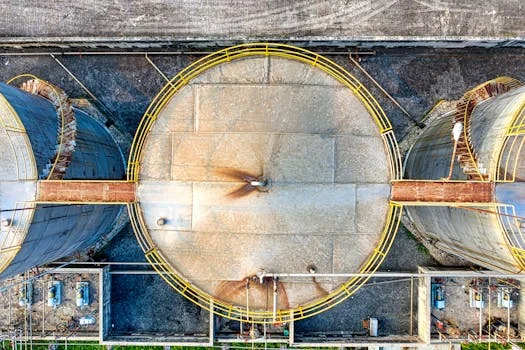
For a 50 m³/h system typical of medium-scale food processing, CAPEX and OPEX for industrial wastewater treatment in Beira depend on technology selection and Mozambican operating conditions.
Budgeting for industrial wastewater treatment in Beira requires a clear distinction between the initial equipment purchase and the long-term operational costs, which are sensitive to Mozambican chemical import duties and electricity tariffs. For a standard 50 m³/h capacity—typical for a medium-scale food processing plant—the following cost estimates apply for 2025 bids.
A 50 m³/h DAF system typically carries a CAPEX of approximately $150,000. The OPEX is relatively low at $0.26/m³, covering power, polymer flocculants, and routine mechanical maintenance. An MBR system of the same capacity requires a higher initial investment of roughly $210,000 due to the cost of the membrane modules. The OPEX for MBR rises to $0.32/m³, which includes a sinking fund for membrane replacement every five to seven years. These figures are essential for engineers to include in donor proposals to ensure the project remains sustainable post-commissioning.
| System Type (50 m³/h) | CAPEX (Estimated) | OPEX ($/m³) | Payback vs Tanker (Months) |
|---|---|---|---|
| Containerized DAF | $140,000 – $165,000 | $0.24 – $0.28 | 14 – 18 |
| Skid-Mounted MBR | $195,000 – $230,000 | $0.30 – $0.35 |
Get a Free Quote — Tell Us About Your Project
Contact Us
|