Why Industrial Wastewater Treatment in Douala Depends on On-Site Systems
Industrial wastewater treatment in Douala requires private-sector solutions due to the absence of municipal infrastructure—98% of residents lack sewer connections. For breweries and food processors, dissolved air flotation (DAF) and membrane bioreactor (MBR) systems achieve 90–98% COD and TSS removal, meeting discharge standards with compact, automated units designed for tropical climates and variable loads.
The city of Douala currently possesses no centralized wastewater or sewage sludge treatment infrastructure, leaving industrial operators solely responsible for the environmental impact of their discharge. Municipal projects aim to sustainably improve sanitary conditions for the population of Douala, but the current reality for a plant engineer is one of total self-reliance. Discharging untreated effluent into the Wouri River or local drainage channels carries significant long-term liability, including heavy environmental penalties from the Ministry of Environment, Protection of Nature and Sustainable Development (MINEPDED) and potential community backlash that can halt production.
For breweries and food processing plants, the challenge is acute. These facilities produce high-strength effluent characterized by extreme organic loads and fluctuating volumes. Without on-site treatment, the high chemical oxygen demand (COD) and biological oxygen demand (BOD) deplete oxygen in local water bodies, leading to anaerobic conditions and foul odors. As international ESG (Environmental, Social, and Governance) standards become a prerequisite for financing and export licenses, robust on-site industrial effluent treatment plants are a critical business asset.
Key Challenges for Food and Beverage Plants in Douala
Brewery effluent in Cameroon typically exhibits COD ranges of 2,000–4,500 mg/L and BOD levels of 1,200–2,500 mg/L, requiring greater than 90% removal efficiency to meet safe discharge or reuse standards. These organic concentrations are significantly higher than municipal sewage, meaning conventional septic systems or basic lagoons are insufficient.
High organic loads frequently destabilize conventional lagoon systems used in peri-urban areas. In Douala's tropical climate, biological activity in ponds can become hyper-accelerated, leading to rapid sludge accumulation and the release of methane and hydrogen sulfide. These odors often result in friction with neighboring residential zones. Moreover, the high salinity and temperature of tropical industrial effluent can accelerate the corrosion of standard concrete and mild steel tanks.
Engineering teams must account for Douala’s "off-grid" reality, where frequent power fluctuations and limited access to specialized chemical reagents mean that treatment systems must be robust and automated. A system requiring constant manual intervention or high-purity polymer imports that are frequently out of stock at local distributors will inevitably fail. Technical solutions must prioritize energy efficiency and mechanical simplicity to ensure consistent compliance despite local logistical constraints.
DAF Systems for High-Efficiency Suspended Solids and FOG Removal
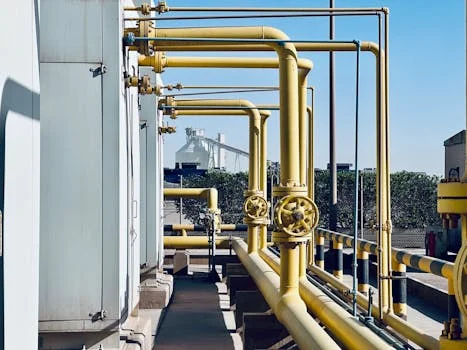
Dissolved Air Flotation (DAF) is the primary physical-chemical treatment stage for industrial plants needing to remove non-soluble organics and solids before biological processing. The DAF removes 92–97% of suspended solids and FOG from food and brewery wastewater at flow rates ranging from 4 to 300 m³/h. By injecting micro-bubbles into the wastewater, the system attaches to low-density particles and floats them to the surface for mechanical removal.
This micro-bubble technology is particularly effective in Douala’s industrial zones where space is limited. Unlike traditional sedimentation clarifiers, a high-efficiency DAF system achieves higher clarity with a compact footprint. The inclusion of automatic skimming and sludge discharge mechanisms reduces the need for constant manual oversight. The stainless steel construction of these units provides the necessary resistance to the corrosive environment.
| Parameter | Inlet Concentration (Typical) | DAF Outlet (Estimated) | Removal Efficiency (%) |
|---|---|---|---|
| Total Suspended Solids (TSS) | 800 – 1,500 mg/L | 40 – 75 mg/L | 95% |
| Fats, Oils, & Grease (FOG) | 200 – 500 mg/L | 10 – 25 mg/L | 95% |
| Chemical Oxygen Demand (COD) | 2,500 – 4,000 mg/L | 1,500 – 2,400 mg/L* | 30 – 40% |
| Turbidity | 200 – 400 NTU | < 20 NTU | 90% |
*Note: DAF primarily removes insoluble COD; remaining soluble COD requires biological treatment.
MBR Bioreactors for Advanced Biological Treatment and Reuse
An integrated MBR system achieves over 95% BOD and COD removal, producing effluent with TSS levels below 10 mg/L and COD below 20 mg/L. This level of treatment allows industrial operators to deploy a compact MBR system for high-quality effluent and water reuse, effectively turning a waste stream into a resource.
The core of this technology lies in submerged PVDF membranes, such as the DF series flat-sheet modules, which filter water to a 0.1 μm pore size. In Douala, where land costs are high, the smaller footprint of an MBR system is a significant CAPEX advantage. These flat-sheet MBR membrane bioreactor modules consume less energy than traditional cross-flow systems and allow for the replacement of individual sheets, lowering long-term OPEX.
| Performance Metric | Conventional Activated Sludge | HydropureWater Integrated MBR |
|---|---|---|
| Effluent TSS | 20 – 50 mg/L | < 5 mg/L |
| Effluent BOD5 | 20 – 30 mg/L | < 5 mg/L |
| Footprint Requirement | 100% (Baseline) | 35 – 40% |
| Sludge Yield | High | Low (Long SRT) |
| Disinfection | Required (Chlorine/UV) | Inherent (0.1 μm barrier) |
Chemical Dosing and pH Control for Stable Treatment Performance
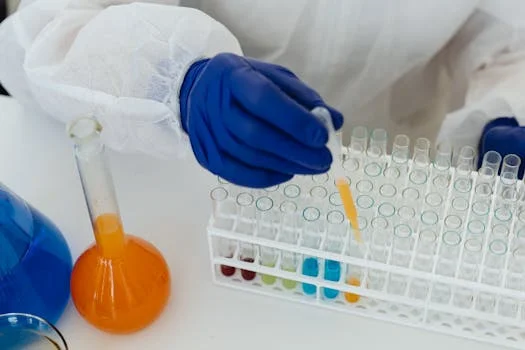
Maintaining stable biological activity requires strict control over influent chemistry. Brewery wastewater pH can swing from 4.5 to 10.5 during different cleaning cycles. An automatic chemical dosing system stabilizes the pH at 6.5–8.0, ensuring optimal conditions for bacteria responsible for COD reduction.
These PLC-controlled systems inject coagulants and flocculants based on real-time flow and sensor data. HydropureWater’s skid-mounted units are pre-wired and factory-tested, reducing installation time by 40% in remote locations. By precisely controlling chemical consumption, these units minimize OPEX associated with reagent waste.
Comparison: DAF + Biological vs MBR for Douala Industrial Plants
A DAF + A/O configuration typically carries a CAPEX that is 25–30% lower than an MBR system, making it ideal for plants prioritizing FOG and solids removal with sufficient land for biological tanks. For facilities with limited space or those aiming for water reuse, the MBR is superior.
While the OPEX for MBR is 15–20% higher, the ROI is often realized through reduced water procurement costs and eliminated environmental fines. For flow rates under 50 m³/day, the MBR is often more economical due to its integrated design. Engineers should compare DAF and API separator performance or review a comparison of MBR and SBR to determine the best biological fit.
| Feature | DAF + Conventional Biological | Integrated MBR System |
|---|---|---|
| Primary Benefit | Lower CAPEX, high FOG tolerance | Highest effluent quality, reuse-ready |
| Space Requirement | Moderate to Large | Very Compact |
| Operator Skill | Moderate | Moderate (Automated) |
| Ideal For | Large breweries, palm oil mills | Urban food plants, water reuse goals |
Frequently Asked Questions
What is industrial wastewater treatment?
It is the multi-stage process of removing contaminants from effluent generated by manufacturing and food processing industries, using physical, chemical, and biological methods.
How big is the industrial wastewater market in Africa?
The market is projected to grow at a 7.3% CAGR through 2030, driven by stricter environmental enforcement and private sector investments.
Where does industrial wastewater come from in Douala?
The majority originates from breweries, food processing, textile mills, and chemical manufacturing plants in the Bassa and Bonabéri industrial zones.
Which is the best method for treating brewery wastewater?
A multi-barrier approach using DAF followed by an MBR system consistently achieves >95% COD reduction, ensuring compliance with discharge standards.