DAF outperforms API separators for industrial wastewater with emulsified oil and fine solids. A DAF vs API separator choice hinges on droplet size, footprint, and the oil limit the plant must meet. DAF removes 90–97% TSS and 85–95% FOG with 10–100 µm air bubbles. API units follow Stokes' Law on free oil, removing about 80% FOG and only 50–60% TSS, and they fail on emulsified droplets below 150 µm.
DAF vs API Separator: What Is the Better Choice?
DAF removes 90–97% TSS and 85–95% FOG, including emulsified droplets below 20 µm. API separators remove roughly 80% free oil and 50–60% TSS and cannot treat emulsified oil. Plants targeting under 10 mg/L oil or facing compact sites should choose DAF. Plants with free-oil streams and available land can still justify an API unit.
How DAF and API Separators Work
Dissolved Air Flotation (DAF) and API oil-water separators are the two common pre-treatment options for oily industrial wastewater. DAF dissolves air under pressure, then releases 10–100 µm bubbles that attach to solids and oil and float them to a skimmer. API separators, named after the American Petroleum Institute, use baffles and a long gravity tank so free oil rises and heavy solids settle under Stokes' Law. Both can retrofit existing tanks, but their performance envelopes differ sharply on emulsified oil.
How DAF Removes Oil and Solids
DAF removes oil and solids by attaching microscopic air bubbles to particles, lowering effective density so the aggregates rise. A coagulation-flocculation stage usually comes first. Polymers such as polyacrylamide (PAM) or polyaluminum chloride (PAC) build flocs that capture bubbles. Under optimal conditions DAF achieves 90–97% TSS removal and 85–95% FOG removal (HydropureWater field data, 2025). The process handles emulsified oils smaller than 20 µm that gravity separators miss. For a practical example, a high-efficiency Dissolved Air Flotation (DAF) System can be specified for most flows. Proper chemical dosing matters; an automatic chemical dosing system keeps coagulant feed steady. Most plants we size for food or metalworking run at the lower end of the chemical dose range when influent quality is well known.
How API Separators Work and Their Limitations
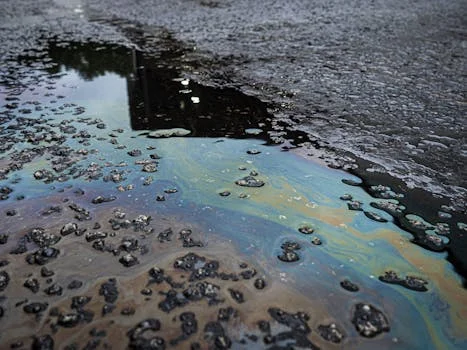
API separators rely on gravity separation so free oil and denser particles separate by density. The influent enters a long tank, often with a length-to-width ratio of 5:1, and slows enough for free oil to rise. Some plant layouts size API tanks for a detention time of 1.5–2 hours and a hydraulic loading of 0.25–0.5 m³/m²·h. API design guidance summarized by EPA commonly uses about 0.5 hour detention for gravity oil-water separators (EPA Oil/Water Separation State of the Art, 1978). Under typical duty API units remove roughly 80% of free oil and 50–60% of TSS. Performance drops for droplets smaller than 150 µm and for emulsified oil. API Publication 421–based designs target free, non-emulsified oil droplets of about 150 µm and larger. Ecology guidance is explicit: do not use API or plate oil-water separators for dissolved or emulsified oils such as coolants and soluble lubricants. Turbulence and short-circuiting cut efficiency further. API units are chemical-free and cheap to run, but many sites later add a Corrugated Plate Interceptor (CPI) if limits tighten. A coarse rotary mechanical bar screen upstream of either separator reduces debris loading on the tank.
Performance Comparison: DAF vs API Separator
Head-to-head data show that DAF outperforms API separators on TSS and FOG across typical industrial flows. The table below summarizes key metrics from industrial case studies and published benchmarks.
| Parameter | DAF (Typical) | API Separator (Typical) | Source |
|---|---|---|---|
| TSS Removal Efficiency | 90–97 % | 50–60 % | HydropureWater field data, 2025 |
| FOG (Free Oil & Grease) Removal | 85–95 % (including emulsified oil) | 70–80 % (free oil only) | HydropureWater field data, 2025 |
| Emulsified Oil Removal | 80–90 % (with coagulation) | ~0 % (ineffective) | EPA Guidelines |
| Footprint (for 30 m³/h flow) | ≈4 m × 2 m (incl. tank & equipment) | ≈12 m × 2.5 m | Design calculations |
| Surface Loading Rate | 5–15 m³/m²·h | 0.25–0.5 m³/m²·h | Manufacturer specs |
| Chemical Dependency | Coagulants required (≈0.10–0.25 $ / m³) | None (chemical-free) | Operational records |
| Maintenance Frequency | Monthly cleaning of skimmer & diffuser | Quarterly tank inspection | Plant logs |
These figures explain why DAF is preferred when discharge limits demand oil below 10 mg/L or when fine suspended solids dominate. API separators remain viable for simple free-floating oil streams. For a deeper cost split on the same equipment pair, see what is the difference between dissolved air flotation and api separator.
What is the mass balance for DAF vs API?
DAF mass balance concentrates oil and solids into a skimmed float, typically a few percent of feed flow, while clarified water exits over the weir. API mass balance splits free oil to the skimmer, settleable solids to the sludge hopper, and untreated emulsified oil into the effluent. Plants comparing options can also review our DAF vs API Separator Comparison: Performance, Cost & Use Cases for side-by-side duty cases.
When to Choose DAF Over API
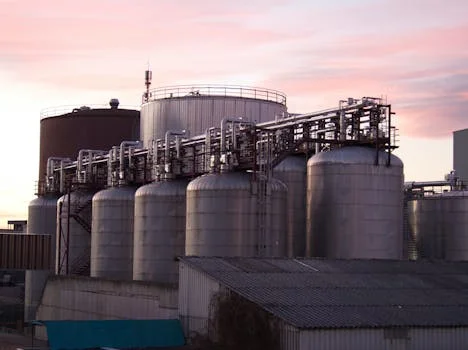
Select DAF when the influent holds emulsified oil, high TSS, or when footprint is limited. Typical scenarios include:
- Food-processing wash-down water with emulsified grease and fine protein particles.
- Metal-working coolant blow-down containing oil-in-water emulsions below 20 µm.
- Pulp & paper effluent with fine fibers and dispersed oil.
- Automotive wash stations where space constraints demand a compact treatment footprint.
DAF responds quickly to flow swings through adjustable recirculation and real-time bubble generation. Food and beverage, pharmaceuticals, textiles, and municipal pre-treatment plants often adopt DAF to meet effluent oil under 10 mg/L. Washington State Department of Ecology stormwater guidance states that API-type separators rarely reduce oil below 10 mg/L.API separators can suffice for stable free-oil streams such as refinery sump water, stormwater runoff, or oil-field produced water where land is available. For plants weighing flotation technologies, the DAF vs IAF systems for industrial wastewater comparison covers values, and the lamella clarifier vs conventional clarifier article helps if a settling step is also under review.
Cost and ROI Analysis
DAF's higher capital cost is often offset by lower sludge volume and faster compliance payback. The table below breaks down typical capital and operating costs for a 50 m³/h capacity.
| Cost Item | DAF System | API Separator | Notes |
|---|---|---|---|
| CAPEX (equipment + installation) | $80,000 – $112,000 | $55,000 – $70,000 | DAF includes saturation drum, diffuser, skimmer. |
| Energy Consumption | 1.5–3 kWh / m³ | 0.4–0.8 kWh / m³ | DAF pumps and air-compression drive higher load. |
| Chemical Cost (coagulant) | $0.10 – $0.25 / m³ | $0.00 / m³ | Depends on influent oil emulsification. |
| Labor & Maintenance | $0.02 / m³ (monthly skimmer cleaning) | $0.03 / m³ (tank inspection) | DAF labor slightly lower due to automated skimming. |
| Sludge Disposal | Reduced sludge volume (≈30 % less) | Higher sludge volume | DAF concentrates solids in a smaller sludge stream. |
| Payback Period (assuming $0.30 / m³ compliance penalty avoided) | 2–3 years | 4–5 years (or longer if CPI retrofit required) | Based on typical plant discharge fees. |
Even though DAF capital cost runs 20–40% higher, lower sludge handling and avoided fines often yield positive ROI within three years. API units may need a CPI upgrade ($20k–$40k) to approach comparable free-oil performance, which extends payback. Cost-breakdown methodology for ROI on related equipment is documented in our industrial dust collection system cost-price 2025 breakdown ROI study.
Who This Is For and Next Step
This guide is for plant engineers, EPC contractors, and procurement managers selecting oil-removal pre-treatment. Pick DAF if your stream holds emulsified oil, sub-20 µm droplets, or high TSS, and if footprint, sludge volume, or discharge limits under 10 mg/L drive the decision. Pick API if your stream is mostly free oil above 150 µm, flow is steady, and you have land for a 12 m × 2.5 m tank at 30 m³/h. To get a sized proposal and CAPEX figure for your flow and influent, request a quote with daily flow, oil concentration, and target discharge limits.
Frequently Asked Questions

Can DAF remove emulsified oil?
Yes. With proper coagulation and flocculation, DAF can reduce emulsified oil to 5–10 mg/L, below many discharge targets. Coagulant at about 0.10–0.25 $/m³ plus micro-bubbles captures droplets below 20 µm that gravity systems cannot separate. Plants should confirm dose with jar tests on actual influent before locking chemical budgets.
Does an API separator remove dissolved oil?
No. API technology only captures free-floating oil by Stokes' Law settling. Dissolved or emulsified oil needs flotation (DAF), membrane separation, or advanced oxidation. A standard API unit typically removes free oil above 150 µm and leaves emulsified fractions in the effluent stream.
What is the difference between API and CPI separators?
A CPI (Corrugated Plate Interceptor) adds inclined plates inside the gravity tank to raise effective surface area and improve capture of smaller free-oil droplets. CPI retrofits cost $20k–$40k and bring modest free-oil gains, but they still cannot remove emulsified oil. CPI remains a gravity process governed by the same density and droplet-size limits as API.
Is DAF better than a clarifier for oil removal?
Yes, for oil. Clarifiers settle heavy solids well, while DAF floats oil and fine particles and typically delivers 85–95% FOG removal. Gravity clarifiers show much lower oil-removal efficiency on emulsified streams. Many plants run a clarifier for settleable solids, then DAF for oil polishing.
Can DAF replace an existing API separator?
Yes. Modular DAF units fit a similar duty at 30 m³/h in about 4 m × 2 m, versus 12 m × 2.5 m for API. That footprint supports a direct retrofit path. Plants typically see compliance gains and a 2–3 year payback when emulsified oil or tight oil limits drove the upgrade.