Illinois wastewater treatment cost in 2026 ranges from $1.2M for a 100,000 GPD package plant to $50M+ for a 5 MGD municipal facility with tertiary treatment. Key drivers include IEPA discharge limits (<30 mg/L BOD/TSS for most permits) and technology choice. MBR systems cost 20–30% more than DAF but cut footprint by about 60%. Metal finishing heavy-metal removal typically adds $200K–$500K to CAPEX.
Why Treatment Costs Keep Rising Across Illinois in 2026
Illinois wastewater treatment plant costs in 2026 typically span $1.2M–$4M for 100,000–250,000 GPD package plants, $5M–$20M for 0.5–5 MGD mid-size plants, and $50M+ for 5+ MGD tertiary facilities. IEPA limits of <30 mg/L BOD/TSS apply on most permits. Lake Michigan watershed projects often require <10 mg/L BOD/TSS plus nutrient control. Technology, watershed, and industry pretreatment set the final budget.
The Illinois Environmental Protection Agency (IEPA) issued 127 enforcement actions in 2023, with 42% aimed at food processing and metal finishing for non-compliant effluent. A mid-sized metal plating plant in Peoria faced over $250,000 in fines and legal fees. Its aging anaerobic lagoon failed NPDES limits for heavy metals and Total Suspended Solids (TSS). Most plants we size for Illinois industrial sites now treat enforcement timing as a hard cost driver.
Nutrient removal requirements are tightening, especially for discharges into sensitive watersheds. Under 35 Ill. Adm. Code 309.105, projects near the Lake Michigan watershed face limits dropping to <10 mg/L for both BOD and TSS, with rising pressure on phosphorus and nitrogen. Meeting those standards needs advanced filtration or biological processes that raise capital expenditure (CAPEX) versus standard secondary treatment. Municipal wastewater treatment cost benchmarks for U.S. buyers show Illinois often sits at the higher end because of site-specific civil work and permitting complexity.
Traditional concrete-and-steel plants in Illinois typically need 12–18 months to permit, design, and construct. Pre-engineered package plants can be deployed in 6–8 weeks. For facilities under active IEPA enforcement, a 12-month traditional build adds daily fine exposure on top of capital cost. When aging lagoons fail, the retrofit-versus-modular choice often hinges on how fast the site must return to compliance.
What Is the Water Treatment Plant Cost Breakdown?
The water treatment plant cost breakdown for Illinois projects splits into CAPEX by hydraulic capacity, first-year OPEX, permitting fees, and contingency. Capital spend tracks capacity and industry contaminants. Small package plants (100K–250K GPD) run $1.2M–$4M. Mid-size municipal or industrial facilities (0.5–5 MGD) run $5M–$20M. Large municipal plants (5+ MGD) frequently exceed $50M. Those figures cover equipment, basic civil works, and commissioning. Illinois River Valley soil conditions can add 10–15% to foundation costs.
First-year operating expenses (OPEX) generally range from $150K to $600K for small plants and can reach $3M for mid-size facilities. Power rates and chemical dosing for phosphorus removal dominate the bill. Food processors must budget Fat, Oil, and Grease (FOG) removal at $150K–$300K extra CAPEX plus higher annual chemicals. Metal finishing plants add $200K–$500K for chemical precipitation and clarification to control chromium and nickel.
| Plant Capacity (GPD) | Primary Industry Type | Estimated CAPEX (2026) | Annual OPEX (Year 1) | IEPA Permit Complexity |
|---|---|---|---|---|
| 100,000 - 250,000 | Food Processing / Small Muni | $1.2M - $4.0M | $150K - $400K | Moderate |
| 500,000 - 2,000,000 | Regional Municipal / Large Industrial | $5.0M - $12.0M | $600K - $1.2M | High |
| 2,000,000 - 5,000,000 | Large Municipal / Heavy Industrial | $12.0M - $35.0M | $1.5M - $3.0M | Very High |
| Special Case (Lake Michigan) | Any (Tertiary Treatment) | Add 25% to Base | Add 20% to Base | Extreme |
Hidden fees sit in permitting and contingency. Standard IEPA permit processing costs range from $40K to $200K; complex sites or Environmental Impact Study (EIS) work can reach $2M. Illinois engineering practice typically uses a 5% contingency on low-risk Greenfield projects. High-risk Brownfield sites or uncertain influent in Chicagoland corridors should budget at least 15% for soil remediation or load swings. Understanding how Cleveland’s industrial wastewater costs compare to Illinois gives multi-state procurement teams a useful regional check.
What Is Illinois Construction Cost for a Water Treatment Plant?
Illinois construction cost for a water treatment plant in 2026 is driven less by equipment stickers alone and more by civil scope, watershed tertiary adders, and schedule risk. Lake Michigan tertiary cases commonly add 25% to base CAPEX and 20% to base OPEX versus inland secondary plants of the same hydraulic rating. Most plants we size for suburban Cook and Lake County sites hit the upper CAPEX band when land is tight and tertiary polishing is mandatory.
Schedule is a cash-flow line item. A 12–18 month concrete plant leaves the buyer paying consultants, temporary hauling, and potential daily fines while steel sits idle. A 6–8 week package train can close an enforcement gap faster, even when unit CAPEX looks similar on paper. Buyers comparing Illinois construction options should model permit lead time (6–12 months for applications) as part of total installed cost, not as a separate soft cost.
Illinois Wastewater Treatment Cost: MBR vs. DAF vs. Package Plants
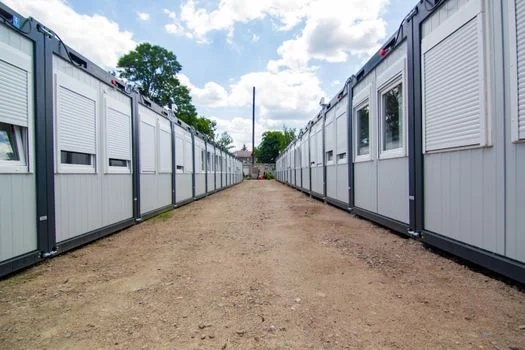
Technology selection is the largest lever on both compliance and long-term cost for Illinois plants. Three options dominate: Membrane Bioreactors (MBR), Dissolved Air Flotation (DAF), and integrated package plants. MBR suits Lake Michigan and other sensitive watersheds. At $18–$90 per gallon of daily capacity CAPEX, MBR systems for Illinois sensitive watersheds deliver 99% pathogen removal and effluent commonly <5 mg/L BOD and TSS. OPEX runs $0.50–$1.20 per 1,000 gallons from membrane cleaning and aeration, while the roughly 60% footprint cut helps land-constrained suburban sites.
For food processing, pulp and paper, and metal finishing, DAF systems for Illinois food processing and metal finishing are usually the cost-effective primary or pretreatment step. DAF CAPEX spans $3.50–$20 per GPD and targets TSS, FOG, and insoluble BOD. At 90–95% TSS removal, DAF alone rarely meets ultra-low nutrient limits for direct discharge to protected Illinois waters without biological polishing. It remains the preferred pretreatment before a Publicly Owned Treatment Works (POTW) when the goal is cutting surcharge fees.
| Technology | CAPEX ($/GPD) | OPEX ($/1K Gal) | Removal Efficiency (TSS) | Deployment Time |
|---|---|---|---|---|
| MBR (Membrane Bioreactor) | $18.00 - $90.00 | $0.50 - $1.20 | 99%+ | 16 - 24 Weeks |
| DAF (Dissolved Air Flotation) | $3.50 - $20.00 | $0.30 - $0.80 | 90% - 95% | 10 - 14 Weeks |
| Integrated Package Plants | $3.50 - $15.00 | $0.20 - $0.60 | 92% - 97% | 6 - 8 Weeks |
Integrated WSZ series package plants for Illinois municipalities and industrial sites sit in the middle at $3.50–$15 per GPD CAPEX. They fit capacities under 500,000 GPD and deploy quickly. At the Deerfield Water Reclamation Facility (WRF), modular package units replaced a failing lagoon, reached compliance in 8 weeks, cut projected CAPEX by 35%, and avoided $180,000 in pending IEPA fines. Package trains often reach 92–97% COD removal, yet Lake Michigan permits may still need UV disinfection or sand filtration as tertiary polish.
Compliance Checklist for Illinois Wastewater Treatment Plants
Industrial and municipal buyers should audit Illinois regulatory fit before locking technology or vendor. Use the steps below against IEPA permit conditions and watershed rules.
- Step 1: Confirm Watershed-Specific Discharge Limits. Determine whether your facility falls under standard IEPA limits (<30 mg/L BOD/TSS) or sensitive watershed limits (<10 mg/L BOD/TSS). Reference 35 Ill. Adm. Code 309.105 for Lake Michigan nutrient requirements.
- Step 2: Conduct Comprehensive Influent Testing. Test for heavy metals (Chromium, Nickel, Zinc), FOG, and nutrients (Phosphorus, Nitrogen). Match pretreatment to the profile—chemical precipitation for metals, DAF for high FOG.
- Step 3: Calculate Peak Flow Capacity. Illinois IEPA guidelines require design for 1.5 times average daily flow to cover storm events and industrial surges. Undersizing is a common cause of permit violations in heavy rain.
- Step 4: Evaluate Technology Based on Footprint and Compliance. Near Chicago, limited land often forces MBR despite higher CAPEX. In rural areas needing fast compliance, package plants usually deliver the shortest path to stable operation.
- Step 5: Initiate the IEPA Permitting Process Early. Submit applications 6–12 months before planned construction. In Illinois, the Permit to Construct and Permit to Operate are separate sequential milestones.
- Step 6: Establish a Post-Installation Monitoring Plan. IEPA typically requires quarterly reporting for the first year. Specify automated sampling and data logging so operators can support compliance reports without manual gaps.
Who This Is For and Next Step
This guide is for Illinois plant engineers, EPC teams, and procurement managers sizing industrial pretreatment or small municipal trains and needing CAPEX/OPEX bands tied to IEPA limits. Buyers chasing semiconductor fab OPEX models in Europe or island desalination CAPEX should look elsewhere—those cost structures do not map to Illinois NPDES permits. If you already have influent data and a target discharge point, request a sized equipment package through our Illinois project inquiry form with flow, BOD/TSS, and watershed notes attached.
Frequently Asked Questions
What are the IEPA discharge limits for Lake Michigan watersheds?
Per 35 Ill. Adm. Code 309.105, Lake Michigan watershed discharges are held tighter than most inland Illinois permits. Limits are typically set at <10 mg/L BOD and <10 mg/L TSS, with added pressure to cut phosphorus and nitrogen. Standard IEPA permits elsewhere often allow <30 mg/L BOD/TSS. Meeting the Lake Michigan band usually means tertiary treatment, about a 25% CAPEX adder, and roughly 20% higher OPEX.
How much does a 100,000 GPD Illinois package plant cost in 2026?
A 100,000–250,000 GPD package plant in Illinois typically costs $1.2M–$4.0M CAPEX in 2026, with first-year OPEX around $150K–$400K for food-processing or small municipal duty. Those figures include equipment, basic civil works, and commissioning. Illinois River Valley soil conditions can add 10–15% to foundations, and FOG or metals pretreatment can add another $150K–$500K depending on industry.
How long do package plants take versus traditional Illinois builds?
Pre-engineered package plants can be deployed in 6–8 weeks, while traditional concrete-and-steel Illinois plants typically need 12–18 months to permit, design, and construct. At Deerfield WRF, modular package units replaced a failing lagoon, reached compliance in 8 weeks, cut projected CAPEX by 35%, and avoided $180,000 in pending IEPA fines. For enforcement-driven projects, schedule risk often outweighs small unit-cost differences.
When should Illinois buyers choose MBR over DAF?
Choose MBR when the discharge point is a sensitive watershed such as Lake Michigan, land is scarce near Chicago, or the permit needs effluent commonly <5 mg/L BOD/TSS with 99% pathogen removal. MBR CAPEX runs $18–$90 per GPD with OPEX of $0.50–$1.20 per 1,000 gallons. Choose DAF at $3.50–$20 per GPD when the duty is FOG/TSS pretreatment to a POTW and ultra-low nutrients are not required for direct discharge.
What contingency should Illinois Brownfield wastewater projects budget?
High-risk Brownfield sites or Chicagoland plants with uncertain influent should budget at least 15% contingency for soil remediation and load variability. Low-risk Greenfield projects commonly carry about 5%. Separate from contingency, IEPA permit processing alone often runs $40K–$200K, and EIS-level reviews can push soft costs toward $2M on complex sites.