Why Punjab Factories and Municipalities Are Switching to Package Wastewater Treatment Plants
A package wastewater treatment plant (WWTP) in Punjab, Pakistan, is a pre-engineered, modular system designed for rapid deployment and NEQS compliance, with capacities ranging from 1 to 500 m³/day. These plants combine biological treatment (A/O, MBR, or SBR) with sedimentation and disinfection in a single skid or buried unit, achieving effluent quality of BOD < 20 mg/L, TSS < 30 mg/L, and fecal coliform < 1,000 MPN/100mL—well below Punjab’s NEQS limits. Typical CAPEX for a 100 m³/day system in Punjab is PKR 12–18 million, with OPEX of PKR 0.8–1.5/m³, depending on technology and automation level. In 2024, approximately 40% of industrial units in Punjab faced fines for non-compliance with National Environmental Quality Standards (NEQS), underscoring a growing regulatory enforcement landscape. This pressure, coupled with escalating land costs—now ranging from PKR 50–100 million per acre in cities like Lahore and Faisalabad as of 2025 market rates—makes compact, efficient package plants a compelling solution. For instance, a textile factory in Sheikhupura successfully reduced its wastewater treatment footprint by 60% and averted an estimated PKR 2.5 million in annual fines by transitioning from traditional lagoons to a 50 m³/day package MBR system. Punjab's annual urbanization rate of 3.5% is placing increasing demands on existing wastewater infrastructure, creating a critical need for scalable and rapidly deployable treatment solutions.
Package Wastewater Treatment Plant Technologies: How They Work and Which One Fits Punjab’s Needs
Understanding the core technologies behind package wastewater treatment plants is crucial for selecting the most appropriate system for Punjab’s diverse industrial and municipal needs. Each technology offers distinct advantages in terms of effluent quality, operational complexity, and cost-effectiveness.
A/O (Anoxic/Oxic) systems utilize a two-stage biological process to remove organic pollutants. In the anoxic zone, facultative bacteria convert nitrates to nitrogen gas, while in the oxic zone, aerobic bacteria consume dissolved organic matter. These systems are highly effective for treating wastewater with high Biochemical Oxygen Demand (BOD) and Chemical Oxygen Demand (COD), commonly found in industries like dairy and textiles. A/O systems can typically achieve COD removal rates of 85–92%, ensuring compliance with Punjab’s NEQS effluent targets of BOD < 30 mg/L and COD < 150 mg/L.
MBR (Membrane Bioreactor) systems integrate biological treatment with membrane filtration, offering superior effluent quality. By employing submerged membranes, MBRs achieve exceptional removal of suspended solids and bacteria, yielding treated water suitable for reuse in applications such as car washes, irrigation, or industrial processes. These systems consistently produce effluent with BOD levels below 10 mg/L and Total Suspended Solids (TSS) below 5 mg/L. The energy consumption for MBRs typically ranges from 0.6 to 1.2 kWh/m³ based on 2025 benchmarks.
SBR (Sequencing Batch Reactor) systems are characterized by their flexibility and ability to handle variable influent flows and loads, making them ideal for industries with seasonal operations, such as food processing. SBRs operate in a time-controlled sequence of filling, reaction, settling, and decanting within a single tank. While they offer robust TSS removal of 90–95%, they generally require a larger footprint compared to MBR systems and may necessitate more intensive operational management for consistent NEQS compliance.
| Parameter | A/O System | MBR System | SBR System |
|---|---|---|---|
| Typical Effluent BOD (mg/L) | < 30 | < 10 | < 20 |
| Typical Effluent TSS (mg/L) | < 30 | < 5 | < 15 |
| Footprint | Moderate | Compact | Large |
| Energy Use (kWh/m³) | 0.4 – 0.8 | 0.6 – 1.2 | 0.5 – 1.0 |
| OPEX (PKR/m³) | 0.7 – 1.2 | 1.0 – 1.5 | 0.8 – 1.3 |
| NEQS Compliance Ease | Good | Excellent | Good |
| Suitability for Punjab | General Industrial, Municipal | Water Reuse, High-Effluent Quality Needs | Variable Load Industries, Municipal |
For applications requiring high-quality effluent for reuse or stringent discharge standards, the MBR integrated wastewater treatment system is often the preferred choice. Conversely, for sites with significant land availability and highly variable loads, an SBR system might be considered. For many general industrial and municipal applications in Punjab, A/O systems offer a balanced approach to performance and cost. In situations with high fat, oil, and grease (FOG) content or elevated TDS, pretreatment using a DAF pretreatment for high-FOG or TDS wastewater in Punjab’s industrial zones may be necessary before the main biological treatment stage.
Sizing Your Package Plant: How to Calculate Capacity for Punjab’s Wastewater Loads
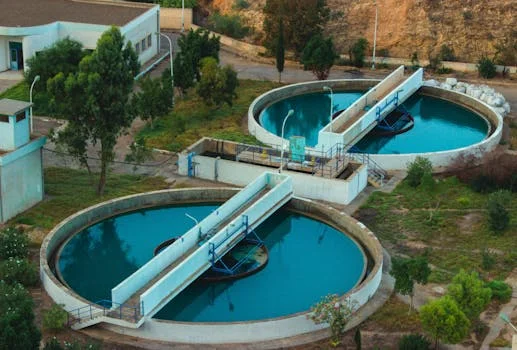
Accurately sizing a package wastewater treatment plant is a critical step that directly impacts its effectiveness, efficiency, and cost. In Punjab, wastewater generation rates vary significantly between municipal and industrial sources, and peak flow factors must be accounted for to ensure robust system performance.
Current data suggests that per capita wastewater generation in Punjab ranges from 80–120 liters per day for municipal sources. For industrial applications, this figure can be considerably higher, with estimates from EPA Pakistan in 2024 indicating 150–300 liters per day per worker or per unit of production, depending on the industry. For instance, a textile mill engaged in dyeing and finishing processes will generate substantially more wastewater than one focused solely on weaving.
Peak flow factors are essential for designing a system that can handle surges in wastewater discharge. A common rule of thumb is to apply a peak flow factor of 1.5 times the average flow for residential and municipal settings. For industrial facilities, especially those with batch processes or intermittent high-volume discharges (such as textile dyeing operations), a peak flow factor of 2.5 times the average flow is often more appropriate. For example, consider a 500-worker textile mill that generates an average of 200 m³/day of wastewater. To account for peak loads, a design capacity of 500 m³/day (200 m³/day * 2.5) would be a starting point. However, it is prudent to incorporate an additional safety margin, such as 20%, leading to a recommended design capacity of 600 m³/day. This ensures the plant can effectively manage fluctuations without compromising treatment efficiency or causing system overload.
the influent characteristics, such as BOD, COD, and TSS concentrations, play a vital role in selecting appropriate pretreatment stages. For wastewater with high FOG content, such as from food processing units, a Dissolved Air Flotation (DAF) unit is essential to remove these pollutants before they enter the biological treatment process. Similarly, if the wastewater has high suspended solids or specific refractory organic compounds, other pretreatment steps might be necessary to protect the downstream biological treatment modules.
Cost Breakdown: How Much Does a Package Wastewater Treatment Plant Cost in Punjab?
Understanding the financial investment required for a package wastewater treatment plant (WWTP) in Punjab involves a detailed analysis of both Capital Expenditure (CAPEX) and Operational Expenditure (OPEX). These costs are influenced by the plant’s capacity, the chosen technology, and the level of automation.
As of 2025, the CAPEX for package WWTPs in Punjab typically ranges from PKR 10–25 million for capacities between 10 and 100 m³/day. For larger systems, serving capacities from 100 to 500 m³/day, the CAPEX can range from PKR 40–80 million. These figures generally encompass the cost of the equipment itself, necessary civil works (such as tank construction or site preparation), installation, and full commissioning of the plant.
OPEX constitutes the ongoing costs associated with running the WWTP. A typical breakdown for a 100 m³/day MBR system reveals that energy consumption accounts for approximately 40% of OPEX, followed by chemicals at 25%, labor at 15%, and maintenance at 20%. For a 100 m³/day MBR system, the estimated operational cost is around PKR 1.2 per cubic meter, translating to approximately PKR 36,000 per month for continuous operation. This cost can vary based on local electricity tariffs and the specific chemical consumables required.
The Return on Investment (ROI) for industrial users is often calculated by comparing the avoided costs of regulatory fines against the operational expenses of the WWTP. For instance, a facility facing potential annual fines of PKR 500,000 for NEQS non-compliance might find that the OPEX for a 50 m³/day system, estimated at around PKR 18,000 per month (PKR 216,000 annually), offers a significant financial benefit. The payback period for such industrial investments typically ranges from 3 to 5 years, making package WWTPs a financially prudent decision in the long run.
| System Type | Capacity (m³/day) | Estimated CAPEX (PKR Million) | Estimated OPEX (PKR/m³) | Estimated Payback Period (Years) |
|---|---|---|---|---|
| A/O System | 100 | 12–16 | 0.7 – 1.0 | 4–6 (Industrial) |
| MBR System | 100 | 15–20 | 1.0 – 1.5 | 3–5 (Industrial) |
| SBR System | 100 | 13–17 | 0.8 – 1.2 | 4–6 (Industrial) |
| A/O System | 300 | 35–50 | 0.6 – 0.9 | 5–7 (Municipal/Industrial) |
| MBR System | 300 | 45–60 | 0.9 – 1.3 | 4–6 (Municipal/Industrial) |
| SBR System | 300 | 40–55 | 0.7 – 1.1 | 5–7 (Municipal/Industrial) |
The choice between A/O, MBR, and SBR systems will significantly impact both upfront and ongoing costs. While MBR systems may have a higher initial CAPEX and OPEX due to membrane technology, their superior effluent quality and water reuse potential can lead to greater long-term financial benefits and environmental compliance. For those considering advanced wastewater treatment options, a detailed cost and performance comparison of MBR and SBR systems for Punjab’s budget-conscious buyers can provide further insights.
Punjab NEQS Compliance: How Package Plants Meet (or Exceed) Local Standards
Achieving compliance with Punjab's National Environmental Quality Standards (NEQS) is paramount for any industrial or municipal facility. Package wastewater treatment plants are engineered to meet or surpass these critical effluent discharge parameters, ensuring environmental protection and avoiding regulatory penalties.
The current NEQS effluent limits for Punjab, as stipulated by the Pakistan Environmental Protection Agency (Pak-EPA) in 2024, are as follows: BOD must be less than 30 mg/L, TSS less than 50 mg/L, pH within the range of 6–9, and fecal coliform less than 1,000 Most Probable Number (MPN) per 100 mL. These stringent standards necessitate effective treatment processes, including robust disinfection and proper sludge management.
Disinfection is a critical final step to eliminate pathogenic microorganisms. Common disinfection methods for package plants include chlorine dioxide, UV irradiation, and ozonation. Chlorine dioxide (residual 0.5–1 mg/L) offers effective disinfection and residual protection. UV systems (dose 30 mJ/cm²) are chemical-free but can be susceptible to fouling in dusty environments common in Punjab, potentially reducing effectiveness if not regularly maintained. Ozone (2–5 mg/L) is a powerful disinfectant but requires on-site generation and can be more energy-intensive. The selection depends on factors like required residual effect, energy availability, and operational expertise. An on-site chlorine dioxide disinfection for NEQS-compliant effluent in Punjab can be a reliable and cost-effective solution.
Sludge management is another key NEQS requirement, stipulating that dewatered sludge for landfill disposal must have a moisture content below 20%. Traditional dewatering methods may struggle to achieve this level. A plate-and-frame filter press, for example, can consistently produce sludge with 15–20% moisture content, whereas centrifuges might only achieve 30–40% moisture. This makes filter presses crucial for meeting disposal regulations. Utilizing a sludge dewatering to meet Punjab’s NEQS moisture limits is essential for compliant disposal.
| Parameter | NEQS Limit (mg/L or MPN/100mL) | Typical A/O Effluent | Typical MBR Effluent | Typical SBR Effluent |
|---|---|---|---|---|
| BOD | < 30 | < 20 | < 10 | < 15 |
| TSS | < 50 | < 25 | < 5 | < 10 |
| pH | 6 – 9 | 6.5 – 8.5 | 6.5 – 8.5 | 6.5 – 8.5 |
| Fecal Coliform | < 1,000 MPN/100mL | < 500 MPN/100mL (with disinfection) | < 100 MPN/100mL (with disinfection) | < 300 MPN/100mL (with disinfection) |
The data clearly shows that both MBR and SBR systems, when coupled with appropriate disinfection, can readily meet or exceed NEQS requirements. MBR systems, in particular, offer a significant advantage in achieving very low TSS and BOD levels, often making them the preferred choice for facilities aiming for water reuse or the highest level of compliance. For specialized needs, such as treating wastewater from healthcare facilities, the Medical Wastewater Treatment System is designed to meet stringent standards with integrated ozone disinfection.
Supplier Selection Checklist: How to Evaluate Package Wastewater Treatment Plant Vendors in Punjab
Selecting the right supplier for a package wastewater treatment plant in Punjab requires a thorough evaluation process, considering both technical capabilities and local market dynamics. A comprehensive checklist can help procurement officers and facility managers make informed decisions, distinguishing between reputable vendors and those who may not meet long-term operational needs.
Key evaluation criteria should include:
- NEQS Compliance Certification: Verify that the proposed system and the supplier’s claims are backed by certifications demonstrating compliance with Pakistan’s NEQS.
- Local Service Network: A strong presence of Punjab-based technicians for installation, commissioning, and ongoing maintenance is crucial for minimizing downtime and response times.
- Warranty and Guarantees: A robust warranty, typically 2+ years for equipment and 10+ years for critical components like membranes, provides essential long-term protection.
- Proven Track Record in Punjab: Request case studies and references from similar facilities (textile, food processing, hospitals) operating within Punjab.
- Pilot Testing Capabilities: For complex industrial wastewater, the ability to conduct pilot studies to validate treatment performance is invaluable.
- Technical Support and Training: Ensure the supplier offers comprehensive training for your operational staff and readily available technical support.
Be wary of red flags such as vague effluent guarantees, a lack of offered pilot testing, or no verifiable references within Pakistan. The distinction between local and international suppliers also plays a role. Local Pakistani manufacturers often offer lower CAPEX, with systems for a 100 m³/day capacity potentially costing PKR 10–15 million. However, they might have limitations in adopting the most advanced treatment technologies or automation features. International vendors, frequently from China or Europe, typically present higher CAPEX (PKR 20–30 million for a 100 m³/day system) but often bring superior automation, higher effluent quality, and more advanced technological integration. Regardless of origin, it is advisable to consider third-party validation of performance testing, potentially through Pakistan EPA-certified or World Bank-approved laboratories, to ensure objective verification of system capabilities.
Procurement Roadmap: Step-by-Step Guide to Buying a Package Wastewater Treatment Plant in Punjab
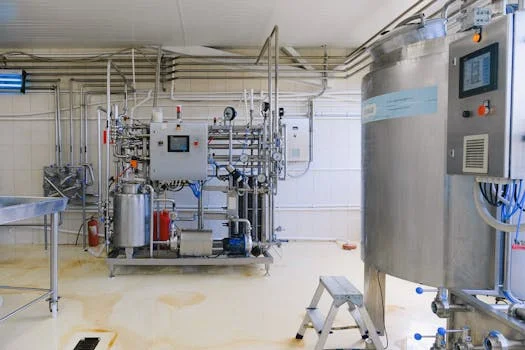
Navigating the procurement process for a package wastewater treatment plant in Punjab requires a structured approach to ensure timely acquisition and successful implementation. This roadmap outlines key stages, including estimated timelines and essential Punjab-specific approvals.
Step 1: Needs Assessment (2 weeks): Define critical parameters including average and peak flow rates, influent wastewater characteristics (BOD, COD, TSS, pH, specific contaminants), desired effluent quality, and available site space. This forms the basis for technical specifications.
Step 2: Vendor Shortlisting (1 week): Identify 3–5 potential suppliers based on their technical capabilities, experience in Punjab, and alignment with project requirements. Request preliminary proposals and technical data sheets.
Step 3: Pilot Testing (4–6 weeks): For industrial wastewater or complex municipal streams, conducting pilot testing with shortlisted vendors can validate treatment performance and optimize system design. This step is crucial for mitigating risks.
Step 4: Tendering and Negotiation (3–4 weeks): Issue a formal Request for Proposal (RFP) to shortlisted vendors. Evaluate bids based on technical merit, cost, warranty, and service support. Negotiate final terms, ensuring clear guarantees for NEQS compliance.
Step 5: Permitting (6–8 weeks): Secure necessary approvals. This typically involves obtaining environmental approval from the Pakistan EPA and a No Objection Certificate (NOC) from the local municipal authority. The complexity and duration can vary by district.
Step 6: Installation and Commissioning (4–12 weeks): Once approvals are granted and the contract is finalized, the supplier will proceed with site preparation, equipment installation, and system commissioning. The duration depends on the plant’s capacity and complexity.
The entire process, from initial needs assessment to full operation, can typically be completed within 6–9 months for a package plant in Punjab. This is significantly faster than the 12–18 months often required for custom-built, large-scale infrastructure projects. This accelerated timeline is a key advantage for facilities needing to address immediate compliance issues or expand treatment capacity rapidly.
Frequently Asked Questions
Q: Can a package plant handle Punjab’s high TDS wastewater (e.g., from textile dyeing)?
A: Yes, but pretreatment is often required for wastewater with Total Dissolved Solids (TDS) exceeding 1,500 mg/L. While MBR systems can manage TDS up to 3,000 mg/L with appropriate sludge management, higher TDS levels might necessitate advanced processes like Reverse Osmosis (RO) post-treatment for water reuse or stringent discharge. For initial pretreatment, a DAF pretreatment for high-FOG or TDS wastewater in Punjab’s industrial zones can be effective in removing suspended solids and some dissolved pollutants.
Q: What’s the smallest package plant available for a Punjab hospital?
A: For clinics and small hospitals in Punjab, the Medical Wastewater Treatment System is available with a capacity as small as 0.5 m³/day. This system is specifically designed to handle medical wastewater and typically incorporates ozone disinfection to meet stringent NEQS limits.
Q: How much space does a 100 m³/day package plant need in Punjab?
A: The footprint requirement varies by type. A buried underground package sewage treatment plant for Punjab’s land-constrained sites typically requires 20–30 m². A skid-mounted system, such as an MBR package plant for water reuse and high-effluent-quality applications in Punjab, will generally need 40–50 m² to accommodate the equipment and ensure adequate access for maintenance and servicing.
Q: Are there financing options for package plants in Punjab?
A: Yes, financing options are available. For municipal projects, the Punjab Inclusive Cities Program (PICP) may offer grants or specific funding schemes. Industrial users can explore commercial bank loans from institutions like HBL or MCB, which often provide financing with 5–7 year tenors for capital investments in environmental infrastructure.
Q: What maintenance is required for a package plant in Punjab’s climate?
A: Routine maintenance is essential for optimal performance. Monthly tasks typically include membrane cleaning (for MBRs), calibration of chemical dosing systems, and sludge removal. Quarterly checks involve servicing pumps and calibrating sensors. An annual full system audit by a certified technician is recommended to ensure all components are functioning correctly and to identify any potential issues proactively.