
What a Longview Chemicals Plant Is Actually Discharging in 2026
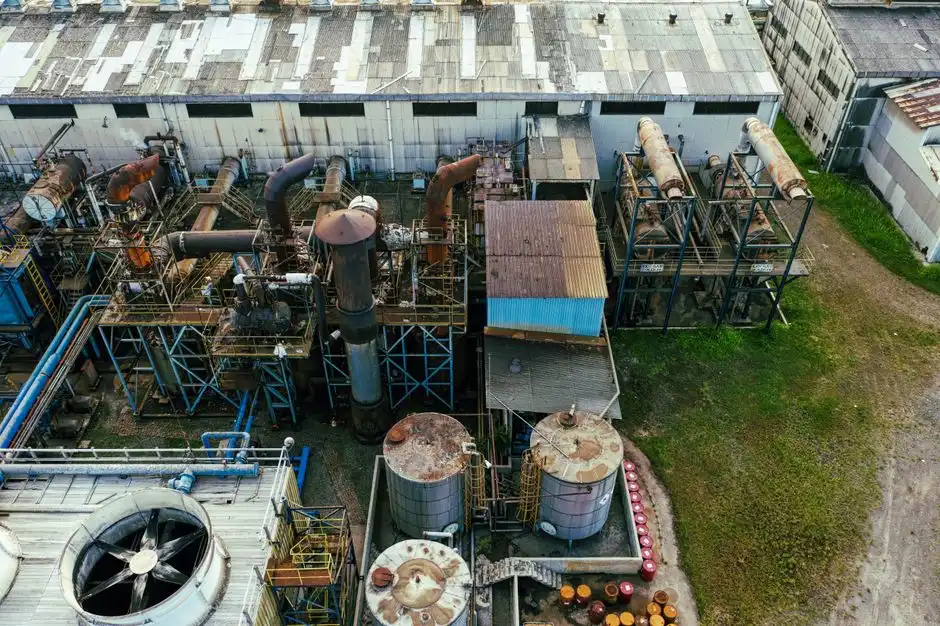
A typical 2026 Longview, TX specialty-chemicals or ethylene-adjacent plant pushes an influent envelope of TSS 200–3,000 mg/L, FOG 50–800 mg/L, pH swings from 4 to 11, and stream temperatures up to 60 °C, with dissolved metals (Fe, Al, Zn, Ni) and sulfate riding along on every batch dump. That profile is not a municipal sewage envelope; it is an emulsion-and-acid envelope, and it is the reason the wrong primary unit will cost a plant six months of permit trouble.
The EPA Process Design Manual for Suspended Solids Removal (EPA 625/1-75-003a, S1) classifies wastewater solids into four fractions by size: soluble (<0.001 µm), colloidal (0.001–1 µm), supracolloidal (1–100 µm), and settleable (>100 µm). In chemical streams, more than half of the suspended load sits in the colloidal-to-supracolloidal band — exactly the size range a gravity clarifier handles worst and a DAF handles best. EPA's own Table 7-4 lists DAF as the preferred process for oil, grease, and chemically conditioned TSS (S1, Chapter 7).
Discharge limits are enforced under the Texas Surface Water Quality Standards and TCEQ NPDES permits (30 TAC Chapter 305), with Sabine River basin assimilative capacity constraining TSS, FOG, and metals loads. A primary unit that misses on FOG or colloidal TSS will not be saved by polishing downstream. For comparable chemicals-park context, see this parallel chemicals wastewater DAF vs clarifier analysis for a Lakeland, FL plant and a similar comparison in our EV-auto wastewater guide for Tell City. Both DAF and clarifier still need coagulation and flocculation ahead of the tank; the divergence is what each does with the floc once it reaches the separator.
How a DAF and a Clarifier Actually Work
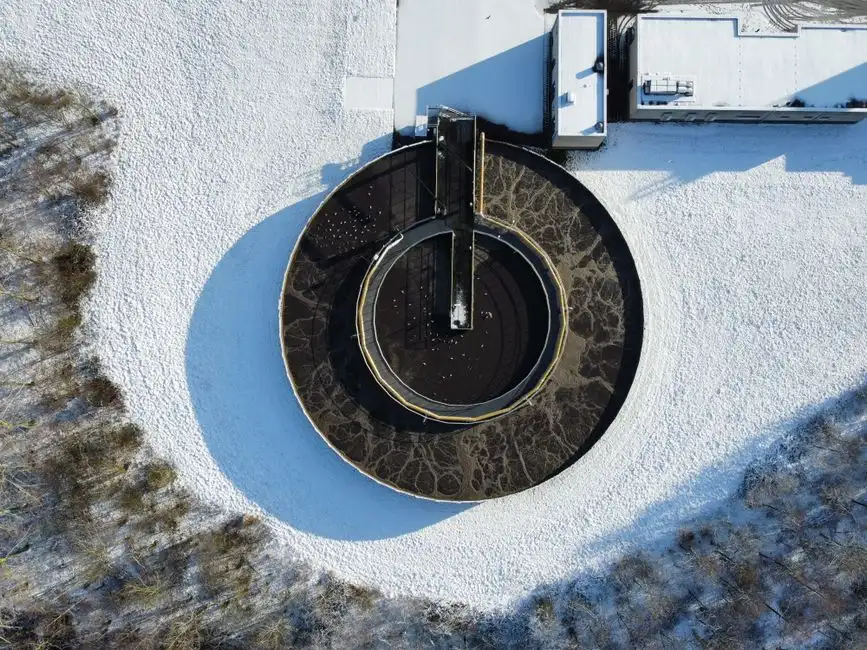
A gravity clarifier is a quiescent tank where floc settles under gravity. Overflow rates for chemical streams typically sit at 1–2 m/h (EPA, S1, Chapter 7), with sludge removed by a scraper mechanism or collected in a bottom cone. Clarifier performance is dominated by floc density, particle size, and viscosity — all of which degrade on hot, low-pH chemical streams.
A dissolved air flotation unit does the opposite. A pressurized recycle stream (around 100 psi) supersaturates clarified water with air; on pressure release into the float tank, the air comes out of solution as micro-bubbles of approximately 30 µm diameter (Aries, S4). Those bubbles attach to floc and lift it to the surface, where a flight or scoop skims it off. Hydraulic retention is short — typically 15–30 minutes — and the float layer is much drier than clarifier underflow.
Two DAF configurations dominate the 2026 chemicals market. DAF Corp's FC Maximizer is a circular, shallow, "zero-velocity" tank in diameters from 6 ft to 70 ft and flows from 10 to 11,000 gpm, achieving 92–98% TSS removal (S5). The rectangular RC UniMax covers 10–1,000 gpm at 85–90% TSS removal (S5), and skid-mounted FC Maximizers from 48–450 gpm are popular for brownfield retrofits (S5). Compare those numbers against a conventional clarifier's 80–90% settleable-solids removal (Ecologix, S2) and the mechanism choice is no longer academic.
Neither unit works without chemical pretreatment. Coagulation neutralizes particle charge and flocculation bridges particles into settleable or floatable masses — both steps are covered in EPA Manual Chapter 4 and Chapter 6 (S1). On a Longview chemicals stream, an automatic chemical dosing system tied into the PLC is what turns either technology from a paper specification into a working unit.
DAF vs Clarifier for Longview Chemicals: Side-by-Side Comparison
The trade-off below is the working table I use with East Texas plant managers when they bring me influent data and a 2026 capex envelope. Numbers are drawn from EPA Manual (S1), Ecologix (S2), Aries (S4), and DAF Corp (S5); footprint multipliers are industry-typical for a 200 gpm equalized stream.
| Parameter | Dissolved Air Flotation (DAF) | Gravity Clarifier (incl. Lamella) |
|---|---|---|
| Best-fit stream | Emulsified oil, FOG, colloidal TSS, hot (40–60 °C) streams | Settleable inorganics, metal hydroxides, gypsum, low oil |
| FOG / oil removal | ~95% (food-processing case, S2) | ~70% baseline (S2) |
| TSS removal | 92–98% circular (S5); 85–90% rectangular (S5) | 80–90% on settleable fraction (S2) |
| Hydraulic / surface loading | 5–25 m/h equivalent on float zone | 1–2 m/h conventional; 20–40 m/h on lamella plates |
| Footprint (200 gpm basis) | ~150–250 ft² skid | ~600–900 ft² conventional; ~120–180 ft² lamella |
| Sludge consistency | 2–4% solids float (S5) | 0.5–2% underflow; thickening usually required |
| Sensitivity to flow surges | Moderate; short HRT buffers spikes | High; carryover risk on hydraulic surges |
| Capex envelope (2026, planning) | $150K–$600K skid; $800K–$3M large circular (S1 Ch. 10 cost-curve logic) | $200K–$1.5M conventional; $250K–$1.2M lamella |
| Opex drivers | Recycle-pump energy, saturator, polymer | Polymer, sludge pumping, larger dewatering train |
For a tighter Longview site, the lamella clarifier's 20–40 m/h surface loading (versus 1–2 m/h on a conventional unit) collapses the clarifier footprint by roughly 10×, which is why a lamella is the clarifier side of every credible hybrid train. The HydropureWater lamella clarifier is sized for that envelope, and the lamella vs conventional clarifier breakdown walks through the hydraulic trade in more detail.
When a Clarifier Is the Right Answer in 2026
Pick a clarifier when the influent is dominated by settleable inorganics — think gypsum, calcium carbonate, or metal hydroxide precipitates from a neutralization step — with low oil content and a stable pH. In that envelope a conventional clarifier is the cheapest path to permit compliance, and a lamella clarifier collapses the footprint enough to fit most Longview chemical-park pads.
The clarifier's weakness is well documented: emulsified oils, sub-100 µm droplets, and colloidal matter slip through. Ecologix's working data put clarifier FOG removal at about 70% versus DAF's 95% on the same food-processing stream (S2), and the gap is wider on hotter, more emulsified chemicals streams. Coagulant demand is real — EPA Manual Chapter 10 cost curves (S1) show polymer dosing dominates clarifier opex — but a solids-contact clarifier with sludge recirculation can cut that dose materially.
For plants that need clarifier-level solids handling without clarifier-level footprint, the HydropureWater lamella clarifier runs at 20–40 m/h and slots into retrofits where a conventional circular basin would never fit. On heavy, low-oil streams in 2026, the clarifier is still the right call — just make sure the upstream chemistry and downstream sludge train are sized for it.
When a DAF Is the Right Answer in 2026
Pick DAF when the influent carries FOG >50 mg/L, a high fraction of colloidal TSS, or runs hot (40–60 °C) where viscosity depresses settling. The micro-bubble mechanism — ~30 µm bubbles from a ~100 psi recycle (Aries, S4) — attaches to floc and floats it regardless of floc density, which is why DAF holds its removal efficiency on streams where clarifier underflow turns to soup.
DAF Corp's FC Maximizer circular line delivers 92–98% TSS removal at flows from 10 to 11,000 gpm in 6–70 ft tanks (S5); the rectangular RC UniMax delivers 85–90% on smaller flows (S5). Skid-mounted FC Maximizers in the 48–450 gpm range (S5) are the fastest path for a 2026 brownfield retrofit in a space-constrained Longview facility — pre-piped, pre-wired, and on a single shipping skid.
Sludge consistency is the opex lever most plants undervalue. DAF float comes off at 2–4% solids (S5), versus a clarifier underflow that typically needs a thickener before it can feed a filter press. That is one less piece of equipment, less polymer, and a smaller dewatering train. The DAF system covers 4–300 m³/h in 13 standard models, which is a useful reference envelope when sizing against 2026 influent projections. For a broader procurement walkthrough, see the how to choose a DAF system guide.
The Hybrid DAF-then-Clarifier Train (Longview's 2026 Default)
The configuration I see most often in working Longview specialty-chemicals plants is a four-stage train: equalization → coagulation/flocculation → DAF → lamella clarifier → biological or membrane polish. The DAF strips emulsified oil, FOG, and the colloidal fraction; the lamella clarifier polishes residual floc and TSS, and buffers hydraulic surges that would otherwise blow through a single clarifier alone.
In practice, this train routinely pushes TSS to <30 mg/L and FOG to <10 mg/L — comfortably inside typical TCEQ NPDES permit limits for chemicals facilities discharging to the Sabine River basin. EPA Manual Chapter 7 (S1) supports the arrangement: DAF handles the light fraction, the solids-contact clarifier handles what is left, and flocculation chemistry (Chapter 6) ties both stages together. The DAF vs clarifier analysis for a Newport petroleum plant and the Mobile, AL petroleum guide apply the same train logic to adjacent Gulf Coast streams.
Skip the hybrid when flows are very small (<20 gpm) or the process is strictly batch — a single DAF or single lamella clarifier is enough. For everything else in 2026, the hybrid is the working default, not the exception.
2026 Capex and Opex Ranges for Longview Plants
These are 2026 planning estimates, framed against the EPA Manual Chapter 10 cost-curve methodology (S1), not point bids. Materials of construction (304/316 SS, FRP, epoxy-coated steel — S4, S5) and TCEQ-reviewed engineering are the swing factors between the low and high end of each band.
| Unit (2026 planning range) | Flow band | Installed capex |
|---|---|---|
| Skid-mounted DAF | 50–500 gpm | $150K–$600K |
| Large circular DAF (FC Maximizer-class) | 1,000–5,000 gpm | $800K–$3M |
| Conventional clarifier | 200–2,000 gpm | $200K–$1.5M |
| Lamella clarifier | 200–2,000 gpm | $250K–$1.2M |
| Plate-and-frame filter press (dewatering) | 5–50 ft³ press volume | $80K–$400K |
Opex is dominated by coagulant and polymer dose, recycle-pump energy on DAF, and sludge handling. DAF float at 2–4% solids (S5) feeds a filter press directly; clarifier underflow at 0.5–2% usually needs a thickener first. A plate and frame filter press pairs naturally with either underflow and pulls the dewatering train together. Final capex is set by materials, TCEQ engineering review, and how much of the train the owner absorbs inhouse.
2026 Procurement Checklist for a Longview Chemicals Plant
- Pull 2 weeks of composite influent data — TSS, FOG, pH, temperature, dissolved metals — and run a jar test per EPA Manual Chapter 4 (S1).
- Match data to the side-by-side table above. Decide single unit versus hybrid DAF-then-clarifier train before any vendor call.
- Demand a skidded, PLC-controlled package with the automatic chemical dosing system integrated, not three separate vendors.
- Confirm the TCEQ review path and require an on-site pilot or bench test (Aries protocol — S4; DAF Corp feasibility study — S5).
- Lock in 2026 spare-parts and membrane/media lead times before signing the PO; East Texas supply chains are tighter than Gulf Coast averages.
Frequently Asked Questions
For a 2026 Longview chemicals plant, should we pick DAF or a clarifier?
Pick DAF when the stream carries emulsified oil, FOG above ~50 mg/L, or colloidal TSS above ~500 mg/L — circular DAFs hit 92–98% TSS removal (DAF Corp, S5). Pick a clarifier when the load is settleable, low-oil inorganics below ~1,000 mg/L TSS; lamella clarifiers shrink the footprint to 20–40 m/h loading.
What is the realistic 2026 capex for a DAF or clarifier system?
Skid DAFs (50–500 gpm) sit at $150K–$600K installed, large circular DAFs at $800K–$3M, conventional clarifiers at $200K–$1.5M, and lamella clarifiers at $250K–$1.2M. Ranges follow EPA Manual Chapter 10 cost-curve logic (S1) and depend on materials of construction.
How does a DAF-then-clarifier train meet TCEQ NPDES limits?
DAF strips oil, FOG, and colloidal TSS; the lamella clarifier polishes residual floc and TSS. The combined train routinely hits TSS <30 mg/L and FOG <10 mg/L, well within typical TCEQ NPDES permit limits for chemicals facilities discharging to the Sabine River basin under 30 TAC Chapter 305.
Is a hybrid DAF and clarifier train worth the extra capex?
For most 2026 Longview specialty-chemicals plants above 20 gpm, yes. The DAF protects the clarifier from oil fouling, and the clarifier buffers hydraulic surges while polishing DAF effluent — a configuration that consistently meets strict TCEQ limits and reduces downstream biological or membrane loading.
Do we need a pilot test before buying a DAF in 2026?
Yes. Both Aries (S4) and DAF Corp (S5) require jar testing and often an on-site pilot to confirm removal efficiency, polymer dose, and float characteristics. Demand a written feasibility report with measured TSS, FOG, and sludge solids before signing a PO.