
Why Tell City EV and Auto Plants Are Re-evaluating Primary Solids Removal in 2026
Tell City, Indiana hosts a cluster of light-vehicle and tier-1 auto parts suppliers whose wash streams contain stamping lubricants, draw compounds, coolants, and phosphate cleaners — all regulated under 40 CFR 432 (Metal Finishing Point Source Category). The standard imposes monthly-average effluent caps that include 1.16 mg/L lead, 1.16 mg/L zinc, 1.16 mg/L copper, and oil & grease of 52 mg/L for applicable Metal Finishing subcategories; verify the exact subcategory (432.1x for automotive, 432.2x for battery components) against the current 2026 version of the rule before you commit to a design (per 40 CFR 432). The Tell City POTW pretreatment program layers on top of the federal limits, typically enforcing an oil & grease cap of 100–200 mg/L at the plant interceptor, which makes primary solids removal a hard requirement, not an option.
What changed in the last 18 months is the wastewater mix itself. EV battery-component operations have added separator-coating rinses, electrolyte-handling wash water, and high-TDS cleaner flushes to the legacy auto stream. The result is wider influent variability, more emulsified oil, and a need for an active removal step that holds steady when the slug loads hit. That is the operational reason — distinct from the compliance reason — that 2026 budget cycles for industrial wastewater treatment in the EV corridor are skewing toward flotation over gravity. For a broader view of how compliance and equipment choice are interacting in 2026, see this 2026 compliance, cost, and equipment guide for industrial wastewater treatment.
What an Automotive Wastewater Stream Actually Looks Like in 2026
A typical Tell City auto-parts influent runs 200–2,000 mg/L TSS with periodic slug loads of 5,000+ mg/L during press washdown. The FOG fraction sits at 100–1,000 mg/L, composed of free stamping oils and emulsified coolants. Free oils float; emulsified coolants and water-soluble draw compounds resist gravity settling because their specific gravity is near 1.0 — that is the fundamental reason a clarifier underperforms on this stream.
The inorganic fraction pulls in zinc, nickel, copper, and lead from plating rinses; phosphate at 5–50 mg/L from cleaning baths; and nitrate/nitrite from conversion-coating stages. The 2026-specific additions are lithium-bearing rinse water and NMP solvent traces from electrode coating, plus high-COD (>5,000 mg/L) solvent flushes that overwhelm simple settling and often force a downstream biological step. Treat this as a self-check: if your composite shows FOG above 100 mg/L, emulsified coolants, or any plating line tie-in, you are already in DAF territory and not in clarifier territory.
DAF vs Clarifier: How Each Technology Actually Works
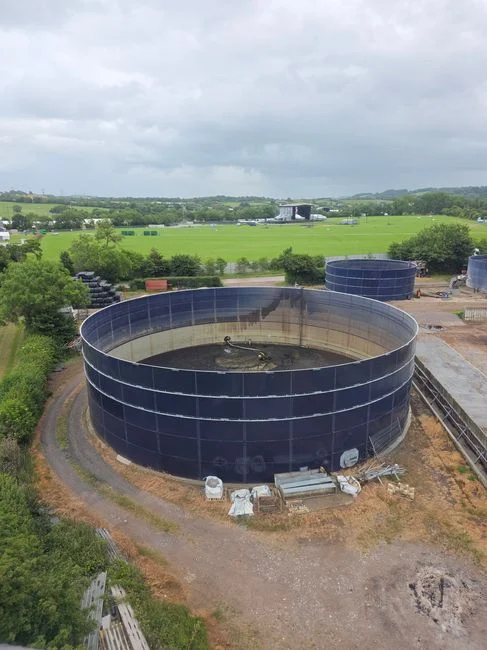
A DAF system pressurizes a side stream of clarified effluent (10–30% of the flow) at 4–6 bar, saturating it with air, and then releases the pressure at the inlet of the flotation tank. The dissolved air comes out of solution as 20–100 μm micro-bubbles that attach to flocculated particles and float them; surface loading runs 5–15 m/h and the float is skimmed off at 3–5% solids. The three operator-tunable knobs are the recycle ratio, the saturation efficiency (85–95%), and the polymer dose (0.5–5 mg/L).
A conventional clarifier is a passive vessel. It holds the flow for 2–4 hours, lets particles denser than water settle, and scrapes sludge off the floor at 1–2% underflow. A lamella clarifier inserts inclined plates at 55–60° to compress the effective settling depth, which lifts surface loading to 20–40 m/h — a middle-ground option for streams that are heavy on solids but light on oil. For the underlying mechanism, the DAF clarifier engineering primer walks through the four-stage process (coagulation/flocculation, air dissolution, bubble-particle attachment, flotation/skimming) with the operating numbers a peer will ask about.
Side-by-Side Comparison: DAF, Lamella Clarifier, and Conventional Clarifier
For the same 50 m³/h auto-parts stream, the three technologies diverge sharply on FOG, footprint, and sludge dryness. The table below uses HydropureWater field data and the ranges cited in the commercial DAF literature (per S2 and S4).
| Parameter | DAF | Lamella Clarifier | Conventional Clarifier |
|---|---|---|---|
| TSS removal | 92–97% | 70–85% | 50–70% |
| FOG removal | up to 95% | 30–50% | 30–50% |
| Surface loading (m/h) | 5–15 | 20–40 | 1–2 |
| Footprint vs DAF | 1× baseline | ~0.7× DAF | 4–5× DAF |
| Sludge solids | 3–5% | 1–2% | 1–2% |
| Energy (kWh/m³) | 0.2–0.5 | 0.05–0.1 | 0.02–0.05 |
| Typical CAPEX band | $50K–$500K | $30K–$250K | $40K–$300K |
For the same flow, a DAF is roughly 5× more space-efficient than a conventional clarifier but uses 4–10× the energy. That is a real trade-off, and the engineer who ignores it in front of a procurement committee loses credibility. The energy line item is what closes the gap on a cost-only decision; the FOG and sludge-dryness lines are what close the gap on a compliance decision.
When a DAF Wins for an EV/Auto Plant (the Common Case)
Any stream with FOG above 100 mg/L or with emulsified oils — stamping, machining, parts washing, EV battery coating lines — should default to DAF. DAF handles slug loads better because the operator can raise the recycle ratio and polymer dose in real time; a clarifier cannot, which is why the literature consistently reports 95% FOG removal on a DAF versus 70% on a clarifier treating the same oily stream (per S2). For a worked example from a comparable midwestern auto corridor, the EV/auto wastewater guide for Kansas City walks through the same influent profile and the same 40 CFR 432 anchor.
The second economic lever is float-sludge dryness. A DAF float at 3–5% solids cuts hauls by 50–70% versus a clarifier underflow at 1–2% solids, which is a roughly $40,000/yr disposal saving benchmark for a medium plant (per S4, wastewater treatment engineering budget data). That saving alone pays back the DAF CAPEX premium in 1.5–3 years. The standard solids train is a rotary bar screen upstream to protect the nozzles and recycle pump, and a plate-and-frame filter press downstream to push the cake to 25–35% solids before haul-off. For the day-to-day operational issues on that press, the sludge press troubleshooting guide covers the seven failure modes that show up most often in the field.
When a Lamella Clarifier or a Hybrid Train Is the Right Call
A lamella clarifier is the right primary step when the stream is high-grit and low-oil — for example, shot-blast dust capture or glass-cleaning rinse. With FOG below 50 mg/L, the inclined plates deliver 70–85% TSS removal at 20–40 m/h surface loading, and CAPEX lands well below a DAF. A standalone clarifier is rarely the right call at a Tell City auto plant because the stream almost always carries emulsified oil, but it is the right polishing stage.
For plants that need to hit both the FOG cap at the POTW and the metal limits under 40 CFR 432, the standard train is bar screen → DAF (oil and fine solids) → chemical precipitation at pH 9–10 → lamella clarifier (metal-hydroxide sludge) → sand/carbon filter → discharge. The DAF + biological reactor combination is well documented for synthetic oily wastewater treatment (per S3) and general industrial oily waste (per S2). Inline without commentary, the dosing step typically uses an automatic chemical dosing system for pH and polymer control, and a chlorine dioxide generator for any residual disinfection before discharge. A parallel reference for the etching/coating side of the same train is the etching wastewater hybrid system guide.
2026 Cost Model: CAPEX, OPEX, and ROI for a Tell City Plant
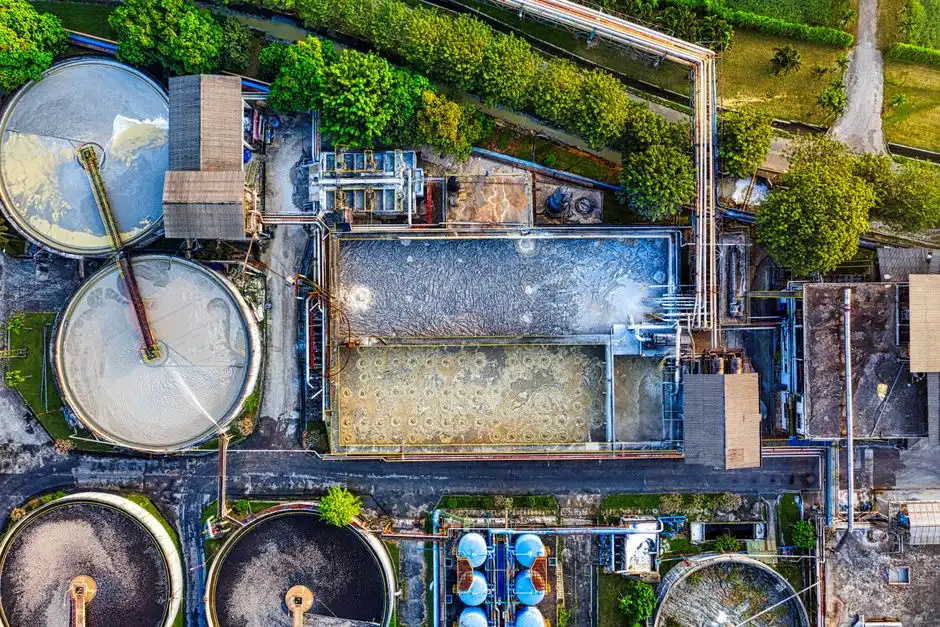
Worked example: 50 m³/h auto parts plant, two-shift operation, influent FOG 400 mg/L, discharge target ≤ 50 mg/L to meet a typical 100 mg/L POTW cap with a safety margin for slug loads.
| Line item | DAF (SS304, semi-auto) | Lamella Clarifier |
|---|---|---|
| CAPEX (installed) | ~$120,000 | ~$70,000 |
| Energy (kWh/m³ × 16 hr × $0.08) | ~$15,700/yr | ~$2,400/yr |
| Polymer | ~$8,000/yr | ~$2,000/yr |
| Maintenance (~3% CAPEX/yr) | ~$3,600/yr | ~$2,100/yr |
| Sludge hauling (solids basis) | ~$25,000/yr | ~$70,000/yr |
| 5-year net cost | ~$185,000 | ~$210,000 |
The DAF carries a ~$50,000 higher CAPEX but saves roughly $45,000/yr in sludge hauling because the float is 3–5% solids versus 1–2% underflow. On disposal alone, the payback is about 2.1 years, and it shortens further once you price in avoided 40 CFR 432 excursions. The CAPEX and OPEX ranges on the DAF system page sit inside the $50K–$500K band that this worked example is scaled from, so the numbers should be treated as order-of-magnitude for a real proposal, not a fixed quote.
Tell City Compliance Checklist Before You Sign the PO
Four steps, in order, that you can put on a single page and walk into a meeting with:
- Pull a 7-day composite influent and effluent sample; quantify FOG, TSS, zinc, lead, copper, phosphate, and pH. If FOG is above 100 mg/L or you see emulsified coolant, the DAF case is already made on data.
- Confirm the Tell City POTW discharge limits (oil & grease, metals, pH window 6.0–10.0) and the 40 CFR 432 subcategory that maps to your NAICS code — 432.1x for automotive parts finishing, 432.2x for battery-component lines.
- Validate polymer selection with jar testing on the actual composite. Cationic polymer for oil and grease, anionic for metal-hydroxide floc; do not let a vendor pick this for you without a bench test.
- Design for pH 6.5–8.5 in the DAF floc zone (per S4) and reserve footprint downstream for a sludge press cake area and a chemical-dosing skid. Both of those land in the CAPEX conversation whether or not you install them on day one.
Frequently Asked Questions
Is a DAF or a clarifier the right primary step for a Tell City EV or auto parts plant in 2026?
DAF, in the common case. With FOG above 100 mg/L or any emulsified coolant, DAF delivers 92–97% TSS and up to 95% FOG removal (per S4), versus 50–70% TSS and 30–50% FOG on a conventional clarifier, which is rarely enough to meet a 40 CFR 432 subcategory effluent limit plus a Tell City POTW oil & grease cap on the same stream.
What 40 CFR 432 effluent limits drive the DAF vs clarifier decision?
The Metal Finishing subcategory sets monthly-average caps that include 1.16 mg/L lead, 1.16 mg/L zinc, 1.16 mg/L copper, and oil & grease at 52 mg/L for applicable lines (per 40 CFR 432; verify your exact subcategory). A conventional clarifier typically cannot hold oil & grease to those levels on an auto stream without chemical polishing, which is why DAF is the default primary step.
When is a lamella clarifier the better choice over a DAF for auto wastewater?
When FOG is below 50 mg/L and the dominant load is inorganic grit or shot-blast dust, a lamella clarifier hits 70–85% TSS removal at 20–40 m/h surface loading for roughly 60% of the DAF CAPEX. For oily or mixed streams at a Tell City plant, lamella is better positioned as a polishing step after DAF and chemical precipitation, not as the primary.
How long does a DAF system take to pay back at a 50 m³/h Tell City auto plant?
On disposal savings alone, roughly 2.1 years, based on a $120,000 DAF CAPEX, 3–5% float solids versus 1–2% clarifier underflow, and a $40,000/yr haul-cost reduction benchmark for a medium plant (per S4). Include avoided 40 CFR 432 excursions and the payback tightens to the 1.5–3 year range cited in the DAF ROI framework.