How Chemicals Wastewater in Lakeland Differs from Food or Mining Streams
Lakeland chemicals factories in 2026 should choose a DAF when the stream carries free or emulsified oil, FOG, sulfides, or fine chemical floc, and a lamella or circular clarifier when the stream is dominated by heavy settleable solids (metal-bearing precipitates, gypsum, catalyst fines). Hybrid DAF + lamella is the defensible default for facilities under 40 CFR Part 414 with mixed influent. CAPEX/OPEX should be sized from the EPA 821-R-98-016 costing-document curves, not vendor list price.
40 CFR Part 414 (organic chemicals, plastics, synthetic fibers) covers streams with free and emulsified oil, sulfides, phenols, VOC strippables, BOD/COD commonly 500-5,000 mg/L, and pH swinging between 2 and 12 across batch campaigns. 40 CFR Part 415 (inorganic chemicals) is the opposite chemistry: heavy metal hydroxides, gypsum, silica, catalyst fines, and occasional hex chrome breakthrough. A generic DAF-vs-clarifier page written for food or mining waste misses both regulatory anchors and the contaminant split that flips the technology choice.
The EPA 821-R-98-016 Detailed Costing Document (Dec 1998) organizes the cost-benchmarking structure around Metals Option 2/3/4 subcategories, with clarification cost curves in Tables 2-33 to 2-35 and DAF cost curves in Tables 2-48 to 2-50. For Florida siting, three discharge pathways exist: FDEP Industrial Wastewater Facility Permit under 62-620 FAC for surface-water discharge, City of Lakeland POTW pretreatment limits under local Chapter 22, and Class I Underground Injection Control (UIC) deep-well disposal, which bypasses the primary-separator question entirely. The heavy metals removal process guide covers the chemistry side in more detail.
What a DAF Actually Does on a Chemicals Stream
A DAF saturates a recycle side-stream with air at 4-6 bar (60-90 psig), then releases that pressure inside the flotation tank through a micro-bubble generator that produces 20-40 micron bubbles consistently 24/7. The bubbles attach to oil droplets, floc particles, and FOG, lowering their effective density and floating them to the surface, where a skimmer sweeps the float layer into a sludge hopper. On a chemicals stream, this is the right mechanism whenever the target contaminant is lighter than water or has been coagulated into a low-density floc.
DAF performance numbers on industrial streams: 92-98% TSS removal on a 2,000 ppm feed (DAF Corp FC Maximizer, zero-velocity shallow-tank design), and 95% oil/grease removal on a high-FOG stream (Ecologix 2026 case, food-processing benchmark used as a chemistry proxy). Micro-bubble sizing is the variable that controls performance, since 20-40 micron is the practical operating range, and a coarser bubble distribution drops attachment efficiency sharply. Chemicals streams also require upstream polymer/coagulant conditioning; a PLC-controlled coagulant/flocculant dosing system stabilizes charge neutralization and floc size across pH swings of 2-12.
The HydropureWater DAF covers 4-300 m³/h across 13 standard models and pairs with the HydropureWater automatic chemical dosing system for charge-neutralization control ahead of the saturator. DAF sludge exits at 2-4% total solids, which is wet enough to pump but dry enough to feed a filter press directly.
What a Clarifier (Conventional or Lamella) Does on a Chemicals Stream
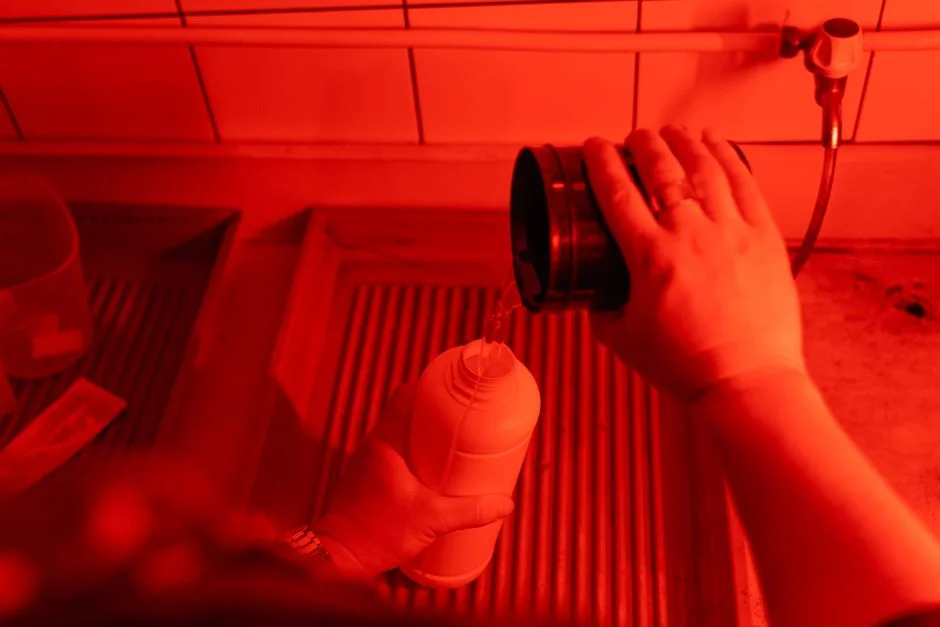
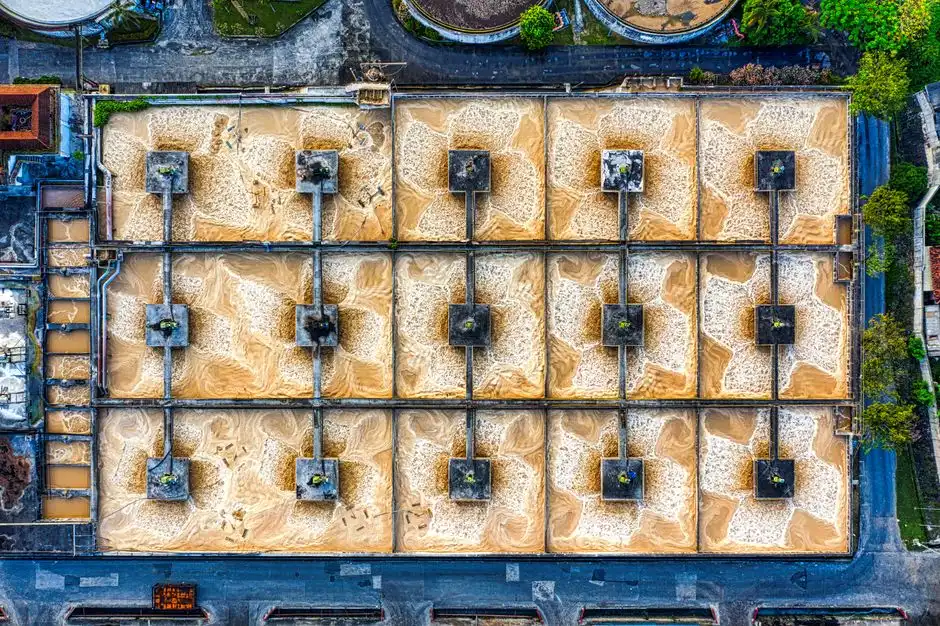
A clarifier separates by gravity. Heavy solids settle to the bottom under quiescent conditions and are scraped to a central hopper; clarified water overflows peripheral weirs. A conventional circular or rectangular clarifier runs at 1-2 m/h surface loading. A lamella (inclined-plate) clarifier tilts the equivalent settling area at 55-60°, packing 60-80% more effective area into the same footprint and pushing surface loading rates to 20-40 m/h. On a 40 CFR Part 415 stream dominated by metal hydroxides, gypsum, or catalyst fines, gravity settling is the cheaper mechanism, and the lamella geometry keeps the tank small enough to fit inside an existing chemicals-plant pad.
Removal numbers: a well-designed conventional clarifier delivers 50-70% TSS without chemistry, and 70-90% with chemically-enhanced primary treatment (coagulant + polymer), per the Richmond WWTP capital improvement study (2007-03-26). A Stamford upflow baffle installed on a clarifier improves performance by up to 38% by suppressing density currents that carry solids up the sidewall and over the effluent weir. The HydropureWater lamella clarifier spec lists up to 30% reduction in chemical consumption via sludge-recirculation floc-blanket operation, which is meaningful for a high-throughput inorganic-chemicals site buying polymer by the tote.
The lamella choice trades plate-pack inspection for the absence of a saturator, compressor, and recycle pump. Clarifier underflow typically runs 1-2% solids, which is wetter than DAF float and usually needs a thickener before filter press dewatering.
DAF vs Clarifier for Chemicals: Side-by-Side Comparison
Chemically-enhanced primary clarification allows a higher peak overflow rate during storm events while maintaining TSS removal, and that peak-flow resilience is part of why both unit operations survive in modern plants. The table below is the single reference a procurement engineer can paste into a 2026 capital memo. Numbers are sourced from DAF Corp (FC Maximizer), the Ecologix 2026 DAF-vs-clarifier guide, the Richmond WWTP CIP study (2007-03-26), and the EPA 821-R-98-016 costing curves.
| Parameter | DAF | Conventional Clarifier | Lamella Clarifier |
|---|---|---|---|
| Separation mechanism | Air flotation (micro-bubbles) | Gravity sedimentation | Gravity sedimentation on inclined plates |
| Dominant removal | Oils, FOG, emulsions, light floc | Heavy settleable solids | Heavy settleable solids in compact footprint |
| TSS removal | 92-98% (DAF Corp, 2,000 ppm feed) | 50-70% no chemistry; 70-90% chemically enhanced | 70-90% chemically enhanced, higher with Stamford baffle (up to +38%) |
| Oil/grease removal | ~95% (Ecologix 2026 case) | ~70% | ~70% |
| Surface loading rate | n/a (rise rate limited) | 1-2 m/h | 20-40 m/h |
| Footprint | Compact (shallow tank) | Largest | 60-80% smaller than conventional |
| Energy demand | Air compressor, saturation pump, recycle pump | Mostly passive; rake drive | Mostly passive; rake drive |
| Chemical conditioning | Coagulant + flocculant required | Polymer optional; required for enhanced mode | Coagulant + flocculant with floc-blanket recirculation |
| Sludge consistency | 2-4% solids float | 1-2% underflow | 1-2% underflow; thickenable |
| CAPEX anchor (EPA 821-R-98-016) | Tables 2-48 / 2-49 | Table 2-33 | Table 2-33 (analogous) |
| O&M anchor (EPA 821-R-98-016) | Tables 2-55 / 2-57 | Tables 2-34 / 2-35 | Tables 2-34 / 2-35 |
Two patterns dominate: DAF wins on light contaminants and tight footprints; clarifiers win on heavy precipitates and passive OPEX. Neither is a default — the right answer follows the influent.
CAPEX and OPEX: Sizing the 2026 Decision
Vendor list price reflects a single configuration at a single flow rate and ignores site-specific civil, electrical, and instrumentation costs. The EPA 821-R-98-016 Detailed Costing Document (1998-12) gives a more defensible structure: total capital cost curves for DAF and Modified DAF (Tables 2-48 and 2-49, page 2-93), clarification total capital cost (Table 2-33, page 2-58), clarification O&M (Tables 2-34 and 2-35), and DAF O&M split by flow band — Tables 2-55 and 2-56 for flow >20 gpm, Tables 2-57 and 2-58 for flow <20 gpm.
To use the curves in 2026, escalate 1998 dollars with the CWT Treatment Technology Costing Index (EPA 821-R-98-016, Section 1) or the ENR Construction Cost Index, and apply the CAPDET cost methodology in Section 1 of the same document. The O&M cost structure is dominated by lime/caustic, polymer, energy, and labor (Section 2.1). Below 20 gpm the system is labor-intensive per unit flow; above 20 gpm it shifts to energy-and-chemical intensive, which matters when a Lakeland site is choosing between a single 80 gpm DAF and two parallel 40 gpm units.
| Cost dimension | DAF | Lamella / Clarifier |
|---|---|---|
| CAPEX reference (1998 USD) | EPA 821-R-98-016, Table 2-48 / 2-49 | EPA 821-R-98-016, Table 2-33 |
| Land reference | Tables 2-52, 2-53 | Table 2-29 |
| O&M, flow > 20 gpm | Tables 2-55 / 2-56 | Tables 2-34 / 2-35 |
| O&M, flow < 20 gpm | Tables 2-57 / 2-58 | Tables 2-34 / 2-35 |
| Recurring O&M items | Compressor service, micro-bubble generator inspection, polymer, energy for recycle pump | Polymer (less, with floc-blanket), rake drive energy, plate inspection |
| OPEX ranking (Ecologix 2026) | Higher | Generally lower |
| CAPEX premium recovery | Only when emulsified-oil fouling is eliminated downstream | n/a |
Clarifiers generally carry lower OPEX (Ecologix 2026), and the DAF CAPEX premium is recovered only on streams where the air-flotation step eliminates an emulsified-oil fouling event downstream (membrane fouling, biological toxicity breakthrough, or product loss in the float). For projects that need both a CAPEX/OPEX backbone and a zero-liquid-discharge trajectory, the hybrid DAF-MBR-RO design framework for GaN and similar fabs shows how the primary separator is sized inside a larger treatment train.
Compliance Filter: 40 CFR Part 414, 40 CFR 415, and FDEP
The engineering choice and the regulatory ceiling must be reconciled before procurement signs a PO. 40 CFR Part 414 (Organic Chemicals, Plastics, and Synthetic Fibers) sets BPT, BAT, and NSPS effluent limits for direct and indirect dischargers — TSS, oil & grease, COD/BOD, and pH are the parameters most often driving the unit-operation choice. 40 CFR Part 415 (Inorganic Chemicals Manufacturing) sets limits for total metals, TSS, and pH by subcategory; cyanide destruction, sulfide precipitation, and metals removal appear as explicit subcategory treatment trains inside EPA 821-R-98-016 (Sections 2.6, 2.1.5, 2.1.1).
Florida-side: FDEP Industrial Wastewater Facility Permitting under 62-620 FAC requires effluent monitoring and design review for any surface-water discharge. City of Lakeland pretreatment limits (Chapter 22, Code of Ordinances) impose local caps on pH, FOG, and metals for any site discharging to the POTW. Class I UIC deep-well injection (FDEP Underground Injection Control) is the alternative disposal route that bypasses the DAF-vs-clarifier question, but it carries its own construction and monitoring burden. For sites that stay on surface-water or POTW discharge, FOG and TSS are the two parameters that most often force a DAF, because gravity settling alone underperforms on emulsified oils that violate local FOG limits.
When to Choose DAF, Clarifier, or Hybrid in 2026
Three configurations cover essentially every 40 CFR Part 414 and Part 415 stream a Lakeland chemicals plant will see in 2026. The decision is contaminant-driven, not vendor-driven.
Choose DAF when free or emulsified oil exceeds ~50 mg/L, FOG is present, sulfides or phenols are stripped to a pretreatment tank, floc is light and slow-settling, or space is constrained. DAF is the right answer whenever the contaminant floats or has been chemically conditioned to float. The HydropureWater DAF covers 4-300 m³/h across 13 standard models for this case.
Choose lamella or inclined-plate clarifier when dominant solids are heavy metal hydroxides, gypsum, or catalyst fines, when flow is steady, when footprint premium is acceptable, and when OPEX must be minimized. The HydropureWater lamella clarifier at 20-40 m/h surface loading and up to 30% polymer reduction via floc-blanket recirculation is the default inorganic-chemicals pick. Add a Stamford upflow baffle if the existing tank is showing density-current carryover (Richmond WWTP data: +38% performance).
Choose hybrid DAF + lamella when the stream carries both light oil/FOG and heavy precipitates. DAF acts as primary, removing the floatable fraction; lamella polishes the underflow and thickens the heavy-solids sludge. This is the most common configuration for 40 CFR Part 414 facilities and the configuration the EPA costing document models with separate unit operations (Sections 2.7 and 2.8). For Lakeland's summer rainfall and stormwater-driven peak flows, chemically-enhanced clarification allows higher peak overflow while maintaining TSS removal, so the hybrid also absorbs hydraulic surges better than either unit alone. The same framework applies to a different chemical-cluster geography in the chemicals wastewater buyer's guide for Fredericksburg, PA.
Implementation Checklist for a 2026 Lakeland Project
Five items move the project from procurement to commissioning without surprises:
- Run a jar test for polymer and coagulant selection — both DAF and lamella performance depend on floc chemistry, and the 2-12 pH swing of a Part 414 stream means one fixed dose will not hold across campaigns.
- Confirm power supply and footprint. DAF needs compressed air and a saturation tank; lamella needs headroom for plate packs and a rake drive.
- Pre-pilot with an on-site DAF or clarifier pilot unit before 2026 procurement (DAF Corp offers pilot feasibility studies, 80-100 gpm pilot scale on the RC UniMax).
- Plan sludge handling — DAF float at 2-4% solids feeds well to a plate-and-frame filter press; clarifier underflow at 1-2% usually needs a gravity belt thickener first.
- Coordinate FDEP permit modification if discharge limits tighten or the flow path changes (deep well to surface water, or POTW to reuse).
Frequently Asked Questions
What TSS removal can a DAF realistically hit on a 2,000 ppm chemicals feed?
92-98% TSS removal at 2,000 ppm feed, exiting below 50 ppm TSS in the clarified water (DAF Corp FC Maximizer, zero-velocity shallow-tank design). Performance drops if micro-bubble sizing drifts above 40 microns, so a dedicated micro-bubble generator matters more than tank size on a chemicals stream.
How much cheaper is a lamella clarifier to operate than a DAF in 2026?
Clarifiers generally have lower operational costs (Ecologix 2026), with the gap driven by eliminated compressed-air, saturation-pump, and recycle-pump energy. Lamella units also cut polymer use by up to 30% via floc-blanket sludge recirculation, which compounds the OPEX advantage on long chemical campaigns.
Which EPA costing tables should a 2026 capital study reference for DAF and clarifier CAPEX?
Use EPA 821-R-98-016 (1998-12) Tables 2-48 and 2-49 for DAF and Modified DAF total capital cost, Table 2-33 for clarification total capital cost, and Tables 2-34/2-35 for clarification O&M. Escalate 1998 dollars to 2026 with the CWT Treatment Technology Costing Index from Section 1 of the same document or the ENR Construction Cost Index.
When does a Lakeland chemicals plant need a Stamford baffle in its clarifier?
When the existing clarifier shows density-current carryover — solids traveling up the sidewall and over the effluent weir during peak flow. A Stamford upflow baffle improves performance by up to 38% by suppressing those currents (Richmond WWTP CIP study, 2007-03-26), and it is the lowest-cost retrofit in a clarifier upgrade.
Does the same DAF-vs-clarifier framework apply outside Florida?
Yes — the EPA 821-R-98-016 cost curves and 40 CFR Part 414/415 effluent limits are federal, so the decision logic is portable. Site-specific factors change: discharge pathway, rainfall-driven peak flows, and local POTW limits. The same framework applied to a Pennsylvania chemicals site is detailed in the chemicals wastewater buyer's guide for Fredericksburg, PA.