Why Discharge Limits Force Plants to Remove Heavy Metals Faster
Five process families remove heavy metals from industrial wastewater: hydroxide precipitation, ion exchange, adsorption, membranes, and electrocoagulation. Influent above 50 mg/L total metals usually starts with precipitation to 0.5–2 mg/L. Targets below 0.1 mg/L need ion-exchange or RO polish. Cr(VI) must be reduced to Cr(III) before any hydroxide step.
EPA TCLP thresholds for characteristic hazardous waste still sit at 5 mg/L Pb, 1 mg/L Cd, 5 mg/L total Cr, and 5 mg/L As under 40 CFR 261.24. Those numbers now sit beside Clean Water Act ELG rules and state mass-loading caps that did not exist a decade ago. The EU IED 2010/75/EU BAT-AELs tightened in the 2024 BREF revision and now sit in a 0.05–0.3 mg/L range for Cu, Ni, Zn, Cd, and Pb on most direct-discharge permits. Thailand's 2026 industrial effluent standard holds Cr(VI) at ≤0.25 mg/L — see the Thailand 2026 chromium discharge compliance guide for enforcement mechanics.
Per-day civil penalties under U.S. EPCRA and state programs routinely run into five figures. Consent decrees have included mandatory shutdowns for repeated exceedances. Engineers should size around kg/day mass loading, not concentration alone. Treat "total metals" versus "dissolved metals" sampling as a permit-defining choice that can swing compliance by 20–40%.
| Jurisdiction | Metal | 2026 Limit | Framework |
|---|---|---|---|
| USA (TCLP) | Pb | 5 mg/L | 40 CFR 261.24 |
| USA (TCLP) | Cd | 1 mg/L | 40 CFR 261.24 |
| USA (TCLP) | Cr (total) | 5 mg/L | 40 CFR 261.24 |
| USA (TCLP) | As | 5 mg/L | 40 CFR 261.24 |
| EU IED | Cu, Ni, Zn | 0.05–0.3 mg/L | BAT-AEL (2024 BREF) |
| EU IED | Cd, Pb | 0.05–0.1 mg/L | BAT-AEL (2024 BREF) |
| Thailand | Cr(VI) | 0.25 mg/L | 2026 Industrial Effluent Standard |
Matching Each Metal to Its Source Industry
Influent concentration is the single most important design driver for any heavy-metal treatment train. It varies by two orders of magnitude across industries. Plating and metal finishing streams run 10–500 mg/L across Cu, Ni, Cr, and Zn, with high EDTA and brightener loads that complicate precipitation chemistry. Mining and mineral processing generate 0.5–50 mg/L As, Cd, and Pb streams typically paired with high sulfate and suspended solids.
Battery materials manufacturing — particularly Li-ion precursor (Ni-Co-Mn) synthesis — produces 50–500 mg/L mixed transition-metal streams at low pH, often with ammonia present. Semiconductor and PCB fabs generate dilute Cu, Pb, and Sn at 1–20 mg/L but with strict ultrapure-water reuse requirements downstream. Tanneries discharge Cr(III) at 20–200 mg/L, almost always as sulfate-complexed species that resist standard hydroxide precipitation.
Real industrial streams also contain co-contaminants — organics, oils, and chelating agents. The simultaneous-removal literature (Bolto 2004; Xie et al. 2020) consistently flags these as the reason bench-scale results do not transfer to plant scale. Most plants we size for plating rinse water run at the lower end of those concentration bands once segregation is in place.
Chemical Precipitation: The Workhorse First Stage
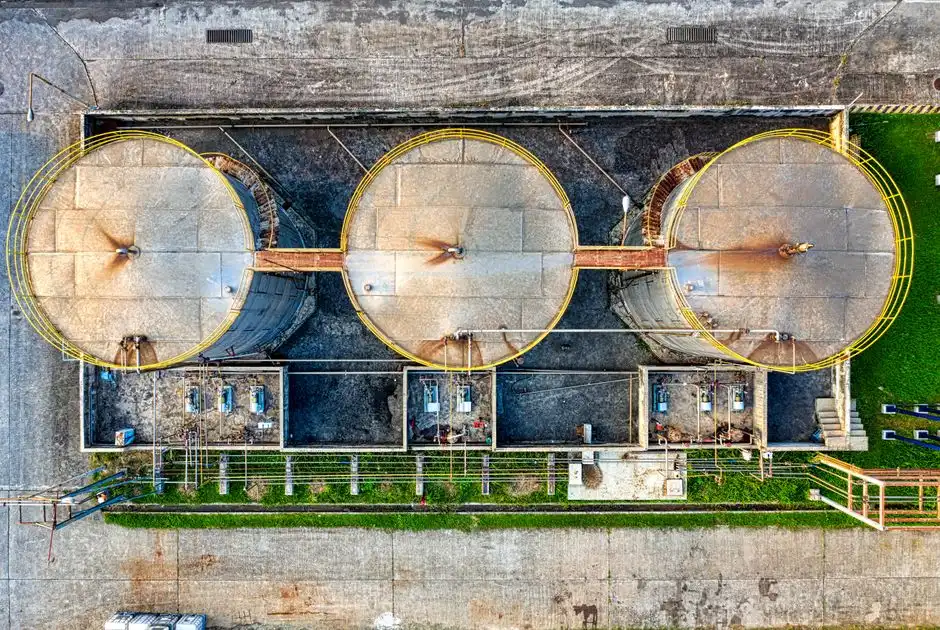
Metal hydroxide precipitation remains the lowest-CAPEX first stage for any train handling >50 mg/L influent. Dose NaOH, lime, or Na2CO3 to push pH past the metal's solubility minimum, then settle or float the precipitate in a lamella clarifier for metal hydroxide settling. Typical reagent dose runs 50–500 mg/L as Ca(OH)2 or NaOH. The pH window matters more than the dose: Cu precipitates cleanly at pH 7–9, Zn at pH 8–10, Ni at pH 9–11, Cd at pH 10–11, and Cr(III) at pH 8–9.5.
Cr(VI) does not respond to hydroxide alone. It requires prior reduction to Cr(III) with FeSO4 or Na2S2O5 at pH 2–3, then re-precipitation. Single-stage hydroxide precipitation achieves 0.5–2 mg/L effluent. Two-stage hydroxide or sulfide precipitation pushes that to 0.1–0.5 mg/L. The hidden cost driver is sludge: 2–5 kg dry solids per kg metal removed. That is why a filter press for metal hydroxide sludge dewatering directly shapes OPEX. A PLC-controlled NaOH and lime dosing system with pH cascade control is the standard package on trains we commission today.
| Metal | Optimal pH | Single-Stage Effluent | Two-Stage Effluent |
|---|---|---|---|
| Cu | 7–9 | 0.5–1 mg/L | 0.1–0.3 mg/L |
| Zn | 8–10 | 0.5–2 mg/L | 0.2–0.5 mg/L |
| Ni | 9–11 | 0.5–2 mg/L | 0.2–0.5 mg/L |
| Cd | 10–11 | 0.5–1 mg/L | 0.1–0.3 mg/L |
| Cr(III) | 8–9.5 | 0.5–1 mg/L | 0.1–0.3 mg/L |
Ion Exchange: Hitting Sub-ppm Effluent for Premium Discharges
Ion exchange is the proven polishing step when the permit or reuse specification demands <0.1 mg/L for Cu, Ni, Zn, or Cd. Strong-acid cation resin in Na+ or H+ form swaps a proton or sodium for the target metal. Chelating resins (iminodiacetate, aminomethylphosphonic acid) give selective uptake for Ni and Cu even when calcium and magnesium are present. Working capacity runs 1.2–2.0 eq/L. Breakthrough is typically signaled at 50–80% loading on an 8–24 h service cycle depending on influent load.
Achievable effluent sits at <0.1 mg/L for most divalent metals, inside EU BAT-AELs and most battery-grade reuse specs. Regeneration consumes 5–10% HCl or H2SO4 for cation resin, with 2–5% NaOH for two-bed or mixed-bed systems. Spent regenerant volume runs 1–3 bed volumes and can be recycled upstream into the precipitation stage to recover its acid value. Best fit is low-flow polishing after precipitation, or selective recovery of high-value Cu and Ni from plating rinse water where the metal pays for the resin.
Adsorption on Carbon, Biosorbents, and Polymer Composites
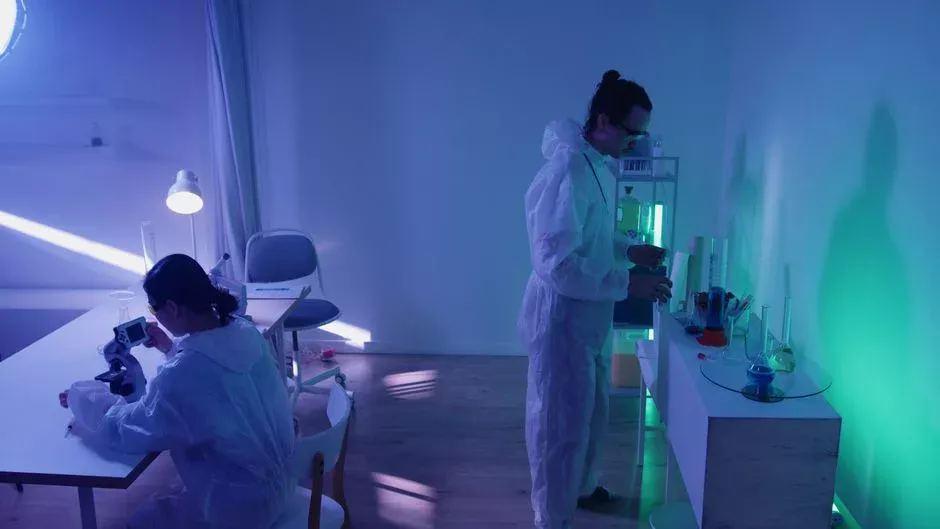
Adsorption is the materials-science frontier — and the source of the most overpromised bench-scale data. The Jadoun 2023 review of conducting-polymer adsorbents reports 80–99% removal of Cu, Pb, Cr(VI), and Cd across polyaniline, polypyrrole, and PEDOT composites. Activated carbon remains the commercial baseline at 20–80 mg Cu/g capacity. Pricing has pushed industrial buyers toward chitosan and modified-cellulose biosorbents that hit 60–150 mg/g at 30–50% of the cost.
The Hao et al. 2023 graphene-oxide/montmorillonite composite aerogel shows selective Cu2+ capture from mixed streams. That is useful proof of concept, but still at research scale with no commercial supply chain. The honest engineering case for adsorption is trace polishing where target limits sit below 0.05 mg/L. It also fits where precipitation chemistry is fouled by chelating agents (EDTA, ammonia, citrate) that hold metals in solution past their normal pH of minimum solubility. For a 20 m³/h plant, adsorption is rarely the primary stage.
Membrane Processes: RO and Nanofiltration for Reuse-Quality Effluent
RO or nanofiltration enters the train when the goal is reuse-grade water rather than just permit compliance. RO rejection of multivalent metal ions exceeds 97% at 200–500 psi feed pressure. Nanofiltration delivers 50–90% rejection of divalent metals at 50–150 psi, which is enough when the downstream target is process water rather than ultrapure rinse. The catch is pretreatment: RO membranes require feed TSS <1 mg/L and Silt Density Index <3. That forces a multi-media filter as RO pretreatment ahead of the high-pressure pump.
Concentrate disposal is the real design constraint. About 10–25% of feed volume leaves the membrane at 4–10× the feed concentration. That stream is what drives a plant toward ZLD or an evaporation pond rather than back into the head of the plant. Best fit is high-purity reuse loops in semiconductor rinse water and battery cathode precursor wash. It also fits sites where the discharge tariff is high enough that water recovery pays for the membrane package in under three years. See the RO system for metal polishing and water reuse configuration for typical flows.
Electrocoagulation and Electrochemical Recovery
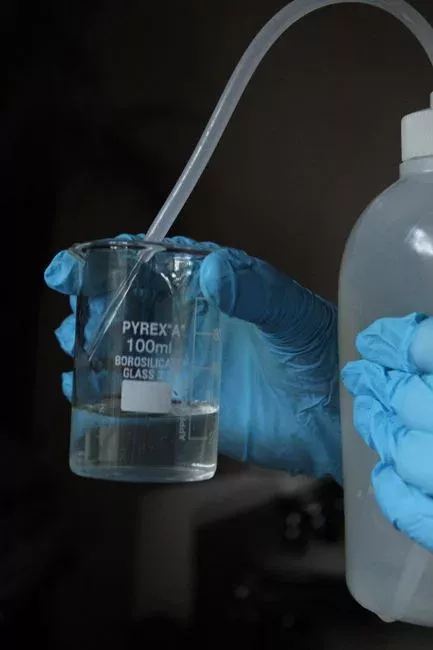
Electrocoagulation dissolves sacrificial Fe or Al anodes in situ, generating coagulant without the chemical dosing and sludge handling of a hydroxide train. Removal runs 95–99% for Cu, Zn, Ni, and Cr(VI) at 10–50 A/m² current density. Energy consumption is 1–5 kWh/m³ depending on influent load. The operational case is sludge: 0.2–0.5 kg dry solids per kg metal removed, against 2–5 kg for chemical precipitation — a 5–10× reduction. That matters at sites with landfill restrictions on chemical sludge or where hauled-disposal cost dominates OPEX.
The counterweights are electrode consumption (typically 0.05–0.2 kg Fe per kg metal removed), power cost, and periodic anode replacement every 1–3 years. Best fit is small-to-medium flows with variable influent — job shops, batch electroplating lines, and remote sites — where simpler chemistry outweighs higher unit energy cost. Compact sites that also treat sanitary sewage beside metal rinse water sometimes place an Underground Package Sewage Treatment Plant (WSZ Series) for the domestic stream so the metals train stays dedicated to process wastewater.
Building a Real Process Train: A Worked Example
A metal-finishing shop at 20 m³/h is a typical EU BAT-AEL direct-discharge case. Influent is Cu 80 mg/L, Ni 40 mg/L, Zn 60 mg/L, Cr(VI) 25 mg/L, and pH 2.5, targeting <0.5 mg/L each metal. The train starts with equalization at 8 h HRT, then Cr(VI) reduction with FeSO4 at pH 2.5 in a packed-bed reactor. Next comes pH adjustment to 9.5 with PLC-controlled NaOH and lime dosing, a lamella clarifier for metal hydroxide settling, and a multimedia filter. Ion-exchange polish (two-bed cation, Na+ form) finishes the water line, and sludge goes to a filter press for metal hydroxide sludge dewatering.
CAPEX for this 20 m³/h train lands at USD 350,000–900,000, with the IX columns and filter press as the main cost drivers. OPEX runs USD 0.25–0.80/m³ across chemicals, resin regeneration acid, power, and sludge hauling. Over a five-year operating life, OPEX typically dominates total cost of ownership by 2–3×. Cake dryness above 35% DS is what keeps the sludge-hauling line item inside budget. The OPEX breakdown is detailed in the filter press OPEX for metal hydroxide sludge analysis.
| Item | CAPEX (USD) | OPEX (USD/m³) |
|---|---|---|
| Equalization + reduction | 40,000–80,000 | 0.05–0.10 |
| Dosing system (NaOH, lime, FeSO₄) | 30,000–70,000 | 0.08–0.20 |
| Lamella clarifier | 60,000–150,000 | 0.01–0.03 |
| Multimedia filter | 25,000–60,000 | 0.02–0.05 |
| Ion-exchange polish (2-bed) | 120,000–300,000 | 0.05–0.15 |
| Filter press (sludge dewatering) | 75,000–240,000 | 0.04–0.27 |
| Total | 350,000–900,000 | 0.25–0.80 |
Decision Framework: Which Process Goes Where
The matrix below is the screen-shot tool for scoping a train in a single meeting. Three rules govern the rest. Influent above 50 mg/L almost always starts with hydroxide precipitation — the chemistry is too cheap to skip. Any target below 0.1 mg/L requires an IX or RO polish stage regardless of the upstream choice. Cr(VI) is a separate train entirely until it is reduced to Cr(III), and that reduction step is mandatory even if the downstream technology is membrane or electrochemical.
The tie-breaker between hydroxide precipitation and electrocoagulation is sludge disposal cost. When landfill tipping fees exceed USD 200/tonne or hauled volume is permit-restricted, electrochemical wins on total cost even with higher power draw. Chelating-agent-laden streams (EDTA, ammonia, citrate) push selection toward ion exchange or membrane, because precipitation stoichiometry breaks down in the presence of strong complexers. The full sludge-handling OPEX picture sits in the filter press OPEX for metal hydroxide sludge reference.
| Primary Metal | Influent Range | Target Effluent | Recommended Primary | Recommended Polish |
|---|---|---|---|---|
| Cu | 20–500 mg/L | <0.1 mg/L | Precipitation pH 8–9 | IX (chelating) or RO |
| Ni | 20–400 mg/L | <0.1 mg/L | Precipitation pH 9–11 | IX (selective) or RO |
| Cr(VI) | 10–200 mg/L | <0.25 mg/L | Reduction + precipitation pH 8–9.5 | IX or RO |
| Zn | 20–300 mg/L | <0.5 mg/L | Precipitation pH 8–10 | IX or NF |
| Pb | 5–100 mg/L | <0.5 mg/L | Precipitation pH 9–10 | IX or RO |
| Cd | 1–50 mg/L | <0.1 mg/L | Precipitation pH 10–11 or sulfide | IX (chelating) |
| As | 0.5–50 mg/L | <0.1 mg/L | Co-precipitation with Fe(III) | IX (anion) or RO |
Selection checklist before you lock CAPEX:
- Measure total and dissolved metals separately on the same sample set.
- Map chelators (EDTA, ammonia, citrate) before setting precipitation pH.
- Confirm Cr(VI) vs Cr(III) speciation if chromium is on the permit.
- Price sludge hauling at cake dryness ≥35% DS, not at wet solids.
- Decide discharge vs reuse before choosing IX versus RO polish.
- Check mass-loading (kg/day) caps, not only mg/L concentration limits.
- Budget five-year OPEX at 2–3× CAPEX for a 20 m³/h metals train.
Who This Is For / Next Step
This guide is for plant engineers, EPC contractors, and procurement managers sizing metal-finishing, battery, mining, PCB, or tannery wastewater trains. Look elsewhere if you only need sanitary sewage treatment with no metal limits — an Underground Package Sewage Treatment Plant (WSZ Series) covers that duty alone. If your influent, permit limits, and sludge-disposal cost are known, request a process sizing quote with flow (m³/h), metals list, and target effluent so the train can be scoped against the matrix above.
Frequently Asked Questions
What is the most cost-effective way to remove heavy metals above 50 mg/L?
Hydroxide precipitation with NaOH or lime, followed by a lamella clarifier, is the lowest-CAPEX option and achieves 0.5–2 mg/L single-stage effluent for Cu, Zn, Ni, and Cd. For sub-ppm targets, add an ion-exchange polish. At 20 m³/h, the full train typically runs USD 0.25–0.80/m³ OPEX across chemicals, resin acid, power, and sludge hauling, as shown in the worked example above.
How do I treat Cr(VI) when hydroxide precipitation alone fails?
Cr(VI) must be reduced to Cr(III) before precipitation. Dose FeSO4 or Na2S2O5 at pH 2–3 in a packed-bed or CSTR with 20–30 min HRT, then re-precipitate at pH 8–9.5. Effluent below 0.25 mg/L is achievable for the Thailand 2026 Cr(VI) limit, and the same train can meet EU BAT-AELs when polishing is added.
When is ion exchange preferred over reverse osmosis for metal polishing?
IX is preferred for low-flow polishing (<50 m³/h) below 0.1 mg/L when the goal is discharge compliance rather than reuse, and when the plant wants to recover Cu or Ni from spent regenerant. RO is preferred when the same water must meet ultrapure or process-reuse specs, or when the discharge tariff is high enough that water recovery pays back the membrane package in under three years.
How much sludge does chemical precipitation make versus electrocoagulation?
Hydroxide precipitation generates 2–5 kg dry solids per kg metal removed; electrocoagulation generates 0.2–0.5 kg per kg — a 5–10× reduction. At landfill tipping fees above USD 200/tonne, the sludge savings typically outweigh electrocoagulation's higher power and electrode-replacement costs on total cost of ownership.