What Counts as High Turbidity Wastewater in Industrial Practice
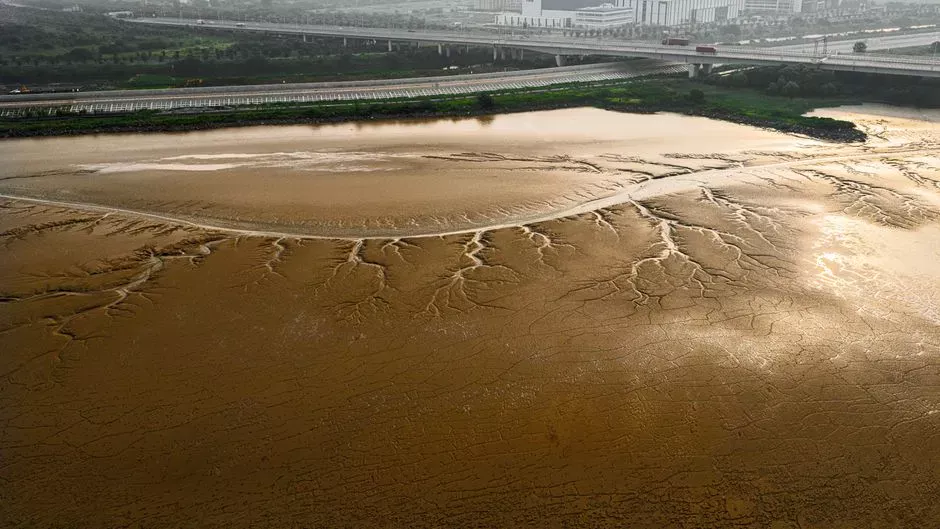
High turbidity in industrial streams is defined by an influent range of 1,000–10,000+ NTU, generated by mining runoff, quarry wash water, construction site discharge, food washing, pulp & paper white water, and textile desizing — orders of magnitude above the <100 NTU typical of municipal sewage. The suspended load is dominated by clay and silt fines under 75 µm, precipitated metal hydroxides (Fe(OH)₃, Al(OH)₃), biological floc carryover from upstream biology, FOG emulsions from food processing, and starch or protein suspensions from grain or meat lines. Each of these sources behaves differently in a clarifier: clay fines carry a negative surface charge that consumes coagulant, metal hydroxide floc is dense and settles readily, and FOG or starch forms a colloidal fraction that resists gravity separation and pushes the design toward dissolved air flotation. Regulatory anchors on the discharge side are the WHO drinking-water aesthetic guideline of <1 NTU and EU Urban Wastewater Directive 91/271/EEC, which most Member States transpose into effluent limits of 10–60 NTU for indirect discharge and <10 NTU for sensitive receiving waters. The technical feasibility benchmark for 2026 is the JY integrated water purification system, which is documented to take streams up to 3,000 mg/L TSS down to <3 mg/L (approximately 10 NTU) in a single packaged train — proof that the 1,000–10,000 NTU influent range is not theoretical, it is a routine design envelope.
The Standard High Turbidity Treatment Train: Stage by Stage
The canonical train for an industrial stream in the 1,000–10,000 NTU band runs screening → flow equalization → coagulation-flocculation → solid-liquid separation (DAF or lamella) → media filtration → optional MBR or RO polishing. Typical NTU readings at each step, using quarry wash water as the worked example (2,500 NTU → 30 NTU → 8 NTU), show the train is a sequence of 80–95% removals stacked on top of one another, not a single heroic unit operation. Equalization sits first with a 6–24 hour HRT buffer to dampen NTU spikes — without it, a transient 8,000 NTU slug will punch straight through the clarifier as floc carryover and force the operator to dump the filtrate. Coagulation is the chemical workhorse: polyaluminium chloride (PAC) dosed at 50–300 mg/L or ferric chloride at 30–150 mg/L across a working pH window of 6.5–7.5 neutralizes the colloidal charge and builds pin floc in a rapid-mix zone at G = 300–700 s⁻¹ for 30–120 seconds. Flocculation follows at a much lower velocity gradient — G = 50–80 s⁻¹ for 15–30 minutes — to grow pin floc into settleable or floatable aggregates without breaking it. A cationic CPAM (charge density 30–60%, molecular weight 8–12 MDa) at 0.5–3 mg/L is added at the flocculation stage to bridge emulsified oil, starch, and fine clays that the inorganic coagulant alone cannot capture, and is the single most common cause of clarifier underperformance when omitted.
Solid-Liquid Separation: DAF vs Lamella vs Conventional Sedimentation
The primary clarifier is the single most consequential equipment decision in the train because it sets the load on every downstream filter and membrane. Three options dominate industrial practice, and the choice is governed by surface loading rate, influent TSS, and whether the stream carries oil or FOG. DAF operates at 5–25 m/h hydraulic loading, removes 80–95% of suspended solids, and is the right tool for streams in the 50–1,500 mg/L TSS range carrying FOG, algae, fibers, or light biological floc — the attached bubble lifts material that would never settle. Lamella clarification runs at 20–40 m/h surface overflow rate thanks to its inclined-plate geometry, removes 70–90% of TSS, and is optimal for the 500–5,000 mg/L TSS range of dense mineral or biological floc, which settles well and does not need a floatation step. Conventional gravity sedimentation is the legacy option at 1–3 m/h with 50–75% TSS removal, and is only defensible for non-critical, non-foaming streams where footprint is not a constraint.
| Parameter | DAF | Lamella Clarifier | Conventional Sedimentation |
|---|---|---|---|
| Surface loading rate | 5–25 m/h | 20–40 m/h | 1–3 m/h |
| TSS removal | 80–95% | 70–90% | 50–75% |
| Optimal influent TSS | 50–1,500 mg/L | 500–5,000 mg/L | 200–2,000 mg/L |
| Best for | FOG, fibers, algae, light floc | Dense mineral/biological floc | Non-critical, non-foaming |
| Footprint | Small to medium | Small (inclined plates) | Large |
The decision rule is short: NTU above 2,000 with oil or FOG present → dissolved air flotation system; NTU above 2,000 with no oil and high TSS → high-efficiency lamella clarifier; NTU 500–2,000 with non-critical footprint → conventional sedimentation. The DAF range is documented from 4–300 m³/h across 13 models, sized to small-batch food plants and large aggregate wash operations alike, and lamella designs in the 2026 catalog are credited with up to 30% chemical savings over conventional settlers at the same overflow rate because of the better floc retention in the inclined-plate zone.
Filration and Polishing: When Effluent Must Drop Below 10 NTU
Clarifier effluent in the 30–100 NTU range is rarely a discharge-ready number — it is a feed-water number for the polishing stage. Multi-media filtration in a sand + anthracite + garnet bed, operated at 10–20 m/h filtration velocity, takes 30–100 NTU down to 3–10 NTU and is the workhorse polish for discharge to a non-sensitive watercourse or for RO pretreatment. The design target coming out of the multi-media filter is SDI < 5; higher than that and the RO membranes will foul within weeks. When reuse is the goal and the stream carries dissolved BOD that multimedia cannot remove, an MBR collapses secondary clarification and filtration into one unit — sub-micron membranes on a 0.1–0.4 MPa aeration duty typically deliver 1–5 NTU effluent with a 60% smaller footprint than a conventional activated-sludge + clarifier train. RO polishing is reserved for closed-loop reuse or zero-liquid-discharge schemes, where the recovered water must be below 0.5 NTU and the feed SDI must be < 5 to protect the thin-film composite membranes (per the 2025 RO reuse article on this site). Each polishing technology has a characteristic failure mode: multimedia breakthrough shows as a step rise in differential pressure, MBR failure shows as a rising transmembrane pressure, and RO failure shows as a drop in normalized flux — the operator who monitors all three avoids the 60–80% performance loss typical of an unmonitored polish train. Equipment anchors for this stage are the multi-media filter, the MBR integrated wastewater treatment system, and RO polishing for water reuse.
Chemical Conditioning and Sludge Handling
Designing the clarifier without designing the sludge line is a common and expensive mistake. A high-turbidity stream at 2,000 mg/L TSS produces 0.3–1.2 kg of dry solids per cubic meter treated, and the skimmings or underflow from a DAF or lamella leave the unit at 95–98% moisture. That sludge has to go somewhere, and the choice downstream is a plate-and-frame filter press rated for 1–500 m² filtration area, producing a dry cake at 60–75% moisture suitable for off-site disposal or, in the case of mineral-rich streams, landfill. The CPAM polymer choice at the clarifier is a trade-off: higher molecular weight (12–18 MDa) gives a clearer supernatant because it bridges more particles, but it binds water into the floc and worsens cake release in the press. Typical press feed polymer dose is 2–6 mg/L, conditioned into the sludge just before the press. Holding the coagulant dose within ±5% of setpoint across a 1,000–10,000 NTU influent swing requires an automatic chemical dosing system paced off a streaming NTU or TSS signal — manual dosing fails within the first NTU spike and either overdoses (high OPEX) or underdoses (clarifier carryover). The downstream dewatering unit itself is a plate-and-frame filter press sized to the clarifier's solids mass balance, not to flow rate.
2026 CAPEX and OPEX Benchmarks by Plant Size
Procurement needs a defensible budget before the pilot test, and the 2026 turnkey cost bands for a complete high-turbidity train (equipment + installation, civil works excluded) cluster as follows: 10–25 m³/h → $80,000–$250,000; 25–100 m³/h → $250,000–$900,000; 100–500 m³/h → $900,000–$2,500,000. OPEX for a mid-range stream runs $0.18–$0.55 per cubic meter treated, dominated by PAC at 35–45% of the total, polymer at 10–15%, energy at 15–20%, and sludge hauling at 20–30%. The marginal cost of adding a polishing stage is the second number procurement asks for: multi-media filtration adds 8–15% to CAPEX, MBR polishing adds 40–80%, and RO adds 120–200% — the reuse-target premium is real and should be justified against the local water tariff before it is specified. Comparable 2026 cost bands in adjacent articles (DAF for carpet effluent at 6199; screw press for meat processing at 6217) sit inside these envelopes, which is the internal consistency check that the ranges are not aspirational. The packaged option for plants under 50 m³/h with a target under 30 NTU is the JY integrated water purification system, which collapses coagulation, clarification, and filtration into a single skid.
| Plant Size (m³/h) | CAPEX (2026, USD) | OPEX ($/m³) | Dominant OPEX Driver |
|---|---|---|---|
| 10–25 | $80K–$250K | $0.30–$0.55 | PAC + sludge hauling |
| 25–100 | $250K–$900K | $0.22–$0.40 | PAC + energy |
| 100–500 | $900K–$2.5M | $0.18–$0.30 | Energy + polymer |
Selection Checklist: Choosing the Right High Turbidity Treatment Train
Five questions resolve 90% of train selections before a vendor meeting: (1) peak versus average flow — a 3:1 peak-to-average ratio mandates equalization; (2) target effluent NTU — discharge to a non-sensitive watercourse needs <30 NTU, RO pretreatment needs <10 NTU, closed-loop reuse needs <1 NTU; (3) oil or FOG presence — yes forces DAF over lamella; (4) available footprint — under 100 m² at 50 m³/h rules out conventional sedimentation; (5) discharge versus reuse — reuse is the gating decision that justifies MBR or RO CAPEX. Worked example: a quarry wash stream at 50 m³/h, 1,500 NTU, no oil, 80 m² footprint, discharge target → equalization + lamella clarifier + multi-media filter + chlorination, no MBR, no RO. The single decision that still warrants a pilot test is the DAF-versus-lamella choice whenever influent TSS exceeds 2,000 mg/L or FOG is intermittent — a 1–4 week on-site jar test and bench-scale clarifier run costs $5,000–$15,000 and routinely re-specifies the primary unit. Final budget reconciliation should pull the 2026 CAPEX table from the previous section and stress-test it against the local water tariff and sludge disposal gate fee, not against the vendor quote.
Frequently Asked Questions
What is the difference between NTU and TSS in a high-turbidity wastewater treatment solution?
NTU measures light scatter from suspended particles and is read inline with a nephelometer; TSS measures the dry weight of those particles in mg/L. For most mineral streams the rule of thumb is 1 mg/L TSS ≈ 2–3 NTU, but the ratio drifts to 1:5 for clay fines and 1:1 for coarse sand. (Source: standard water-treatment instrumentation references.)
What air-to-solids ratio does a DAF need for high-turbidity industrial streams?
Industrial DAF units are designed for an air-to-solids ratio of 0.02–0.06 (mass of dissolved air per mass of influent TSS), with recycle rates of 10–30% of forward flow. Streams above 1,000 mg/L TSS or with high FOG push the design toward 0.04–0.06 to maintain a stable float blanket.
When should an MBR be chosen instead of a DAF for a high-turbidity wastewater treatment solution?
MBR replaces DAF when the stream carries dissolved BOD above 500 mg/L that the DAF cannot remove, or when reuse requires sub-5 NTU effluent without a downstream RO. For purely particulate loads, DAF is 30–50% cheaper on both CAPEX and OPEX.
What polymer dose works for clay-bearing water at 3,000 NTU?
A cationic CPAM at 1.5–3 mg/L, charge density 40–60%, molecular weight 10–14 MDa, added at the flocculation inlet, is the standard dose for clay-bearing mining or quarry water. Below 1 mg/L floc strength collapses; above 4 mg/L the supernatant clears but cake release in the press worsens.
What is the EU discharge-limit reference for turbidity from an industrial site in 2026?
EU Urban Wastewater Directive 91/271/EEC, as transposed by Member States, sets indirect-discharge turbidity at 10–60 NTU and sensitive-receiver discharge at <10 NTU for most industrial streams. The full 2026 country-by-country breakdown is in the EU industrial discharge limits 2026 article.
Related Equipment
- JY integrated water purification system — specifications, capacity range, and technical data