Why Textile Wastewater in Chile Looks Different in 2026
Chile imported roughly 123,000 tonnes of used clothing in 2024 and generates about 572,000 tonnes of textile waste per year, according to figures cited by Chile's environment ministry and reported in mid-2025 (source: the Guardian, 2025-06). That scale is the trigger that brought textiles into Chile's Extended Producer Responsibility (EPR) framework, Ley 20.920, as a priority category in 2025 — meaning importers and producers will progressively be required to finance collection, sorting, and treatment infrastructure rather than treat compliance as a downstream municipal problem. The Atacama Region, where textile dumps already span an estimated 1.16 sq mi (source: Wiley/Lamp, 2025), carries a poverty index 1.7% above the national average, which is why the social-license pressure on producers is no longer optional.
Layered on top of the EPR moment is a hard water-stress signal. The Copiapó, Limarí, and Aconcagua basins — the geography of most Santiago-region dyehouses serving export markets — are under increasing allocation pressure, and new rights are scarce. For a process engineer writing a 2026 ETP spec, that means the brief is no longer "discharge to sewer at D.S. 90 limits." It is "discharge compliantly, and reuse whatever the basin allows." That is a circular-economy engineering brief, not a permit-renewal exercise.
Typical Influent Characterization for a Chilean Textile Dyehouse
Reactive-dye cotton effluent in central Chile typically runs COD 800–3,000 mg/L, BOD₅ 250–1,200 mg/L (BOD₅/COD ratio 0.25–0.45), color 1,500–4,000 Pt-Co, TDS 1,500–6,000 mg/L from neutral salt (NaCl/Na₂SO₄) addition in the dye bath, pH 9–12, and temperature 30–60 °C at the source (HydropureWater field data, 2026). Sulfide from sulfur-dye reduction stages lands at 1–10 mg/L, and residual H₂O₂ carried over from bleaching wash-off runs 10–200 mg/L — both of which must be neutralized upstream of biology. Polyester disperse-dye effluent is the inverse problem: lower COD (often 400–1,200 mg/L) but extremely high color (3,000–8,000 Pt-Co) and a heavy carrier/surfactant load from high-temperature dyeing at 130 °C.
The equalization step is non-negotiable. Most Santiago dyehouses now operate a 8–12 h HRT equalization basin with NaOH/H₂SO₄ trim to bring pH to 6.5–8.0 and forced-draft cooling to drop temperature below 38 °C before biology. Residual peroxide above ~50 mg/L is quenched with sodium thiosulfate or a catalase step; sulfides above 5 mg/L are precipitated with iron(III) sulfate. Skipping either knocks 20–30% off biological COD removal and can stall an MBR within a week.
| Parameter | Reactive-dye cotton | Disperse-dye polyester | Denim indigo |
|---|---|---|---|
| COD (mg/L) | 800–3,000 | 400–1,200 | 600–1,800 |
| BOD₅/COD | 0.25–0.45 | 0.20–0.35 | 0.30–0.50 |
| Color (Pt-Co) | 1,500–4,000 | 3,000–8,000 | 800–2,500 |
| TDS (mg/L) | 1,500–6,000 | 500–1,500 | 800–2,000 |
| pH | 9–12 | 5–8 | 7–10 |
| Temperature (°C) | 30–60 | 40–70 | 25–40 |
| Sulfide (mg/L) | 1–10 | <2 | 3–15 |
Chilean Discharge Standards: D.S. 90/2000, D.S. 609/1998, and NCh 1333
Three rules govern a 2026 Chilean textile ETP. D.S. 90/2000 SEGPRES sets industrial discharge-to-sewer limits at pH 5.5–9.0, temperature <35 °C, TSS ≤300 mg/L, BOD₅ ≤300 mg/L, COD ≤750 mg/L, oil & grease ≤150 mg/L, and sulfides ≤5 mg/L. If the effluent reaches a surface water body used as a water supply — the more common scenario in the Maipo and Aconcagua valleys — D.S. 609/1998 MOP applies, with tighter limits: TSS ≤80 mg/L, BOD₅ ≤35 mg/L, COD ≤250 mg/L, oil & grease ≤20 mg/L, total nitrogen ≤50 mg/L, total phosphorus ≤10 mg/L, and color ≤100 Pt-Co. NCh 1333.Of1978 covers irrigation reuse, with pH 5.5–9.0, TSS ≤200 mg/L, and fecal coliforms ≤1,000 NMP/100 mL — the standard to hit if the plant sits near an agro-industrial buyer.
The 2025 Ley 20.920 amendment that added textiles as a priority EPR category does not set new process-effluent limits directly. It creates a reporting and financing obligation on importers and producers that, in practice, makes a documented on-site ETP a defensible offset in EPR compliance submissions. A plant that can show "X m³/day treated to D.S. 609 + 75% reuse" has a much cleaner EPR conversation than one that buys offsets.
| Parameter | D.S. 90/2000 (sewer) | D.S. 609/1998 (surface water) | NCh 1333 (irrigation) |
|---|---|---|---|
| pH | 5.5–9.0 | 6.0–8.5 | 5.5–9.0 |
| Temperature (°C) | <35 | <30 (ΔT <3) | — |
| TSS (mg/L) | ≤300 | ≤80 | ≤200 |
| BOD₅ (mg/L) | ≤300 | ≤35 | ≤80 |
| COD (mg/L) | ≤750 | ≤250 | — |
| Oil & grease (mg/L) | ≤150 | ≤20 | — |
| Sulfide (mg/L) | ≤5 | ≤1 | — |
| Color (Pt-Co) | — | ≤100 | — |
| Total N (mg/L) | — | ≤50 | — |
| Total P (mg/L) | — | ≤10 | — |
The 2026 Unit-Process Train That Actually Works for Chilean Textile Effluent
The defensible 2026 train for a 500–2,000 m³/day Chilean textile ETP runs screening → equalization → DAF → anaerobic hydrolysis (UASB/EGSB) → aerobic MBR → AOP color polishing, with optional RO polishing for reuse. Each stage has a specific job and a target removal; missing one is what kills MBR membranes in year two.
Stage 1 — Screening. A GX series rotary mechanical bar screen at 3–5 mm openings removes lint, fibers, and fabric scraps that otherwise blind DAF nozzles and shred MBR membranes within weeks. Stage 2 equalization (HRT 8–12 h) brings pH to 6.5–8.0, temperature to <38 °C, and smooths the BOD shock load from batch dye-bath discharges. A HydropureWater automatic chemical dosing skid handles NaOH/H₂SO₄ trim and residual H₂O₂/sulfide quench. Stage 3 DAF — typically a HydropureWater dissolved air flotation system with a micro-bubble contact zone — uses PAC 50–150 mg/L and anionic flocculant 1–3 mg/L to remove 80–95% of TSS, residual reactive/direct dyes, oils, and surfactants, handling the 4–50 m³/h flows typical of mid-sized dyehouses.
Stage 4 is anaerobic hydrolysis in a UASB or, for reactive-dye loads with high upflow velocity, an EGSB reactor (HRT 12–24 h) that drops COD by 30–50% with a small biogas benefit and breaks down recalcitrant dye auxiliaries. Stage 5 is an aerobic MBR — a HydropureWater integrated MBR system with a DF series PVDF flat-sheet membrane module at 0.1–0.4 μm, HRT 18–36 h, MLSS 8,000–12,000 mg/L — delivering <50 mg/L COD, <5 mg/L TSS, and near-complete particulate color removal at roughly 60% of the footprint of conventional activated sludge. Stage 6 is AOP color polishing (H₂O₂/UV, O₃/H₂O₂, or photo-Fenton) to bring residual color below 15 Pt-Co and decolorize the soluble reactive/disperse fractions biology cannot touch; electrical-energy-per-order benchmarks for this stage are covered in the AOP energy-efficiency guide. An optional Stage 7 RO polishes to 75–85% recovery for reuse in dyeing wash water, with concentrate routed to a small mechanical evaporator for ZLD in tight basins.
| Stage | Function | Target removal | Influent → Effluent (COD mg/L) |
|---|---|---|---|
| 1. Screening | Lint, fibers, scraps | — | — |
| 2. Equalization | pH 6.5–8.0, T <38 °C | — | — |
| 3. DAF | TSS, oils, partial color | 80–95% TSS, 30–50% color | 2,000 → 1,500 |
| 4. Anaerobic (UASB/EGSB) | COD reduction, biogas | 30–50% COD | 1,500 → 850 |
| 5. Aerobic MBR | Soluble COD, TSS, particulate color | 90–95% COD, >99% TSS | 850 → <50 |
| 6. AOP polishing | Residual soluble color | 70–90% color | — → color <15 Pt-Co |
| 7. RO (optional) | Reuse polishing | 95–99% TDS, 75–85% recovery | — → <10 mg/L TDS |
DAF vs Lamella Clarifier: Which Pre-Treatment Belongs Upstream of the MBR?
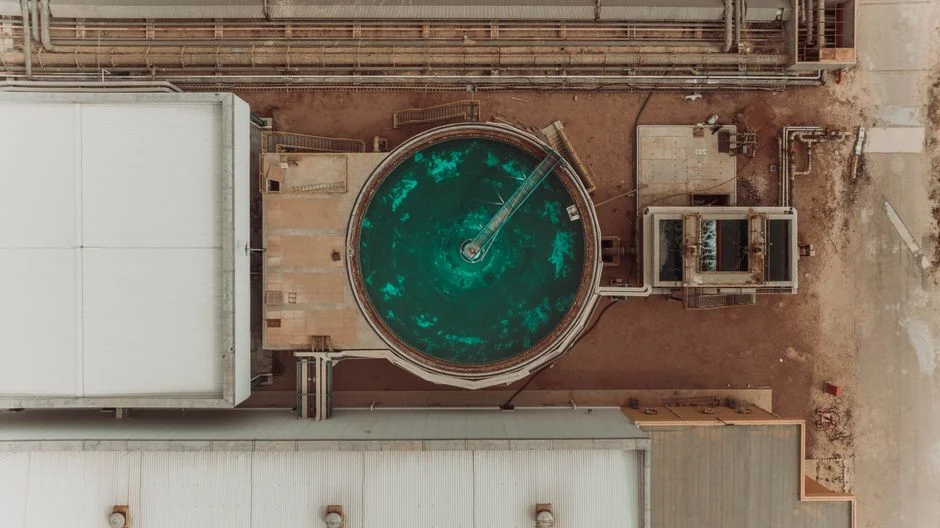
For Chilean textile influent with high oil and surfactant content — scouring wash water, polyester carrier effluent — DAF outperforms a lamella clarifier because micro-bubbles (10–50 μm) attach to emulsified FOG and lift it to the surface, where the lamella plate pack simply cannot reach suspended emulsions. A DAF on cotton/polyester scouring effluent typically removes 80–95% of TSS at hydraulic loading 4–25 m/h with 30% higher polymer use than lamella; a lamella on the same duty needs 1.5–2× the footprint and misses 30–50% of the emulsified oil that an MBR will then adsorb onto its membrane surface. The downstream consequence of picking lamella is irreversible MBR fouling in 6–18 months, not a clarifier failure.
Use the decision rule: DAF for flows <500 m³/day with mixed cotton/polyester and any surfactant load; lamella only for >1,000 m³/day cotton-only mills with low surfactant. Micro-bubble generation and skimmer geometry for the DAF case are detailed in the DAF vs clarifier decision guide and the cross-regional comparison in the textile wastewater treatment in Colombia guide.
| Criterion | DAF | Lamella clarifier |
|---|---|---|
| Hydraulic loading | 4–25 m/h | 20–40 m/h |
| TSS removal (textile) | 80–95% | 60–80% |
| Emulsified oil capture | High | Low |
| Polymer use | Baseline + 30% | Baseline |
| Footprint (same duty) | 1× | 1.5–2× |
| MBR fouling risk | Low | High (6–18 mo) |
CAPEX and OPEX for a 2026 Chilean Textile ETP
For a turnkey 2026 build in central Chile on seismic-rated soil, CAPEX runs roughly USD 600K–1.4M for 500 m³/day, USD 1.2M–2.6M for 1,000 m³/day, and USD 2.5M–5.0M for 2,000 m³/day (HydropureWater field data, 2026). The cost drivers are MBR membrane area (scales with flow), AOP reactor sizing, RO skid (if reuse is in scope), and seismic-rated civil works in Santiago-area soil classes D/E. OPEX lands at USD 0.9–1.6 per m³ treated, broken down as electricity 40–55%, chemicals 15–25%, membrane replacement 10–15%, and labor 10–15%. The AOP stage alone is 25–35% of OPEX and the most sensitive cost line — which is why the AOP energy-efficiency numbers in the linked guide are the single biggest lever in 2026 builds. Sites pursuing reuse should budget another 15–25% OPEX uplift for RO concentrate handling unless they route concentrate to a third-party ZLD operator.
| Capacity | CAPEX (USD) | OPEX (USD/m³) | Main cost drivers |
|---|---|---|---|
| 500 m³/day | 600K–1.4M | 1.1–1.6 | MBR area, seismic civil |
| 1,000 m³/day | 1.2M–2.6M | 0.9–1.4 | MBR + AOP reactor |
| 2,000 m³/day | 2.5M–5.0M | 0.9–1.3 | RO skid, ZLD handling |
Tying Engineering to the 2026 EPR Law and the Atacama Moment
Under Ley 20.920 as amended in 2025, producers and importers of textiles now carry explicit obligations to finance collection and treatment (source: the Guardian, 2025-06). A properly engineered and metered on-site ETP — discharge-compliant to D.S. 609 and producing documented reuse volumes via a HydropureWater industrial RO system — is the cleanest offset a producer can show in EPR reporting. Sludge dewatering via a plate-frame filter press brings cake to 60–70% DS for off-site disposal or, in some sites, textile-fiber recovery, and a chlorine dioxide generator handles polishing disinfection where RO permeate is held in a recycled-water tank for dyeing wash water.
On-site reuse is also the strongest ESG narrative for Chilean textile brands selling into the EU under CSRD and into California under SB 707 — both of which scrutinize water stewardship in textile supply chains. The defensible 2026 build sequence is DAF + MBR first to lock in D.S. 609 compliance, then AOP + RO in phase two once the plant has 6–12 months of operating data and a real reuse buyer lined up. A site-specific process design and CAPEX/OPEX model based on actual influent should be requested before any budget commitment.
Frequently Asked Questions
What COD and color limits apply to textile effluent discharged to surface water in Chile?
Discharge to surface water under D.S. 609/1998 MOP is limited to COD ≤250 mg/L, BOD₅ ≤35 mg/L, TSS ≤80 mg/L, and color ≤100 Pt-Co. Sewer discharge under D.S. 90/2000 SEGPRES is looser at COD ≤750 mg/L and BOD₅ ≤300 mg/L, with no color limit (per D.S. 90/2000 SEGPRES).
What is the typical CAPEX for a 500 m³/day textile ETP in Chile in 2026?
A turnkey 500 m³/day DAF + anaerobic + MBR + AOP plant built on seismic-rated Santiago soil runs USD 600K–1.4M in 2026, with OPEX at USD 1.1–1.6 per m³ treated (HydropureWater field data, 2026).
When is DAF the right pre-treatment choice upstream of an MBR for textile effluent?
Use DAF whenever the influent carries emulsified oil, surfactant, or carrier chemicals — typical of cotton scouring and polyester disperse-dye effluent — because micro-bubbles capture FOG that lamella clarifiers miss and that would otherwise foul MBR membranes irreversibly within 6–18 months.
How does Chile's 2025 Ley 20.920 amendment affect on-site ETP design?
The amendment adds textiles as a priority EPR category, requiring importers and producers to report volumes and progressively finance collection and treatment. It does not yet set new process-effluent limits, but a documented on-site ETP with reuse is a defensible offset in EPR compliance submissions (per Ley 20.920, 2025 amendment).