What Mining Wastewater in Conroe Actually Looks Like in 2026
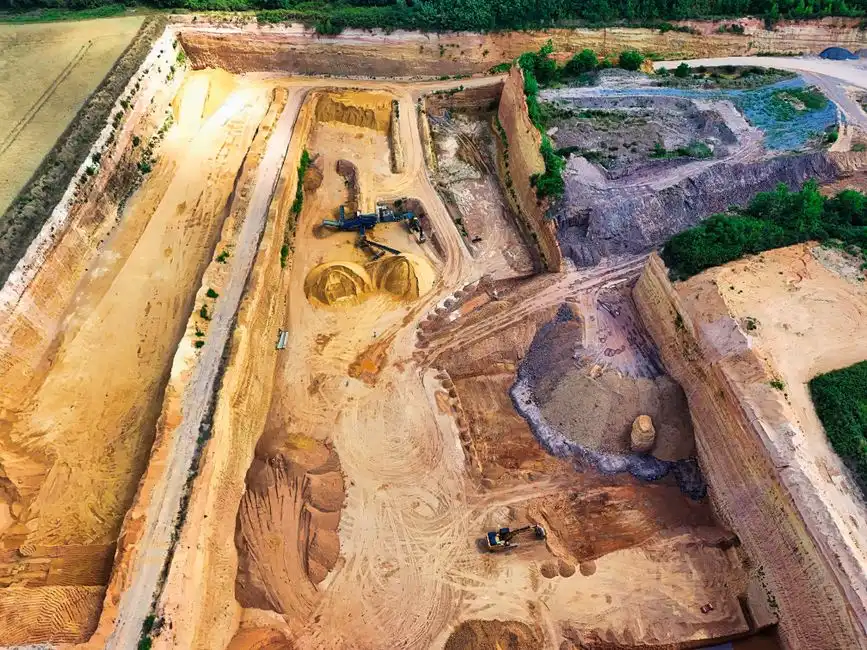
Conroe-area aggregate wash circuits, oilfield-services decant streams, and light-metals finishing lines all feed wastewater streams that break the assumptions built into generic DAF-versus-clarifier content. Four contaminant classes dominate: freshly precipitated metal-hydroxide flocs (Fe, Mn, Al, Cu, Zn) with specific gravity within roughly ±5% of water; abrasive silica and ore grit larger than 1,000 µm; residual flotation reagents — xanthates, dithiophosphates, fatty acids; and mill lubrication oils. Real mining-adjacent feed streams measured 3,497–4,693 mg/L total suspended solids and 2,457–4,880 NTU turbidity in the Midvaal case study (Janse van Rensburg et al., Water SA, 2019-07) — figures that are unusually high for drinking-water work but normal for mineral-processing effluents. Conroe shale and sand plants processing aggregate wash water or oilfield-services decant sit in a comparable envelope.
The compliance lens is 40 CFR 440 NPDES for ore mining and dressing, layered with TCEQ-issued state mining permits covering TSS, total recoverable Cu/Pb/Zn/Ni/Cd, and pH bands. Two operational facts push this decision away from the generic: pH swings between 6 and 11 across a single shift as lime, caustic, or sulfuric acid is dosed, and hydraulic flow routinely varies 2:1 to 4:1 as mill circuits ramp up or bypass streams recycle. Any technology that cannot absorb both swings will fail an inspection — and the technology choice in 2026 is driven by whether the feed is light-floc dominated or grit-dominated.
How a DAF System and a Clarifier Actually Separate Solids
A conventional clarifier is a passive gravity vessel. Water enters a center well, flows radially outward, and particles denser than water settle over a 2–4 hour retention period. The only adjustable levers are sludge withdrawal rate and, on a circular unit, the rotational speed of the scraper mechanism. Clarifiers are mechanically simple, but they struggle with particles whose specific gravity is within roughly ±5% of water — exactly where freshly precipitated metal hydroxides sit (HydropureWater field data, 2025).
Dissolved air flotation is an active system. A pressurized recycle stream equal to 10–30% of clarified effluent is saturated with air at 4–6 bar (85–95% saturation efficiency), then released at atmospheric pressure inside the flotation tank. The pressure drop nucleates 20–100 µm micro-bubbles that attach to conditioned flocs and float them to the surface, where a skimmer sweeps them into a hopper. Because DAF is driven by bubble buoyancy rather than gravity, the separation is fast — surface loading rates of 5–15 m/h versus 1–3 m/h for gravity settling. That 3–5× speed gap is what drives the footprint decision on tight Conroe plant yards.
The practical implication for Conroe feeds is straightforward. Hydrophobic particles (oils, residual sulfide precipitates, unreacted xanthate reagents) attach readily to micro-bubbles with minimal chemical aid. Hydrophilic fine metal hydroxides need polymer conditioning first — typically a cationic or anionic polyacrylamide at 0.5–5 mg/L — to bridge particles into flocs large enough to be lifted. Get that chemistry right and DAF outperforms any clarifier on a mixed mining feed; get it wrong and the float layer collapses, leaving the unit to function like a clarifier with extra equipment. Pair the DAF with a lamella clarifier polish stage when the discharge spec calls for TSS below 30 mg/L — the two-stage architecture is the 2026 default for Conroe NPDES renewals.
Side-by-Side: DAF vs Clarifier for a Conroe Mining Feed
The table below is built for procurement engineers who need to photograph it and forward it to a CFO or a TCEQ reviewer. Parameter ranges reflect the spread between food-grade stainless retrofits and full SS316 mining builds at 4–300 m³/h (HydropureWater field data, 2025).
| Parameter | DAF System | Gravity Clarifier |
|---|---|---|
| TSS removal on conditioned metal flocs | 92–97% | 40–70% on light solids; 70–90% only on dense grit |
| Footprint at equal hydraulic capacity | ~25% of clarifier basin area | Baseline (large circular or rectangular basin) |
| Surface loading rate | 5–15 m/h | 1–3 m/h |
| Sludge dryness from primary stage | 3–5% solids (float) | 1–2% solids (underflow) |
| Effluent response to flow swing | Tracks variability with active aeration control | Effluent degrades as swing exceeds design |
| Tolerance to abrasive grit >200 µm | Low without upstream rotary mechanical bar screen | High — handles grit natively |
| Polymer demand | 0.5–5 mg/L on hydrophilic metal hydroxides | Coagulant only on colloidal feeds |
| Active energy | 0.2–0.5 kWh/m³ | Near zero active; continuous underflow pumping |
| Equipment CAPEX (unit-only) | Baseline | 30–50% lower equipment cost |
| Installed CAPEX after civil work | Baseline | 10–25% lower; civil and foundation costs close the gap |
Three takeaways from this table matter for a 2026 Conroe spec. First, DAF wins on footprint, sludge dryness, and surge tolerance — the three parameters that hit a mining plant's OPEX hardest. Second, a clarifier is the correct first stage when the feed carries coarse silica, ore particles above 200 µm, or dense sulfide tailings; without upstream screening, that grit will damage DAF nozzles and recycle pumps. Third, the CAPEX gap is often smaller than the equipment-only line suggests because clarifier civil and foundation work scales with footprint, and a DAF system occupying roughly a quarter of the area requires significantly less concrete.
2026 Cost Reality for a Conroe Mining Plant (Worked Example)
For 4–300 m³/h mining flows, a 2026 DAF installation runs $50,000–$500,000 equipment-only, driven by materials (SS304 vs SS316), automation (PLC with effluent monitoring, VFD on the recycle pump), and tank volume. The DAF system spans 13 standard models from DAF-003 (3 m³/h, 1,500 kg dry, $50K low end) up to DAF-120 (120 m³/h, 10,000 kg dry, $400K+ for full SS316 with PLC and VFD), and custom builds extend coverage to 300 m³/h (HydropureWater field data, 2025).
Clarifier equipment cost is typically 30–50% lower, but those savings get offset by civil and foundation work, and the larger footprint often forces longer equalization basins and pumping runs. On a like-for-like installed basis the CAPEX gap is usually 10–25%.
The OPEX case is where DAF pulls ahead. DAF float at 3–5% solids versus clarifier underflow at 1–2% solids means 50–70% less waste volume hauled off-site. On a medium-sized mining plant processing 50 m³/h, the float-versus-underflow delta saves more than $40,000 per year in disposal fees (HydropureWater field data, 2025) — a line item a Conroe plant controller will recognize as defensible when it's written out on a single page. Add an automatic chemical dosing skid and a downstream plate and frame filter press and the disposal-cost reduction compounds further, because the float can be dewatered to a cake above 25% solids before it ever hits a roll-off. ROI typically lands between 1.5 and 3 years on reagent-heavy circuits; the short end is hit when water-reuse credits and avoided fresh-water intake are factored in.
When a Clarifier Still Wins in 2026
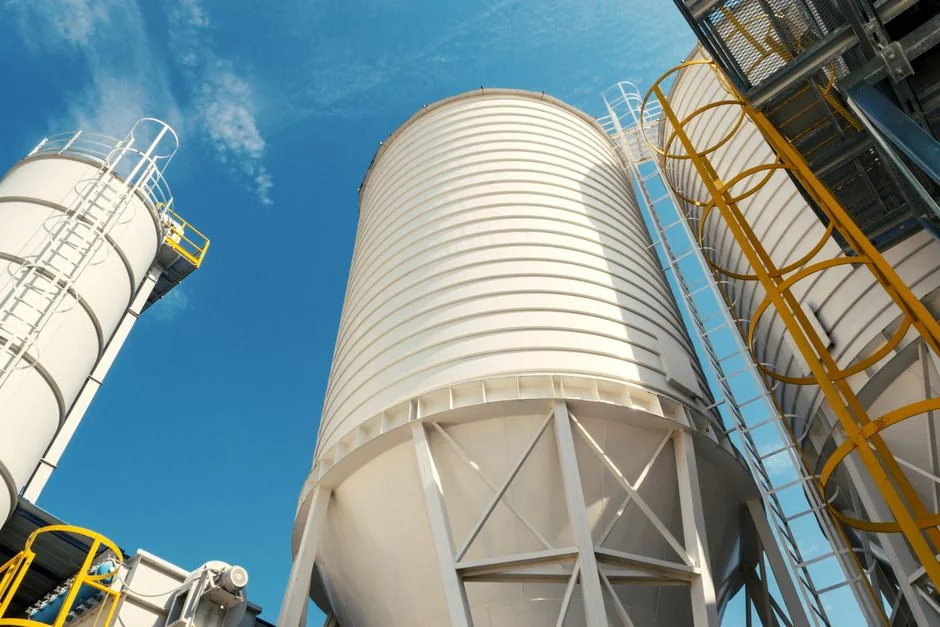
A conventional clarifier is the better choice when the feed is dominated by dense, abrasive solids — coarse silica grit, sulfide tailings, or ore particles above 200 µm — and the downstream process already includes a thickener. Clarifiers tolerate grit with minimal wear, while DAF recycle pumps and air-release nozzles fail prematurely without upstream screening. For pure grit-removal duty at a primary crushing or mill circuit, a clarifier remains the lower-CAPEX, lower-maintenance option (HydropureWater field data, 2025).
Two Conroe-relevant cases are worth naming. First, an existing magnetite tailings line where the legacy thickener can be repurposed as the primary clarifier — there is no reason to install a DAF in parallel when the basin and the rake mechanism already exist. Second, aggregate wash circuits that bleed ore grit into the clarifier feed — those plants should keep the clarifier and only add a DAF downstream if the discharge limit demands TSS below 30 mg/L or metals polishing. The decision rule is straightforward: if the feed is light and floc-dominated, DAF first; if the feed is heavy and grit-dominated, clarifier first and consider DAF only as a polish.
Pre-Spec Checklist Before You Sign the 2026 PO
Engineers should run through the four-dimension framework below before locking in a 2026 purchase (HydropureWater field data, 2025).
- Water characterization. Run jar tests across copper, zinc, and iron concentrate streams — optimal polymer charge and dose can move an order of magnitude within a single shift. Vendors who offer on-site jar testing and a guaranteed effluent TSS band outperform those who quote on flow capacity alone. For a parallel methodology on Appalachian coal-prep circuits, see the Mendenhall mining DAF-vs-clarifier guide.
- Hydraulic and mechanical fit. Confirm the 2:1–4:1 swing range is inside DAF turndown; size the equalization basin if it is not. Specify a rotary mechanical bar screen (GX series) ahead of the DAF when feed carries more than 200 µm grit, and confirm the recycle pump headroom is rated for Conroe's summer ambient (which runs saturated inlet air in July and August).
- Operations and total cost. Three items are non-negotiable: PLC with effluent TSS monitoring, VFD on the recycle pump, and automatic pH adjustment to 6.5–8.5. Without those three, bubble-particle attachment fails, the float layer collapses, and the DAF will underperform a clarifier despite higher CAPEX. Lock the 40 CFR 440 envelope and confirm TCEQ state-mining permit limits for Cu, Pb, Zn, Ni, Cd before finalizing materials of construction (SS304 vs SS316).
- Vendor track record and architecture. Prefer suppliers who offer on-site jar testing, a guaranteed effluent TSS band, and references on Conroe-area aggregate or oilfield-services work. The 2026 default architecture is a DAF system as the primary stage, followed by a lamella clarifier polish stage when discharge or reuse targets demand TSS below 30 mg/L. For an existing basin retrofit, the lamella clarifier retrofit guide walks through the conversion math.
For a comparison of the same decision tree applied to a different region, the Conway Springs mining wastewater guide covers an oil-and-gas-adjacent jurisdiction and is useful for cross-checking the Conroe logic.
Frequently Asked Questions
DAF or clarifier for mining wastewater in Conroe in 2026 — which should a factory choose?
For Conroe mining and metals factories in 2026, choose a DAF system as the primary clarifier and add a lamella polish when discharge TSS must stay below 30 mg/L. DAF delivers 92–97% TSS removal on metal-hydroxide flocs, cuts sludge hauling 50–70% versus a clarifier, and tolerates 2:1–4:1 flow swings typical of mill circuits. A clarifier only wins on coarse grit above 200 µm with upstream screening — for Conroe aggregate wash circuits bleeding ore grit, keep the clarifier and add DAF only as a downstream polish.
Can a DAF system meet 40 CFR 440 metals limits standalone?
No. DAF handles TSS and bulk metal-hydroxide flocs efficiently, but for Cu, Pb, Zn, Ni, or Cd that must be polished to single-digit ppm, DAF must be followed by ion exchange or chemical precipitation. A typical Conroe architecture is pH adjustment to 6.5–8.5, polymer-conditioned DAF, then a precipitation or ion-exchange stage for the residual dissolved metals before NPDES discharge.
How much polymer does a DAF need on a mining feed?
Plan for 0.5–5 mg/L of cationic or anionic polyacrylamide, with the dose selected by jar test on each concentrate stream. Hold pH between 6.5 and 8.5 — outside that band the polymer fails to bridge the flocs and the float layer collapses. On a copper concentrate stream the optimum often lands near the low end; on an iron hydroxide stream it usually sits mid-range. Re-test whenever the feed shifts.
What does a 2026 DAF system cost for a 50 m³/h Conroe plant?
Equipment-only CAPEX runs roughly $200,000–$300,000 in SS316 with PLC, VFD, and an automatic chemical dosing skid. Full installed cost rises once civil work, equalization basin tie-ins, and the lamella polish are added — typically another 30–60% on top of equipment. On a 50 m³/h mining plant, the float-versus-underflow solids delta delivers more than $40,000 per year in disposal-fee savings (HydropureWater field data, 2025), which sets a defensible 1.5–3 year ROI window.
Does Conroe humidity or Gulf-Coast temperature change the DAF specification?
Marginally. The core separation is unaffected, but building ventilation and skimmer motor duty cycle both run hotter under Gulf summer ambient, and the air compressor must be sized for saturated inlet air in July and August. Specify compressor capacity at the local wet-bulb design point rather than the manufacturer's standard rating, and oversize the skimmer gearbox if the float hopper is exposed to direct sun. The recycle pump and nozzle geometry are not climate-sensitive.