Why a Coca-Cola Plant Acquisition in Mexico Is a Three-Layer Compliance Event
A 2026 acquisition of a Coca-Cola system plant in Mexico triggers three stacked wastewater compliance obligations that all attach at signing, not at the next permit renewal. The deal team must satisfy (1) Mexican federal and local law — NOM-001-SEMARNAT-2023 discharge limits, the Ley de Aguas Nacionales framework administered by Conagua, and the 1954 Valle de Mexico groundwater extraction ban; (2) Coca-Cola's corporate KORE requirements, anchored to the 2035 environmental goals announced 2024-12-02; and (3) any Alliance for Water Stewardship (AWS) Standard v2.0 site obligations already attached to the target. The acquirer cannot close without inheriting all three.
Scale matters: the Coca-Cola system comprises more than 200 bottling partners across roughly 950 production facilities, and approximately 720 of those facilities were evaluated using the WRI Aqueduct 4.0 tool to identify the 200+ high-risk locations targeted for 100% water replenishment by 2035. A Mexican concentrates or bottling site is almost always inside that high-risk perimeter, which means the buyer's compliance budget is set by corporate replenishment obligations, not just by local effluent ceilings. A separate ETP due-diligence protocol for legacy wastewater covers the parallel checklist for non-beverage acquisitions, but beverage plants carry additional corporate and stewardship layers that this guide addresses.
The CDMX variant is the most disorienting case. The 1954 decree banning groundwater extraction in the Valle de Mexico basin (Official Gazette of the Federation, 19 August 1954) means a buyer in Azcapotzalco is not purchasing well access — they are purchasing a tanker-truck-dependent water supply sourced from the State of Mexico, with all the logistics, price, and ESG-narrative risk that implies. Finally, the 2024-12-02 Coca-Cola release explicitly excludes acquired businesses — BODYARMOR, CHI, Costa, doğadan, fairlife, innocent — from the 1.5°C emissions goal, signalling a staged integration model. Buyers should model environmental capex on a 3–5 year convergence curve, not a 12-month retrofit window.
Mexican Federal Wastewater Law: NOM-001-SEMARNAT-2023 and Conagua Concessions
NOM-001-SEMARNAT-2023 sets the parameter ceilings for wastewater discharges to rivers, soil, or municipal sewer, with stricter values applied to Type A receiving water bodies relevant to the Valle de Mexico and to the Tula river system that drains much of central Mexico. The acquirer's ETP must hit, on a self-monitoring basis, the following parameter families: daily flow (m³/d), BOD₅, COD, TSS, fats/oils/grease (FOG), settleable solids, pH (typical compliance band 6.0–9.0), temperature rise above receiving water, total nitrogen, total phosphorus, and acute toxicity. Monthly bitácoras of self-monitoring results must be retained and made available to Conagua and to the local environmental authority (Secretaría del Medio Ambiente or equivalente estatal) on request.
The Ley de Aguas Nacionales governs water extraction and concession titles, all of which are administered by Conagua. The 2025 IMCC concession return — more than 4 million m³ of paper entitlement returned to Conagua for reallocation to urban and community use (La Jornada, 2025-05-30) — proves that the regulator is now actively auditing unused volume, not just volume in use. A buyer must therefore re-audit every m³ on the title, model growth scenarios, and reserve a buffer for Conagua's reclamation of surplus entitlement that the target's own forecasts have not captured.
For a CDMX site in Azcapotzalco, the 1954 groundwater extraction ban forecloses any new well permit. The acquirer inherits a two-supplier tanker-truck contract from the State of Mexico plus municipal network supply, and accepts the supply-chain cost and ESG-disclosure cost of operating in a basin classified by WRI Aqueduct 4.0 as high baseline water stress. The audited Mexican concentrates site (AWS-000582) flags a related cartographic issue: its administrative region XIII does not correspond to the hydrological limits of the Valley of Mexico basin, and the audit observation TNR-013939 records that the site did not previously highlight this mismatch. This kind of basin-misclassification issue is common in Mexico and should be re-checked in any pre-close review.
Coca-Cola Corporate Requirements: KORE, the 2035 Goals, and What Is Inherited on Closing
The 2024-12-02 Coca-Cola press release replaced the prior 2025 environmental framework with a 2035 horizon built around three pillars: water security in high-risk locations, packaging circularity, and emissions reduction. For an acquirer, the binding pillar is water. The company has committed to 100% replenishment of water used in each of the 200+ high-risk locations across the Coca-Cola system by 2035, plus continued water-use efficiency improvements and the return of safe water to communities. A Mexico plant is overwhelmingly likely to fall inside that 200+ list, given the WRI Aqueduct 4.0 classification and the volumes already returned to Conagua.
The operational KPI a buyer will be benchmarked against is the IMCC water-use ratio of 1.47 L of water per litre of beverage produced — versus a competitor benchmark of approximately 2.0 L reported by the same executive (La Jornada, 2025-05-30). This is the number corporate sustainability will track in the first full operating year. Exceeding it does not constitute a regulatory breach, but it will surface in the parent's annual sustainability reporting and in ESG ratings, both of which are now part of the enterprise value being acquired.
The 150+ million peso Sheinbaum-era investment commitment — covering aquifer reinjection, nature-based permeability projects, and rainwater harvesting at 700+ schools — is a board-level, not plant-level, deliverable. The new owner inherits the brand commitment, the replenishment ledger, and the reporting cadence. Coca-Cola commits to annual sustainability reporting, so the new plant's WWTP performance and water balance land in the parent's public disclosures within the first full operating year. The 1.5°C emissions goal currently excludes acquired brands (BODYARMOR, CHI, Costa, doğadan, fairlife, innocent), but the release states that integration into the 1.5°C trajectory is planned — model environmental capex on a staged, multi-year convergence curve, not a 12-month retrofit.
Alliance for Water Stewardship (AWS) Standard v2.0: Inheriting the Platinum Site
AWS Standard v2.0 (2019) is the operational water-stewardship standard most multinational buyers are now expected to inherit. The Platinum tier is the highest of four recognition levels, requiring demonstrated catchment-level performance, not just site-level compliance. If the target holds an active Platinum certificate, the acquirer inherits the certificate, the public disclosure, the corrective-action plan, and the open findings — all of which are recorded against the site reference number and visible to stakeholders.
The audited Mexican concentrates site (AWS-000582) is the worked example. Certificate issued 2025-03-24, valid to 2028-03-23, lead auditor Claudia M., site contact David Silva, audit window 2024-08-27 to 2024-08-30. Three observations were left open as of the report. TNR-013965 (AWS indicator 1.2.2) records that the current and potential degree of influence between the site and stakeholders within the catchment — considering the site's ultimate water source and ultimate receiving water body — must still be mapped, with the corrective-action plan approved and the work in progress. TNR-014955 (AWS indicator 1.3.2) records that the site water balance, including inflows, losses, storage, and outflows, must be identified and mapped; the audit noted that the site had presented an equation of WWTP and drainage only and had not yet captured production-side outputs.
TNR-013939 flags a third, more subtle issue: the basin declared in the site's documentation is administrative region XIII, which does not correspond to the hydrological limits of the Valley of Mexico basin, and the site did not highlight this mismatch. For the acquirer, this means a water-balance map is not just a sum of WWTP outflow plus drainage — it must be a complete equation covering municipal network inflow, tanker-truck inflow, WWTP outflow, drainage outflow, production outflow, storage, and losses, all reconciled at AWS 1.3.2 granularity. The audit also notes the site's treated effluent "exceeds the requirements of the applicable Mexican standards" on certain analysed compounds, which reads as parameter headroom on effluent quality but a documentation gap on the supporting evidence chain. A parallel semiconductor plant acquisition wastewater compliance guide walks through a similar standards-vs-corporate-layer tension in a different sector.
The 90-Day Pre-Close ETP Due-Diligence Protocol
The window between LOI and signing is the only leverage a buyer has. A 90-day pre-close ETP due-diligence protocol, sequenced to surface the highest-risk items first, looks like this.
Day 0–14 — Permit inventory. Collect NOM-001 self-monitoring reports (bitácoras) for the trailing 24 months, the Conagua title assignment document, the Concesión de Uso Comercial/Industrial, the CDMX Licencia Ambiental Única if applicable, and any state-level environmental license (Secretaría del Medio Ambiente del Estado de México or equivalent). Confirm that concession volumes on paper match volumes actually extracted, given the 2025 IMCC precedent of returning more than 4 million m³ of unused paper entitlement.
Day 15–35 — WWTP walkdown. Compare design hydraulic capacity against current and peak daily flow. The audited Mexican site has 6 sumps feeding one WWTP from the dry-parts production, liquid-parts production, and the finished-product distribution centre. Assess aerobic/anoxic basin integrity, clarifier condition, sludge handling route, disinfection, and the on-line instrumentation chain. Photograph every unit operation and tag missing instruments.
Day 36–60 — Water balance reconciliation. Rebuild inflows (municipal network plus tanker trucks from State of Mexico suppliers) and outflows (WWTP, drainage, production losses) to AWS 1.3.2 granularity. Stress-test by ±20% on inflow. A parallel legacy wastewater audit checklist for semiconductor acquisitions uses a similar ±20% stress band; the same logic applies here because tanker-truck deliveries vary by ±15–25% week to week.
Day 61–80 — Effluent compliance check. Pull 12 months of self-monitoring data and benchmark against NOM-001-SEMARNAT-2023 limits and the 1.47 L/L corporate KPI. Flag any parameter that has exceeded 80% of the limit in any single month — those are the parameters that will trip first under load growth.
Day 81–90 — Open findings and warranty schedule. List every open AWS non-conformity or observation (the audited Mexican site has at least three) and structure a pre-close escrow or warranty tied to closure. Open AWS findings are the most underpriced liability in a beverage-plant deal because they are public.
Effluent Parameter Benchmark: What the ETP Must Hit on Day-One Post-Close
The table below is the single artifact the deal team will photocopy. It benchmarks NOM-001-SEMARNAT-2023 typical limits against the typical beverage-concentrate plant influent range and a realistic post-treatment target for an A/O (anoxic-oxic) + DAF + disinfection train — the unit-operation stack most likely to close the gap on a Mexican concentrates site.
| Parameter | NOM-001-SEMARNAT-2023 typical limit (discharge to municipal sewer / Type A receiving body) | Typical beverage-concentrate plant influent | Realistic post-treatment target (A/O + DAF + disinfection) |
|---|---|---|---|
| Daily flow (m³/d) | Site-specific, per title | Site-specific; track by month | Match title; design for +20% |
| BOD₅ | 30–150 mg/L (body-dependent) | 800–2,500 mg/L | < 30 mg/L |
| COD | 75–300 mg/L (body-dependent) | 1,500–5,000 mg/L | < 100 mg/L |
| TSS | 40–150 mg/L | 300–1,200 mg/L | < 30 mg/L |
| FOG | 15–50 mg/L | 200–800 mg/L (syrup carryover) | < 15 mg/L with dissolved air flotation unit |
| Settleable solids | 0.5–1.0 mL/L | 5–20 mL/L | < 0.5 mL/L |
| pH | 6.0–9.0 | 4.0–11.0 (CIP swings) | 6.5–8.5 |
| Temperature | Rise < 5–7 °C above receiving body | CIP rinse > 30 °C common | < 30 °C at outfall; equalisation basin required |
| Total nitrogen | 15–40 mg/L | 40–120 mg/L | < 15 mg/L with A/O nitrification-denitrification |
| Total phosphorus | 5–20 mg/L | 10–40 mg/L | < 5 mg/L with chemical precipitation |
| Acute toxicity | Negative per NOM-001 toxicity test | Variable | Negative, confirmed quarterly |
Two parameters consistently trip bottlers and require dedicated unit operations, not bolt-on fixes. FOG from food-grade syrup carryover will not drop below 15 mg/L on a primary clarifier alone; a DAF unit is the standard solution. CIP rinse-water temperature above 30 °C is a thermal-discharge problem and an acute-toxicity problem combined, and an equalisation basin ahead of the biological stage is the cheapest fix — bigger than it sounds, because it sets the hydraulic residence time for everything downstream.
CAPEX Envelope and Equipment Selection for Compliance Gaps
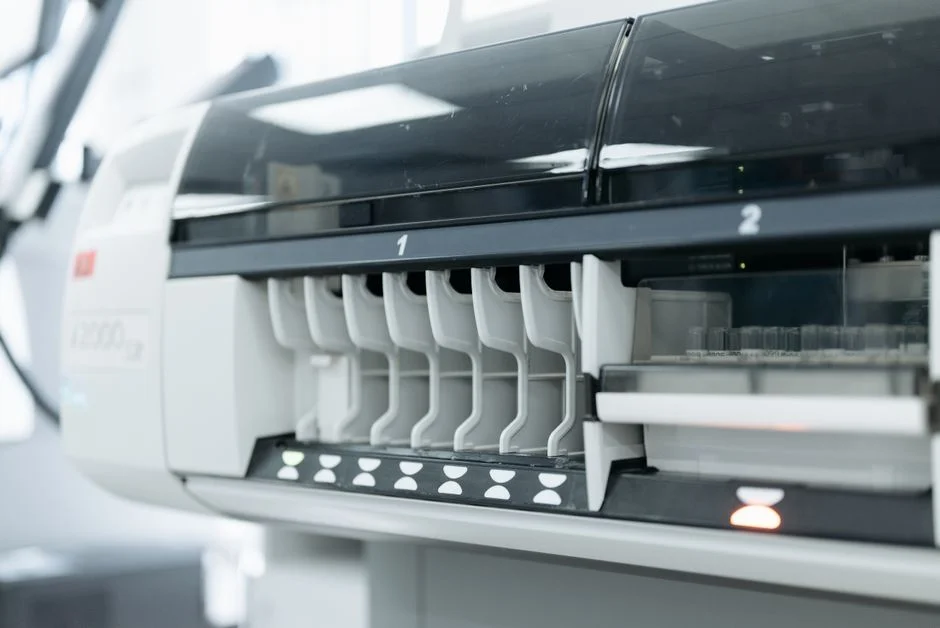
Three upgrade scenarios cover the vast majority of compliance gaps an acquirer will find. Each is presented as a CAPEX band tied to flow rate and influent strength, not a single number, because beverage plant hydraulics vary by an order of magnitude across the Coca-Cola system.
Scenario A — FOG and TSS shortfall. Solved by adding or upgrading a DAF unit, typically a dissolved air flotation unit sized to peak flow. This is the most common single CAPEX line item in beverage-plant compliance retrofits and the lowest-risk install.
Scenario B — BOD/COD or total-nitrogen shortfall. Solved with an A/O or membrane bioreactor retrofit, typically a packaged MBR membrane bioreactor system where footprint is constrained. The CAPEX band is wider than Scenario A because tankage, blower sizing, and membrane replacement schedule all interact.
Scenario C — Sludge handling. Solved with a plate-and-frame filter press, typically a plate-and-frame filter press sized to daily dry-solids production. Sludge handling is the line item most often under-scoped in pre-close reviews because operators focus on effluent quality and forget that dewatering capacity gates the whole system.
Two cross-cutting items consistently appear in beverage-plant audits. pH correction and coagulant injection recur as gaps, and a PLC-controlled chemical dosing skid typically closes both. AWS-driven water-balance and stakeholder mapping cost is documentation, not hardware, and it pays back through faster non-conformity closure at the next surveillance audit — the audited Mexican site has three open observations, and a 6–9 month closure on each is the realistic planning horizon. Buyers should model CAPEX as a band, not a point, and structure the SPA warranty around parameter-by-parameter closure rather than a single completion certificate.
Frequently Asked Questions
Do NOM-001-SEMARNAT-2023 discharge limits change automatically on closing?
No. Mexican federal and local discharge permits, concession titles, and Licencia Ambiental Única all transfer with the asset. The limits in force on the day of closing remain binding until the next permit modification, which the acquirer must trigger proactively if the production profile changes.
When does a Conagua concession title need to be formally transferred to the buyer?
Conagua title assignments do not transfer silently. The buyer must file a title-transfer request with Conagua and obtain confirmation before operating under the existing volume. A 2025 IMCC concession return of more than 4 million m³ (La Jornada, 2025-05-30) showed that Conagua is now actively auditing unused paper entitlement, so the buyer should re-audit every m³ on the title, not just the volume currently extracted.
What is the 2035 water replenishment obligation, and does it bind a new owner?
Coca-Cola's 2024-12-02 commitment targets 100% replenishment in 200+ high-risk locations by 2035. A Mexican plant is almost always inside that list. The obligation flows with the asset into the parent's annual sustainability reporting, so the new owner's first full operating year is the reporting deadline that matters.
What liability attaches to open AWS Platinum non-conformities on closing?
Open findings are public. The acquirer inherits the corrective-action plan, the audit report, and the obligation to close major non-conformities before the next surveillance audit. A pre-close escrow or warranty tied to closure of named findings is the standard protection; the audited Mexican site (AWS-000582) had at least three open observations at the 2025-03-24 certification decision.
Is groundwater extraction legal at a CDMX plant?
No. The 1954 decree banning groundwater extraction in the Valle de Mexico basin (Official Gazette of the Federation, 19 August 1954) remains in force, and no new well permit is possible in the Azcapotzalco district. A buyer inherits a tanker-truck and municipal-network supply chain from State of Mexico suppliers, with the logistics and price risk that implies.