Why the TI–Silicon Labs Deal Is an Arizona Wastewater Event
On 4 February 2026 Texas Instruments announced a definitive agreement to acquire Silicon Labs for $231.00 per share in an all-cash transaction, representing an enterprise value of approximately $7.5 billion, with closing expected in the first half of 2027 and roughly $450 million in guided annual manufacturing and operational synergies within three years post-close (source: TI press release, 2026-02-04). The headlines read "wireless connectivity" and "embedded processing scale," but for an environmental engineering lead or a third-party due-diligence consultant, the framing misses the point. Every dollar of the $450M synergy runs through an acquired manufacturing site on day one of integration, and every liter of wastewater that site discharges runs through an ADEQ permit stack that is inherited, not rewritten, on the change-of-control date.
Silicon Labs is headquartered in Austin, Texas, with operations in more than 16 countries (source: TI press release, 2026-02-04), so any Arizona or forward-looking semiconductor site absorbed in the deal envelope carries its full permit stack at closing. The deal is not a finance event with a wastewater footnote; it is a wastewater event with a finance headline. Treat the 1H 2027 close as a sequence of ADEQ filings, baseline audits, retrofit decisions, and commissioning trials, and the $7.5B transaction becomes a defensible engineering workstream. Treat it as a finance story and the same close turns into a Notice of Violation and a headline.
The legacy TI Tucson site, listed on the National Priorities List on 8 September 1983 with a Record of Decision issued in 1988, ISCO remedy selection in April 2012, and continued groundwater monitoring under a 2014 consent decree between EPA, the U.S. Justice Department, ADEQ, and Texas Instruments, sits under ADEQ oversight and is unrelated to any forward-looking active-manufacturing envelope the new deal may absorb (source: ADEQ, 2026). The article that follows is therefore a four-permit ADEQ cascade, a 30-day filing window, a Phoenix Active Management Area gate, and a 365-day retrofit Gantt chart — not a rehash of NPL history.
The Four ADEQ Permits That Move With an Arizona Industrial Site on Change-of-Control
An acquired Arizona industrial site brings four parallel ADEQ instruments with it on the change-of-control date, and the buyer steps into all four at once. The first is the Arizona Pollutant Discharge Elimination System (AZPDES) individual or general discharge permit under A.A.C. R18-9-A901, with the 50,000 gallons-per-day combined-flow threshold setting the cut between individual and general coverage; satellites below 50,000 gpd can stay on multi-sector general permit AZMSG200000 provided each files its own NOI (source: S5, 2026). The second is the Aquifer Protection Program (APP) permit under A.A.C. R18-9 Article 3, which covers any subsurface disposal, surface impoundment, dry well, unlined pond, or injection well — and the de minimis exemption under A.R.S. § 49-241.01 is narrow (source: S5, 2026). The third is the industrial-stormwater Notice of Intent under A.A.C. R18-9-A901, with general permit AZMSG200000 governing coverage for any industrial activity exposed to stormwater (source: S5, 2026). The fourth is any county-specific MS4 overlay in Maricopa, Pinal, or Pima County, which the buyer must coordinate with the county stormwater program on top of the state NOI (source: S5, 2026).
Under A.A.C. R18-9-A905, ADEQ requires written notice of a change of ownership or operational control at least 30 days in advance of the proposed transfer, with a written agreement specifying the date of transfer of permit responsibility, coverage, and liability between the current and new owners (source: S5, 2026). The existing permit number transfers, but the asset carries the seller's Discharge Monitoring Report (DMR) history, Notice of Violation (NOV) ledger, and any open Agreed Orders — compliance history is what is being purchased, not a clean slate (source: S5, 2026). ADEQ reviewers treat an expired SWPPP as a permit violation rather than a clerical defect, which makes SWPPP currency a Day-1 deliverable for the buyer's integration team (source: S5, 2026). Open monitoring wells are a Phase I environmental surprise and an independent NOV trigger under A.A.C. R18-9, so well-closure documentation must be on the table before signing (source: S5, 2026).
For the upfront mechanical screening stage, a rotary mechanical bar screen on the inlet works keeps rags, wipes, and packaging debris out of downstream biological and membrane stages, which is the cheapest insurance against membrane fouling across the rest of the train.
| Permit / Instrument | Trigger | Threshold / Form | Change-of-Control Action |
|---|---|---|---|
| AZPDES Individual Permit (A.A.C. R18-9-A901) | Combined process flow > 50,000 gpd | Individual application; site-specific review; public notice | File change-of-owner ≥ 30 days pre-transfer; re-issuance in buyer's name; DMR history transfers |
| AZPDES General Permit (AZMSG200000) | Satellite operations < 50,000 gpd | Separate NOI per satellite; confirm active status | Update NOI within 30 days; refresh SWPPP currency |
| Aquifer Protection Program (APP) — A.A.C. R18-9 Article 3 | Any subsurface disposal, dry well, unlined pond, or injection well | APP permit; BADCT determination if in Phoenix AMA | Verify BADCT determination on file; close orphan monitoring wells; A.R.S. § 49-241.01 de minimis is narrow |
| Industrial Stormwater NOI (A.A.C. R18-9-A901 / AZMSG200000) | Industrial activity exposed to stormwater | NOI + SWPPP | Confirm NOI active; refresh SWPPP; expired SWPPP = permit violation |
| County MS4 Overlay (Maricopa / Pinal / Pima) | Site located in regulated MS4 | Coordinate NOI with county stormwater program | Coordinate with county; update operator of record |
Why the Phoenix Active Management Area Gate Is the Single Biggest Permit Risk
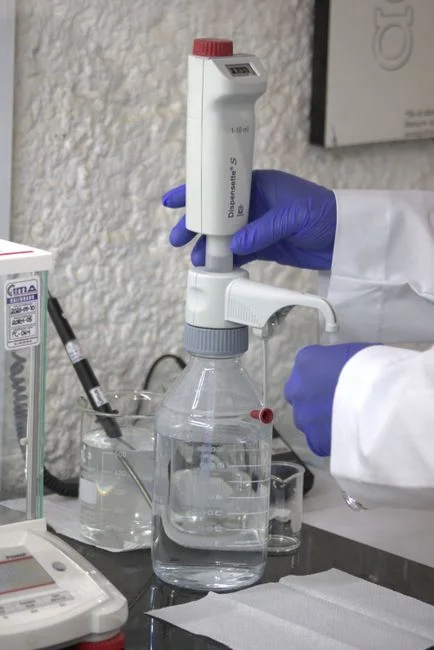
The Phoenix Active Management Area is designated a sole-source aquifer under the federal Safe Drinking Water Act, and ADEQ layers Best Available Demonstrated Control Technology (BADCT) and a no-degradation review on top of the AZPDES effluent floor for any discharge or injection inside the basin (source: S5, 2026). The BADCT gate is independent of numeric effluent compliance: a plant can post clean DMRs and still be denied re-issuance if the aquifer-review path finds that discharge quality is not consistent with the basin's no-degradation standard. A site with no BADCT determination on file triggers a SONAR-style nutrient and aquifer-review process that adds 6–12 months to APP re-issuance on top of the 30-day change-of-owner window (source: S5, 2026).
AMA-located semiconductor sites are the single most common cause of permit denial for an industrial retrofit, not because the discharge is non-compliant, but because the no-degradation gate operates as a basin-level political review on top of the parameter list (source: S5, 2026). Rural-Arizona outfalls run a more conventional AZPDES pathway without the basin-level political gate, so a Pinal or Cochise County siting compresses the re-issuance timeline materially relative to a Phoenix, Mesa, or Chandler siting. The buyer should treat the AMA-or-not question as a Day-1 decision variable in site selection, not a permitting footnote.
Conveyance is a separate counter-party stack. An APP or AZPDES permit authorizes discharge but does not grant pipeline easement, so the buyer must coordinate with the Salt River Project, the Maricopa County Flood Control District, and the Central Arizona Project for legal access (source: S5, 2026). A 6–12 month APP delay plus a separate easement dispute is the failure mode that pushes a 1H 2027 close into a 2028 close, so both gates have to be sequenced into the 365-day plan from the start.
Arizona-Specific Discharge Limits the ETP Must Hit
The federal categorical floor for metal-finishing streams is total nickel below 1.0 mg/L and total cobalt below 1.0 mg/L under 40 CFR 433, with site-specific tightening common inside the Phoenix AMA where the no-degradation standard applies (source: S5, 2026). The Arizona-specific additions layer on top of that floor: Total Dissolved Solids (TDS) and chloride caps tied to receiving-aquifer quality under A.A.C. R18-11, nitrate-nitrogen limits for any on-site reuse, a pH 6.5–9.0 standard, and temperature and oil & grease caps on cooling-tower blowdown (source: S5, 2026). The Arizona numeric nickel standard for domestic water sources is 100 µg/L under A.A.C. R18-11; cobalt has no universal numeric surface water quality standard in Arizona, so cobalt limits are set through toxicity-based permit conditions derived from NPDES technical guidance (source: S5, 2026).
For a semiconductor module-assembly site, the binding loadings that drive the ETP envelope are copper, lead, and nickel from lead-frame and substrate finishing; fluoride from any HF/BOE touch-up; tetramethylammonium hydroxide (TMAH) from photolithography developer; total nitrogen from developer and resist stripping; and total suspended solids from CMP slurry carrying silica, ceria, or alumina (source: S3, 2026). TI already operates a mature product-level environmental program under IEC QC 080000 for restricted chemicals, alongside RoHS, REACH, and Green compliance, so the corporate policy stack is not the gap (source: S3, 2026). The integration gap is at the site/facility level — the discharge point, the APP envelope, the SWPPP, and the MS4 overlay. Confirm site-specific design values against current permits, influent testing, and the final equipment proposal before commissioning, because the federal categorical floor is the minimum, not the ceiling.
| Parameter | Limit / Range | Regulatory Anchor | Source |
|---|---|---|---|
| Total Nickel | < 1.0 mg/L (categorical); 100 µg/L numeric for domestic water sources | 40 CFR 433; A.A.C. R18-11 | S5, 2026 |
| Total Cobalt | < 1.0 mg/L (categorical); toxicity-based permit condition | 40 CFR 433; NPDES technical guidance | S5, 2026 |
| TDS | Aquifer-quality based; often < 500 mg/L for reuse | A.A.C. R18-11 | S5, 2026 |
| Chloride | Aquifer-quality based; tied to receiving aquifer | A.A.C. R18-11 | S5, 2026 |
| Nitrate-Nitrogen | Limit applies for any on-site reuse | A.A.C. R18-11 | S5, 2026 |
| pH | 6.5 – 9.0 | A.A.C. R18-11 | S5, 2026 |
| Oil & Grease (cooling-tower blowdown) | Permit-capped; categorical floor under 40 CFR 433 | 40 CFR 433; ADEQ permit | S5, 2026 |
| Fluoride (HF/BOE rinse) | Target < 10 mg/L for reuse envelope | Site-specific; reuse declaration binding | S3, 2026 |
| Total Nitrogen (TMAH, resist strip) | Site-specific; sized to reuse end-use | A.A.C. R18-11; NOM-001 analog | S3, 2026 |
Brownfield ETP Retrofit Scope for a 1,500 m³/day Semiconductor Module-Assembly Site
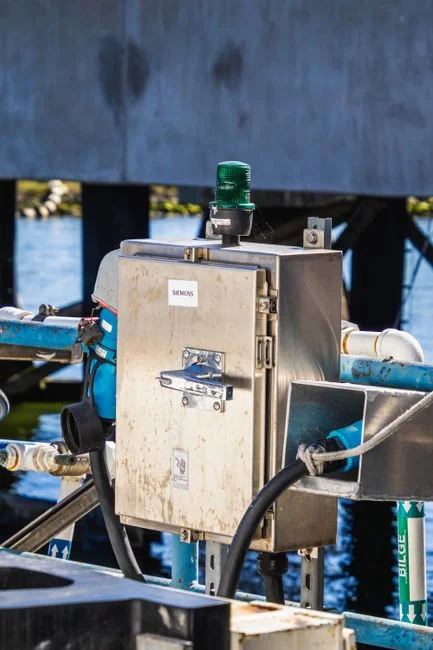
The defensible reference train for an Arizona retrofit has five to seven stages, with the conservative end of that range when the site keeps cathode coating in-house. A dissolved air flotation system handles suspended solids and FOG upstream of the biological stage. Chemical precipitation with a lamella clarifier removes copper, lead, and nickel to the low-mg/L range the categorical floor expects. The biological stage is an integrated MBR wastewater treatment system with a DF series PVDF flat-sheet membrane module at 0.1 µm and MLSS 8,000–12,000 mg/L, with a denitrification/nitrification split to hit the total-nitrogen envelope (source: S3, 2026). An industrial RO polishing system closes the loop for cooling-tower make-up or toilet flush, with a ClO2 disinfection stage on the reuse line.
For a 1,500 m³/day Arizona retrofit, the base train (DAF + lamella + MBR + RO) fits $1.5M–$4M; adding NMP vacuum distillation for in-house cathode coating pushes the line to $4M–$6M; adding an evaporator/crystallizer for zero-liquid-discharge alignment runs 1.5x–2.5x the base. Normalized, that is $1,000–$4,000 per m³/day of design capacity, or $4–$16 per gallon of daily flow (source: S5, 2026). The Arizona-specific OPEX pinch point is brine disposal: RO reject is 15–30% of feed, producing 225–450 m³/day of brine on a 1,500 m³/day plant, and deep-well injection (Class I or Class V depending on volume) is the dominant disposal path with an industrial waste hauler as fallback (source: S5, 2026).
Three retrofit paths are on the table. Path (a) is inherit and operate as-is — lowest capex, zero rebuild time, but it accepts whatever reuse-registration gap the inherited APP carries and the operational risk of an ETP envelope sized for a different stream mix. Path (b) is a brownfield MBR+RO retrofit — 30–50% of greenfield capex, 6–9 months of build time, and reuse of the existing APP envelope so the basin-level political gate is already passed. Path (c) is a greenfield rebuild — 18–24 months to commission, full new EIA exposure, and a new APP negotiation that can stall on basin availability. Brownfield MBR+RO retrofit is the only path that fits inside the 365-day window to the 1H 2027 close and reuses the existing APP envelope, so it is the default (source: S3, 2026). For the parallel pretreatment envelope that data-hall and semiconductor sites share, see the Nuevo León pretreatment compliance guide.
| Retrofit Path | Scope | CAPEX vs Greenfield | Build Time | Risk vs 1H 2027 Close |
|---|---|---|---|---|
| (a) Inherit and operate as-is | No rebuild; existing ETP envelope | Lowest capex (no rebuild) | 0 months | High — accepts APP/BADCT gap and stream-mix mismatch |
| (b) Brownfield MBR + RO retrofit (default) | DAF + lamella + MBR + RO + ClO2 | 30–50% of greenfield ($1.5M–$4M base at 1,500 m³/day) | 6–9 months | Low — reuses existing APP; closes MBR/RO envelope |
| (c) Greenfield rebuild | Full new ETP, new EIA, new APP | 100% reference | 18–24 months | Medium — new EIA, new APP negotiation, basin availability not guaranteed; misses 1H 2027 |
365-Day Pre-Close Gantt Chart: Filings, Audit, Retrofit, Commissioning
The compliance cascade compresses cleanly into a four-task Gantt chart if the change-of-control date is treated as Day 0. Day 0 to Day 90: file change-of-owner notifications with ADEQ under A.A.C. R18-9-A905 at least 30 days before the transfer, and commission a baseline ETP performance and compliance-history review covering the last 36 months of discharge monitoring and any open Agreed Orders (source: S5, 2026). Day 90 to Day 180: complete a stream-by-stream wastewater audit against the module-assembly profile — CMP slurry, fluoride rinses, TMAH developer, IPA rinse, copper-bearing acid/alkaline wash, flux and resist stripping, sanitary sewage, cooling-tower blowdown, RO reject — and lock the retrofit-versus-rebuild decision against the capex bands above; close any orphan monitoring wells (source: S3, 2026). Day 180 to Day 365: execute the brownfield MBR+RO retrofit, run a 90-day commissioning trial against A.A.C. R18-11 instantaneous maximums, refresh SWPPP currency, and close the file before the 1H 2027 cut-over.
An automatic chemical dosing system on the precipitation stage keeps coagulant and pH control inside the tight band the lamella needs to hit the categorical floor without operator babysitting across the 90-day commissioning trial. The cost of skipping a step is concrete: NOV under ADEQ, suspension risk on the operating licence, Agreed Order exposure, and the reputational risk of a publicly disclosed $7.5B deal turning into a compliance headline. The same schedule works as a semiconductor ETP due-diligence checklist for any back-end or module-assembly site in the deal envelope; for the parallel manufacturing audit framing, see the Samsung factory ETP due diligence checklist.
Phase II Due-Diligence Checklist the Buyer Can Hand to Counsel
Pull at least 8 quarters of Discharge Monitoring Reports from EPA ECHO; anything shorter misses the rolling two-year exceedance window ADEQ reviewers examine first (source: S5, 2026). Request the existing APP permit file, the BADCT determination if the site sits in the Phoenix Active Management Area, and any groundwater-monitoring well closure documentation — open monitoring wells are a Phase I environmental surprise and an independent NOV trigger under A.A.C. R18-9 (source: S5, 2026). Confirm AZPDES NOI coverage and active status for every satellite operation on the site; an expired NOI on a paint shop becomes the buyer's first violation (source: S5, 2026).
Map conveyance routes to ensure legal access — an APP or AZPDES permit authorizes discharge but does not grant the right to lay a pipeline across a neighboring easement, flood-control district, or irrigation district. The active Arizona counter-parties are the Salt River Project, the Maricopa County Flood Control District, and the Central Arizona Project (source: S5, 2026). For the sludge dewatering envelope on the metal-rich clarifier underflow, a plate-and-frame filter press is the standard workhorse and pairs with the ClO2 disinfection stage on the reuse line. For the parallel jurisdictional framing on a peer site, see the Samsung Mexico plant wastewater compliance guide. Verify site-specific design values against current permits, influent testing, and the final equipment proposal before commissioning, because the federal categorical floor is the minimum, not the ceiling (source: S3, 2026).
Frequently Asked Questions
Which ADEQ permits trigger at closing when Texas Instruments acquires an Arizona plant?
Four ADEQ instruments move with the asset on a change-of-control: an AZPDES individual or general discharge permit under A.A.C. R18-9-A901 (50,000 gpd individual threshold), an Aquifer Protection Program (APP) permit under A.A.C. R18-9 Article 3, an industrial-stormwater NOI under general permit AZMSG200000, and any county MS4 overlay in Maricopa, Pinal, or Pima (source: S5, 2026). The change-of-owner notice is required at least 30 days before transfer under A.A.C. R18-9-A905.
Does the change-of-control trigger a brand-new EIA or APP in Arizona?
No. A change-of-control does not, by itself, trigger a brand-new APP or EIA. Inherited permits remain in force subject to a change-of-owner filing and a compliance-history review with ADEQ (source: S5, 2026). The TI–Silicon Labs deal, signed 4 February 2026 for $7.5B and expected to close in 1H 2027, is therefore a filing exercise first and a re-permit exercise only if the review surfaces a finding.
What does the Phoenix Active Management Area BADCT gate mean for retrofit timing?
The Phoenix AMA is a sole-source aquifer under the federal Safe Drinking Water Act, and ADEQ layers Best Available Demonstrated Control Technology and a no-degradation review on top of the AZPDES effluent floor (source: S5, 2026). A site with no BADCT determination on file triggers a SONAR-style nutrient and aquifer-review path that adds 6–12 months to APP re-issuance on top of the 30-day change-of-owner window. This is the single most common permit denial pathway for an industrial retrofit in Arizona.
What CAPEX band does a 1,500 m³/day semiconductor module-assembly retrofit fit inside?
The base train (DAF + lamella + MBR + RO) on a 1,500 m³/day Arizona site fits $1.5M–$4M; adding NMP vacuum distillation for in-house cathode coating pushes the line to $4M–$6M; a ZLD add-on (evaporator/crystallizer) runs 1.5x–2.5x the base (source: S5, 2026). Normalized, that is $1,000–$4,000 per m³/day of design capacity, or $4–$16 per gallon of daily flow, with brownfield retrofit at 30–50% of greenfield capex (source: S3, 2026).
Which federal categorical standards apply to the metal-finishing streams at an Arizona semiconductor site?
40 CFR 433 sets the federal categorical floor at total nickel below 1.0 mg/L and total cobalt below 1.0 mg/L for metal-finishing streams (source: S5, 2026). The Arizona numeric nickel standard for domestic water sources is 100 µg/L under A.A.C. R18-11; cobalt has no universal numeric surface water standard in Arizona and is set via toxicity-based permit conditions (source: S5, 2026). Site-specific tightening is common inside the Phoenix AMA where the no-degradation standard applies.