Why Textile Effluent Is a Distinct Problem in the Netherlands
Textile wet processing consumes roughly 200 L of water per kilogram of fabric produced, distributed across eight discrete unit operations: sizing, de-sizing, scouring, bleaching, mercerising, dyeing, printing, and finishing (Ghaly et al. 2014, reviewed in Int. J. Environ. Sci. Technol., 2019). Each step contributes a different contaminant signature, and a Dutch mill rarely runs one fabric in one colour on one shift — batch operations mean pH swings of 4–11, temperature swings of 30–90 °C, and colour peaks that arrive at the treatment plant on a 6–12 hour cycle. Generic municipal treatment cannot absorb that shock load.
The Dutch angle is twofold. First, the Netherlands is a European textile logistics and industrial laundry hub, so the receiving surface waters — many of them KRW-protected — are sensitive to salt, colour, and metal loads that a generic EU discharge consent would still allow. Second, the 2025–2030 National Circular Textile Policy, released as part of the National Circular Economy Programme, sets a 2050 full-circularity horizon and ties procurement and subsidy flows to reuse, recycling, and material-recovery targets (source: Dutch 2025–2030 Circular Textile Policy, transition-pathways.europa.eu, 2025-01). For a plant engineer, that means designing today for a permit envelope that will tighten before the equipment is fully depreciated.
Microplastics sharpen the case. A 2025 field study at a Dutch industrial textile laundry facility (ITLF) found that a single laundry contributed 13% of the total MP load entering the receiving WWTP Kerk en Zanen, while two Dutch WWTPs (West and Horstermeer) removed between 72% and 94% of incoming MPs — leaving 6–28% to surface water (Springer Microplastics and Nanoplastics, 2025-04). At a Dutch mill sized for indirect discharge to a Waterschap sewer, that residual is the permit risk a designer has to plan around. For a fuller breakdown of Dutch permit mechanics, see the Netherlands package wastewater treatment plant cost and compliance guide.
What Comes Out of a Textile Plant: Contaminant Profile by Process Step
A textile effluent is not one stream but eight overlapping ones, and the engineering answer depends on which streams are segregated. Sizing and de-sizing release starch, PVA, and carboxymethyl cellulose — high-COD, high-BOD loads that are biologically treatable but arrive in slugs. Scouring contributes alkalis, fats, waxes, and surfactants. Bleaching adds hydrogen peroxide, sodium silicate, and pH instability. Mercerising raises NaOH strength into the 200–280 g/L band. Dyeing carries reactive, disperse, acid, or vat dyes together with NaCl (often 50–100 g/L) and Na2SO4 as exhaustion aids. Printing carries thickeners and urea. Finishing contributes softeners, fluorocarbons, and formaldehyde-based crosslinkers (Holkar et al. 2016, as cited in Int. J. Environ. Sci. Technol., 2019).
Dye concentration spans two orders of magnitude in the literature, and the range is not noise — it reflects whether the sample was a composite mill effluent, a spent dyebath, or a single reactive-dye discharge. Reported concentrations include 10–50 mg/L (Laing 1991), 10–250 mg/L for dye-house composite (Ghaly et al. 2014), 60 mg/L reactive (Shelley 1994), 100–200 mg/L reactive (Gahr et al. 1994), 600–800 mg/L (Vandevivere et al. 1998), and up to 7,000 mg/L in a specific reactive-dye stream (Koprivanac et al. 1993). Colour intensity is reported at 1,000–1,500 ADMI units for coloured effluents (O'Neill et al. 1999). Metals of concern include chromium, zinc, iron, mercury, and lead (Hussein 2013), plus cobalt, copper, and chromium bound inside dye chromophores (Adinew 2012). Salt — often invisible in a BOD/COD table — is the parameter that defeats conventional biology and pushes the design toward RO.
| Process step | Dominant pollutants | Typical load / concentration | Design implication |
|---|---|---|---|
| Sizing / de-sizing | Starch, PVA, CMC, BOD, COD | COD 2,000–10,000 mg/L in spent liquor | Capture hot, treat biologically |
| Scouring | Alkali, fats, waxes, surfactants | pH 10–13, oil/grease 1–5 g/L | Equalise pH before DAF |
| Bleaching | H2O2, silicates, residual COD | COD 500–1,500 mg/L | Compatible with ASP after equalisation |
| Mercerising | NaOH, residual COD | NaOH 200–280 g/L in spent liquor | Segregate; recover caustic if economical |
| Dyeing | Reactive/acid/disperse dyes, NaCl, Na2SO4 | Dye 10–7,000 mg/L; salt 1,000–100,000 mg/L | Coagulation + DAF; RO if reuse targeted |
| Printing | Thickeners, urea, dyes, surfactants | COD 1,000–3,000 mg/L | Hydrolyse thickeners biologically |
| Finishing | Softeners, fluorocarbons, formaldehyde | AOX 1–10 mg/L; COD 200–800 mg/L | AOX limit may drive advanced oxidation |
The Standard Dutch Treatment Train, Step by Step
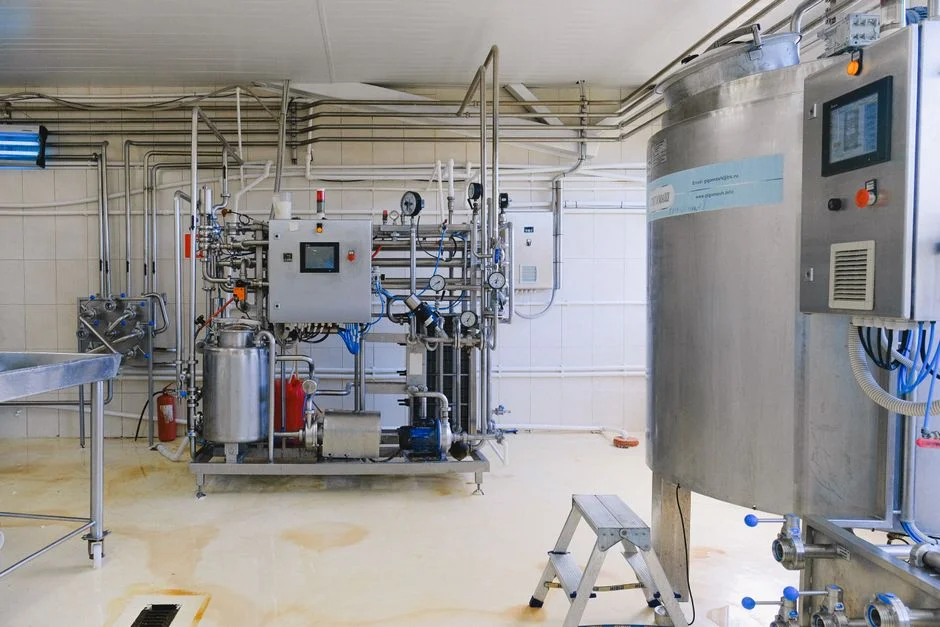
A robust Dutch textile train runs in seven stages, each justified by the parameter it removes.
1. Headworks. A rotary mechanical bar screen for textile headworks takes out fibres, lint, plastic packaging fragments, and button debris before the lift station. Bar spacing of 3–6 mm is typical; finer screens risk blinding from fabric lint and are not recommended upstream of biological treatment without wash-water management.
2. Equalisation. An 8–24 hour buffer tank is the single most cost-effective unit on the site. It dampens pH, temperature, and load swings from batch dyeing, and it gives the operator a chance to blend reactive and disperse streams so downstream biology sees a stable feed. The corresponding DAF process flow diagram for textile pre-treatment shows the equalisation tank feeding a DAF system for colour and suspended solids removal by gravity.
3. DAF. Dissolved air flotation with coagulant (typically FeCl3 or polyaluminium chloride) and anionic polymer removes 60–90% of colour precursors, suspended solids, and oil/grease. The DAF float captures dye-bound metals and hydrolyses thickener residues. Hydraulic retention time is 20–30 minutes; air-to-solid ratio is in the 0.02–0.05 range for textile feed.
4. Biological treatment. Conventional ASP, SBR, or MBBR handles the residual COD and BOD. For reactive-dye loads above ~500 mg/L COD, an anaerobic/aerobic sequence is required: a 24–48 hour anaerobic stage cleaves azo bonds and decolourises the bulk, followed by an aerobic stage for residual organics and ammonia. Hydraulic retention in the aerobic basin is typically 12–36 hours; MLSS 3,000–5,000 mg/L.
5. MBR polishing. A submerged PVDF MBR system for textile wastewater polishing at 0.1–0.4 micron nominal pore size drops TSS below 5 mg/L and pushes COD into the 50–100 mg/L band, which is the typical indirect-discharge target under Dutch Waterschap permits. MBR also retains biomass at 8,000–12,000 mg/L MLSS, shrinking the required aeration basin footprint by 40–60% compared to a clarifier-based ASP at the same loading.
6. RO or NF (only when reuse is the goal). For sites pursuing in-process water reuse or facing salt loads above ~2,000 mg/L, an RO polishing for textile process water reuse is added downstream of MBR. Recovery on textile brine runs 70–85%; concentrate disposal is the design driver, both in CAPEX (brine treatment or evaporation pond) and OPEX (anti-scalant, CIP chemicals).
7. Sludge handling. A plate-and-frame filter press for textile sludge brings combined DAF float and biological sludge to 22–28% dry solids, suitable for off-site incineration. Under the 2025–2030 circular policy, the press cake is increasingly diverted toward fibre recovery or pyrolysis feedstock rather than landfill.
Choosing Between Activated Sludge, MBR, and RO Polishing
The technology choice follows from three questions: what does the local Waterschap accept, what is the salt load, and is reuse a permit condition or a procurement requirement. Conventional activated sludge with a secondary clarifier is the lowest-CAPEX option and produces effluent at COD 150–250 mg/L and TSS 20–40 mg/L — adequate only where the indirect-discharge consent sits well above 200 mg/L COD, which is becoming rare in the Netherlands.
MBR is the workhorse for most Dutch mills. The footprint is roughly 60% smaller than an equivalent ASP train, the effluent sits at COD 50–100 mg/L and TSS under 5 mg/L, and the mixed liquor is decoupled from the clarifier, which is a real advantage on textile feed where clarifier blankets routinely fail on colour shock. The 72–94% MP removal reported at Dutch WWTPs (Springer Microplastics and Nanoplastics, 2025-04) was measured at plants with biological treatment and a settling step; an MBR adds a physical barrier and is generally credited with a further 0.5–1.0 log removal on top of biological removal. Even so, on-site polishing is the only credible path to circular reuse.
RO is required when (a) salt exceeds 2,000 mg/L and the receiving Waterschap is enforcing chloride or conductivity limits, or (b) the 2025–2030 circular policy commitments in the company's sustainability report require in-process reuse. Concentrate disposal is the controlling cost — typically 5–15% of the feed volume at 70–85% recovery, sent to brine evaporator, off-site disposal, or a crystalliser. For a deeper look at the downstream disinfection step that protects reuse loops, see the UV disinfection engineering specs and cost guide and the MBR membrane module product page.
| Parameter | Conventional ASP + clarifier | MBR | RO polishing (after MBR) |
|---|---|---|---|
| Relative footprint | 1.0× (baseline) | ~0.4× | Adds 15–25% over MBR |
| Effluent COD | 150–250 mg/L | 50–100 mg/L | < 25 mg/L |
| Effluent TSS | 20–40 mg/L | < 5 mg/L | < 1 mg/L |
| Effluent conductivity | Unchanged | Unchanged | 90–99% salt rejection |
| Reuse suitability | None | Non-contact reuse | Rinse-water, dyeing-make-up |
| CAPEX band, small plant (50–200 m³/d) | EUR 0.2–0.5M | EUR 0.4–1.0M | + EUR 0.2–0.4M |
| CAPEX band, mid plant (500–2,000 m³/d) | EUR 0.6–1.5M | EUR 1.2–3.5M | + EUR 0.6–1.5M |
| CAPEX band, large plant (> 5,000 m³/d) | EUR 2–6M | EUR 5–15M | + EUR 2–6M |
Dutch Compliance: Waterwet, Waterschap Permits, and the 2025–2030 Circular Push
Two regulatory frames govern a Dutch textile site. Direct discharges to surface water require a Waterwet permit issued by Rijkswaterstaat, with limits set against the KRW chemical and ecological status of the receiving water body. Indirect discharges to a municipal or Waterschap sewer fall under the Indirect Discharge Decree (Indirecte Lozingenbesluit) and the local Waterschap's Blauwe Golf or analogous wastewater regulation. In practice, most Dutch textile plants discharge indirectly, and the Waterschap is the day-to-day regulator.
The parameter envelope most Waterschappen enforce on textile indirect discharges includes COD, BOD5, total-N, total-P, suspended solids, AOX, and the heavy metals Cr, Cu, Zn, Ni, and Pb. Colour is increasingly a hard limit and is typically expressed in ADMI units or mg/L Pt/Co; common indirect-discharge limits sit in the 100–250 ADMI band, with the tighter end applied to plants discharging to a sensitive WWTP. pH is bounded at 6.5–9.5 and temperature typically below 30 °C at the sewer connection.
The 2025–2030 National Circular Textile Policy is not yet a permit condition, but it is already a procurement gate. Subsidies under the National Circular Economy Programme and corporate sustainability reporting under CSRD both reference it, and new permits issued in 2025–2026 are being written with MP monitoring in the envelope, anchored in the 13% single-source MP contribution measured at the Dutch ITLF (Springer Microplastics and Nanoplastics, 2025-04). For comparable pretreatment engineering outside the textile sector, the 2026 petroleum pretreatment limits walkthrough shows the same permit-mechanics logic applied to a different effluent.
Designing for Reuse: Closing the Loop Under the Circular Policy
Reuse is the most defensible answer to tightening Dutch permits. Three moves convert a compliance-driven design into a circular-economy design. First, add an RO loop on the rinse-water stream at 70–85% recovery; permeate returns to the rinse step, concentrate is bled off and treated. Second, evaluate nanofiltration on the dyeing-make-up stream — NF passes monovalent salts while retaining divalent dye residues, which is often the right cut for reactive dyeing. Combined, RO on rinse and NF on dye make-up can cut freshwater demand by 40–60% in a typical Dutch dyehouse.
Third, treat sludge as a resource, not waste. Anaerobic digestion of biological surplus at 35 °C with 15–20 day HRT produces 0.25–0.35 m³ biogas per kg COD removed; the digested solids are then dewatered on a plate-and-frame filter press for textile sludge to 22–28% DS. The cake, which historically went to incineration, becomes a candidate for fibre recovery or pyrolysis under the 2025–2030 policy. A high-efficiency primary sedimentation tank upstream of biology cuts biological load and shrinks the digester, while a well-tuned automatic chemical dosing system keeps coagulant use where it removes colour and not where it wastes it. A chlorine dioxide generator on the reuse loop delivers AOX-controlled disinfection for rinse water without the THMs that come with chlorine.
Energy is the second design lever. MBR aeration is 60–70% of plant electricity, and the most reliable way to cut it is upstream — a properly run DAF pre-stage reduces MLSS load to the MBR and trims aeration energy by 15–25% (HydropureWater field data, 2025). Combined with a 70–85% RO recovery loop and an anaerobic digester, a Dutch textile plant sized at 1,000 m³/d can realistically target 40–60% freshwater reduction and 30–50% sludge mass reduction, both of which are the metrics the 2050 circular horizon will be measured against.
Frequently Asked Questions
What is the typical COD of textile wastewater?
Combined textile mill effluent typically runs 800–2,500 mg/L COD, with dyeing streams at the high end. Spent reactive-dye baths can exceed 7,000 mg/L COD and are usually segregated and treated separately (Koprivanac et al. 1993; Ghaly et al. 2014).
Which treatment is most common for textile effluent in the Netherlands?
The standard Dutch train is equalisation, DAF, biological treatment (often anaerobic/aerobic), and MBR polishing. RO is added where in-process reuse is targeted or where salt loads exceed ~2,000 mg/L.
How much does a textile wastewater plant cost in the Netherlands?
Turnkey CAPEX in 2026 runs EUR 0.4–1.0M for 50–200 m³/d, EUR 1.2–3.5M for 500–2,000 m³/d, and EUR 5–15M above 5,000 m³/d, with MBR as the baseline and RO added at +15–25%. The full breakdown and supplier checklist are in the Netherlands package wastewater treatment plant cost and compliance guide.
Do Dutch permits set a colour limit?
Yes. Most Waterschappen enforce either ADMI units or mg/L Pt/Co for colour on indirect discharges, typically in the 100–250 ADMI band. Direct discharges to surface water are subject to tighter colour and AOX limits tied to the KRW status of the receiving water body.
What does the 2025–2030 Dutch textile policy mean for wastewater?
The 2025–2030 National Circular Textile Policy sets a 2050 full-circularity horizon and drives reuse, material recovery, and MP monitoring. It is not yet a hard permit condition, but it shapes subsidy eligibility, CSRD reporting, and the language of new Waterschap permits issued in 2025–2026. Plant designers should treat in-process reuse and sludge valorisation as permit-relevant today, not as a 2035 retrofit option.