The 2026 Compliance Stack for Cincinnati Petroleum Dischargers
Under 40 CFR 403.5(a), any petroleum plant near Cincinnati that discharges to a POTW is bound by the federal pass-through and interference prohibition — there is no silent exemption (per EPA NPDES pretreatment standards, 2026-01). A refinery falls under 40 CFR Part 419 categorical limits; a bulk terminal or fuel-blending plant is a noncategorical SIU governed by 40 CFR 403 plus Metropolitan Sewer District of Greater Cincinnati (MSD) local limits, derived using EPA's MAHL method. Typical 2026 HEM ceilings run 100–200 mg/L and ~250 mg/L TSS, met by a four-stage train: source segregation, primary oil/water separation (API/CPI/coalescer), DAF polishing, and biological or MBR polish.
The citation chain a Cincinnati compliance engineer can hand an Ohio EPA inspector runs: Clean Water Act of 1972 (33 U.S.C. § 1251 et seq.) → 40 CFR Part 403 general pretreatment regulations → Ohio EPA NPDES pretreatment delegation → Metropolitan Sewer District of Greater Cincinnati (MSD) local limits → 40 CFR Part 419 categorical limits for refineries. MSD's Pretreatment Program was approved by Ohio EPA per the August 5, 2011 approval letter (per msdgc.org) and remains the Ohio-EPA-approved mechanism for SIU permitting in the Greater Cincinnati service area. The legal pivot is the receiving plant's effluent quality and biosolids, not the discharger.
Pass-through under 40 CFR 403.3(p) is a discharge that exits the POTW into waters of the U.S.; interference under 40 CFR 403.3(k) is a discharge that inhibits or disrupts the POTW, its treatment processes, or its sludge use and disposal. A Cincinnati-area refinery is a categorical SIU under 40 CFR Part 419; a bulk terminal or fuel-blending plant is a noncategorical SIU under 40 CFR 403 plus local limits, derived using EPA's MAHL/MAIL method. The distinction matters because categorical limits ride on top of local limits, and a refinery's effluent compliance is judged against both.
What the Local Limits Actually Look Like in 2026
Local limits at a Cincinnati-area POTW are derived using EPA's Maximum Allowable Headworks Loading (MAHL) method, which converts four regulatory inputs into a per-user allocation. Per the 2020 St. Joseph, MO TBLL evaluation by Black & Veatch, those four MAHL inputs are: (1) NPDES permit limits on the receiving POTW, (2) state water quality standards for the receiving stream, (3) Part 503 biosolids disposal criteria, and (4) local worker/ecosystem protection factors such as NIOSH thresholds. The POTW then converts MAHL into a Maximum Allowable Industrial Loading (MAIL) for each SIU, allocates mass against flow, and prints the result as daily-maximum and monthly-average numbers on the discharge permit.
The parameter set a Cincinnati petroleum SIU is judged on tracks the standard municipal local-limits table reproduced in the 2025 Middlesboro, KY ordinance § 51.062(N) — a defensible reference framework a terminal engineer can present in lieu of the MSD-specific numbers, which are issued per-permit rather than published as a generic table.
| Parameter | Daily Maximum (mg/L) |
|---|---|
| Arsenic (As) | 0.75 |
| Cadmium (Cd) | 0.07 |
| Chromium, total (Cr) | 1.71 |
| Chromium, hexavalent (Cr⁶⁺) | 0.41 |
| Copper (Cu) | 1.2 |
| Cyanide, amenable | 0.13 |
| Lead (Pb) | 0.18 |
| Mercury (Hg) | 0.001 |
| Nickel (Ni) | 0.69 |
| Selenium (Se) | 0.13 |
| Silver (Ag) | 0.24 |
| Zinc (Zn) | 1.48 |
| HEM (O&G surrogate) | 100–200 (50 in water-reuse basins) |
| TSS | ~250 |
Hexane Extractable Material (HEM) is the federally used O&G surrogate under 40 CFR § 401.16 and EPA Method 1664A, and is what most bulk plant permits cite as "O&G." Benzene and TPH are the lead parameters for permit negotiation because the MAHL they generate often constrains daily flow more than O&G does. The dilution prohibition is also standard: no user shall increase process water use or attempt to dilute a discharge as a substitute for adequate treatment to meet federal categorical limits (per Middlesboro § 51.063). Stricter Cincinnati-area POTWs in water-reuse basins push daily-maximum HEM toward 50 mg/L.
Mapping Cincinnati Petroleum Waste Streams to the Right Treatment Stage
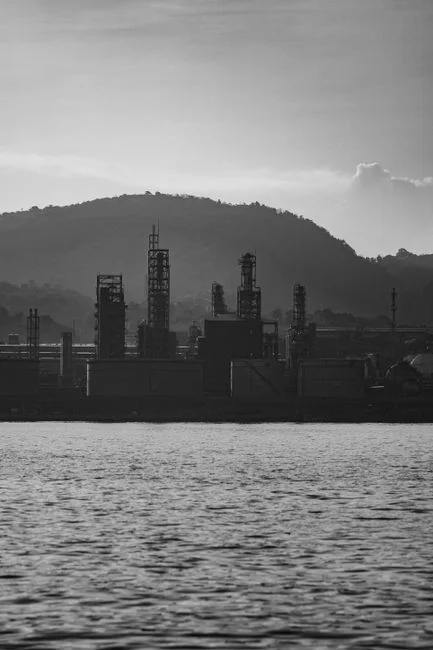
The principal waste streams a Cincinnati-area petroleum site must route into the pretreatment train are tank-bottom water, API/coalescer dumps, truck and rail loading drip, vehicle wash-rack wastewater, hydrostatic test water, and stormwater that contacts product-handling areas. Each carries a different droplet-size distribution, and droplet size drives stage selection. Tank-bottom water is free oil plus sludge; wash-rack water is emulsified, with sub-50 µm droplets driven by detergents; loading-arm drip is mostly free oil. Stormwater from product-handling pads is intermittent and can swing 10× between a dry day and a 1-inch rain event.
A single-technology approach fails because a CPI cannot break emulsions and a DAF is overwhelmed by a free-oil slug during a coalescer dump. The field finding is that a DAF alone without a primary gravity stage fails under slug loads from coalescer dumps because free oil blankets the bubble surface and crashes the air-to-solids ratio (HydropureWater field data, 2026). Source segregation is the cheapest control available: segregated laterals for product-handling pads, covered dump valves, and dedicated oil/water sewering on truck-loading islands reduce the volume hitting the train by 40–70% in field retrofits (HydropureWater field data, 2025–2026), and convert most of the remaining flow from "design problem" to "design choice."
The robust path is a four-stage train with explicit stage duties: (1) source segregation to keep hydrocarbon-contaminated streams out of clean stormwater and shrink the volume hitting the train; (2) primary oil/water separation — API, CPI, or coalescer for free oil ≥60–150 µm; (3) DAF for emulsified oil 10–25 µm; (4) biological or MBR polishing only where ammonia, sulfide, or dissolved hydrocarbon reductions are required. The order is non-negotiable, and skipping stage 2 to save capex is the single most common cause of DAF underperformance in the field.
Choosing the Primary Separator and DAF Polisher
Choosing the primary separator is the highest-leverage equipment decision in the entire train. The four technologies sit in different performance bands and are not interchangeable; the side-by-side comparison below is the only way to pick the right one for a Cincinnati terminal's flow regime and slug-load profile.
| Technology | Target Droplet Size | Hydraulic Loading | Best Application | Key Limitation |
|---|---|---|---|---|
| API gravity separator | ≥150 µm (free oil) | Vendor-specific; large footprint | High-throughput marine terminal, large flow swings | Cannot break emulsions; sensitive to turbulence |
| CPI (corrugated plate interceptor) | ≥60 µm (free oil) | Compact; vertical configurations available | Small-to-mid terminal with steady flow; retrofit into existing concrete vault | Rarely meets <100 mg/L on emulsified waste; plate fouling |
| Coalescer (plate or multimedia) | ≥20 µm (polishing) | 5–10 gpm/ft² (vendor-specific) | Polishing stage or low-flow sites with strict <50 mg/L needs | Higher O&M; media replacement 1–3 yr |
| DAF | 10–25 µm (emulsified/colloidal) | 2–5 gpm/ft² surface; ASR ~0.02–0.05 | Truck-loading rack with emulsified oils; as primary only where free oil is pre-strained | Slug-sensitive without upstream primary; needs air saturation system |
The robust path for a Cincinnati terminal is CPI or API as primary, then a dissolved air flotation system as the emulsified-oil polisher, sized with a 20–30% safety margin on hydraulic and air-to-solids loading. Three numbers drive a defensible design: peak instantaneous flow (gpm or m³/h, not the daily average — slug loads during a coalescer dump or tank drop can spike 3–5× the daily mean), daily O&G load (lb/day or kg/day, calculated from tank turnover, wash-rack volume, and drip rates), and target residual O&G (mg/L, taken from the local permit ceiling or, ideally, set 20–30% below it). For API units, a residence time of at least 30 minutes at peak flow is the standard reference; CPI plate spacing typically falls in the 1–2 inch range with a corrugation angle near 45°.
DAF chemistry closes the gap to a strict HEM ceiling: pH adjustment to 6.5–7.5 ahead of the DAF and a coagulant or demulsifier dose of 50–200 mg/L via a HydropureWater automatic chemical dosing system is what unlocks residual <50 mg/L HEM. Where the permit swings from a 50 mg/L HEM ceiling to <20 mg/L in a water-reuse loop, the polishing step moves from biological (an MBR membrane bioreactor wastewater treatment system with 0.1 µm PVDF flat-sheet modules) to adsorption (GAC). For a head-to-head DAF vs clarifier framing on a similar waste profile, see the DAF vs clarifier for petroleum bulk wastewater worked example, and for a parallel compliance framing at another process-industry site see how petroleum bulk plants meet pretreatment limits in the East Providence guide.
Significant noncompliance: use the actual federal criteria
40 CFR 403.8(f)(2)(viii) defines significant noncompliance (SNC) for the public-notification provision. The chronic and TRC criteria apply to SIUs; the stated interference, imminent-endangerment and programme-impact criteria can also reach other industrial users. A single exceedance can still be a violation even when a statistical SNC threshold is not reached.
| Criterion | Federal test |
|---|---|
| Chronic violations | 66% or more of measurements for the same parameter in a six-month period exceed a numeric pretreatment standard or requirement. |
| TRC violations | 33% or more of measurements for the same parameter in six months equal or exceed the applicable limit multiplied by 1.4 for BOD, TSS and fats/oil/grease, or 1.2 for other pollutants except pH. |
| Other criteria | Specified interference/pass-through, imminent endangerment, a compliance-schedule milestone still unmet 90 days after its date, required reports not provided within 45 days after the due date, inaccurate noncompliance reporting, or other programme-adversely-affecting violations determined by the POTW. |
The 45-day criterion is not permission to file late. Reporting deadlines and earlier notification duties remain enforceable. Federal SNC is not a universal sequence of one late report, two NOVs and a hearing, and filing on the fifteenth does not guarantee protection. Obtain the POTW’s enforcement response plan and any actual order; corrective deadlines and remedies come from the applicable requirements, not a generic 30/60-day cure window.
Build the monitoring and response plan from written requirements
Obtain the actual control mechanism, pollutant list, sampling location, methods, frequencies, report dates and notification duties. Under 403.12(g)(3), grab samples are required for oil and grease and volatile organics, among the listed parameters. Permitted laboratory compositing under appropriate preservation and approved protocols is different from prescribing a field flow-proportional BTEX or HEM composite. Have the laboratory and authority confirm the sampling plan. Retain actual results and chain of custody; do not estimate missing laboratory results as if measured. The 24-hour violation notice and repeat-analysis provisions in 403.12(g)(2) have their own conditions and exceptions; do not confuse them with the immediate potential-problem notification in 403.12(f).
Frequently asked questions
Does one late report automatically mean SNC?
A late report can violate its deadline immediately, but federal SNC is determined under 403.8(f)(2)(viii), not by a universal one-report/two-NOV sequence. The required-report criterion is failure to provide it within 45 days after its due date; other SNC criteria and earlier notification duties remain independent.
Should HEM and BTEX be collected as field composites?
Do not prescribe that generically. The pretreatment rule specifies grab samples for oil/grease and volatile organics, with defined laboratory-compositing provisions. Confirm the actual permit, method and preservation with the authority and laboratory.
What should an equipment acceptance specification contain?
Provide the actual limits, sample basis and measured feed range. Agree residual-pollutant tests, throughput, chemical and energy use, sludge handling, alarms and safe containment of off-spec water. Keep compliance responsibilities and response deadlines explicit.