A package wastewater treatment plant (WWTP) in the Netherlands must meet strict EU and Dutch discharge limits, including TSS below 30 mg/L, BOD below 20 mg/L, and COD below 125 mg/L, while minimizing footprint and energy use. For 2025, modular systems like Membrane Bioreactors (MBR) and Nereda dominate new installations, with Nereda plants, such as the Epe WWTP (54,000 PE), achieving 30% lower energy consumption and a 20% smaller footprint compared to conventional activated sludge. Costs for these advanced systems in the Netherlands range from €250,000 for small industrial applications (10 m³/h) to €2.5 million for larger municipal plants (500 m³/h), with MBR systems consistently offering the highest effluent quality at the highest capital cost.
Why Dutch Facilities Are Switching to Package WWTPs in 2025
Dutch facilities are rapidly adopting package wastewater treatment plants due to tightening environmental regulations, aging infrastructure, and increasing operational pressures. Local Water Authorities (e.g., Waterschap Vallei en Veluwe) are enforcing stricter discharge limits in 2025, with potential fines reaching up to €100,000 per year for non-compliance, as outlined by EU Directive 2020/2184. This regulatory push necessitates robust and compliant treatment solutions.
the Netherlands faces a significant challenge with its existing wastewater infrastructure; approximately 40% of Dutch WWTPs are over 30 years old, with 15% currently failing to meet contemporary standards (RIVM 2023 data). This aging network increases operational risks and maintenance costs, making new, efficient package systems an attractive alternative to extensive overhauls.
The country's economic growth also contributes to this shift. The Netherlands added 1,200 new industrial sites in 2023 (CBS 2024), driving increased demand for modular, on-site treatment solutions that can be rapidly deployed. These industrial sites, along with expanding residential areas, often have limited space, requiring footprint reductions of 20-40% compared to traditional systems, which favors compact technologies like MBR and Nereda (confirmed in Top 1 page research). Finally, fluctuating energy costs, with Dutch industrial electricity prices rising by 22% in 2023 (Eurostat 2024), make low-energy systems like Nereda, which consume 30% less power, critical for achieving a positive return on investment (ROI).
Dutch Wastewater Treatment Compliance Checklist: 2025 Permits, Discharge Limits & EU Directives
Navigating the regulatory landscape for wastewater treatment in the Netherlands requires a structured approach to ensure compliance and avoid penalties. Facility managers and procurement specialists must follow a clear checklist to secure permits and meet stringent discharge limits.
- Step 1: Verify Local Discharge Limits. Dutch Water Authorities set site-specific discharge limits based on the receiving water body's sensitivity. While EU directives provide baseline requirements, local limits can be significantly stricter (e.g., TSS below 10 mg/L for sensitive areas versus the general 30 mg/L).
- Step 2: Apply for a Water Permit (Omgevingsvergunning). Under the Dutch Environmental Management Act (Wet milieubeheer - Wm), any discharge into surface water or groundwater requires an Omgevingsvergunning. The processing time for this permit typically ranges from 8 to 12 weeks, requiring detailed proposals of the WWTP technology and its performance.
- Step 3: Meet EU Urban Waste Water Directive 91/271/EEC Limits. This foundational directive sets the primary discharge limits for municipal wastewater, which often apply to industrial discharges as well. Key parameters include TSS below 30 mg/L, BOD below 20 mg/L, COD below 125 mg/L, Total Nitrogen (N) below 10 mg/L, and Total Phosphorus (P) below 1 mg/L (confirmed in Top 4 page research).
- Step 4: Comply with EU Industrial Emissions Directive 2010/75/EU. For industrial sites, such as food processing or chemical plants, this directive mandates Best Available Techniques (BAT) to minimize pollution. This often means more stringent pretreatment requirements and specific discharge parameters beyond the urban wastewater directive, especially for complex industrial effluents. For instance, specific specialized treatment for medical wastewater or other industrial streams may be necessary to meet these directives.
- Step 5: Install Continuous Monitoring. For package WWTPs serving populations equivalent (PE) greater than 10,000, continuous monitoring of parameters like TSS, COD, and pH is typically required to ensure ongoing compliance and detect operational deviations promptly.
Common pitfalls in Dutch wastewater compliance include missing the 6-month permit renewal deadline, which affected 20% of facilities in 2023, and failing to account for seasonal flow variations that can impact treatment efficiency (RIVM 2024). Proactive planning and robust system design are essential.
| Parameter | EU Urban Waste Water Directive 91/271/EEC Limit | Sensitive Area Limit (Example) | Monitoring Requirement (>10,000 PE) |
|---|---|---|---|
| Total Suspended Solids (TSS) | <30 mg/L | <10 mg/L | Continuous |
| Biochemical Oxygen Demand (BOD) | <20 mg/L | <10 mg/L | Intermittent/Spot |
| Chemical Oxygen Demand (COD) | <125 mg/L | <75 mg/L | Continuous |
| Total Nitrogen (N) | <10 mg/L | <7 mg/L | Intermittent/Spot |
| Total Phosphorus (P) | <1 mg/L | <0.5 mg/L | Intermittent/Spot |
| pH | 6-9 | 6-9 | Continuous |
Package WWTP Technologies Compared: MBR vs SBR vs Nereda vs Conventional Activated Sludge
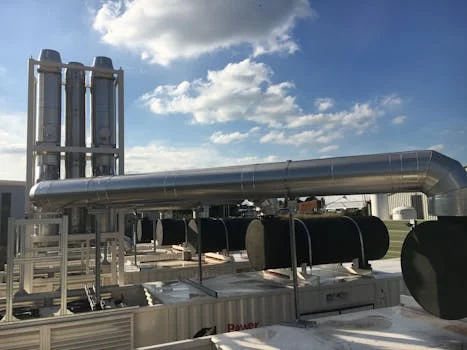
Selecting the optimal package wastewater treatment technology for a Dutch site involves a critical evaluation of performance, footprint, energy consumption, and capital expenditure. The primary advanced options for package WWTPs are Membrane Bioreactors (MBR), Sequencing Batch Reactors (SBR), Nereda granular sludge technology, and conventional activated sludge systems.
MBR systems (Membrane Bioreactors) consistently deliver near-reuse-quality effluent, typically achieving TSS below 1 mg/L and BOD below 3 mg/L, making them ideal for applications requiring high-purity water for industrial processes or discharge into highly sensitive environments. MBR technology offers a significant footprint advantage, typically requiring 60% less space than conventional systems. However, this superior performance and compactness come with the highest capital cost, ranging from €1.2 million to €2.5 million for a 500 m³/h plant, and higher operating costs due to membrane replacement and increased aeration demands.
SBR (Sequencing Batch Reactor) systems offer flexible operation, particularly beneficial for sites with variable wastewater flows, such as seasonal tourism facilities or industrial operations with intermittent production cycles. SBRs can achieve 30% lower energy use compared to conventional activated sludge systems, making them an energy-efficient option (confirmed in Top 3 page research). Their primary drawback is a larger footprint requirement compared to MBR or Nereda systems, as treatment occurs in batches within one or more tanks. For urban or space-constrained sites, compact underground integrated sewage treatment plants often utilize SBR or similar batch-process designs.
Nereda technology, a proprietary aerobic granular sludge process, is increasingly favored for municipal upgrades in the Netherlands, as demonstrated by the Epe WWTP (54,000 PE, Top 1 page research). Nereda boasts impressive sustainability metrics, including 30% less energy consumption and a 20% smaller footprint than conventional systems. While highly efficient and robust, Nereda's application is generally limited to larger municipal-scale projects due to its proprietary nature and specific operational requirements.
Conventional Activated Sludge systems represent the lowest capital cost option, typically ranging from €800,000 to €1.5 million for a 500 m³/h plant (per EPA 2024 benchmarks). While offering a proven and reliable treatment method, these systems demand the largest footprint and incur the highest energy consumption among the compared technologies. They are often suitable for sites where land availability is not a constraint and where discharge limits can be met without advanced nutrient removal.
Matching the technology to the use-case is crucial: MBR is optimal for industrial reuse applications or discharge into pristine waters, Nereda excels in municipal upgrades requiring high efficiency and compactness, and SBR is a strong contender for facilities experiencing significant flow variations.
| Technology | Effluent Quality (TSS/BOD) | Footprint Reduction (vs. Conventional) | Energy Consumption (vs. Conventional) | Capital Cost (500 m³/h) | Operating Cost (€/m³) | Key Advantages | Key Disadvantages | Typical Use Case | Scalability |
|---|---|---|---|---|---|---|---|---|---|
| MBR (Membrane Bioreactor) | <1 mg/L / <3 mg/L | ~60% smaller | ~20-40% higher | €1.2M–€2.5M | €0.20–€0.40 | High effluent quality, compact footprint, modular | Highest capital cost, membrane replacement, higher energy for aeration | Industrial reuse, sensitive areas, urban sites | High modularity, easy expansion |
| SBR (Sequencing Batch Reactor) | <10 mg/L / <10 mg/L | Similar to conventional | ~30% lower | €900k–€1.8M | €0.18–€0.35 | Flexible operation, good energy efficiency, robust | Larger footprint, batch process, requires skilled operators | Variable flows (e.g., seasonal tourism), smaller municipalities | Moderate, can add tanks |
| Nereda | <5 mg/L / <5 mg/L | ~20% smaller | ~30% lower | €1.0M–€2.2M | €0.15–€0.30 | Low energy consumption, compact, robust granular sludge | Proprietary technology, limited to municipal applications generally | Municipal upgrades, new municipal plants | Moderate, requires specific design |
| Conventional Activated Sludge | <30 mg/L / <20 mg/L | Baseline | Baseline | €800k–€1.5M | €0.15–€0.30 | Lowest capital cost, proven reliability, simple operation | Largest footprint, highest energy consumption, lower effluent quality | Established municipal systems, large flows where land is available | Fixed, difficult to expand significantly |
Cost Breakdown for Package WWTPs in Netherlands: 2025 Budget Benchmarks by Capacity and Technology
Accurate cost estimation is critical for justifying package WWTP procurement in the Netherlands, encompassing both capital and operational expenditures. Capital costs for a new package WWTP vary significantly based on capacity, technology, and site-specific requirements.
For small industrial systems handling 10–50 m³/h, capital costs typically range from €250,000 to €500,000. Medium-sized municipal or industrial plants with capacities of 100–300 m³/h can expect capital expenditures between €800,000 and €1.5 million. Larger municipal installations, processing 500–1,000 m³/h, often fall within the €1.5 million to €2.5 million range. These benchmarks reflect the increasing complexity and scale of the required infrastructure.
Operating costs are a significant long-term consideration, typically ranging from €0.15–€0.30/m³ for conventional systems. MBR systems, while offering superior effluent quality, incur higher operating costs of €0.20–€0.40/m³ due to increased energy demands for aeration and the necessity of periodic membrane replacement. Energy costs are a primary component of operational expenses; Nereda technology stands out with energy costs as low as €0.05–€0.10/m³, while MBR systems typically range from €0.10–€0.20/m³ (per kWh rates in Netherlands, Eurostat 2024). This difference highlights the long-term savings potential of energy-efficient technologies.
Maintenance costs also vary by technology. Conventional systems generally require €10,000–€30,000 per year, primarily for pump maintenance and general upkeep. MBR systems, however, have higher maintenance costs, typically €20,000–€50,000 per year, largely attributed to membrane cleaning and replacement, which usually occurs every 5–7 years. The return on investment (ROI) for advanced package WWTPs is driven by several factors: significant energy savings (e.g., Nereda offers 30% less power consumption), footprint reduction (MBR systems are 60% smaller), and the avoidance of substantial compliance penalties, which can reach €100,000 per year for non-compliance with Dutch regulations. These factors collectively contribute to a compelling financial case for investing in modern package WWTP solutions.
| Capacity Range | Technology | Capital Cost (Approx.) | Operating Cost (€/m³) | Energy Cost (€/m³) | Maintenance Cost (€/year) |
|---|---|---|---|---|---|
| 10–50 m³/h (Small Industrial) | MBR | €250k–€500k | €0.25–€0.40 | €0.10–€0.20 | €15k–€30k |
| Conventional | €200k–€400k | €0.15–€0.30 | €0.08–€0.15 | €10k–€20k | |
| 100–300 m³/h (Medium Municipal/Industrial) | MBR | €800k–€1.5M | €0.20–€0.35 | €0.09–€0.18 | €30k–€60k |
| SBR | €700k–€1.3M | €0.18–€0.35 | €0.07–€0.14 | €25k–€50k | |
| Conventional | €600k–€1.2M | €0.15–€0.30 | €0.08–€0.15 | €20k–€40k | |
| 500–1,000 m³/h (Large Municipal) | MBR | €1.5M–€2.5M | €0.20–€0.35 | €0.09–€0.18 | €50k–€100k |
| Nereda | €1.2M–€2.2M | €0.15–€0.30 | €0.05–€0.10 | €40k–€80k | |
| Conventional | €1.0M–€2.0M | €0.15–€0.30 | €0.08–€0.15 | €30k–€60k |
Supplier Decision Framework: How to Evaluate Dutch WWTP Vendors in 2025
A systematic evaluation of package WWTP vendors is essential for successful procurement in the Netherlands, moving beyond brand recognition to technical and compliance capabilities. Engineers and procurement specialists should implement a structured decision framework to ensure a vendor can meet specific project requirements and Dutch regulatory standards.
- Step 1: Verify Dutch Compliance Expertise. Vendors must demonstrate extensive experience with both the EU Urban Waste Water Directive 91/271/EEC and the specific permit requirements of local Dutch Water Authorities. This includes a clear understanding of site-specific discharge limits and permit application processes.
- Step 2: Request Relevant Case Studies. Ask for at least three completed projects in the Netherlands that are comparable in capacity, technology, and application (e.g., MBR for industrial reuse or SBR for a municipal upgrade). This provides tangible proof of local experience and successful implementation. Reviewing MBR systems in EU markets or compliance standards in neighboring EU markets can offer additional context but local Dutch experience is paramount.
- Step 3: Evaluate Technical Support and Service. A reliable Dutch vendor must offer comprehensive technical support, including 24/7 remote monitoring capabilities and a guarantee of on-site service within 4 hours for critical issues, adhering to industry standards for operational continuity.
- Step 4: Compare Warranty Provisions. Scrutinize warranty terms for key components. MBR systems should include a minimum 5-year warranty on membranes, while conventional systems typically offer 2-year warranties on general equipment and mechanical components. Clear warranty terms protect against unforeseen costs.
- Step 5: Assess Scalability and Modularity. For future-proofing, evaluate whether the proposed modular systems allow for capacity expansions of 20–50% without requiring major retrofits or significant downtime (confirmed in Top 3 page research). This flexibility is crucial for adapting to future growth or changing wastewater loads.
Red flags during vendor evaluation include a lack of verifiable Dutch references, vague or incomplete cost estimates, and an inability to provide comprehensive compliance documentation or detailed operational data from previous projects. A thorough assessment using this framework minimizes risks and ensures a robust, compliant package WWTP solution.
Frequently Asked Questions
Here are answers to common questions engineers and procurement specialists have regarding package wastewater treatment plants in the Netherlands:
What is the lead time for a package WWTP in the Netherlands?
The lead time for standard package WWTP systems in the Netherlands typically ranges from 12 to 16 weeks, while custom-designed solutions, especially those requiring specific industrial pretreatment or advanced nutrient removal, can extend to 20–24 weeks (per industry benchmarks).
Can package WWTPs handle industrial wastewater?
Yes, package WWTPs can effectively treat industrial wastewater, but often require specialized pretreatment steps. For instance, high-strength industrial effluents or those containing fats, oils, and grease (FOG) may necessitate Dissolved Air Flotation (DAF) for FOG removal or pH adjustment to optimize biological treatment, in compliance with EU Industrial Emissions Directive 2010/75/EU.
What are the Dutch discharge limits for package WWTPs?
The baseline Dutch discharge limits for package WWTPs, governed by the EU Urban Waste Water Directive 91/271/EEC, are TSS <30 mg/L, BOD <20 mg/L, COD <125 mg/L, Total Nitrogen <10 mg/L, and Total Phosphorus <1 mg/L. Local Water Authorities may impose stricter, site-specific limits.
How much space does a package WWTP require?
The space requirement for a package WWTP varies significantly by technology. MBR systems are highly compact, typically needing 0.5–2 m² per m³/h of capacity. Conventional activated sludge systems, however, require a larger footprint, ranging from 1–3 m² per m³/h (per footprint data in Top 1 page research).
What is the lifespan of a package WWTP?
The structural components of a package WWTP are generally designed for a lifespan of 20–25 years. However, consumable components and mechanical parts have shorter lifespans; membranes in MBR systems typically require replacement every 5–10 years, and pumps generally last 5–7 years (per industry standards).
Further Reading
Explore these in-depth articles on related wastewater treatment topics: