Industrial UV disinfection system engineering specs hinge on three numbers: a 30–120 mJ/cm² dose by target log reduction, influent UVT ≥50%, and TSS ≤30 mg/L. CapEx runs ¥80K–¥2.5M and OPEX ¥0.05–¥0.20/m³, with zero chemical byproducts.
Does UV Treatment Cut Chemical Byproducts?
UV treatment cuts THM and HAA formation because 254 nm light inactivates microbes without chlorine chemistry. A validated 30 mJ/cm² dose commonly delivers 4-log E. coli reduction when UVT stays ≥50% and TSS ≤30 mg/L. CapEx spans ¥80K–¥2.5M by flow and lamp type, with OPEX near ¥0.05–¥0.20/m³.
Chlorine disinfection in industrial wastewater often forms trihalomethanes (THMs) and haloacetic acids (HAAs). Those byproducts conflict with tight discharge limits such as China's GB 8978-1996, and related EU water-quality rules have long referenced Directive 98/83/EC for THM control in water systems. Chemical byproducts also create environmental risk and force dechlorination steps, which add 20–30% to OPEX versus non-chemical alternatives in many plant cost models.
Zero Chemical Disinfection for Industrial Effluent: Where It Pays
Zero chemical disinfection for industrial effluent pays off fastest where permits cap disinfection byproducts or prohibit residual oxidant entirely. Bulk chlorine has been the default wastewater plant chemical for decades, and its storage and handling raise the EHS audit load every year. Facilities that switch away from bulk chlorine often report simpler permit paperwork once scrubbers and chlorination rooms leave the site. Most plants we size for food or electronics effluent run at the lower end of the dose band once solids are controlled upstream.
A Jiangsu food processing plant eliminated THM violations after switching to UV, cutting compliance costs by ¥180K/year and simplifying environmental reporting. Where a residual oxidant is still needed for a downstream loop, pair UV with a metered Automatic Chemical Dosing System only for that niche duty — not as the primary plant-wide disinfectant.
Industrial UV Disinfection System Engineering Specs: Mechanism, Dose, and UVT
Industrial UV disinfection system engineering specs reduce to one dose equation and two water-quality limits: Dose (mJ/cm²) = Intensity (mW/cm²) × Exposure Time (s), with UVT ≥50% and TSS ≤30 mg/L. UV-C light at 254 nm inactivates microorganisms by disrupting DNA and RNA so cells cannot replicate. A dose of 30 mJ/cm² typically achieves a 4-log (99.99%) reduction of E. coli in treated wastewater under clear effluent conditions, and industrial applications span 30 mJ/cm² for basic bacterial kill to 120 mJ/cm² for higher virus targets or resilient pathogens.
Performance hinges on influent UV transmittance (UVT) and total suspended solids (TSS). Optimal performance needs UVT ≥50% and TSS ≤30 mg/L; below those limits, particles scatter light and shield microbes. Pre-treatment with Dissolved Air Flotation (DAF) pre-treatment for UV disinfection or filtration then becomes mandatory before the reactor. Electronics streams that already use membrane polishing can borrow lessons from RO pre-treatment for UV disinfection in electronics wastewater when UVT must stay high.
UV Dose Requirements for Industrial Wastewater
UV dose requirements for industrial wastewater run from 30 mJ/cm² for 4-log coliform to 120 mJ/cm² for aggressive virus goals in pharma or electronics effluent. According to the US EPA UV Treatment Toolkit (LT2ESWTR Table 4), drinking-water post-filter credit uses 22 mJ/cm² for 4-log Cryptosporidium or Giardia, while the same table sets 186 mJ/cm² for 4-log virus at 254 nm (40 CFR 141.720(d)(1)). Wastewater permits are usually indicator-based rather than LT2 credit-based, so design to the permit organism and the validated RED for your reactor.
| Target Pathogen / Log Reduction | Required UV Dose (mJ/cm²) | Typical Influent UVT (%) | Typical Influent TSS (mg/L) | Example Industrial Application |
|---|---|---|---|---|
| 4-log E. coli / Fecal Coliform | 30–40 | ≥50 | ≤30 | General industrial discharge, cooling water |
| 4-log Giardia / Cryptosporidium | 40–80 | ≥55 | ≤20 | Food processing effluent, aquaculture |
| 5-log Viruses (e.g., Adenovirus) | 80–120 | ≥60 | ≤10 | Pharmaceutical wastewater, electronics manufacturing |
| Advanced Oxidation (AOP) | >200 | ≥70 | ≤5 | Recycled process water, trace contaminant removal |
Industrial UV Disinfection Technologies: LED vs Mercury Lamps
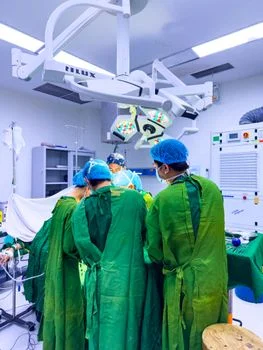
Technology choice for industrial effluent depends on flow, required dose, CapEx, OPEX, and footprint. Low-pressure (LP) mercury lamps remain the workhorse: CapEx about ¥800K–¥1.5M, lamp life 12–18 months, and stable duty near 30–50 m³/h. Medium-pressure (MP) lamps trade shorter life (5–8 months) for higher power density, fitting 50–200 m³/h trains at CapEx ¥1.5M–¥2.5M. UV LED packages now reach 24–36 months lamp life with CapEx ¥1.2M–¥2M and about 30% lower power than LP for an equivalent germicidal dose on many skids under 50 m³/h.
Pick LP when flow is steady and operators want familiar maintenance. Pick MP when channel length is short or peak flows swing hard. Pick LED when energy tariffs are high or when point-of-use pharma and electronics loops need instant power modulation. Compact mini units used for sidestreams still follow the same dose equation; lamp count and UVT matter more than brand labels on small skids.
Comparison of Industrial UV Disinfection Technologies
| Technology | CapEx (¥) | OPEX (¥/m³) | Lamp Life (Months) | Flow Range (m³/h) | Ideal Use Case |
|---|---|---|---|---|---|
| Low-Pressure Mercury | 800K–1.5M | 0.08–0.15 | 12–18 | 30–50 | General industrial discharge, cooling water, stable flows |
| Medium-Pressure Mercury | 1.5M–2.5M | 0.12–0.20 | 5–8 | 50–200 | High-flow industrial effluent, variable water quality, compact footprint |
| UV LED | 1.2M–2M | 0.05–0.10 | 24–36 | <50 | Pharma effluent, electronics, point-of-use, energy-sensitive applications |
System Sizing: Flow Rate, Dose, and Pre-Treatment
Industrial UV sizing starts with the permit target, then water quality, then hydraulics. Set the log reduction first — for example 4-log E. coli — which locks the design dose, typically 30–120 mJ/cm² for the industrial bands listed above. Measure UVT and TSS on representative shifts, not a single grab; if UVT falls below 50% or TSS exceeds 30 mg/L, install solids removal before the reactor or the delivered RED will drift below the validated envelope.
Common pre-treatment paths use DAF to strip FOG and suspended solids, or multimedia filtration for UV pre-treatment to cut turbidity. A practical sizing check is Flow Rate (m³/h) = (Lamp Intensity × Number of Lamps) / Dose, then confirm against the vendor's validated operating window. Worked example: a food plant at 100 m³/h with UVT 60% and TSS 25 mg/L can often use a four-lamp LP bank at 30 mJ/cm² for 4-log bacteria, provided sleeve cleaning keeps intensity on set point.
Selection checklist before you freeze CapEx:
- Confirm the permit indicator (E. coli, fecal coliform, enterococci) and its numeric limit.
- Log UVT and TSS across peak FOG or pigment shifts for at least one production week.
- Decide LP, MP, or LED from flow band, footprint, and energy tariff.
- Require a validation report covering your flow, UVT, and dose envelope.
- Budget sleeve wiping, ballast spares, and lamp change-out labor in Year 1 OPEX.
- Verify upstream DAF or filter duty so UVT stays ≥50% at peak solids.
- Document redundancy (N+1) if a single reactor outage would violate the daily max.
How Do Flocculant Chemical Costs Compare with UV?
Flocculant chemical costs stack on every cubic meter whenever coagulation supports clarification ahead of UV. UV energy and lamps replace the disinfectant chemical line itself, while plants that keep polymer for DAF or settling still pay flocculant dose rates. Sites converting from chlorine typically drop chlorine purchase, dechlorination salt, and THM non-compliance exposure; many see about 20% lower disinfection OPEX after UV conversion once chemical procurement and handling fall out. Compliance-cost cuts often land in the 30–50% band when byproduct penalties disappear.
For whole-plant budgeting, review a full CapEx and OPEX build — not only the UV skid. A useful external reference point is the structured breakdown in Wastewater Treatment Plant Cost in Odisha 2026: CAPEX, OPEX, Tech-Spec, which shows how disinfection is only one line in the plant total. Food processors comparing oxidant options should also weigh chlorine dioxide vs. UV disinfection for food processing when residual demand or biofilm control still matters in process water loops.
Cost Breakdown: CapEx, OPEX, and ROI
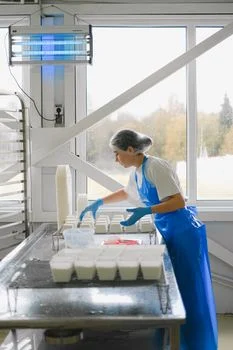
Industrial UV CapEx runs from ¥80K for compact LED units on small or specialty flows up to ¥2.5M for high-flow mercury systems on large effluent headers. OPEX covers energy, lamps, and routine maintenance, typically ¥0.05–¥0.20/m³, with LED models often at the low end when UVT is healthy. ROI drivers include 30–50% lower compliance cost from eliminating chemical byproducts and penalties, plus roughly 20% lower disinfection OPEX versus chlorine when chemical purchase and dechlorination disappear. Removing bulk chemical storage also shortens EHS protocols and frees the indoor footprint that chlorine scrubbers once occupied.
Industrial Wastewater UV System CAPEX OPEX China Benchmarks
Industrial wastewater UV system CAPEX OPEX China benchmarks cluster in three bands under the GB 8978-1996 discharge framework: compact LED at ¥80K–500K, standard LP trains at ¥800K–1.5M, and high-flow MP at ¥1.5M–2.5M. Across food and light manufacturing accounts, payback usually lands inside the 2–6 year windows in the table below when THM exposure and chemical handling labor are counted. High-flow MP trains sit at the long end because lamp change-outs arrive more often.
| System Type | CapEx (¥) | OPEX (¥/m³) | Typical ROI (Years) | Ideal Industry |
|---|---|---|---|---|
| Compact UV LED | 80K–500K | 0.05–0.08 | 2–4 | Small-batch pharma, electronics, laboratory discharge |
| Low-Pressure Mercury (Standard Flow) | 800K–1.5M | 0.08–0.15 | 3–5 | Food processing, general manufacturing, cooling tower blowdown |
| Medium-Pressure Mercury (High Flow) | 1.5M–2.5M | 0.12–0.20 | 4–6 | Large-scale chemical production, textile dyeing, municipal-industrial blends |
Compliance Mapping for Industrial Discharge
UV is widely accepted for industrial discharge when the reactor is validated against the permit organisms. In China, GB 8978-1996 frameworks allow UV for industrial discharge when the system demonstrates the required 3–5 log reduction of target pathogens. Under the EU Industrial Emissions Directive 2010/75/EU, food, drink and milk BAT conclusions support cutting harmful disinfection chemicals released to water; those conclusions appear in Commission Implementing Decision (EU) 2019/2031 and the FDM BREF.
US EPA drinking-water rules credit UV for up to 4-log virus inactivation at 186 mJ/cm² in post-filter applications. Wastewater permits instead set indicator limits and rely on reactor validation rather than a single national dose table. Third-party validation remains the practical compliance tool. NSF/ANSI 55 addresses UV microbiological water treatment system performance classes used in many procurement specs, while wastewater projects more often follow biodosimetry protocols aligned with EPA UVDGM methods or IUVA/WEF wastewater validation guidance.
European drinking-water practice frequently references a 40 mJ/cm² RED setpoint under DVGW W294 and ÖNORM M 5873. That setpoint is a useful benchmark, not a substitute for your discharge permit. Keep the validation envelope, sensor calibration logs, and off-spec event records ready for inspectors.
Who This Is For / Next Step
This guide is for plant engineers, EPC designers, and procurement managers sizing tertiary disinfection on food, pharma, electronics, or mixed industrial effluent. It fits sites where chlorine residual or THMs are unacceptable. Look elsewhere if your permit requires a lasting residual in the receiving sewer and no downstream plant provides secondary disinfection. If you already have UVT, flow, and permit data, request a reactor sizing pass — share your effluent profile for a UV disinfection quote so CapEx and lamp OPEX match your dose and UVT window.
Frequently Asked Questions
What is the minimum UV dose for industrial wastewater?
A minimum UV dose of 30 mJ/cm² is generally required for a 4-log reduction of E. coli when UVT and TSS are in range. Doses up to 120 mJ/cm² appear in pharma and electronics specs when higher virus log reduction is written into the design basis. For drinking-water virus credit, US EPA LT2 lists 186 mJ/cm² for 4-log virus at 254 nm. Industrial wastewater permits usually follow indicator limits instead of that drinking-water table.
What are the UV pre-treatment UVT TSS limits industrial wastewater plants must meet?
Keep influent UVT ≥50% and TSS ≤30 mg/L for the industrial design bands used here. UV efficacy falls when solids shadow microbes and cut UVT, so reactors outside those limits cannot deliver the validated dose. If the limits are exceeded, add DAF pre-treatment for UV disinfection or multimedia filtration for UV pre-treatment before the reactor so dose delivery recovers.
How often do UV lamps need replacement?
Low-pressure mercury lamps typically need replacement every 12–18 months under continuous industrial duty. UV LED modules often last 24–36 months, which cuts change-out labor on small skids. Medium-pressure lamps usually land at 5–8 months because higher power density ages the envelope faster. Track intensity sensors monthly and replace earlier if output drifts below the validated set point.
Is UV disinfection approved for food processing wastewater?
Yes, UV is used for food and beverage effluent disinfection where permits accept validated non-chemical kill. EU IED 2010/75/EU BAT work for food, drink and milk industries emphasizes cutting harmful disinfection chemicals released to water. China GB 8978-1996 frameworks allow UV when log-reduction targets are demonstrated. Always match the reactor validation to the specific indicator and numeric limit in your discharge permit.
What is the CapEx for a 50 m³/h UV system?
For a 50 m³/h UV system, CapEx typically ranges from ¥800K–¥1.5M for low-pressure mercury packages and ¥1.2M–¥2M for UV LED packages. Final price tracks required dose, UVT, redundancy, and sleeve-cleaning hardware. Compact LED units for much smaller flows can start near ¥80K, while high-flow MP trains climb toward ¥2.5M when channel power density must stay high.
Related Equipment
- pipeline UV-C sterilizer configurations — The checklist maps onto flange, medium-pressure and open-channel unit options.