Etching wastewater reverse osmosis system design centers on 15-40 bar operation, 95-99% TDS rejection and >99% copper removal on feeds of 5,000-20,000 mg/L. Pretreatment to COD <50 mg/L and SDI <3 typically extends membrane life from 12-18 months to 24-36 months.
Etching Wastewater Reverse Osmosis System Design: The Short Answer
RO applied to etch and rinse streams runs at 15-40 bar (217-580 psi) because TDS of 5,000-20,000 mg/L drives osmotic pressure far above brackish service. Properly pretreated trains reject 95-99% of dissolved solids, 90-95% of COD, and >99% of copper and fluoride. Flux is held to 12-20 LMH to keep foulants off the membrane surface.
Why Etching Wastewater Reverse Osmosis Needs Specialized Pretreatment
Etch and rinse streams carry 500-5,000 mg/L copper, 5,000-20,000 mg/L TDS, and pH from 1-3 to 10-12, so a standard brackish RO skid fouls within months. Pretreatment to COD <50 mg/L and SDI <3 typically extends membrane life from 12-18 months to 24-36 months while supporting >99% copper rejection and 95-99% TDS removal at 15-40 bar.
Those contaminant loads exceed typical municipal wastewater by 10 to 100 times, and COD of 1,000-10,000 mg/L with suspended solids present drives rapid membrane occlusion. Semiconductor process discharges remain subject to EPA 40 CFR Part 469 effluent guidelines. Under 40 CFR 469.15, semiconductor BAT sets fluoride at 32.0 mg/L maximum for any one day and 17.4 mg/L as a 30-day average. The same BAT table lists TTO at 1.37 mg/L maximum for any one day, values confirmed against the Cornell LII CFR mirror in September 2026.
BPT and NSPS keep pH between 6.0 and 9.0 where those limits apply. EU Directive 2008/98/EC still governs hazardous-waste classification of concentrated etch residues, separate from U.S. effluent guidelines. Both frameworks shape pretreatment depth long before membrane selection begins.
Complexing agents such as EDTA or ammonia keep metals dissolved and can seed localized scaling as recovery rises. Rinse-water reuse targets often require COD <10 mg/L and TDS <50 mg/L. Meeting those specs needs an industrial RO system for etching wastewater reuse sized for high osmotic pressure and aggressive CIP chemistry, not a standard brackish skid. Broader plant planning for industrial wastewater treatment should keep etch streams segregated before the RO train.
Operational data from high-volume PCB plants shows the cost of skipping pretreatment. A Shenzhen PCB plant historically replaced RO membranes three times per year on copper-laden feed. After a train of chemical precipitation for heavy metal removal in etching wastewater plus dissolved air flotation, membrane life reached 24 months. Annual membrane spend fell about 65% and overall OPEX about 35% (HydropureWater field data, 2025).
High TDS Etching Wastewater RO Operating Pressure, Flux and Recovery Settings
High TDS etching wastewater RO operating pressure spans 15-40 bar because TDS above 5,000 mg/L raises osmotic pressure well above the brackish range. General brackish RO operates at 2-17 bar and seawater trains at 40-82 bar, so the etching band sits between the two (Wikipedia, Reverse osmosis). Design flux is held at 12-20 LMH for polyamide thin-film composites and 8-15 LMH for cellulose acetate so foulants are not driven into the membrane.
Cross-flow velocity of 1.0-1.5 m/s limits concentration polarization. Raising velocity from 0.8 m/s to 1.2 m/s extended membrane life about 20% in a 2025 HydropureWater field study by delaying the ΔP rise that triggers CIP. Recovery is set at 50-70% on acid etch and 65-85% on alkaline streams, bounded by silica and calcium solubility in the concentrate.
Polyamide TFC membranes deliver 99%+ rejection of Cu²⁺ and high water flux, but free chlorine must stay <0.1 mg/L. Nearly all commercial RO membranes today are thin-film composite polyamide, and chlorine degrades the TFC layer, which is why sodium bisulfite is dosed to deactivate residual oxidant (Wikipedia, Reverse osmosis). Cellulose acetate tolerates chlorine up to about 1 mg/L yet rejects some organics less well and operates only near pH 4-8.
Most semiconductor reuse trains therefore use TFC elements with PLC-controlled chemical dosing for pH adjustment and antiscalant addition. Specifying durable RO & UF Membranes and Filter Elements matched to chlorine, pH, and silica limits is part of the same design package. Element choice and dosing design are specified together, never separately.
| Parameter | Acid Etching Effluent | Alkaline Etching Effluent | RO Permeate (Target) |
|---|---|---|---|
| Operating Pressure | 20–40 bar | 15–30 bar | N/A |
| Design Flux (LMH) | 12–15 | 15–20 | N/A |
| Copper Rejection | >99.2% | >99.5% | <0.1 mg/L |
| TDS Rejection | 95–98% | 97–99% | <100 mg/L |
| Recovery Rate | 50–70% | 65–85% | N/A |
Which RO Systems Suit Semiconductor Production?
Semiconductor production favors multi-barrier RO trains with precipitation, DAF or UF ahead of TFC membranes when rinse reuse or UPW makeup is the goal. Single-pass brackish RO without metals removal rarely holds SDI <3 or copper <0.1 mg/L on etch-bearing feeds. Plants that only need COD <100 mg/L for discharge can stop at biological polishing; plants targeting TDS <50 mg/L need the full RO polishing path described above. Spiral-wound elements cannot be backpulsed, so the pretreatment train, not the membrane, sets achievable uptime (Wikipedia, Reverse osmosis).
Pretreatment Strategies to Extend RO Membrane Lifespan
What Pretreatment for RO in PCB Etching Wastewater Works Best?
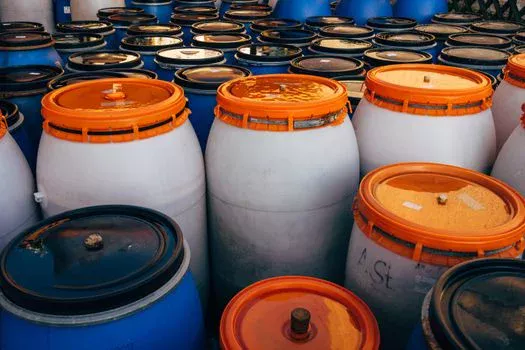
A staged train of chemical precipitation, DAF and ultrafiltration works best, taking RO feed down to COD <50 mg/L and SDI <3 before membranes see the stream. Each stage targets a distinct foulant class, which is why skipping any one of them shows up as shorter membrane life within months.
Chemical precipitation at pH 8-10 removes 95-99% of copper and 85-95% of COD, cutting RO feed COD toward 50-200 mg/L. Without that step, irreversible organic fouling can appear within weeks. A following high-efficiency DAF system for etching wastewater pretreatment removes 90-95% of TSS and residual FOG that would coat membrane surfaces.
Ultrafiltration ahead of RO targets SDI <3 with 0.01-0.1 μm pores that block colloids and macromolecules, often extending RO life to 24-36 months. That double-membrane layout is common in ZLD trains where RO uptime sets plant recovery. Acid etch streams (pH 1-3) need neutralization to pH 6-8; alkaline streams (pH 10-12) need acid dosing. Typical NaOH or H₂SO₄ use is 0.5-2 kg/m³, and antiscalants such as polyacrylic acid or phosphonates at 2-5 mg/L inhibit CaCO₃ and silica as concentration factor rises.
| Pretreatment Stage | Contaminant Target | Removal Efficiency | Impact on RO |
|---|---|---|---|
| Chemical Precipitation | Copper, Heavy Metals | 95–99% | Prevents metal scaling |
| DAF System | TSS, FOG, Organics | 90–95% | Reduces organic fouling |
| Ultrafiltration (UF) | Colloids, Bacteria | SDI < 3.0 | Extends lifespan by 12+ months |
| Antiscalant Dosing | CaCO₃, SiO₂ | Threshold Inhibition | Maintains flux stability |
Which Industrial RO Systems Recycle High-TDS Water?
Industrial RO systems recycle high-TDS etching water when recovery is set at 50-85% with energy recovery and when brine goes to evaporation or permitted disposal. Brine routing is where etching wastewater reverse osmosis system design usually succeeds or fails, because concentrate handling decides both economics and permit exposure.
RO removes 95-99% TDS, while an MBR system as an alternative to RO for etching wastewater polishing typically removes only 50-70% dissolved solids. MBR uses a smaller footprint and about $0.30-$0.80/m³ energy-related OPEX, but it cannot meet semiconductor rinse purity. Ion exchange suits selective copper capture at low TDS yet regenerates at roughly $0.80-$2.00/m³ on high-load feeds. Evaporation reaches 90-95% recovery for ZLD, but CAPEX is often 2-3 times RO for a 10 m³/h duty ($300K-$1M), so RO usually concentrates brine first. High-salinity RO design strategies for industrial wastewater apply when TDS stays in the multi-thousand mg/L range.
| Technology | TDS Removal | OPEX ($/m³) | CAPEX (10 m³/h) | Best Use Case |
|---|---|---|---|---|
| Reverse Osmosis | 95–99% | $0.50–$1.20 | $150K–$350K | High-purity water reuse |
| MBR | 50–70% | $0.30–$0.80 | $100K–$250K | Discharge compliance |
| Ion Exchange | Selective | $0.80–$2.00 | $80K–$200K | Selective metal recovery |
| Evaporation | >99.9% | $2.00–$5.00 | $300K–$1.0M | Zero Liquid Discharge (ZLD) |
Reverse Osmosis Cost for Semiconductor Etching Wastewater: 2026 Benchmarks
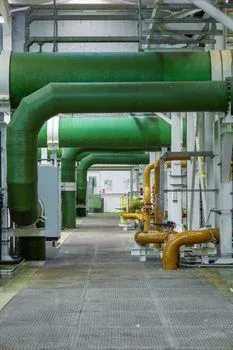
Reverse osmosis cost for semiconductor etching wastewater starts with CAPEX of $150,000-$500,000 for 10-50 m³/h packages with DAF, UF, dosing, and PLC control. High-pressure pumps and 316L or chemically resistant piping dominate the budget because etch chemistry is corrosive. Energy use is about 1.5-3.0 kWh/m³ at 75% recovery and can drop 15-20% with ERDs and VFDs. Membrane replacement runs about $0.10-$0.30/m³ at a 24-month life and roughly doubles if life falls to 12 months.
Municipal wastewater reuse RO consumes roughly 0.1-1 kWh/m³ by comparison, so the etching premium pays for metals-laden, high-TDS service (Wikipedia, Reverse osmosis). A 20 m³/h train at 75% recovery saves about 131,000 m³/year of fresh water. At $5/m³ combined water and discharge cost, that is about $655,000/year and a 3-5 year payback when uptime holds. EU plants aligning urban and industrial discharge programs can also track updates under the EU Urban Wastewater Treatment Directive compliance updates alongside site-specific etch limits.
Zero-Fouling RO Design Strategies for Membrane Lifespan
Polyamide membranes provide 20-30% higher flux than cellulose acetate but need near-zero oxidant residual. Continuous ORP monitoring with automatic sodium bisulfite dosing protects the TFC layer across multi-year service. For scaling control, keep LSI below 1.8 and silica in the concentrate below 150 mg/L. Feed-forward automatic chemical dosing systems adjust antiscalant with influent TDS swings so production spikes do not create irreversible scale.
CIP should follow normalized permeate flow and ΔP, not a fixed calendar. Trigger cleaning when ΔP rises 10-15% from baseline or normalized flow drops 10%. Citric acid for inorganics followed by sodium hydroxide for organics typically restores 85-95% of flux. Cross-flow at 1.2-1.5 m/s between CIP events lengthened cleaning intervals about 25% versus low-velocity layouts in HydropureWater field data.
Selection checklist: Measure copper, fluoride, COD, silica, and TDS on segregated acid and alkaline lines. Size precipitation and DAF/UF to COD <50 mg/L and SDI <3 before RO. Set flux at 12-20 LMH and pressure at 15-40 bar for the osmotic load. Choose TFC or CA for chlorine and pH tolerance. Budget membrane life at 12-18 months without UF, or 24-36 months with a full barrier train. Compare RO-plus-evaporator CAPEX with once-through evaporation for ZLD. Define CIP triggers on ΔP and normalized flow before startup.
Who this is for: PCB and semiconductor plants reusing rinse water or concentrating etch brine. Who should look elsewhere: sites that only need COD discharge compliance without dissolved-solids removal may stop at MBR or precipitation. Next step: share influent analyses and reuse targets through the request-a-quote page so an engineer can size pretreatment and RO recovery before capital approval. Regional teams can also benchmark duties against the Ajman Industrial Effluent Guide: 2026 Specs and Compliance, which applies the same spec-first method to UAE plants.
Frequently Asked Questions
What is the RO membrane lifespan for etching wastewater?
Without advanced pretreatment, RO membranes typically last 12-18 months on etching wastewater. With chemical precipitation, DAF, and UF holding influent COD <50 mg/L and SDI <3, service life often reaches 24-36 months. That extension cuts membrane replacement OPEX roughly in half when life doubles from one year to two. Field results vary with silica, complexing agents, and CIP discipline.
How much energy does etching RO consume per cubic meter?
Energy use averages 1.5-3.0 kWh/m³ at about 75% recovery on etching feeds. Brackish RO often uses only 0.5-1.5 kWh/m³ because osmotic pressure is lower. Etch streams at 5,000-20,000 mg/L TDS need 15-40 bar, which drives the higher specific energy. ERDs and VFDs can trim consumption another 15-20% when permeability is stable.
Can RO remove essentially all copper from etch wastewater?
RO alone removes >99% of copper but rarely reaches non-detect from multi-thousand mg/L feeds. Precipitation first cuts copper from as high as 5,000 mg/L to <10 mg/L, then RO polishes to <0.1 mg/L for many semiconductor reuse specs. Complexed copper may need process-specific chemistry before the membrane stage.
What fouls RO membranes most in semiconductor plants?
Organic fouling from photoresists and complexing agents, plus silica and calcium scale, are the main drivers. High COD coats the membrane; rising recovery pushes LSI and silica past solubility. Keep pH in the membrane window, dose antiscalant at 2-5 mg/L, and clean when ΔP or normalized flow drifts 10-15% from baseline.
Is RO more cost-effective than evaporation for etch recovery?
RO is usually more cost-effective up to about 80% recovery because CAPEX is typically 50-70% lower than evaporation for the same feed rate. For true ZLD, RO acts as a pre-concentrator so the evaporator handles a smaller brine volume. Compare OPEX at $0.50-$1.20/m³ for RO versus $2.00-$5.00/m³ for evaporation on the same duty.