What Defines a Fit-for-Purpose Industrial RO System?
A fit-for-purpose industrial RO system matches peak permeate demand in m3/d (US gpd), recovery, and permeate TDS to the duty. A 10,000 GPD (about 37.9 m3/d) skid with 8–12 TFC membranes, expandable to 12, at up to 95% recovery is often quoted near $30,000. That duty can deliver <10 ppm TDS permeate when feed SDI and oxidant control are maintained.
Why Reverse Osmosis Trains Fail: Common Pitfalls and How to Avoid Them
Reverse osmosis failure rarely starts in the high-pressure skid itself; it usually traces to unstable pretreatment or underspecified feed limits. In high-output semiconductor plants, rising differential pressure and falling flux often indicate particulate fouling. Without adequate pretreatment, membrane fouling can cut productivity by 20–30% within 6 months as Silt Density Index (SDI) rises and cake layers form. When feed SDI exceeds 5, particulates load the membrane surface, raise required pressure, and can lock in irreversible flux decline.
Chemical attack is a second common failure mode. Thin-film composite (TFC) polyamide membranes reject salt efficiently but are sensitive to oxidizers. Trace residual chlorine can damage the polyamide layer and cause a sudden permeate TDS spike. Understanding how chlorine pretreatment impacts RO membrane longevity matters for municipal or chlorinated process feeds. Target feed SDI <3 when a 3–5 year membrane life is required, typically via multi-media filtration plus granular activated carbon (GAC) or sodium bisulfite dechlorination.
Energy waste is the third operational trap. Many plants budget RO energy near 2–5 kWh per 1,000 gallons produced. Published brackish RO SEC is typically 0.6–1.0 kWh/m3 (about 2.3–3.8 kWh/1,000 gal) at feed TDS above 1,500 ppm (Singh, Desalination and Water Treatment, 2011). For feed TDS below 1,000 ppm, published SEC is often 0.3–0.5 kWh/m3 (about 1.1–1.9 kWh/1,000 gal). High-efficiency pumps with variable frequency drives (VFDs) can cut annual power use by 15–20% versus fixed-speed duty (HydropureWater product specs). Proper pretreatment systems for RO membrane protection, including multi-media filters and softeners, keep the array near design pressure and avoid the energy penalty of fouled elements.
RO Specs: What the Numbers Really Mean
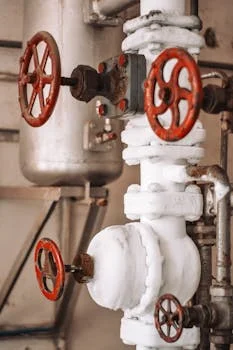
Flow rate in Gallons Per Day (GPD) must be sized on peak demand, not average draw. Recovery—the share of feed that becomes permeate—sets both water yield and scaling risk. Recovery up to 95% is achievable with multi-stage arrays and concentrate recycle (HydropureWater product catalog), while many industrial trains run 75–80% to limit sparingly soluble salts on the membrane.
Membrane chemistry sets salt rejection. TFC membranes typically deliver about 99% salt rejection versus about 95% for older cellulose acetate types, but TFC feed must be chlorine-free. When feed TDS exceeds 2,000 ppm, osmotic pressure rises and low-pressure pumps often cannot hold design flux. High-pressure trains in the 800–1,000 psi class are then common for brackish or concentrated feeds. For high-purity duties, HydropureWater RO trains for ultra-pure water use high-rejection TFC elements to hold permeate below 10 ppm TDS when pretreatment is stable. SDI remains the standard particulate screen before RO and NF (Grundfos SDI guidance).
| Parameter | Standard Industrial Specification | High-Purity Specification (Pharma/Semi) |
|---|---|---|
| Membrane Type | Polyamide Thin-Film Composite (TFC) | Low-Fouling, High-Rejection TFC |
| Salt Rejection (%) | 98.5% - 99.2% | 99.5% - 99.8% |
| Operating Pressure | 150 - 250 psi | 400 - 800 psi (varies by TDS) |
| Recovery Rate | 50% - 75% | 75% - 95% (with concentrate recycling) |
| Feed Water SDI | < 5.0 | < 3.0 |
How to Match RO Equipment to Your Application
End-use purity rules which train configuration is acceptable. Pharmaceutical water often needs microbial control and TDS below 10 ppm, so designers specify 0.2 μm post-filtration and frequently a double-pass RO layout. Semiconductor ultrapure water targets commonly include TOC below 1 ppb and resistivity near 18.2 MΩ·cm, which usually means RO plus electrodeionization (EDI) or mixed-bed polishers—not RO alone.
Flow and recovery move together: a 20,000 GPD train at 75% recovery yields about 15,000 GPD permeate and 5,000 GPD concentrate. Raising recovery to 85% cuts wastewater volume but concentrates salts such as calcium carbonate at the membrane wall and raises scaling risk. Power plants that need boiler-feed conductivity below 0.1 μS/cm prioritize absolute ion removal over maximum recovery. In those trains, RO often serves as a tertiary treatment process that protects downstream ion-exchange resins from organic fouling.
| Industry | Target Water Quality | Critical System Component |
|---|---|---|
| Pharmaceutical | <10 ppm TDS, Sterile | Double-Pass RO + UV Sterilization |
| Semiconductor | <1 ppb TOC, 18.2 MΩ·cm | RO + EDI + Ultrafiltration |
| Food & Beverage | <500 ppm TDS, Food Grade | FDA-Compliant Materials + Softening |
| Power Generation | <0.1 μS/cm Conductivity | RO + Mixed Bed Deionizer |
What Do Capital and Operating Costs Look Like?
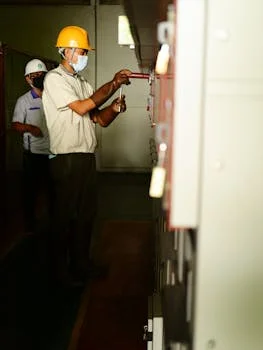
Capital expenditure for process RO skids still follows a non-linear curve with GPD capacity and automation. Per 2025 supplier quotes still used as planning benchmarks in 2026, a base 10,000 GPD unit typically ranges from $25,000 to $40,000. Mid-range 20,000 GPD units cost about $50,000 to $75,000. High-capacity 40,000 GPD frames with PLC controls and stainless steel construction often land between $80,000 and $120,000. Equipment is commonly about 60% of that CAPEX, with installation about 20%, pretreatment about 10%, and initial spares about 10%.
Operating cost is dominated by power and consumables. Energy often falls between $0.02 and $0.05 per gallon of permeate depending on tariff and feed pressure. Industrial membrane elements commonly cost $500–$1,500 each and are replaced every 3–5 years when SDI and oxidant control are maintained (HydropureWater field data, 2025). A 20,000 GPD train that displaces purchased deionized water can save about $50,000 per year when municipal DI is priced near $0.01 per gallon, implying a 2–3 year payback under that water-cost assumption. For budgeting, treat the industrial RO system CAPEX and OPEX lines separately from any potable polishing skid.
| System Capacity (GPD) | Estimated CAPEX | Annual OPEX (Est.) | 3-Year TCO |
|---|---|---|---|
| 10,000 | $30,000 | $8,500 | $55,500 |
| 20,000 | $60,000 | $14,000 | $102,000 |
| 40,000 | $100,000 | $22,000 | $166,000 |
Top RO Configurations: Head-to-Head Comparison
Hardware and control logic separate otherwise similar membrane brands such as FilmTec or Hydranautics. High-recovery frames emphasize concentrate recirculation to cut waste volume. Sanitary pharmaceutical frames prioritize drainable piping and dead-leg control. The HydropureWater 20,000 GPD high-recovery configuration reaches 95% recovery and about 99% TDS reduction at roughly 3.2 kWh/1,000 gal under catalog duty (HydropureWater product catalog). Where drinking-water polishing sits downstream of process RO, a Commercial Direct Drinking Water System can be specified as a separate point-of-use train rather than forcing sanitary and industrial duties onto one skid.
| System Model Type | Flow Rate (GPD) | Recovery Rate | Energy (kWh/kgal) | Best Use Case |
|---|---|---|---|---|
| HydropureWater High-Recovery | 20,000 | 95% | 3.2 | Water Scarcity Areas / General Mfg |
| Axeon Flex Series | 10,000 | 75% | 4.1 | Data-Driven Facilities (Data Logging) |
| Crystal Quest Expandable | 10,000 - 40,000 | 70-80% | 4.5 | Growing Facilities (Scalability) |
| Sanitary Double-Pass | 15,000 | 65% | 5.8 | Pharmaceutical / Biotech |
| Low-Energy Brackish | 30,000 | 80% | 3.5 | Food & Beverage / Boiler Feed |
What Belongs on an RO Supplier Checklist?
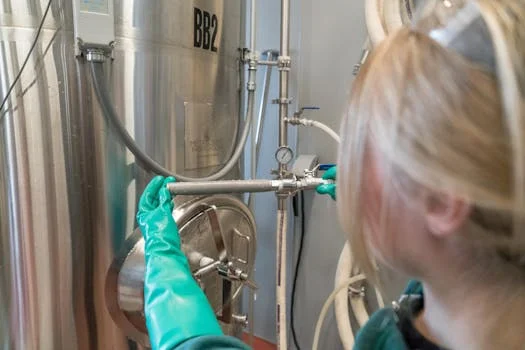
Supplier selection is as consequential as membrane selection because commissioning errors and weak after-sales support erase good hardware specs. Procurement teams should score vendors on feedwater design depth, documented recovery at the stated SDI, and local service response—not brochure peak GPD alone. Package wastewater plants solve a different problem (biological treatment of sewage or industrial effluent) and should not be bid as substitutes for process RO when the duty is demineralized permeate.
Use this checklist before releasing a purchase order:
- Written design basis: feed TDS, SDI, temperature, chlorine residual, and peak/average permeate demand in m3/d (US gpd).
- Guaranteed salt rejection and recovery at that design basis, with concentrate chemistry and antiscalant plan.
- Pretreatment scope that holds feed SDI <3 (or <5 for standard industrial warranty limits) and removes oxidants before TFC membranes.
- Pump, VFD, and PLC documentation with projected kWh per 1,000 gal at design TDS.
- Commissioning, CIP procedures, and membrane warranty terms tied to logged SDI and free-chlorine limits.
- Spare-element lead time and local technician coverage within the plant’s required response window.
- Clear boundary between process RO and any Commercial Direct Drinking Water System if potable taps are in scope.Ask for a factory acceptance test plan and a site start-up protocol before award. When comparing bids, keep the industrial RO system scope distinct from biological package-plant packages that address effluent compliance rather than permeate purity.
Who this is for: plant engineers, EPC firms, and procurement managers sizing brackish or low-TDS process RO for manufacturing, utilities, or high-purity front ends. Who should look elsewhere: buyers needing biological package sewage plants as the primary treatment unit, or seawater desalination with energy-recovery turbines as the core process. Next step: send feed analysis (TDS, SDI, chlorine, hardness) and peak permeate demand for a duty-specific skid review.
Frequently Asked Questions
How much does a 10,000 GPD RO skid cost?
Plan about $25,000–$40,000 CAPEX for a base 10,000 GPD skid on 2025 supplier quotes still used as 2026 planning benchmarks, with about $8,500/year OPEX in the worked example above. Installed cost rises when pretreatment, stainless frames, or PLC automation are added. Confirm whether the quote includes filters, softeners, and start-up chemicals before comparing bids.
What SDI should RO feed water meet?
Most spiral-wound RO warranties treat feed SDI above 5 as unacceptable without further pretreatment, while SDI below 3 is the common target for multi-year membrane life. High-purity trains often hold SDI even lower. Measure SDI on the RO feed header after pretreatment, not on raw water alone.
How much energy does process RO use?
Many plants still use 2–5 kWh per 1,000 gallons as a rough industrial planning band. Published SEC for brackish RO is typically 0.6–1.0 kWh/m3 (about 2.3–3.8 kWh/1,000 gal) at feed TDS above 1,500 ppm (Singh, 2011). Lower-TDS feeds can run near 0.3–0.5 kWh/m3 when pumps and recovery are optimized.
Do I need double-pass RO for pharmaceutical water?
Double-pass RO is common when permeate must stay below about 10 ppm TDS with tight microbial control, usually with 0.2 μm post-filtration and UV. Single-pass RO may suffice for less stringent process water if polishing ion exchange or EDI follows. Match the pharmacopeia or site specification, not a generic brochure recovery claim.
What should I ask an RO supplier before buying?
Require a design basis, guaranteed rejection/recovery at your SDI and TDS, oxidant control for TFC membranes, projected kWh/1,000 gal, CIP and warranty terms, and local service coverage. Reject bids that omit pretreatment or quote extreme recovery without scaling calculations. Separate process RO from potable point-of-use equipment when both are required.