Why Industrial Plants Are Switching from Chlorine to Chlorine Dioxide
Chlorine dioxide (ClO₂) delivers 2.6× the oxidative capacity of chlorine (263% vs 100%) and forms no trihalomethanes (THMs). Where the EPA drinking-water total THM MCL of 80 µg/L constrains reuse or discharge practice, that chemistry gap matters. Chlorine costs $0.15–$0.30 per kg while chlorine dioxide runs $1.20–$2.50 per kg, yet ClO₂ often cuts required dosage by 60–80% because each molecule does more work. Both chemistries need automated dosing, but chlorine dioxide needs stricter residual control (EPA drinking-water MRDL: 0.8 mg/L as ClO₂) and on-site generation for safety. For high-organic-load streams (COD > 500 mg/L), chlorine dioxide reaches 92–97% COD removal versus chlorine's 70–85%, which is why food, pharmaceutical, and textile plants weigh chlorine vs chlorine dioxide carefully.
Food plants that switch to chlorine to handle rising microbial loads often push THMs past 80 µg/L after disinfection. Discharge samples then show chloroform and other halogenated byproducts, which can trigger fines or forced shutdowns. Chlorine still looks cheap at $0.15–$0.30/kg, but typical industrial doses run 2–5 mg/L. Chlorine dioxide usually matches or beats that kill at 0.5–2 mg/L. That dosage cut often offsets the higher unit price of $1.20–$2.50/kg.
Chlorine is pH-sensitive. Its strongest form, hypochlorous acid (HOCl), dominates only between pH 6.5 and 7.5. Chlorine dioxide keeps oxidative strength across pH 4 to 10. Chlorine reacts with water to form hydrochloric acid (HCl), raising effluent corrosivity and caustic demand. Chlorine dioxide stays a dissolved gas and avoids those acidic residuals. According to 2024 EHEDG data, 68% of EU food processing plants have moved to chlorine dioxide, up from 32% in 2020, driven by pH-independent kill and stronger disinfection strategies for high-risk wastewater.
Oxidation Chemistry: How Chlorine and Chlorine Dioxide Break Down Contaminants
Chlorine and chlorine dioxide disinfect by different electron-transfer paths: chlorine uses addition or substitution, while chlorine dioxide uses pure oxidation-reduction. When chlorine (Cl₂) enters water, it accepts 2 electrons and forms hypochlorous acid (HOCl) and hydrochloric acid (HCl): Cl₂ + H₂O → HOCl + HCl. Above pH 7.5, HOCl dissociates into the much weaker hypochlorite ion (OCl⁻), cutting pathogen kill and contaminant oxidation sharply.
Chlorine dioxide (ClO₂) acts as a dissolved gas and accepts 5 electrons per molecule without forming acids: ClO₂ + 5e⁻ → Cl⁻ + 2O²⁻. Five electrons versus two give ClO₂ its 2.6× oxidative capacity (263% relative to chlorine). Chlorine has a higher oxidation potential (1.36 V) than chlorine dioxide (0.95 V), but the lower potential is useful in wastewater. It keeps the molecule selective, so it does not chase most organics or ammonia and focuses on target pollutants and pathogens. That selectivity is why chlorine dioxide achieves 92–97% COD removal at 500 mg/L influent (per EPA 2024 benchmarks), while chlorine is consumed by ammonia and background organics and yields only 70–85% COD removal.
| Chemical Property | Chlorine (Cl₂) | Chlorine Dioxide (ClO₂) |
|---|---|---|
| Electron Transfer Capacity | 2 Electrons | 5 Electrons |
| Oxidation Potential (V) | 1.36 V (Non-selective) | 0.95 V (Selective) |
| Oxidative Capacity (%) | 100% | 263% |
| pH Tolerance Range | 6.5 – 7.5 (Narrow) | 4.0 – 10.0 (Broad) |
| COD Removal Efficiency | 70% – 85% | 92% – 97% |
Byproduct Formation and Regulatory Compliance: What the Data Shows
Chlorine dioxide avoids chlorinated organic byproducts such as trihalomethanes (THMs) and haloacetic acids (HAAs), which many permits watch closely. When chlorine meets natural organic matter (NOM) or industrial TOC, it forms chloroform, bromoform, and chlorophenols. For influent TOC > 10 mg/L, THM formation rises 3–5× (per AWWA 2023 study) and often exceeds the EPA drinking-water MCL of 80 µg/L. Industrial limits can be higher; China's GB 8978-1996 standard allows up to 1.0 mg/L of certain THMs, but the regulatory trend is toward tighter halogenated-organic controls.
Chlorine dioxide byproducts are mainly chlorite (ClO₂⁻) and chlorate (ClO₃⁻). They lack the same THM cancer profile, but plants still monitor them. Under the EPA Stage 1/2 Disinfectants and Disinfection Byproducts Rules, the chlorite MCL is 1.0 mg/L and the chlorine dioxide MRDL is 0.8 mg/L in treated drinking water. In the European Union, the Industrial Emissions Directive 2010/75/EU requires tight adsorbable organic halide (AOX) monitoring for textile and chemical plants. Chlorine dioxide does not add to AOX, which simplifies chlorinated-discharge monitoring. Plants can cut oxidant demand further by reviewing how DAF systems reduce organic load before disinfection, lowering both dose and byproduct risk.
| Contaminant | EPA Limit | EU Limit (IED) | China GB Limit | WHO Guideline |
|---|---|---|---|---|
| Total THMs | 80 µg/L | Monitoring Required | 1.0 mg/L | Variable |
| Chlorite (ClO₂⁻) | 1.0 mg/L | 0.7 mg/L | 0.7 mg/L | 0.7 mg/L |
| Residual ClO₂ | 0.8 mg/L | 0.5 mg/L | 0.6 mg/L | N/A |
| AOX | N/A | 1.0 mg/L | N/A | N/A |
Cost Comparison: Chlorine vs Chlorine Dioxide for Industrial Wastewater
Raw chlorine dioxide costs more per kilogram than chlorine, but total cost of ownership (TCO) for ClO₂ is often 15–20% lower in high-COD service. Chlorine gas or liquid bleach prices range from $0.15 to $0.30 per kg, while on-site chlorine dioxide runs $1.20–$2.50 per kg (2025 market data). Because chlorine dioxide is more efficient and skips ammonia demand, dosage is typically 60–80% lower. For a plant treating 1,000 m³ per day, a chlorine dose of 5 mg/L needs 5 kg of chemical, while a chlorine dioxide dose of 1 mg/L needs only 1 kg.
Hidden costs often favor chlorine dioxide. Chlorine disinfection usually needs sulfuric acid or caustic to hold pH at 6.5–7.5, adding $0.05–$0.15 per m³ (per WEF 2024). Chlorine can raise sludge volume by 15–25% as chlorinated organics adsorb onto biological solids, lifting disposal cost. Chlorine dioxide shows no measurable sludge-volume impact (per EPA 2023). THM analysis costs roughly $120 per sample versus about $80 for chlorite testing, which widens the gap over a compliance year. Stable dose control also needs PLC-controlled chemical dosing systems for chlorine or chlorine dioxide to stop over-dosing and waste.
| Cost Category | Chlorine (Gas/Liquid) | Chlorine Dioxide | Notes |
|---|---|---|---|
| Chemical Cost ($/kg) | $0.15 – $0.30 | $1.20 – $2.50 | ClO₂ is 8x more expensive per kg. |
| Typical Dosage (mg/L) | 2.0 – 5.0 | 0.5 – 2.0 | ClO₂ requires 60-80% less volume. |
| Equipment CAPEX | $50K – $200K | $30K – $150K | Gas systems require scrubbers/safety. |
| pH Adjustment Cost | $0.05 – $0.15/m³ | $0.00 | ClO₂ works at broad pH. |
| Sludge Disposal | 15-25% Increase | Negligible | Chlorinated organics add to sludge mass. |
| 5-Year TCO | Higher | 15-20% Lower | Based on high organic load streams. |
Equipment Integration: Dosing Systems, Residual Monitoring, and Automation
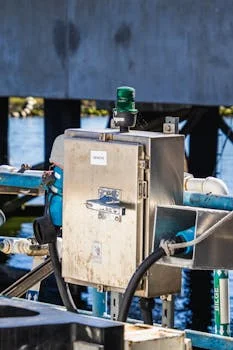
Moving from chlorine gas to chlorine dioxide means leaving vacuum regulators for on-site generators. Chlorine dioxide gas is unstable in pressurized storage and must be made at the point of use. Chlorine gas trains use vacuum regulators, injectors, and emergency scrubbers to manage toxicity. Chlorine dioxide is generated by reacting sodium chlorite (NaClO₂) with hydrochloric acid or chlorine gas. A Chlorine Dioxide Generator for industrial wastewater compliance can produce 50 to 20,000 g/h, covering most industrial flow swings.
Residual monitoring matters more for chlorine dioxide because the EPA drinking-water MRDL is 0.8 mg/L. Chlorine often uses standard DPD or amperometric sensors; chlorine dioxide needs dedicated ClO₂ sensors to avoid oxidant cross-interference. Modern skids feed those sensors into PLC dosing loops. If oxidant demand drops, the generator must ramp down at once to avoid residual violations. A 2024 textile plant case in Bangladesh showed that switching from manual chlorine dosing to an automated chlorine dioxide generator cut chemical spend by 40% while holding 100% compliance with local organic-halide discharge limits.
When to Use Chlorine vs Chlorine Dioxide: A Decision Framework for Engineers
Oxidant choice for industrial wastewater turns on three variables: organic load (COD/TOC), halogenated-byproduct limits, and secondary-treatment pH. Use the rules below to pick the cheaper compliant path for your site.
- Select Chlorine if:
- Influent TOC is consistently below 5 mg/L.
- The wastewater pH is stable between 6.5 and 7.5.
- There are no regulatory limits on THMs or AOX in the discharge permit.
- The chemical budget is strictly limited to <$0.50/m³ and organic load is low.
- Select Chlorine Dioxide if:
- Influent TOC exceeds 10 mg/L or COD is >500 mg/L.
- The wastewater pH fluctuates or is outside the neutral range (pH 4–10).
- Strict THM limits (80 µg/L) or AOX limits apply.
- High-level COD removal (>90%) is required for downstream reuse.
- Hybrid Approach:
- Use chlorine for primary, bulk disinfection in low-organic stages to save cost.
- Use chlorine dioxide for "polishing" the final effluent to ensure byproduct compliance. A pulp and paper plant case study showed this hybrid method achieved a 30% cost saving compared to a chlorine-only system while meeting all environmental standards.
Engineering Decision Logic: If (TOC > 10 mg/L) OR (pH > 8.0) OR (THM Limit < 100 µg/L) → Chlorine Dioxide is the mandatory technical choice.
Who Should Choose Chlorine Dioxide and Next Steps
This comparison fits plant engineers and procurement managers at food, pharmaceutical, textile, and pulp-and-paper sites with influent COD above 500 mg/L or strict THM/AOX permits. It is less relevant for low-organic municipal reuse where chlorination already meets the permit; for those sites, a conventional chlorination system paired with a PLC-controlled chemical dosing skid is usually sufficient. Plants with effluent TOC under 5 mg/L and a tight chemical budget can still justify chlorine, but should plan for sludge-handling and pH-adjustment costs in any 5-year forecast. If your discharge permit cites THM limits near 80 µg/L, or your influent pH swings past 8.0, request a chlorine dioxide generator sizing from our engineering team: get a chlorine dioxide generator quotation with influent data.
Frequently Asked Questions
Is chlorine dioxide better than chlorine for industrial wastewater?
Yes, for high-organic-load wastewater (COD > 500 mg/L), chlorine dioxide achieves 92–97% COD removal compared to chlorine's 70–85%. It also forms no trihalomethanes (THMs), which helps plants track against the EPA drinking-water total THM MCL of 80 µg/L when reuse or strict permits apply.
Is chlorine dioxide safe for humans?
Yes, when plants use on-site generation and automated residual control. The EPA sets a drinking-water MRDL of 0.8 mg/L for residual chlorine dioxide. In industrial rooms, generator venting and secondary containment of precursor chemicals keep operator exposure within safe work limits.
What is another name for chlorine dioxide?
Chlorine dioxide is occasionally called "chlorine peroxide" or written as ClO₂. It is chemically distinct from chlorine (Cl₂) and sodium chlorite (NaClO₂), with different oxidation states and reaction paths, so the names should not be swapped in specs or permits.
Can chlorine dioxide be used in food processing wastewater?
Yes. Food plants favor it because it works across pH 4–10 and avoids chlorine taste and chlorinated organic byproducts on contact surfaces. FDA 21 CFR 173.300 authorizes chlorine dioxide as an antimicrobial in poultry processing water and fruit/vegetable wash water at up to 3 ppm residual; many EU food plants follow the same chemistry basis for related process water.
How does chlorine dioxide compare to ozone for wastewater treatment?
Ozone has a higher oxidation potential (2.07 V) than chlorine dioxide (0.95 V), but it costs more to generate and lasts only seconds to minutes. Chlorine dioxide is more stable and leaves a measurable residual, so disinfection continues through the treatment train.