France’s 2025 DAF systems achieve 90–97% TSS removal and 70–85% COD reduction in industrial wastewater, meeting EU Directive 2020/741 limits (TSS <35 mg/L, COD <125 mg/L). EMO France’s ALPHA series handles 5–50 m³/h with a 3.5 m² footprint, while Nijhuis Saur’s HR-DAF scales to 300 m³/h. Capital costs range from €50K for compact units to €500K for high-flow systems, with OPEX at €0.10–€0.30/m³ treated. Compliance requires CE marking and adherence to NF EN 12255-12 for flotation units.
Why French Industries Are Switching to DAF Systems in 2025
Industrial facilities across France are facing a tightening regulatory squeeze that makes traditional sedimentation tanks increasingly obsolete. A dairy plant in Brittany recently faced fines exceeding €150,000 in a single year due to fluctuating Chemical Oxygen Demand (COD) levels that exceeded municipal discharge limits. This scenario is becoming common as the EU Directive 2020/741 mandates stricter thresholds for industrial discharges, specifically targeting Total Suspended Solids (TSS) at less than 35 mg/L and COD at less than 125 mg/L. Non-compliance is no longer just a legal risk; it is a significant financial liability, with French Water Agencies (Agences de l'eau) increasing oversight and penalties in 2024.
The primary driver for the adoption of a daf system in france is the superior sludge management it offers compared to conventional clarifiers. Dissolved Air Flotation (DAF) systems reduce sludge volume by 30–50% by producing a much drier sludge cake (4–8% solids) than sedimentation (1–2% solids). For a French poultry processor treating 500 m³/day, this efficiency translates to a reduction in disposal costs of approximately €20–€50 per ton. One case study from the Pays de la Loire region demonstrated a facility saving €80,000 annually simply by switching to DAF and reducing the frequency of sludge transport and incineration.
According to a 2023 report from the French Ministry of Ecological Transition, the highest rates of DAF adoption are currently seen in the food processing sector (42%), followed by pulp and paper (28%), textiles (15%), and municipal pre-treatment (10%). While tube settler clarifiers as an alternative to DAF for food processing wastewater remain viable for heavy inorganic solids, DAF is the preferred choice for French engineers dealing with fats, oils, and greases (FOG) and light organic flocs that refuse to settle.
How DAF Systems Work: Mechanism, Micro-Bubbles, and Separation Efficiency
The engineering principle behind DAF is the manipulation of buoyancy through the introduction of micro-bubbles. Unlike sedimentation, which relies on gravity to pull particles down, DAF uses air to lift them up. In a typical French industrial application, micro-bubbles with a diameter of 30–50 μm are generated by dissolving air into a recycle stream of treated water under high pressure (4–6 bar). When this "whitewater" is released into the flotation tank at atmospheric pressure, the air precipitates out of the solution, forming millions of tiny bubbles.
These bubbles attach to suspended solids via surface tension, effectively reducing the overall density of the particle-bubble aggregate to less than 1 g/cm³. This process is governed by NF EN 12255-12, the French standard for flotation units, which specifies the design parameters for air saturation and hydraulic loading. For optimal separation, the recycle ratio—the percentage of treated effluent returned to the saturation system—typically ranges from 10% to 30% of the influent flow. While higher ratios improve TSS removal, they also increase energy consumption, requiring a precise balance managed by modern PLC systems.
The process follows a strict three-phase sequence:
- Coagulation and Flocculation: Chemicals are added to neutralize particle charges and form larger flocs. Utilizing an automated chemical dosing for optimal DAF flocculation and coagulation is critical here to prevent chemical waste and ensure consistent floc strength.
- Air Dissolution and Release: The saturation tank creates the micro-bubble stream.
- Flotation and Separation: The flocs rise to the surface to form a sludge blanket, which is then mechanically skimmed.
Data from HydropureWater’s DAF systems for French industrial wastewater treatment indicates that a retention time of 20–40 minutes is sufficient for 90% TSS removal, though high-COD reduction often requires 45–60 minutes to allow for the removal of emulsified organics.
DAF System Technical Specifications: Flow Rates, Footprint, and Performance
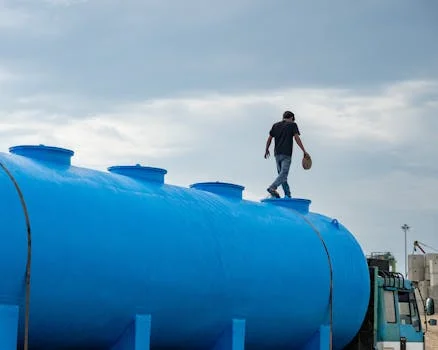
Sizing a DAF system for a French facility requires an analysis of the hydraulic load versus the available footprint. In regions like the Île-de-France, where industrial real estate is at a premium, the compact nature of DAF is a significant advantage. A system handling 50 m³/h typically requires only 3.5 to 5 m² of floor space, whereas a comparable sedimentation tank would require three to four times that area.
The following table outlines the technical parameters across standard, high-efficiency, and large-scale systems used in the French market:
| Flow Rate (m³/h) | Footprint (m²) | TSS Removal (%) | COD Reduction (%) | Energy (kWh/m³) |
|---|---|---|---|---|
| 5–15 (Compact) | 1.5–3.0 | 92–95% | 65–75% | 0.35–0.50 |
| 20–60 (Standard) | 4.0–8.5 | 94–97% | 70–80% | 0.25–0.40 |
| 100–300 (Large) | 15.0–32.0 | 95–98% | 75–85% | 0.15–0.25 |
Energy consumption remains a critical KPI for French compliance managers. Standard DAF units consume between 0.2 and 0.5 kWh/m³, but energy-optimized models, such as the Nijhuis HR-DAF, can push this down to 0.1 kWh/m³ through more efficient saturation pumps. chemical dosing is a major OPEX variable. Typically, 5–15 mg/L of coagulant (like Polyaluminum Chloride, PAC) and 0.5–2 mg/L of polymer are required. A case study from a winery in the Bordeaux region showed that by implementing precise pH adjustment prior to DAF, the facility reduced polymer consumption by 40%, significantly lowering the annual chemical spend.
French DAF Suppliers Compared: EMO, Nijhuis, and HydropureWater
The French market is served by a mix of local specialists and international manufacturers. Selecting the right supplier depends on the specific flow requirements, the complexity of the wastewater, and the available budget. EMO France and Nijhuis Saur are the dominant established players, while HydropureWater provides high-spec alternatives for cost-sensitive projects.
| Supplier | Model Range | Flow (m³/h) | CE / NF EN 12255-12 | Lead Time | Warranty |
|---|---|---|---|---|---|
| EMO France | ALPHA / DELTA | 5–150 | Yes / Yes | 12 Weeks | 2 Years |
| Nijhuis Saur | HR-DAF / FlooDAF | 10–300+ | Yes / Yes | 16 Weeks | 3 Years |
| HydropureWater | DAF line | 5–200 | Yes / Optional | 10 Weeks | 1-3 Years |
EMO France is highly regarded for its ALPHA series, which is optimized for "plug-and-play" installation in small to medium facilities. Their focus is on simplicity and reliability, making them a favorite for municipal pre-treatment and smaller food processors. Nijhuis Saur, part of the larger Saur Group, specializes in high-flow, high-complexity applications. Their HR-DAF (High Rate) technology is engineered for maximum energy efficiency and is often found in large-scale pulp and paper mills or industrial clusters.
HydropureWater offers the DAF line, which serves as a competitive option for French firms looking for robust engineering without the premium price tag of local conglomerates. With capital costs ranging from €40K to €350K, HydropureWater provides a shorter lead time (10 weeks) and flexible warranty extensions. While all these suppliers provide CE marking, it is essential for procurement officers to verify specific NF EN 12255-12 certification if the project is receiving subsidies from the Agence de l'Eau.
DAF System Costs in France: CAPEX, OPEX, and ROI Breakdown
Budgeting for a daf system in france requires a distinction between initial capital expenditure (CAPEX) and the long-term operational costs (OPEX). For a mid-sized 50 m³/h system, the CAPEX typically ranges from €120,000 to €180,000. This is generally distributed as follows: 60% for the equipment itself, 20% for installation, 15% for civil works (foundations and piping), and 5% for commissioning and staff training.
OPEX is where the real variance occurs. On average, treating industrial wastewater in France costs between €0.10 and €0.30 per cubic meter. The breakdown includes:
- Energy: €0.10–€0.30/m³ (depending on local electricity tariffs).
- Chemicals: €0.05–€0.15/m³.
- Maintenance: €0.03–€0.10/m³ (spare parts, pump seals).
- Sludge Disposal: €0.02–€0.08/m³ (highly dependent on the dryness of the sludge).
The Return on Investment (ROI) for DAF systems in France is remarkably fast, often between 2 and 5 years. A cheese plant in the Auvergne-Rhône-Alpes region achieved a payback period of 3.2 years by eliminating municipal surcharges for high TSS and reducing their sludge disposal volume by 45%. Financing is also supported by the French government through ADEME (Agency for Ecological Transition) grants and circular economy funding, which can cover up to 30% of the CAPEX for projects that significantly reduce environmental impact.
French and EU Compliance: Directives, Standards, and Certification
Compliance is the most critical hurdle for any environmental engineer in France. The EU Directive 2020/741 on minimum requirements for water reuse is the current gold standard. DAF systems must be capable of consistently meeting the "Class A" or "Class B" water quality standards if the treated effluent is intended for agricultural irrigation or industrial reuse. This requires third-party performance testing, often conducted by organizations like Bureau Veritas or TÜV Rheinland.
For municipal pre-treatment, the Urban Waste Water Directive 91/271/EEC applies, requiring DAF units to achieve at least 70% BOD5 removal and 90% TSS removal before the water enters the public sewer system. In France, the specific standard NF EN 12255-12 dictates the safety and performance requirements for flotation units. It is not enough for a machine to have a CE mark; it must also have documentation proving it meets the structural and operational safety standards required by French labor and environmental laws.
Before final handover, the local Agence de l’Eau will often require a performance audit. This involves 24-hour composite sampling to verify that the DAF system maintains its removal efficiency across peak flow periods. Failure to provide this documentation can result in the withholding of government grants or the imposition of daily fines.
Supplier Checklist: 10 Questions to Ask Before Buying a DAF System in France
Procurement officers should use the following framework to evaluate potential DAF suppliers and ensure the equipment is fit for purpose in the French industrial landscape:
- Technical Performance: What is the guaranteed TSS and COD removal efficiency based on our specific influent parameters?
- Pilot Testing: Can you provide a mobile pilot unit for on-site testing before we commit to the full-scale purchase?
- Certification: Do you have documented NF EN 12255-12 compliance and third-party validation data?
- Full CAPEX: Does the quote include installation, civil works, and commissioning, or is it "ex-works" only?
- OPEX Estimate: What is the estimated cost per cubic meter for energy and chemicals at our specific flow rate?
- Lead Time: What is the exact delivery timeline, and what are the penalties for delays?
- References: Can you provide three case studies from French facilities in our specific industry (e.g., dairy, textile)?
- Energy Efficiency: What is the specific kWh/m³ consumption, and are there variable frequency drives (VFDs) included?
- Sludge Handling: What is the expected dry solids content of the sludge, and what volume reduction can we expect?
- After-Sales Support: What is the response time for on-site service calls in France, and where is the nearest spare parts warehouse?
Frequently Asked Questions
How does a DAF system compare to a tube settler in French food plants?
In French food processing, DAF is superior for wastewater containing fats, oils, and greases (FOG) which tend to float rather than sink. While a tube settler is cheaper for heavy grit removal, a DAF system is essential for meeting the strict TSS <35 mg/L limits mandated by EU Directive 2020/741. For a detailed comparison, see the DAF system requirements in Uzbekistan for comparative analysis regarding global industrial standards.
What are the typical chemical costs for DAF in France?
Chemical costs typically range from €0.05 to €0.15 per cubic meter of treated water. This depends on the dosage of coagulants like PAC (5–15 mg/L) and flocculants (0.5–2 mg/L). Many French plants use automated sensors to adjust dosing in real-time, which can reduce these costs by up to 20% compared to manual dosing systems.
Is government funding available for DAF systems in France?
Yes, through ADEME and regional Water Agencies, French companies can often secure grants covering 20–40% of the CAPEX. These are usually tied to "Green Recovery" initiatives or projects that demonstrate significant reductions in water consumption through reuse, aligning with the EU’s circular economy goals.
What maintenance is required for a DAF system?
Routine maintenance includes checking the air saturation pump seals, cleaning the micro-bubble release nozzles to prevent clogging, and inspecting the sludge scraper blades. Most French facilities schedule a major service every 12 months, with an annual maintenance cost representing about 2–3% of the initial equipment CAPEX.