Chlorine dioxide generators for food processing produce on-site ClO₂ for wash water, chillers, and CIP circuits under FDA 21 CFR 173.300 and EPA 40 CFR Part 180.950. Typical food-plant units deliver 50–20,000 g/h ClO₂, hold ±5% output stability with amperometric control, and keep biocidal activity across pH 4–10 without forming trihalomethanes (THMs). Reported pathogen performance includes up to 99.999% kill for Listeria, E. coli, and norovirus when dose and contact time are met, while reaction chambers in PVDF or Hastelloy resist ClO₂ corrosion.
What chlorine dioxide generators for food processing deliver
Chlorine dioxide generators for food processing supply dissolved ClO₂ at 1–5 ppm for produce flumes and poultry chillers, with about 30–60 seconds contact for multi-log kill when water quality holds. Food-plant outputs commonly span 50–20,000 g/h, use PVDF or Hastelloy C-276 wetted parts, and target >95% precursor conversion. Amperometric PLC dosing holds about ±5% accuracy versus ±15% on manual systems.
Unlike free chlorine, ClO₂ remains effective when flume or chiller pH drifts between 4 and 10 during organic-load spikes. Process engineers specify these systems when biofilm control, THM limits, and audit-ready dose logs matter more than lowest CAPEX alone.
Why Food Processors Are Switching from Chlorine to Chlorine Dioxide
Chlorine’s weak biofilm penetration and sharp pH sensitivity leave Listeria and Salmonella niches in drains, flumes, and chillers. According to CDC 2022 recall data cited in plant reviews, 48% of foodborne outbreaks were linked to chlorine-washed produce, mainly because sodium hypochlorite loses over 90% efficacy when water pH rises above 7.5. ClO₂ stays dissolved as a gas and keeps biocidal strength across pH 4–10, which matters in produce flumes and poultry chillers where organic load drives pH swings.
THMs and haloacetic acids from chlorine frequently challenge the EPA Stage 2 Disinfectants and Disinfection Byproducts Rule limit of 80 µg/L for THMs. ClO₂ is a selective oxidant and does not chlorinate natural organic matter into those byproducts at food-plant doses. That compliance path often pairs disinfection upgrades with how medical wastewater treatment systems complement ClO₂ disinfection in food plants so hygiene water and effluent programs stay aligned.
Field performance tracks the chemistry. A 2023 Journal of Food Protection case on a California leafy-greens line reported a 92% drop in E. coli positives after switching to 3 ppm ClO₂ at 45-second contact. ClO₂ oxidizes cell membranes and disrupts protein synthesis; unlike hypochlorous acid, it crosses the extracellular polymeric substances of biofilms instead of stalling at the surface. Most plants we size for produce wash run residual targets near the lower end of 1–3 ppm once turbidity is controlled.
Food safety programs still need documented dose, rinse, and verification steps. Align generator controls with haccp safety systems for food processing plants so critical limits, monitoring, and corrective actions match the written plan.
Chemical vs. Electrolytic ClO₂ Systems Compared
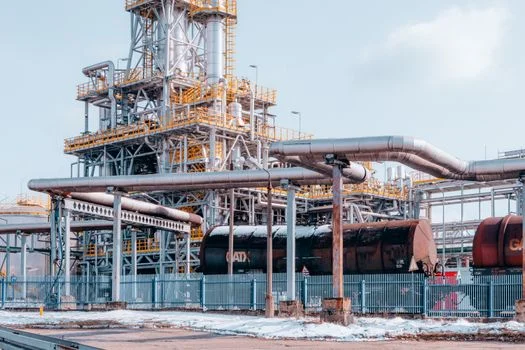
Chemical systems make ClO₂ from sodium chlorite plus acid or chlorine gas and cover the widest industrial outputs, typically 50–20,000 g/h. CAPEX often lands between $12,000 and $80,000, with lower hardware cost but hazardous precursor storage. Quality units use PVDF-lined chambers and automatic descaling to limit byproduct deposits. Vacuum eduction pulls precursors under negative pressure so a line break draws air inward instead of spraying chemicals.
Electrolytic systems use salt brine and power, remove bulk acid storage, and raise CAPEX to about $30,000–$120,000 while cutting OPEX near 30%, roughly $0.08 per kg ClO₂ versus about $0.20 per kg on chemical systems. Cells foul when hardness, iron, or manganese is high, so pretreatment for ClO₂ generators including removing iron and manganese belongs in the design package. For buyers comparing platforms, an industrial chlorine dioxide generator datasheet should state output at the plant’s inlet hardness and chlorite strength, not only nameplate g/h.
| Feature | Chemical (2-Part/3-Part) | Electrolytic (Brine-Based) | Single-Chem Precursor |
|---|---|---|---|
| Output Range | 50 – 20,000 g/h | 50 – 5,000 g/h | 10 – 1,000 g/h |
| CAPEX Range | $12,000 – $80,000 | $30,000 – $120,000 | $15,000 – $45,000 |
| OPEX (per kg ClO₂) | $0.20 – $0.25 | $0.08 – $0.12 | $0.28 – $0.35 |
| Safety Profile | High (Acid/Chlorite handling) | Highest (Brine only) | Moderate (Proprietary mix) |
| Maintenance | Monthly pump/seal checks | Annual electrode service | Low frequency |
Pressurized injection suits multi-line meat plants that need high-volume dosing into several flumes. Single-chemical precursor skids simplify small dairies and cut operator steps, but chemical cost usually runs 15%–20% above binary chlorite/acid systems. Match delivery method to pipe pressure and number of injection points before freezing the skid layout.
2026 Engineering Specs for Food-Grade ClO₂ Systems
Engineering specs for food-grade ClO₂ units emphasize automation, corrosion-resistant materials, and tight dosing against FDA 21 CFR 173.300. Modern PLC-controlled chemical dosing systems for precise ClO₂ injection use amperometric sensors for real-time measurement and about ±5% dosing precision, versus roughly ±15% on manual setups that overshoot flavor impact or undershoot kill.
Pathogen kill rate is the validation metric. Data from Food Microbiology (2024) confirms a 5-log reduction of Listeria monocytogenes in 30 seconds at 3 ppm ClO₂. For Salmonella, a 6-log reduction is reported within 60 seconds at 5 ppm under the study conditions. Chambers use FDA-facing materials: PVDF for oxidative resistance, Hastelloy C-276 where chloride is high enough to pit stainless steel.
| Technical Parameter | Specification Range | Application Relevance |
|---|---|---|
| ClO₂ Output Range | 50 g/h – 20,000 g/h | Scalable from small dairy to poultry plants |
| Reaction Efficiency | >95% conversion rate | Minimizes unreacted chlorite in food water |
| Chamber Material | PVDF or Hastelloy C-276 | Corrosion resistance and FDA compliance |
| Control System | Siemens/Allen-Bradley PLC | Remote monitoring and flow-paced dosing |
| Sensor Type | Amperometric (Real-time) | Accuracy vs. indirect ORP sensors |
| Inlet Water Quality | Turbidity <1 NTU; Fe <0.3 mg/L | Prevents sensor fouling and scaling |
Automation spans manual panels to PLC packages with alarms and remote logs for auditors. Audit-ready residual and dose records are a purchase criterion for food safety managers. Inlet water must stay within the table limits: turbidity above 1 NTU or elevated iron fouls sensors and cuts conversion, so filtration or softening sits upstream of the generator.
What is an LG-25 ClO₂ unit?
An LG-25 ClO₂ unit is a compact capacity class buyers often use as shorthand for mid-small continuous output near the lower industrial band, not a universal regulatory code. Confirm nameplate g/h, precursor chemistry, and sensor type on the vendor drawing. For wash lines needing about 50–300 g/h after a 20% peak buffer, verify ±5% dose hold and PVDF or equal wetted parts. Request NSF/ANSI 60 support where food-contact water rules apply.
Cost Models: CAPEX, OPEX, and ROI for Food Processing Facilities
Financial cases rest on lower chemical waste and lower disinfection-byproduct exposure. CAPEX starts near $12,000 for a 50 g/h manual skid suited to small dairies and rises to about $120,000 for a 20,000 g/h PLC system sized for poultry slaughter. Skid-mounted packages cut field labor and can trim total installed cost by up to 20% versus stick-built layouts.
OPEX tracks generation method. Chemical systems typically cost $0.20–$0.25 per kg ClO₂ when sodium chlorite is about $2.50/kg and acid about $1.80/kg. Electrolytic OPEX falls near $0.08–$0.12 per kg on salt and power. Versus chlorine, ClO₂ often cuts total oxidant use by about 30% because less capacity is wasted on non-target organics. Avoided THM non-compliance costs—plants often budget around $50,000 per year when Stage 2 limits are missed—help drive ROI under 18 months on many mid-size lines.
| Cost Category | Chlorine (Hypochlorite) | ClO₂ (Chemical Gen) | ClO₂ (Electrolytic Gen) |
|---|---|---|---|
| Initial CAPEX | $5,000 – $15,000 | $12,000 – $80,000 | $30,000 – $120,000 |
| Annual OPEX (10kg/day) | $4,500 – $6,000 | $7,300 – $9,100 | $2,900 – $4,400 |
| Maintenance/Year | $500 – $1,500 | $1,500 – $3,500 | $2,500 – $5,000 |
| Regulatory Risk Cost | High (THM Fines) | Zero | Zero |
Maintenance usually runs $1,000–$5,000 per year for sensor calibration, pump seals, and chamber descaling. Versus ozone, ClO₂ often shows about 20% lower CAPEX because it skips off-gas destruct and heavy air-prep trains. A Midwest mid-sized poultry plant reported $45,000 annual savings after switching from chlorine to ClO₂, citing about 40% less water use from better chiller recycle and no pathogen-related downtime in that period.
How does chlorine dioxide compare to an ozone machine?
Chlorine dioxide dosing holds residual in flumes and chillers; an ozone machine doses a short-lived gas with little lasting residual in high-COD food water. ClO₂ CAPEX is often about 20% lower than ozone packages that need off-gas destruct and air preparation. Ozone can kill faster in very clean, low-demand water. In poultry chillers and produce wash with proteins and fats, ClO₂ selectivity usually leaves more oxidant for pathogens.
How to Select the Right Unit for Your Facility
Selection starts with flow, dose, and water chemistry. Required output uses [Flow Rate (L/min) × Desired Dose (ppm) × 60] / 1,000 = g/h ClO₂. For example, a produce wash line moving 100 m³/h (1,666 L/min) at a 3 ppm dose needs about 300 g/h. Engineers should size with a 20% buffer for peak organic loading. Small plants with limited staff often prefer electrolytic logistics; high-volume processors usually favor chemical systems on OPEX at large g/h.
Confirm FDA 21 CFR 173.300 for direct food contact and EPA 40 CFR Part 180.950 for treatment claims on the water path. Specifying a Chlorine Dioxide (ClO₂) Generator for Water Disinfection should include conversion efficiency, sensor type, and materials of construction on the submittal, not only peak g/h.
Before purchase, run this checklist:
- Water Quality Audit: Test iron, manganese, and turbidity. High levels foul ClO₂ sensors and force pretreatment.
- Automation Needs: 24/7 lines with thin staffing need PLC control and remote monitoring.
- Vendor Warranty: Require at least 1-year standard coverage; premium packages offer 3-year terms plus remote diagnostics.
- Pilot Testing: For high-risk matrices, rent a 50 g/h portable unit for 30 days and validate kill rates in your water before full install.
- Certification: Reject bids lacking NSF/ANSI 60 chemical/material support or on-site operator training.
- Injection layout: Count flume and chiller points; vacuum vs pressurized delivery changes skid piping.
- Residual policy: Define target ppm, rinse/drainage rules, and MRDL handling at discharge.
Red flags include “one-size-fits-all” quotes without water analysis, missing NSF/ANSI 60 support, or no training plan. Keep industrial disinfection scopes separate from unrelated medical search topics such as chlorine dioxide treatment for lyme 2026, which belong on a different comparison page.
Troubleshooting Common ClO₂ Generation Issues
Low output is the most common operator call, usually from clogged feed lines or weak precursors. When sodium chlorite purity falls below 80% from poor storage, conversion collapses. Backflush feed lines with deionized water monthly and check precursor strength with a titration kit. If output stays low, the amperometric sensor may have drifted; recalibrate weekly against a DPD-glycine benchtop test.
Chamber scaling shows up as falling conversion and tracks hardness or a wrong acid-to-chlorite ratio. Many chemical units target about 1:1.2 acid to chlorite by the vendor stoichiometry. If scale continues at correct chemistry, install softening upstream. A strong chlorine odor or yellow solution signals incomplete reaction or over-acidification; cut acid about 10% or raise chamber retention toward 30 seconds to clear free-chlorine contamination.
Sensor faults often follow FOG fouling in meat plants. A steady 0 ppm reading while pumps run usually means a coated membrane; clean with 10% citric acid. Erratic PLC values often trace to poor grounding or VFD noise on sensor cables near large pumps—shield and separate those runs.
Who this is for / Next step
This guide is for plant engineers, EPC contractors, and procurement teams sizing ClO₂ for meat, dairy, and produce wash water. Look elsewhere if you only need municipal drinking-water residual control without food-contact rules, or if your duty is pure sterilization gas without aqueous dosing. When flows, inlet iron, and target ppm are known, request a sized skid and dose map through our quote request for ClO₂ disinfection equipment so CAPEX/OPEX can be checked against your flume and chiller duty.
Frequently Asked Questions
Is chlorine dioxide safe for use in organic food processing?
Yes, chlorine dioxide is permitted in organic processing under EPA 40 CFR Part 180.950 and the USDA National Organic Program when label and rinse rules are followed. Wash concentrations may exceed the 0.8 mg/L MRDL during contact, but water leaving the facility must meet that limit unless a potable rinse or equivalent drainage step is documented. Keep dose logs with the organic handler’s plan and confirm buyer retailer rules for each commodity.
Does ClO₂ treatment affect the taste or smell of food products?
No meaningful off-flavor is expected at standard food-processing doses of 1–5 ppm ClO₂. Unlike chlorine, ClO₂ does not form chlorophenols that create medicinal odors on product. Many processors report cleaner sensory profiles because ClO₂ also oxidizes sulfides and geosmin in process water. Keep residuals inside the validated band; overshooting dose still wastes chemical even if flavor impact stays low.
How does ClO₂ perform in high organic load environments like poultry chillers?
ClO₂ remains effective in poultry chillers because it is a selective oxidant and spends less capacity on proteins and fats than free chlorine. Chlorine is consumed rapidly by high COD, while ClO₂ stays available longer for Campylobacter and Salmonella control when dose and mixing are correct. Maintain inlet turbidity and iron within generator limits so sensors stay accurate. Validate contact time in the actual chiller volume, not only in a clean bench test.
What are the storage requirements for ClO₂ precursors?
Store sodium chlorite cool, dry, and ventilated, away from acids and combustibles, typically as 25% or 31% liquid for industrial systems. Provide secondary containment for both chlorite and acid activators. Never store ClO₂ gas as bulk inventory; generate on demand and dissolve immediately into carrier water. Train operators on incompatible storage and spill response before first fill.
What dose and contact time should a produce wash target first?
Most produce wash validations start near 3 ppm ClO₂ with about 45 seconds contact when water quality is controlled, matching published leafy-greens performance data. Adjust after a water-quality audit if turbidity exceeds 1 NTU or iron exceeds 0.3 mg/L. Size equipment for peak flow plus a 20% buffer so dose does not sag during product surges. Confirm organoleptic and residue limits with QA before locking the SOP.