Why Bilbao Hospital Effluent Cannot Be Treated as Ordinary Sewage
Hospital wastewater carries four pollutant families that municipal plants in the Bilbao Bizkaia Water Consortium (CABB) network — operated by ACCIONA across 25 plants including Arriandi, Cruces, and Lekeitio — were not designed to handle. The stream blends (1) biodegradable organics from kitchens, laundries, and wards, (2) persistent micropollutants including pharmaceuticals, iodinated contrast media, endocrine disruptors, and antibiotics, (3) pathogenic microorganisms with documented antibiotic resistance gene (ARG) loads, and (4) radioisotopes from nuclear medicine departments at Cruces and Basurto, notably I-125 and Tc-99m in patient excreta. A Chlorella sp. LH2 study reported a BOD₅:COD ratio of 0.77 in hospital wastewater, which signals moderate biodegradability but a residual fraction of slowly-degradable pharmaceuticals that conventional activated sludge cannot mineralise (Springer Bioresources and Bioprocessing, 2024).
Typical influent from a Basque general hospital runs BOD₅ 150–250 mg/L, COD 250–500 mg/L, TSS 100–200 mg/L, NH₃-N 20–50 mg/L, total phosphorus 5–15 mg/L, and fecal coliforms 10⁶–10⁷ CFU/100 mL, with pH 6.5–8.5. The Arriandi and Cruces plants downstream are sized for domestic sewage and will reject any hospital discharge that breaches Council Directive 91/271/EEC sensitivity thresholds for the Bilbao estuary. That is why on-site pre-treatment is non-negotiable for any clinic, lab, or general hospital in Biscay.
2026 Regulatory Stack Governing Bilbao Hospital Discharges
Four overlapping instruments govern a Bilbao hospital discharge in 2026. Real Decreto 1620/2007 sets the national numerical regime for reuse and discharge, with COD <125 mg/L, BOD <25 mg/L, TSS <35 mg/L, total nitrogen 15–25 mg/L depending on the receiving environment, and total phosphorus capped at 2 mg/L in sensitive zones — the Bilbao estuary is classified sensitive. The EU Urban Wastewater Treatment Directive 91/271/EEC, revised in 2022 and entering force January 2024 with a 2026 transposition deadline, adds quaternary treatment for micropollutants on plants >100,000 PE and tightens N/P limits that will flow down to hospital pre-treatment through national implementing rules. The Basque Water Agency (URA / Agencia Vasca del Agua) issues the local discharge authorisation, requiring quarterly self-monitoring for sites below 500 m³/d and pre-treatment standards before any connection to the CABB sewer. Finally, where treated effluent is reused for toilet flushing, irrigation, or cooling, the WHO guidelines and EU Drinking Water Directive 98/83/EC apply.
The Chinese GB18466-2005 standard cited in the Top 1 paper uses different thresholds (SS 20 mg/L, fecal coliform 500 MPN/L) and does not map directly to Bilbao compliance — the engineer should treat the Chinese MBR data as a performance reference, not a regulatory target.
| Parameter | RD 1620/2007 (discharge) | EU UWWTD 2022 revision | URA / CABB sewer acceptance |
|---|---|---|---|
| COD | <125 mg/L | Tightened from 125 → 80 mg/L for sensitive zones (transposing 2026) | <500 mg/L (sanitary sewer) |
| BOD₅ | <25 mg/L | <25 mg/L retained | <300 mg/L |
| TSS | <35 mg/L | Tightened, MBR-grade | <400 mg/L |
| Total nitrogen | 15–25 mg/L | <10 mg/L for >100,000 PE; cascade to hospitals via national rules | <50 mg/L |
| Total phosphorus | 2 mg/L (sensitive) | 0.5–1 mg/L tightening | <15 mg/L |
| Total coliforms | <100 CFU/100 mL (reuse) | Per receiving body | Negotiable; typically <10,000 CFU/100 mL |
The Process Train That Works in Bilbao: Screening → MBR → ClO₂
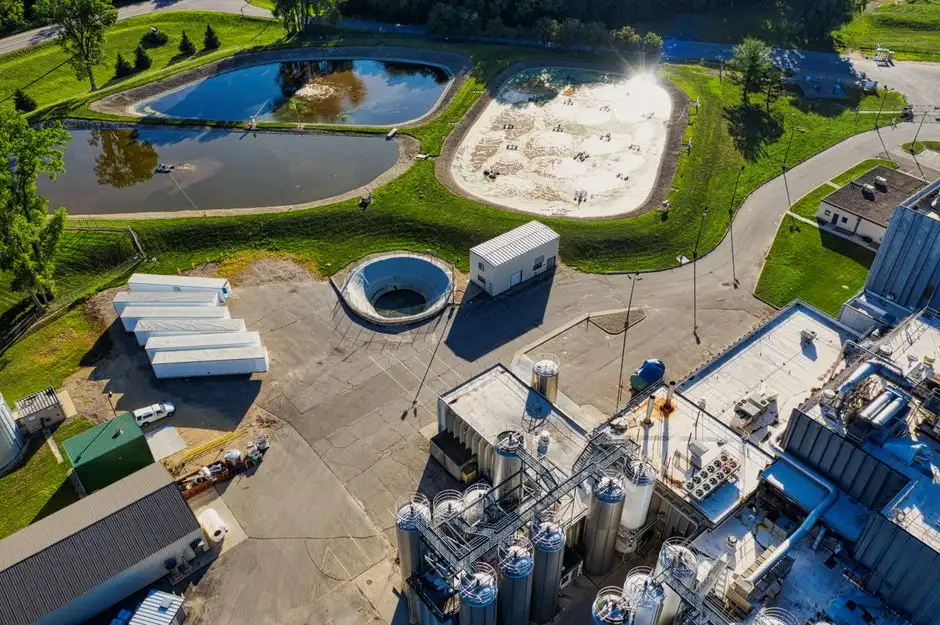
For a 50–500 m³/d Basque hospital, the defensible train in 2026 runs through six unit operations. Start with a rotary mechanical bar screen at 3–5 mm aperture to strip wipes, gauze, and plastics before they reach the membranes — a step that prevents the rips and fouling incidents that account for the bulk of unplanned downtime. Step two is equalization with coarse-bubble aeration, sized at 8–12 h HRT to flatten the diurnal peaks from operating theatres (07:00–09:00) and laundry shifts. Step three is the biological stage, either MBBR or conventional activated sludge at HRT 6–10 h and MLSS 3,000–4,000 mg/L, designed against COD <125 mg/L and BOD <25 mg/L.
Step four is the submerged MBR system with 0.1–0.4 μm PVDF membranes. The 200 m³/d MBR trial reported in the Top 1 paper delivered COD <50 mg/L, NH₃-N <10 mg/L, total coliform not detected, and TSS virtually zero — a useful Bilbao-applicable benchmark once Chinese GB18466 thresholds are swapped for RD 1620/2007 numbers. Step five is disinfection with an on-site chlorine dioxide generator at 2–5 mg/L residual and 15–30 min contact time; the same Top 1 paper recommends ClO₂ over chlorine, NaOCl, ozone, and UV for hospital wastewater because it achieves >99.9% microbial kill without forming trihalomethanes. Step six closes the loop with a plate-and-frame sludge filter press to bring the wasted biosolids to 22–25% dry solids for off-site disposal as biohazard waste (LER 18 01 03*).
Process Comparison: MBR vs SBR vs DAF + ClO₂ vs Microalgae
The four viable architectures for a Basque hospital site are not equivalent. A submerged PVDF MBR delivers the best effluent quality and the smallest footprint — roughly 60% smaller than conventional activated sludge per the Top 1 paper — at a 2026 CAPEX of €200K–€450K for 100 m³/d, with membrane replacement on a 5–7 year cycle. An SBR is mechanically simpler with no membrane inventory and lower CAPEX (€120K–€280K at 100 m³/d), but the larger footprint and weaker performance on pharmaceutical residues limit it to sites without reuse intent. A DAF unit front-end is the right call where TSS and FOG loadings are high (central kitchens, hospital laundries), but DAF alone will not meet COD/N on its own — it must precede an MBR. The Chlorella sp. LH2 microalgae route is an academic novelty: 88.92% E. coli kill, 68.64% TN removal, 64.44% TP removal after 10 days, but the 10-day HRT and large pond footprint disqualify it for any urban Bilbao site in 2026.
Decision rule: <50 m³/d → packaged MBR + ClO₂; 50–500 m³/d → MBR + ClO₂; >500 m³/d with on-site reuse → MBR + RO polishing for closed-loop toilet flushing.
| Architecture | Effluent COD | Footprint (100 m³/d) | CAPEX 2026 | Membrane / replace | Best fit |
|---|---|---|---|---|---|
| MBR + ClO₂ | <50 mg/L | ~40 m² (compact skid) | €200K–€450K | PVDF, every 5–7 yr | Discharge to CABB + reuse |
| SBR + ClO₂ | 60–90 mg/L | ~90 m² | €120K–€280K | None | Discharge only, no reuse |
| DAF + MBR + ClO₂ | <50 mg/L | ~55 m² | €260K–€520K | PVDF, every 5–7 yr | High TSS / FOG (laundry, kitchen) |
| Microalgae (Chlorella) | ~47 mg/L | ~600 m² pond | Pilot-scale only | None | Research, not Bilbao 2026 |
2026 Cost Bands and Compliance Economics
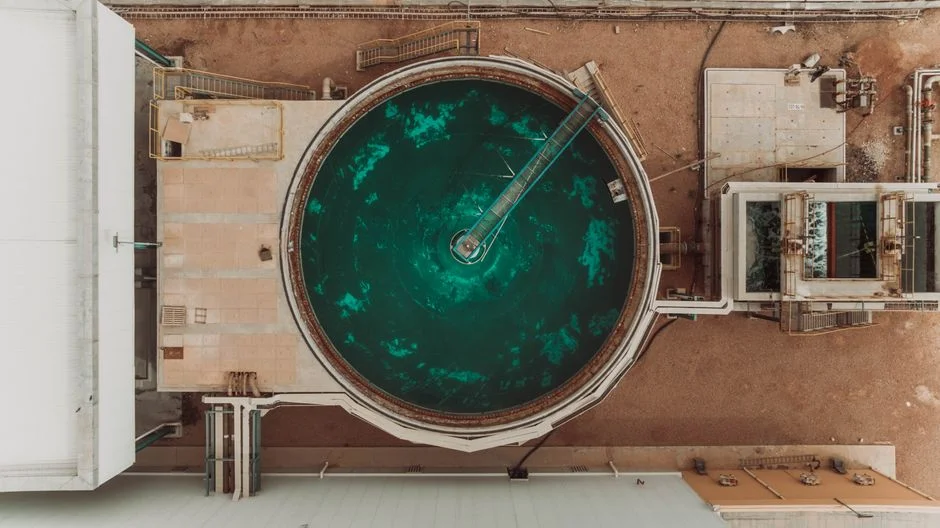
Turnkey CAPEX for a Bilbao site in 2026, including civil works and commissioning, breaks down as: 50 m³/d €110K–€230K, 100 m³/d €180K–€420K, 200 m³/d €320K–€680K, and 500 m³/d €650K–€1.4M. OPEX for the MBR + ClO₂ train runs €1.8–€3.5/m³, driven by ClO₂ precursor chemicals (HCl + NaClO₂) and membrane-cleaning reagents, with electricity at 0.6–1.2 kWh/m³. Three cost drivers are specific to Bilbao: seismic-rated civil design under NCSE-02 for moderate-seismicity Biscay, 316L stainless selection on coastal sites to resist salt-air corrosion, and bilingual Spanish/Basque reporting templates for URA submissions.
The ROI case is straightforward. Reusing treated effluent for toilet flushing and landscape irrigation offsets 20–35% of municipal water cost, with a 3–5 year payback at Bilbao 2026 water tariffs of approximately €1.8/m³. The alternative — paying ACCIONA's CABB surcharge for non-compliant discharge — typically costs 2–4× the on-site OPEX. A packaged underground integrated sewage treatment skid with an automatic chemical dosing system for ClO₂ precursor feed keeps installation footprint small and dosing within the 2–5 mg/L target band.
5-Step Selection Checklist for a Bilbao Hospital Project
- Quantify the worst-case influent. Composite-sample BOD, COD, TSS, NH₃-N, and fecal coliforms over a 7-day period, plus a targeted pharmaceuticals/contrast-media screen for radiology and oncology departments.
- Map the discharge point. To the CABB sewer under ACCIONA's Bilbao contract, or to a URA-classified water body. The limits differ and so does the monitoring frequency (typically quarterly for <500 m³/d).
- Decide reuse intent upfront. If toilet flushing or irrigation is in scope, design for RO polishing and tertiary filtration from day one — retrofitting RO into an MBR skid is expensive.
- Choose the process train from the MBR / SBR / DAF matrix. Apply a 20% hydraulic safety factor and 1.5× peak factor on biological load to handle diurnal spikes from operating theatres.
- Lock in compliance reporting. Quarterly self-monitoring per URA, microbiological assays per UNE-EN ISO 7899, and sludge disposal logged under LER 18 01 03*.
Frequently Asked Questions
What are the discharge limits for a Bilbao hospital in 2026? Real Decreto 1620/2007 caps COD at <125 mg/L, BOD at <25 mg/L, TSS at <35 mg/L, and total phosphorus at 2 mg/L in the Bilbao estuary's sensitive zone, with the EU UWWTD 2022 revision tightening nitrogen to <10 mg/L once national transposition lands.
Which disinfection chemistry is best for hospital wastewater? Chlorine dioxide at 2–5 mg/L residual with 15–30 min contact — it delivers >99.9% microbial kill, avoids the trihalomethane problem of NaOCl, and outperforms ozone and UV on ARG-bearing effluent per the Top 1 hospital disinfection study.
What flow rate requires a packaged plant versus civil-built? Below 50 m³/d, a skid-mounted MBR + ClO₂ unit is the standard answer; 50–500 m³/d needs civil-built equalization and MBR tanks; above 500 m³/d with on-site reuse, add RO polishing.
What does a compliant 100 m³/d Bilbao hospital plant cost in 2026? Turnkey CAPEX of €180K–€420K including civil works, with OPEX of €1.8–€3.5/m³ — 3–5 year payback when reused for toilet flushing at Bilbao's €1.8/m³ water tariff.
How does discharge to the CABB sewer work? Pre-treat on site to RD 1620/2007 limits, obtain a URA discharge authorisation with quarterly self-monitoring, then connect to the CABB network operated by ACCIONA across Bilbao's 25-plant portfolio including Arriandi and Cruces.
Related Equipment
- compact medical wastewater system — specifications, capacity range, and technical data