Why Slaughterhouse Wastewater Demands Ultrafiltration
Slaughterhouse wastewater carries an organic load that overwhelms primary treatment: typical raw streams measure BOD₅ 1,500–5,000 mg/L, COD 2,500–8,000 mg/L, TSS 800–4,000 mg/L, FOG 200–1,500 mg/L, and total nitrogen 100–400 mg/L, with peaks during blood release and paunch handling (per EPA 40 CFR Part 432 subcategory profiles). A dissolved air flotation (DAF) unit or settling basin removes 50–70% of free oil and settleable solids, but emulsified fat droplets below 10–20 μm and dissolved proteins (albumin, hemoglobin, myosin) pass through DAF virtually intact and load the downstream biological stage. In a 2026 design environment, the EPA Meat & Poultry Products rule and EU BAT-AEL (BOD < 25 mg/L, COD < 125 mg/L, TSS < 35 mg/L) leave no margin for the breakthrough these colloids cause. Water reuse economics compound the pressure: clean-in-place water, boiler feed, and yard washdown now compete with municipal discharge for budget share.
Ultrafiltration is a pressure-driven membrane process with nominal pore size 0.01–0.1 μm that physically rejects macromolecular COD, emulsified oil, colloids, and most bacteria on a size-exclusion basis. In a slaughterhouse train it sits between DAF and any downstream RO or disinfection step, functioning as the polishing barrier conventional settling cannot provide. For engineers evaluating where UF fits against other flotation configurations, the DAF system advantages and disadvantages guide is a useful starting point for understanding why DAF alone stops short of compliance.
Membrane Selection: PVDF vs PES, Hollow Fiber vs Flat Sheet
PVDF is the default material for slaughterhouse UF because of its pH 1–13 tolerance for cleaning-in-place chemicals, mechanical strength under backwash pressure, and field-documented lifetime of 5–7 years versus 3–5 years for PES in protein-rich matrices. Regenerated cellulose membranes offer the lowest protein binding but degrade quickly above pH 10 and rarely survive CIP with caustic plus hypochlorite, which makes them impractical for slaughterhouse duty. Pore size selection follows the upstream process: 0.01–0.05 μm nominal pore (10,000–50,000 Da MWCO) is specified when UF follows DAF and must reject emulsified FOG and macromolecular COD; 0.1 μm (100,000 Da) is acceptable only when UF follows an MBR and acts primarily as a pathogen barrier.
Geometry drives backwash strategy and packing density. Hollow fiber delivers 20,000–30,000 m²/m³ of packing density, supports reverse backwash, and dominates standalone UF skids. Tubular membranes handle FOG above 2,000 mg/L but cost 3–5× more per square meter and are rarely justified in red-meat or poultry plants where DAF already drops FOG below 500 mg/L. Flat sheet sits inside MBR cassettes rather than in a separate UF loop. For plants considering an MBR-based train, the DF series PVDF flat sheet membrane modules illustrate how flat-sheet geometry integrates with biological treatment.
| Parameter | PVDF (recommended) | PES | Regenerated cellulose |
|---|---|---|---|
| Nominal pore size | 0.01–0.05 μm | 0.01–0.1 μm | 0.01–0.05 μm |
| MWCO | 10,000–100,000 Da | 10,000–50,000 Da | 5,000–30,000 Da |
| pH tolerance (CIP) | 1–13 | 2–12 | 2–8 |
| Typical lifetime (slaughterhouse feed) | 5–7 years | 3–5 years | 1–2 years |
| Geometry options | Hollow fiber, flat sheet, tubular | Hollow fiber, flat sheet | Flat sheet |
| Backwash capability | Reverse flush + CEB | Reverse flush + CEB | Forward flush only |
Operating Parameters: Flux, TMP, Recovery and CIP
Sustainable flux for slaughterhouse UF after DAF runs 40–80 LMH at a transmembrane pressure (TMP) of 0.5–2.0 bar. The critical flux threshold — the point above which fouling becomes irreversible — typically falls between 60 and 70 LMH on DAF-pretreated feed (HydropureWater field data, 2026). Operating at 50–60 LMH leaves headroom for temperature swings and feed variability without crossing that boundary. Recovery rates of 85–95% are standard, with the 5–15% concentrate bleed routed to sludge handling — typically a plate and frame filter press for dewatering before disposal.
Fouling control follows a three-tier protocol. Forward flush every 15–30 minutes dislodges loose foulants from the membrane surface. Chemically enhanced backwash (CEB) every 1–7 days uses NaOCl 200–500 ppm for organic removal followed by citric acid for iron and scale. Full CIP every 2–4 weeks uses 0.5–1.0% NaOH plus 200–500 ppm NaOCl at 35–40°C. Temperature affects performance directly: flux rises approximately 2% per °C up to 35–40°C, and slaughterhouse effluent commonly arrives at 25–35°C, which is favorable for flux but requires CIP chemistry rated for that temperature band. For plants struggling with emulsified oil upstream of UF, the guide to treating emulsified oil wastewater covers DAF and membrane interactions in more detail.
| Parameter | Operating range | Design target |
|---|---|---|
| Sustainable flux | 40–80 LMH | 50–60 LMH |
| TMP | 0.5–2.0 bar | 0.8–1.2 bar |
| Recovery | 85–95% | 90% |
| Backwash interval | 15–30 min | 20 min |
| CEB interval | 1–7 days | 3 days |
| Full CIP interval | 2–4 weeks | 3 weeks |
| NaOCl (CEB) | 200–500 ppm | 300 ppm |
| Citric acid (CEB) | 0.5–2.0% | 1.0% |
| Operating temperature | 20–40°C | 25–35°C |
Treatment Train Comparison: DAF + UF vs MBR + UF vs UF Standalone
Three train configurations dominate 2026 slaughterhouse designs, and the choice hinges on whether the target is discharge compliance, water reuse, or sidestream polishing. The dissolved air flotation system paired with a UF skid is the most common retrofit for plants that already operate DAF and need to meet stricter discharge limits. DAF + UF produces BOD < 30 mg/L and FOG < 10 mg/L at the lowest CAPEX ($80–$180 per m³/day installed capacity), making it the right call when reuse is not on the table.
MBR + UF targets water reuse: cleaning water, boiler feed after RO, or yard washdown. The MBR membrane bioreactor system cuts footprint by roughly 60% relative to a conventional activated-sludge train because the secondary clarifier disappears, and it pushes effluent to BOD < 10 mg/L, NTU < 1, and FOG < 5 mg/L — close to reuse-grade without RO. CAPEX runs $180–$350 per m³/day. UF standalone is rarely a complete train; it is used for sidestreams such as blood collection point discharge, rendering condensate, or paunch liquor pretreatment, where the feed load is low enough that 85–90% rejection is sufficient. For a deeper look at hollow-fiber MBR configurations, the hollow fiber MBR for food processing guide covers geometry and operating tradeoffs.
| Train | TSS removal | FOG removal | COD removal | BOD effluent | CAPEX ($/m³/day) | Best fit |
|---|---|---|---|---|---|---|
| DAF + UF | 90–95% | 85–92% | 80–90% | < 30 mg/L | 80–180 | Discharge compliance |
| MBR + UF | 98–99% | 95–99% | 95–98% | < 10 mg/L | 180–350 | Water reuse |
| UF standalone | 85–90% | 75–85% | 70–80% | 30–60 mg/L | 50–120 | Sidestream polishing |
System Design and Pre-Procurement Checklist
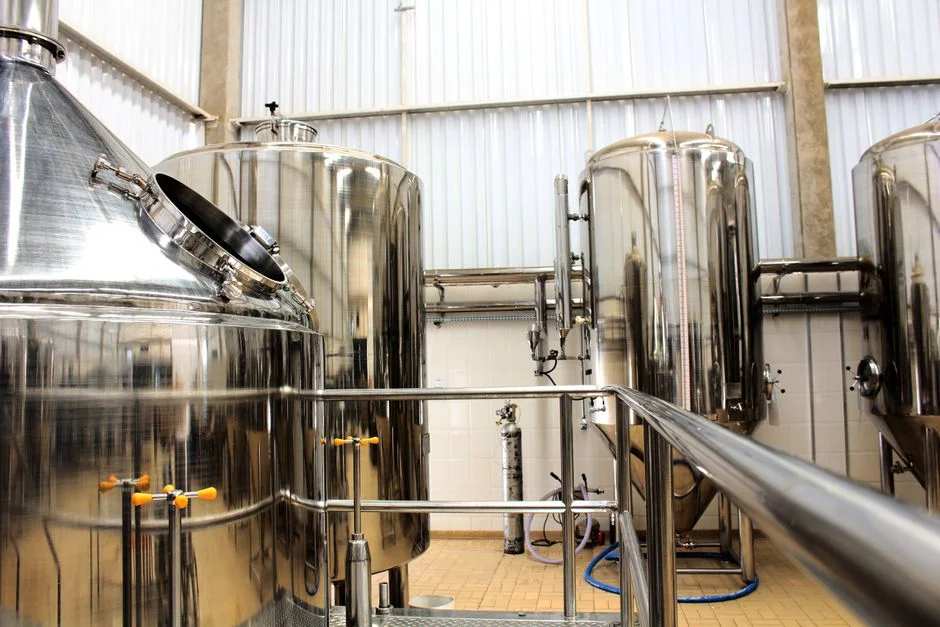
Membrane area scales directly with design flow: required membrane area (m²) = design flow (m³/h) × 1,000 / (flux LMH × operating hours/day). For a 100 m³/day plant running 20 hours at 50 LMH, that yields 100 m² of membrane — a useful sanity check against vendor quotes. Pre-treatment must remove gross solids and free oil before the UF feed: a GX series rotary mechanical bar screen with 1–2 mm aperture catches paunch solids and trimmings; a DAF with polymer dosing drops FOG below 500 mg/L; an equalization tank with 4–8 hour HRT buffers hydraulic and load swings from batch kill-floor operations. An automatic chemical dosing system for CIP and CEB completes the scope.
Vendor evaluation should weight four numbers: membrane replacement cost per m² (request separately, not bundled), CIP chemical consumption in kg per m³ of permeate, energy consumption in kWh per m³ of permeate (target 0.4–0.8), and a reference list of meat-processing installations older than three years. A red flag is any vendor quoting sustainable flux above 80 LMH for slaughterhouse feed without a detailed CIP protocol attached, or any vendor that will not disclose membrane material (PVDF vs PES) in the datasheet. For predictive maintenance planning across the wider plant, the predictive maintenance for wastewater treatment plants guide covers sensor and SCADA integration. Installed CAPEX for a 100 m³/day UF system runs $80,000–$350,000 depending on train choice; OPEX is dominated by membrane replacement every 5–7 years and CIP chemicals at roughly $0.05–$0.15 per m³ of permeate.
Frequently Asked Questions
What pore size and membrane material should a slaughterhouse UF system use?
0.01–0.05 μm nominal pore PVDF is the standard spec for slaughterhouse UF, with MWCO 10,000–50,000 Da. This range rejects emulsified FOG, proteins, and macromolecular COD after DAF, and PVDF survives the pH 1–13 CIP chemistry required to remove protein fouling.
Should UF be placed before or after the MBR?
UF after MBR acts as a pathogen barrier and polishing step, producing reuse-grade effluent at NTU < 1. UF before MBR (i.e., DAF + UF + biological) is uncommon in meat processing because the biological stage handles dissolved organics more economically than membrane rejection. For most abattoir and meat processing wastewater designs, DAF + UF or MBR + UF are the two realistic configurations.
What CAPEX, OPEX, and membrane lifetime should engineers expect?
Installed CAPEX for a 100 m³/day system runs $80,000–$350,000 depending on train configuration. OPEX is dominated by membrane replacement ($15–$40 per m² of membrane every 5–7 years for PVDF) and CIP chemicals ($0.05–$0.15 per m³ of permeate). Energy consumption should fall in the 0.4–0.8 kWh per m³ of permeate range for a well-designed skid.
How often is CIP needed, and how do you prevent irreversible fouling from blood and paunch proteins?
Forward flush every 15–30 minutes, chemically enhanced backwash every 1–7 days with 200–500 ppm NaOCl plus citric acid, and full CIP every 2–4 weeks. Operating below the 60–70 LMH critical flux threshold is the single most effective prevention — crossing it compresses proteins into a gel layer that even aggressive CIP will not fully remove. Equalization upstream of DAF keeps protein shocks from reaching the membrane.
Is UF effluent reuse-ready, or does it need RO downstream?
DAF + UF effluent meets EPA 40 CFR Part 432 discharge limits and EU BAT-AEL food industry benchmarks for non-contact reuse such as yard wash and irrigation. For boiler feed, cooling tower makeup, or clean-in-place water, RO polishing downstream of UF is required to drop conductivity below 50 μS/cm and remove monovalent ions. MBR + UF effluent without RO is suitable for cleaning water and most non-potable reuse.