Why Saudi Ethanol Distilleries Need a Regionally Specific Treatment Train
Distilleries in Saudi Arabia produce industrial and pharmaceutical-grade ethanol — beverage alcohol production is prohibited in the Kingdom. Their wastewater is best treated with a four-stage train: equalization + cooling (60–80 °C), anaerobic digestion (UASB/IC) for biogas recovery, aerobic MBR for residual COD/BOD, and reverse osmosis for reuse. Raw spent wash carries 80,000–150,000 mg/L COD and must meet MEWA/NCEC industrial limits (COD ≤ 200 mg/L) before discharge or reclamation under Vision 2030 reuse mandates.
Generic Indian or Brazilian case studies fail in KSA for three structural reasons. First, Saudi industrial water policy under Vision 2030 pushes large industrial water users toward high process-water reuse, while most Indian sugar-mill references target 30–50% reuse at best, and Brazilian ethanol plants discharge to land after biodigestion. Second, Royal Commission environmental rules in Yanbu and Jubail (RCAP) impose TN < 10 mg/L and TP < 2 mg/L for any irrigation discharge zone, well below what most academic reviews treat as achievable. Third, ambient site temperatures of 38–50 °C accelerate biological kinetics (a 1.5–2× rate bump over a 25 °C reference) but raise the cooling load on spent wash arriving at 60–80 °C from the evaporator column — a heat-recovery step the Indian/Brazilian literature largely ignores because they don't face a 50 °C wet-bulb.
The volumetric case is also tighter here. Per the 2023 Springer review, distillery spent wash generation runs 8–15 L per L of ethanol produced (Bijekar et al., 2022). For a 50 m³/day ethanol plant, that translates to 400–750 m³/day of high-strength influent — a load that needs to be characterized, cooled, and biologically oxidized under Saudi-specific temperature, sulfate, and chloride conditions. Ethanol spent wash carries an order-of-magnitude higher organic load than most food-processing effluents.
Distillery Spent Wash Characteristics in the KSA Context
Spent wash from a molasses- or date-based Saudi distillery typically arrives with 80,000–150,000 mg/L COD, 40,000–60,000 mg/L BOD₅, 8,000–15,000 mg/L TSS, 2,000–6,000 mg/L sulfate, pH 3.5–4.5, and a temperature of 60–80 °C (Mohana et al., 2009, J. Hazard. Mater. 163:12–25; Bijekar et al., 2022). Color routinely exceeds 4,000 Pt-Co units from melanoidin and caramelization byproducts, and total phosphorus runs 50–200 mg/L as phosphate-bound organics. These are the numbers a design engineer should plug into the mass balance — not the dilute 30,000–50,000 mg/L figures quoted for grain-based Western distilleries.
Regional modifiers push the envelope further. Groundwater blending at Yanbu and Jubail adds 1,500–4,000 mg/L chloride and can push raw TDS to 18,000–25,000 mg/L even before any process additions. Evaporative cooling-tower blowdown that gets co-mingled with the spent wash line — a common shortcut at older Saudi sites — contributes another 800–2,000 mg/L of sulfate and 200–500 mg/L of calcium hardness, which has direct consequences for IC reactor scaling and RO membrane fouling downstream.
Feedstock swings are significant. Plants that switch between date molasses and grain feedstock see the BOD/COD ratio move from about 0.45 (date/molasses) to 0.30–0.35 (grain), and summer heat raises spent-wash temperature at the equalization tank. These are the design inputs to the equalization, cooling, and neutralization step that opens the train.
| Parameter | Typical range (KSA spent wash) | Design value for mass balance |
|---|---|---|
| COD | 80,000–150,000 mg/L | 110,000 mg/L |
| BOD₅ | 40,000–60,000 mg/L | 50,000 mg/L |
| TSS | 8,000–15,000 mg/L | 12,000 mg/L |
| Sulfate (SO₄²⁻) | 2,000–6,000 mg/L | 4,000 mg/L |
| Total nitrogen | 1,500–3,000 mg/L | 2,200 mg/L |
| Temperature | 60–80 °C | 70 °C |
| pH | 3.5–4.5 | 4.0 |
| Color | 3,500–6,000 Pt-Co | 4,500 Pt-Co |
The 2026 Process Train: From Equalization to RO Polishing
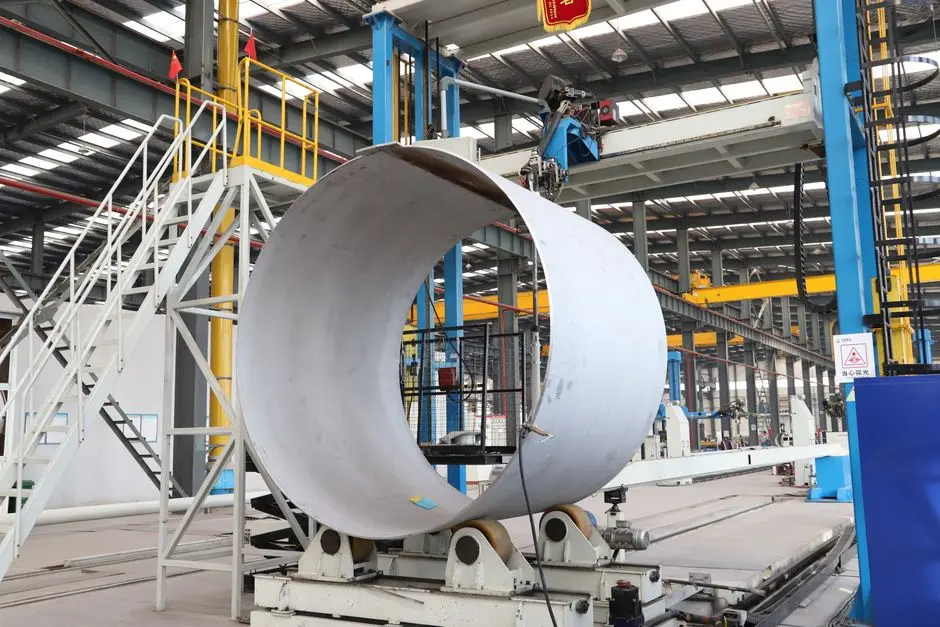
The train that actually meets KSA discharge and reuse limits in 2026 runs in four stages, each with hard removal targets the engineer can validate at commissioning.
Stage 1 — Equalization and cooling. A 250–300 m³ balance tank, FRP or SS-lined, holds 8–12 h HRT to dampen pH swings and feedstock/summer load shifts. A plate heat exchanger drops the spent wash from 60–80 °C down to 35–38 °C before it enters the biological stage — the recovered heat can pre-heat boiler feedwater, recovering 4–6 GJ/day at a 50 m³/day plant. Caustic dosing raises pH to 6.8–7.2 to prevent IC reactor souring.
Stage 2 — Anaerobic digestion. Either a UASB (upflow anaerobic sludge blanket) or IC (internal circulation) reactor. Design at 12–18 kg COD/m³·day OLR, HRT 5–10 days, with a two-stage configuration when sulfate exceeds 3,000 mg/L to separate sulfidogenesis from methanogenesis. Biogas yield sits at 0.28–0.40 m³ CH₄ per kg COD removed, with 60–70% methane content after H₂S scavenging on an iron-oxide media bed to drop H₂S below 200 ppm before the CHP engine.
Stage 3 — Aerobic polishing with MBR. A conventional activated-sludge basin coupled to a submerged MBR system using 0.1 µm PVDF flat-sheet MBR modules. MLSS runs 8,000–12,000 mg/L, flux 30–50 LMH, effluent TSS < 5 mg/L. Cumulative COD reduction from raw influent to MBR permeate is 90–97%.
Stage 4 — RO polishing. A brackish-water RO polishing skid at 70–85% recovery, with an energy-recovery turbine saving 35–40% of high-pressure pump power. Permeate TDS comes out < 50 mg/L — directly suitable as cooling-tower makeup or boiler feed after a polishing mixed-bed. Concentrate goes to a lined evaporation pond or forced-circulation crystallizer if the site is pursuing ZLD. The MBR sludge line terminates at a plate-and-frame filter press producing 22–28% DS cake for off-site disposal or co-incineration with bagasse/date pits.
| Stage | Equipment | Key spec | Removal / output |
|---|---|---|---|
| 1. EQ + cooling | Balance tank, PHE, NaOH dosing | 250–300 m³, 35–38 °C outlet | pH 7.0, T 35–38 °C |
| 2. Anaerobic | IC or UASB, H₂S scrubber | OLR 12–18 kg COD/m³·d, HRT 5–10 d | 75–85% COD, 600–900 m³ CH₄/day |
| 3. MBR | PVDF flat-sheet modules | MLSS 10,000 mg/L, flux 30–50 LMH | Effluent COD < 500 mg/L, TSS < 5 mg/L |
| 4. RO | BWRO 2-stage, ERT | Recovery 70–85%, permeate 30 m³/day | Permeate TDS < 50 mg/L |
| Sludge | Lamella + filter press | 22–28% DS cake | 3–4 m³ cake/day |
MEWA, NCEC and RCAP Compliance: What 2026 Auditors Will Check
MEWA/NCEC industrial discharge limits set the national ceiling: COD ≤ 200 mg/L, BOD₅ ≤ 50 mg/L, TSS ≤ 60 mg/L, pH 6–9, oil & grease ≤ 15 mg/L, sulfate ≤ 400 mg/L, with residual chlorine ≥ 1 mg/L after dechlorination if chlorination is used. Plants in Yanbu and Jubail that fall under Royal Commission jurisdiction face tighter reuse numbers — TN < 10 mg/L, TP < 2 mg/L, fecal coliform < 200 CFU/100 mL for any irrigation discharge zone (RCAP Section 6.4 update, 2024). The mechanism for picking a reuse-grade envelope is the same as the one used for the ZLD process selection playbook, only the discharge numbers are region-specific.
For plants that plan to reuse effluent as boiler feed or cooling-tower makeup under Vision 2030 industrial water-reuse targets, treated water must hit SASO envelopes: TDS < 200 mg/L, SiO₂ < 5 mg/L, hardness < 10 mg/L as CaCO₃. That envelope is what justifies the RO stage — a MBR alone won't get there. Sampling protocol requires 24-h composite auto-samplers with online COD and pH meters at the discharge flowmeter, telemetry-uploaded to the regulator's compliance portal. Auditors will reject manually grabbed samples as evidence of compliance in 2026.
Equipment Sizing for a 50 m³/day Saudi Distillery
The sizing below is what a process engineer can lift directly into a datasheet or RFQ for a 50 m³/day ethanol plant generating 400–750 m³/day of spent wash (worst-case design point: 750 m³/day). All vessels assume ambient 38–50 °C site conditions and a target biological operating temperature of 35–38 °C.
Equalization tank: 250–300 m³ working volume (8–12 h HRT), FRP or rubber-lined carbon steel, mechanical mixer at 1.5–2.0 kW, top-mounted exhaust to a caustic and nutrient dosing skid. Anaerobic reactor: 150–200 m³ IC reactor in SS 304, dual-stage for sulfate-rich feed, internal gas-liquid separator, gas holder sized for 4 h retention. MBR basin: 80–120 m³ aeration volume with two flat-sheet modules, permeate suction pump at –20 to –30 kPa, CIP loop for weekly 1,000 ppm NaOCl clean-in-place. RO skid: 30 m³/day permeate, two-stage 2:1 array, ERT on the concentrate stream. Sludge line: lamella clarifier pre-thickening to 2–3% DS, then a pre-DAF unit for float removal before the filter press. Co-generation: 600–900 m³/day biogas from the IC reactor covers 40–60% of plant thermal demand through a 200–300 kWe CHP unit.
| Item | Size / spec | Qty | Notes |
|---|---|---|---|
| Equalization tank | 250–300 m³, FRP/SS-lined | 1 | 8–12 h HRT, top mixer |
| IC anaerobic reactor | 150–200 m³, SS 304 | 1 (+ 1 standby for dual-stage) | OLR 12–18 kg COD/m³·d |
| MBR basin + modules | 80–120 m³, 0.1 µm PVDF | 1 basin, 2 modules | Flux 30–50 LMH |
| RO skid | 30 m³/day permeate, 2-stage | 1 | ERT, 70–85% recovery |
| Sludge dewatering | Plate-and-frame press, 22–28% DS | 1 | 3–4 m³ cake/day |
| Biogas CHP | 200–300 kWe | 1 | 40–60% thermal offset |
2026 CAPEX, OPEX and Reuse Revenue for a Saudi Distillery Plant
For a 50 m³/day ethanol plant, the 2026 turnkey CAPEX for an anaerobic + MBR + RO + sludge train sits at USD 1.8–2.6 M (SAR 6.8–9.8 M), ex-works, containerized or skid-mounted EPC scope (HydropureWater 2026 budget pricing for KSA region). OPEX runs USD 0.9–1.4 per m³ treated (SAR 3.4–5.3), dominated by electrical for RO and aeration (~60% of OPEX) and sludge hauling (~15%). The financial offset from biogas CHP and water reuse is what makes the bid competitive. A 50 m³/day plant generating 600–900 m³/day of biogas can displace 400–700 kWh/day of grid import at SAR 0.20/kWh, and RO permeate reused as boiler feed saves SAR 8–12 per m³ against fresh demineralized water purchase. Payback against an evaporation-pond ZLD alternative is 3.5–4.5 years for the RO + reuse route versus 6+ years for thermal ZLD at the same capacity. The MENA climate economics that drive those numbers are covered in detail in the ZLD system economics for MENA climates reference.
| Line item | 2026 value | Unit |
|---|---|---|
| CAPEX (UASB/IC + MBR + RO + sludge) | 1.8–2.6 | USD M (SAR 6.8–9.8 M) |
| OPEX (per m³ treated) | 0.9–1.4 | USD/m³ (SAR 3.4–5.3) |
| Biogas CHP offset | 400–700 | kWh/day grid displaced |
| RO permeate value | 8–12 | SAR per m³ saved |
| Payback (RO+reuse vs ZLD) | 3.5–4.5 | years |
Frequently Asked Questions
What is the discharge COD limit for distillery wastewater in Saudi Arabia? MEWA/NCEC industrial discharge limits cap COD at 200 mg/L for national permits, with RCAP zones in Yanbu and Jubail tightening reuse parameters further (TN < 10 mg/L, TP < 2 mg/L for irrigation zones).
How much spent wash does a distillery produce per liter of ethanol? Per the Springer 2023 review (Bijekar et al., 2022), 8–15 L of spent wash per L of ethanol — meaning a 50 m³/day ethanol plant generates 400–750 m³/day of high-strength influent that the MBR stage reduces by 90–97%.
Can RO permeate from distillery wastewater be reused as boiler feed? Yes — at 70–85% recovery, BWRO permeate typically lands at TDS < 50 mg/L, suitable for cooling-tower makeup or boiler feed after a mixed-bed polisher, supporting Vision 2030 industrial water-reuse targets.
What is the 2026 CAPEX for a 50 m³/day Saudi distillery wastewater treatment plant? USD 1.8–2.6 M (SAR 6.8–9.8 M) ex-works for a containerized anaerobic + MBR + RO + sludge train, per HydropureWater 2026 KSA budget pricing.
How much biogas can an IC reactor recover from distillery spent wash? 0.28–0.40 m³ CH₄ per kg COD removed — translating to 600–900 m³/day of methane at a 50 m³/day plant, which displaces 40–60% of plant thermal demand through a 200–300 kWe CHP unit.