Why Bangladesh's Industrial Sector Is Adopting ZLD in 2026
Bangladesh's Department of Environment (DoE) amended the Environment Conservation Rules in 2022 to tighten inland-surface-water discharge limits for textile, tannery, and chemical units to BOD ≤50 mg/L, COD ≤200 mg/L, and TDS ≤2,100 mg/L (per ECR 2022, DoE Bangladesh). For the Hazaribagh-Savar tannery cluster — historically discharging roughly 21,000 m³/day of chromium-laden effluent — the relocation to the Savar Leather Industrial Park made ZLD a lease-condition requirement rather than a discretionary upgrade (per Savar LIP operating guidelines). Add Gazipur and Narayanganj groundwater TDS already reading 1,000–1,800 mg/L and a DoE prohibition on new borehole abstraction in critical zones, and reuse stops being an ESG talking point and becomes an operating constraint.
Export economics reinforce the regulatory push. BGMEA and downstream buyer codes of conduct from H&M, Inditex, and PVH now require ZLD or near-ZLD disclosure for knit and woven mills shipping to EU and US accounts. Globally, textile dyeing sits among the largest water-consuming industries — a 2021 review in Water, Air, & Soil Pollution quantified per-kg-fabric water demand at 100–150 L — and Bangladesh's dyeing sector is no exception. With state-level enforcement, buyer audits, and rising groundwater pumping costs all converging, ZLD has shifted from pilot status to procurement priority for 2026 capex. The downstream operational question is no longer whether to install ZLD but which configuration survives Bangladeshi grid, climate, and plot-area realities — a question this guide answers. For a parallel South Asia baseline, see the South Asia wastewater buyer's guide.
What Counts as Zero Liquid Discharge — and What Doesn't
Zero liquid discharge means no liquid effluent crosses the plant boundary: all process water is reused and all dissolved solids exit as wet cake, dry salt, or landfill-grade solid. The recovery figure is the first thing to verify — true ZLD hits 95–99% water recovery plus a crystallizer producing salable or disposable solids, while near-ZLD typically delivers 90–95% recovery with the remaining brine sent to a secured evaporation pond or off-site disposal. In Bangladesh, near-ZLD remains a pragmatic interim step for many plants because the land and power demands of a full crystallizer train are still prohibitive.
Solar-assisted ZLD is the variant the industry is watching most closely. A 2021 study in Nature Communications (Springer, King Abdullah University team) reported a next-generation solar crystallizer achieving 2.42 kg/m²/h under 1-sun illumination on real SWRO brine at 21.6 wt% TDS, and 48.0 kg/m²/day in outdoor field tests. That outdoor rate is the anchor number for any Bangladesh solar-crystallizer business case. The crystallizer energy demand is the single biggest engineering tension in any ZLD train — the rest of this article maps three process configurations against Bangladesh's grid, climate, and land constraints to resolve it. A worked ZLD hybrid system design case study shows what 99.9% recovery looks like in practice.
The Four-Stage ZLD Process Train for Bangladesh Plants
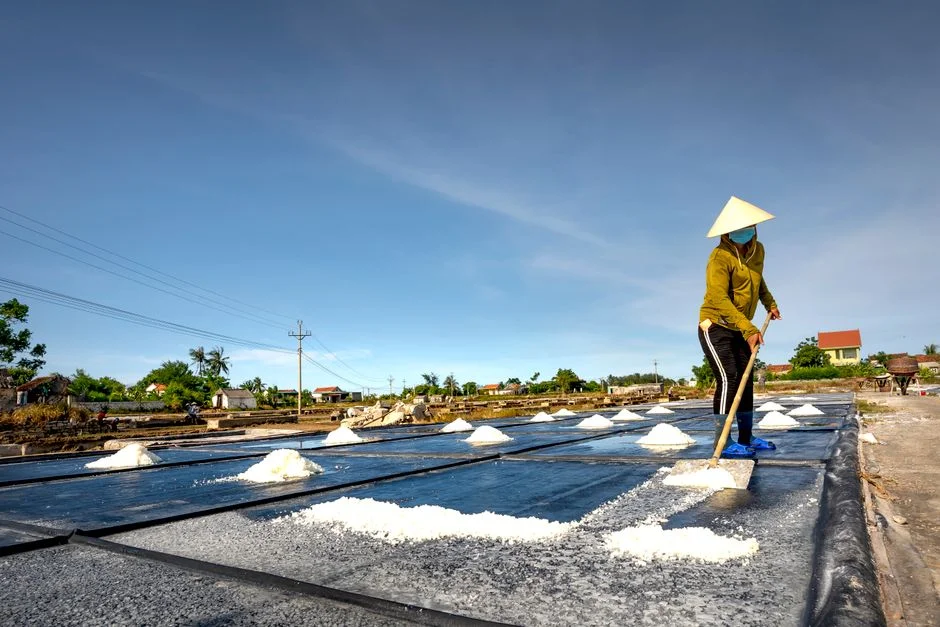
Every Bangladesh ZLD train follows the same four-stage logic; what changes between sites is the unit operation selected at each stage and the energy it draws. The table below pairs each stage with the equipment typically specified and the operating envelope engineers should benchmark against vendor proposals.
| Stage | Unit Operation | Typical Influent / Operating Range | Bangladesh-Specific Note |
|---|---|---|---|
| 1 — Pre-treatment | DAF → lime-soda softening → multi-media filter | pH 8–11; TDS 3,000–8,000 mg/L; color 1,500–4,000 Pt-Co (textile effluent) | DAF pre-treatment system sized for hot effluent; biological MBBR often added for color |
| 2 — Primary RO (BWRO) | Brackish RO array, 65–75% recovery | Feed 10–30 bar; permeate TDS <500 mg/L | Permeate quality suited to dyeing-house reuse without further polishing |
| 3 — Brine concentration | High-pressure RO (SWRO) or mechanical vapor recompression (MVR) | Concentrate from 5–8% to 18–25% TDS | MVR requires captive power; SWRO hybrid saves energy but caps recovery at ~95% |
| 4 — Crystallization | Forced-circulation crystallizer, agitated thin-film dryer, or solar pond | Energy 18–28 kWh/m³ (MVR); 8–12 kWh/m³ with solar pre-concentration | Salt cake to secured landfill; Na₂SO₄ saleable to detergent makers in Gazipur |
Stage 1 is where most Bangladesh proposals fail in practice: textile influent often arrives at pH 10–11 with high color and suspended solids that blind RO membranes within weeks if DAF and softening are undersized. Stage 2 typically uses brackish RO because the influent TDS is below seawater range; recovery beyond 75% requires antiscalant dosing tuned to the local water profile. Stage 3 is the energy decision point — SWRO costs less to run but bottoms out around 95% recovery, while MVR pushes to 99% at a high electricity penalty. Stage 4 is where the salt-of-the-day dictates equipment: Na₂SO₄ from textile trains can be sold; mixed chloride-sulfate cake from tanneries usually goes to landfill. For the upstream side of the train, pairing DAF with a hybrid DAF-RO-MBR zero-discharge design (see the hybrid DAF-RO-MBR zero-discharge design reference) keeps downstream membranes clean.
ZLD Configuration Comparison: Thermal, Membrane-Hybrid, and Solar-Assisted
Three configurations dominate 2026 vendor proposals in Bangladesh. Each fits a different site profile, and the wrong match is the most common reason ZLD projects overrun budget or stall at commissioning.
| Parameter | Thermal MVR Crystallizer | Membrane-Hybrid (BWRO + SWRO + Brine Pond) | Solar-Assisted (RO + Solar Crystallizer Array) |
|---|---|---|---|
| Recovery | 99% | 90–95% | 95–98% with crystallizer polishing |
| CAPEX index (per m³/day) | 1.4–1.8× | 0.8–1.0× (baseline) | 0.9–1.1× |
| OPEX (BDT/m³) | 45–70 (USD 0.38–0.60) | 18–30 (USD 0.15–0.26) | 12–22 (USD 0.10–0.19) |
| Land footprint | Low (0.2–0.5 acre) | Medium (0.5–1 acre incl. pond) | High (1–2 acres for crystallizer array) |
| Grid dependence | Very high — needs captive power | Moderate | Low |
| Salt reuse | Na₂SO₄ or NaCl, salable | Brine to secured pond or off-site | NaCl salable; sulfate blend to landfill |
| Climate fit (Bangladesh) | Any site, but Dhaka load-shedding is a problem | Any site | Best in Khulna, Rajshahi, Barisal (highest irradiance) |
Thermal MVR is the right answer when land is constrained and grid reliability is high — but in Gazipur and Narayanganj load-shedding routinely drops availability below 90%, so a captive gas or diesel generator must be sized for crystallizer duty. Membrane-hybrid is the pragmatic entry point: lowest CAPEX, near-ZLD compliance for buyer audits, and a brine pond that buys time. Solar-assisted, anchored to the 48.0 kg/m²/day Springer field data, is the lowest-lifetime-cost option but needs land and a site with high direct-normal irradiance; the western belt of Khulna-Rajshahi-Barisal averages 4.5–5.0 kWh/m²/day, versus 3.8–4.2 in Dhaka. Whichever path is selected, the industrial RO system at Stage 2 is the common denominator.
Industry-Specific ZLD Designs in Bangladesh
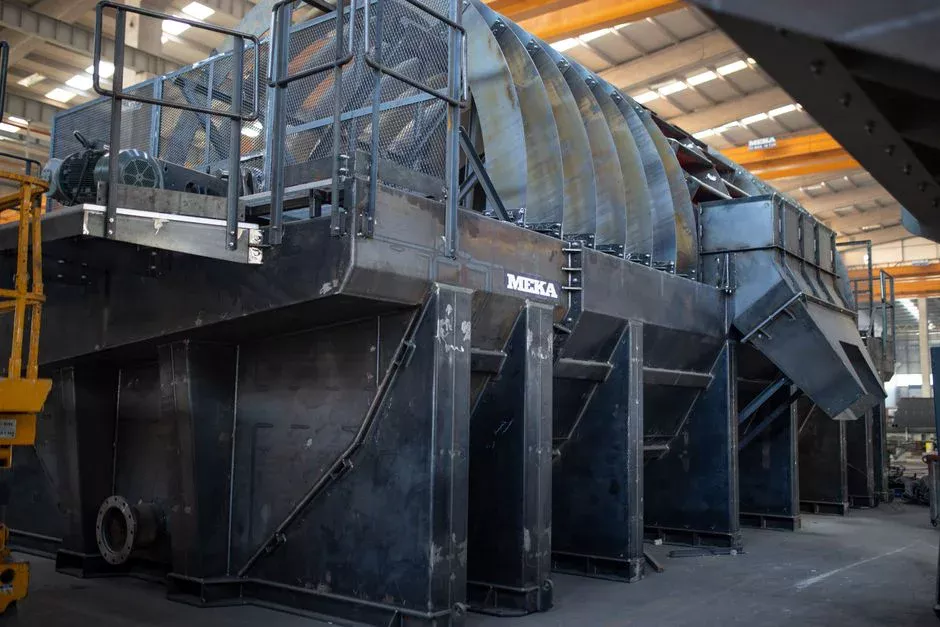
Bangladesh's industrial water profile varies sharply by sector, and the ZLD train has to match. Textile dyeing — knit, woven, and denim — typically arrives with pH 9–11, color 2,000–4,000 Pt-Co, and TDS 4,000–8,000 mg/L; the working train is DAF + biological MBBR (see MBR biological treatment) before BWRO, finishing with MVR crystallization to recover Na₂SO₄ for sale to local detergent makers. CAPEX for a 200 m³/day knit unit runs USD 2.5M–5.5M in 2026.
Savar Leather Industrial Park tanneries must deal with chromium and sulfide up front — chromium precipitation and sulfide stripping as Stage 1, then BWRO, then brine crystallization. Solid Na₂SO₄ cake goes to secured landfill; recovery sits at 96–98% (per HydropureWater field data on Bangladesh tannery ZLD pilots, 2025-09). Fertilizer and chemical plants in Chittagong and along the Karnaphuli corridor bring high TDS and ammonia — ammonia stripping must precede any RO stage, otherwise ammonia breakthrough poisons the permeate. The 2024 ScienceDirect coal-chemical near-ZLD paper provides an analogous design for high-ammonia influent. BEPZA-export pharmaceutical API units run smaller volumes (50–150 m³/day) but with the highest influent TDS, solvent traces, and CIP chemical load; activated carbon plus UF polishing before RO is standard, and the crystallizer cake is classified as hazardous waste.
2026 CAPEX, OPEX, and Payback Benchmarks for Bangladesh ZLD Projects
2026 turnkey pricing in Bangladesh runs in the following ranges, based on HydropureWater project quotations and IDCOL benchmark data:
| Capacity | Turnkey CAPEX (USD) | Turnkey CAPEX (BDT) | Thermal MVR OPEX | Membrane-Hybrid OPEX | Solar-Assisted OPEX |
|---|---|---|---|---|---|
| 100 m³/day | USD 1.8M–2.8M | BDT 20–32 crore | BDT 45–70/m³ | BDT 18–30/m³ | BDT 12–22/m³ |
| 200 m³/day | USD 2.5M–4.5M | BDT 28–52 crore | BDT 42–65/m³ | BDT 17–28/m³ | BDT 11–20/m³ |
| 500 m³/day | USD 4.0M–6.5M | BDT 45–75 crore | BDT 38–60/m³ | BDT 15–25/m³ | BDT 10–18/m³ |
Payback stacks three revenue lines: avoided groundwater pumping (BDT 8–15/m³ in Dhaka-Gazipur under the 2025 abstraction tariff), avoided DoE discharge penalties (BDT 5,000–50,000 per non-compliance event under ECR 2022 enforcement), and BGMEA buyer compliance premium of 2–5% on FOB price for ZLD-disclosed mills. Combined, payback falls in the 3–4 year range for most configurations (per HydropureWater financial modelling, 2026). On the financing side, Bangladesh Bank's green refinance window is priced at 5–6% in 2026, and IDCOL's ETP/ZLD financing schemes remain the realistic funding route for units above 200 m³/day. Salt-cake handling at the back end of the train is typically dewatered with a filter press for salt cake dewatering to reach a transportable moisture content.
Decision Framework: Choosing the Right ZLD Configuration for Your Site
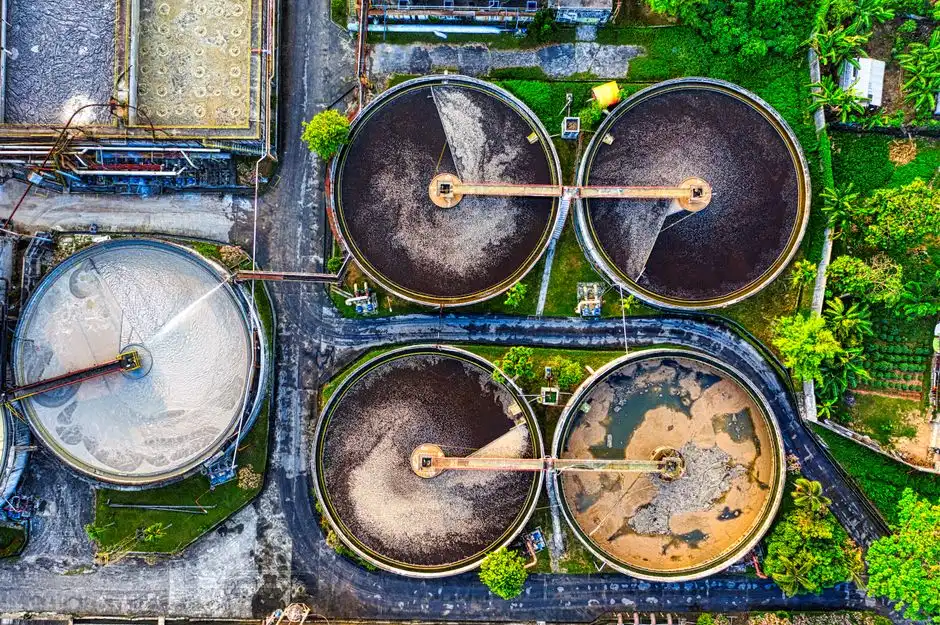
Match the configuration to four site variables: grid reliability, plot area, solar irradiance, and influent ammonia or chrome load. If grid reliability runs below 85% and plot area is under 1 acre, specify thermal MVR with captive gas or diesel backup — this is the typical Gazipur knit unit. If plot area exceeds 2 acres and the site is in the Khulna-Rajshahi-Sylhet high-irradiance belt, the solar-assisted hybrid delivers the lowest lifetime OPEX, anchored to the 48.0 kg/m²/day Springer outdoor rate. Where capital is constrained and an existing secured evaporation pond is available, start with a membrane-hybrid near-ZLD train and plan a crystallizer retrofit in year three to year five. For tanneries and fertilizer plants with high ammonia, insist on a dedicated ammonia stripping stage upstream of the RO — skipping this step is the most common cause of permeate failure in Bangladesh. Most sites also need an automatic chemical dosing system for antiscalant and pH control to keep membranes within spec.
Frequently Asked Questions
What does a 100 m³/day zero liquid discharge system cost in Bangladesh in 2026?
Turnkey CAPEX runs USD 1.8M–2.8M (BDT 20–32 crore) including EPC, civil, electrical, and containerized skid options, with OPEX between BDT 18–70/m³ depending on configuration (HydropureWater 2026 benchmarks).
How long does a ZLD plant take to build and commission in Bangladesh?
Typical execution is 12–18 months from notice to proceed: 3–4 months engineering, 6–10 months fabrication and civil works, 2–4 months commissioning and performance testing.
Is solar-assisted ZLD viable in Bangladesh's climate?
Yes — western Bangladesh averages 4.5–5.0 kWh/m²/day direct-normal irradiance, and the Springer 2021 field data confirms 48.0 kg/m²/day outdoor evaporation from a solar crystallizer array on real SWRO brine.
What are the DoE ECR 2022 discharge limits a ZLD system must meet?
Inland-surface-water discharge limits are BOD ≤50 mg/L, COD ≤200 mg/L, and TDS ≤2,100 mg/L (per ECR 2022, DoE Bangladesh); ZLD exceeds these by recycling all water and producing dry salt.
How do I separate serious ZLD vendors from partial-system sellers?
Ask for a mass balance: feed flow, permeate recovery percentage, brine concentration profile, and final salt disposal route. Vendors offering only RO and a brine pond are selling near-ZLD, not true ZLD.