Industrial wastewater treatment specs Surat India buyers still open with textile caps of COD ≤ 250 mg/L, BOD ≤ 30 mg/L and TSS ≤ 100 mg/L. Surat Municipal Corporation had already reused more than 30% of treated wastewater by 8 March 2024. Anjana at 122 MLD with IFAS, and Bhatar at 277 MLD with SBR, remain the public benchmarks. Biological trains in this guide are rated at 92–97% COD removal, and DAF at 95%+ FOG reduction.
Textiles, dyes, pharmaceuticals and PCB manufacturing still set the design cases, because inlet quality swings and small plots decide whether ZLD is required. According to The Times of India (26 June 2026), SMC was treating 1,320 MLD across 20 sewage plants. Those five named plants are benchmarks. They are not the whole inventory.
Industrial Wastewater Treatment Specs Surat India
Surat specs in 2026 pair a textile COD cap of 250 mg/L with consent values often set at 150 mg/L for pharmaceuticals and 100 mg/L for PCB lines. SMC's March 2024 briefing recorded more than 30% treated-wastewater reuse, and the city mission is 70% reuse by 2030. Size the process train to the consent limit.
Most textile sheds we size in Pandesara land nearer 800 mg/L COD than 1,500 mg/L on a normal production day. The 4,000 mg/L dye-intermediate case is a different train. Do not average those two inlets into one design number.
GPCB COD Discharge Limits for Surat Industries
GPCB COD discharge limits for Surat industries are written into each consent, not into one citywide number. This guide keeps the 2025 working set: COD ≤ 250 mg/L for textiles, ≤ 150 mg/L for pharmaceuticals and ≤ 100 mg/L for PCB manufacturing. The 100 mg/L PCB cap and the 150 mg/L pharmaceutical cap are tighter than the textile number, and they are aimed at the Tapi River and local groundwater. Older plants still miss them when the file was built to 250 mg/L only.
According to the Central Pollution Control Board effluent-standards index, textile dyeing and printing, dye intermediates, electroplating and pharmaceutical formulation each have a separate entry. Electroplating standards on that page were notified on 30 March 2012. A Surat dye maker that let COD exceed 1,200 mg/L drew a ₹50 L penalty after an unannounced GPCB inspection. A primary Surat-optimized DAF system for textile and dye wastewater before biology is the usual way to keep that peak off the final sample.
Surat Treated Wastewater Reuse Mandate Compliance
Surat treated wastewater reuse mandate compliance stood above 30% of treated wastewater on 8 March 2024, according to Surat Municipal Corporation, at 330 MLD reused against about 1,018 MLD collected. The same briefing sets the mission at 70% of treated wastewater by 2030 and 100% by 2035. Earlier notes that stopped at a 30% mandate described the level already reached, not the finish line. By 26 June 2026, SMC was treating 1,320 MLD at 20 plants, up from 11 plants and 1,726.50 MLD of design capacity in that March 2024 inventory.
Industrial reuse in the older spec called for BOD <10 mg/L and TSS <2 mg/L. SMC's tertiary outlet on the same 8 March 2024 slides is BOD below 5 mg/L, suspended solids below 2 mg/L, COD below 50 mg/L and TDS below 500 mg/L. Colour at that outlet is under 5 Hazen, against an inlet near 55 Hazen. Most mills we visit use that water for wash and cooling, not as dye-bath makeup.
Textile clusters took 115 MLD of the 330 MLD reused in that briefing, from tertiary plants whose combined inlet was 164 MLD and net output 115 MLD. Pandesara has run a 40 MLD tertiary plant since 2014, Dindoli added 40 MLD, and Sachin GIDC has taken 35 MLD since November 2020. SMC counted more than 450 dyeing and printing houses in and around the city, and more than 125 of them in Pandesara. The city also booked more than Rs 1.20 billion a year from this reuse.
Phase III of Jal Hi Amrit, under AMRUT 2.0, left 17 of those plants on a high rating. The Times of India (26 June 2026) put Surat's incentive total at Rs 100.55 crore. Earlier phases had given 19 of 20 plants a five-star score and one plant a four-star score. The same report said CPHEEO had issued guidelines recommending the Anjana IFAS retrofit for other cities.
Design capacity and process family in the table match the 8 March 2024 SMC inventory. Karanj is listed there as conventional activated sludge plus fixed film plus SBR, at 211 MLD, with work through 2024. Bhatar is conventional activated sludge plus SBR at 277 MLD, and its benchmark in this guide is 95% BOD removal. Anjana's 122 MLD IFAS train is the compact-footprint reference in the same inventory.
| SMC Treatment Plant | Capacity (MLD) | Technology Employed | Primary Reuse Application |
|---|---|---|---|
| Anjana | 122 | IFAS (Fixed Film) | Gardening, Tanker Filling |
| Bhatar | 277 | SBR Technology | Industrial Reuse, Flushing |
| Bhesan | 200 | CAS + IFAS | Agriculture, Construction |
| Karanj | 211 | CAS + SBR | Lake Restoration |
| Singanpore | 255 | CAS + SBR | Industrial Reuse |
Wastewater by Industry in Surat
Textile plants account for approximately 40% of Surat's industrial wastewater, with COD of 800–1,500 mg/L, ADMI colour of 500–1,200 and pH from 3 to 11. Most dye houses we sample swing from pH 3 to 11 in a shift, so decolourisation by oxidation or adsorption has to precede the COD cut. Dye and intermediate shops are harsher, with COD up to 4,000 mg/L plus chromium and copper. Heavy metals stay in the cake only when the spec starts from a plate vs. belt filter press cost comparison for Surat's sludge dewatering.
Pharmaceutical effluent often shows a BOD/COD ratio below 0.3, because antibiotics and solvents resist biology. High-performance MBR systems for pharmaceutical and PCB wastewater in Surat hold a higher biomass than a conventional clarifier plant. PCB wastewater is mostly inorganic, with fluoride at 50–200 mg/L and ammonia at 100–500 mg/L. Calcium chloride precipitation, ammonia stripping and a ZLD finish are the usual path when copper and nickel are worth recovering.
Match the consent COD in this table to the train, then check the lab sheet, not the brochure.
| Industry | Key Contaminants | GPCB COD Limit | Recommended Technology |
|---|---|---|---|
| Textiles | Color, TDS, COD | ≤ 250 mg/L | DAF + Biological + RO |
| Dyes | Heavy Metals, Phenols | ≤ 250 mg/L | Fenton + SBR + Filter Press |
| Pharma | Solvents, Antibiotics | ≤ 150 mg/L | MBR + Activated Carbon |
| PCB Mfg | Fluoride, Ammonia, Cu | ≤ 100 mg/L | Chemical Prep + ZLD |
DAF Clarifier for Surat Dye Manufacturers
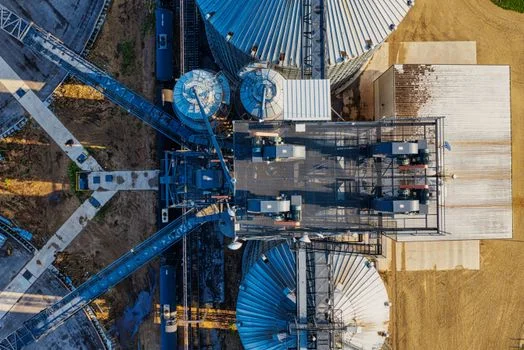
A DAF clarifier for Surat dye manufacturers is a primary step, not a final COD plant. Units on these sheds usually run at a hydraulic loading rate of 4–8 m/h. FOG removal at 95%+ is the number that protects the membrane or the biology. Most plants we size for Surat dye sheds sit at the lower end of 4–8 m/h when colour, not only grease, is the complaint.
Read how DAF clarifiers remove 95%+ suspended solids using microbubble physics before you set the recycle rate. DAF alone still reaches less than 60% COD removal, so a biological stage stays in the line. Coagulant spend, not power, is the daily cost on this unit. The CAPEX band for a local Surat DAF is ₹12–18 L/m³, about 30-40% under a typical imported skid.
MBR System Cost for Surat Textile Wastewater
MBR system cost for Surat textile wastewater sits at a CAPEX of ₹25–35 L/m³ and an OPEX of 1.2–2.0 rupees per cubic metre in the benchmark table. The same train is the one that holds COD below 50 mg/L and TSS below 1 mg/L for SMC reuse water. Flux on these modules is 15–25 LMH (liters per square meter per hour), and the membrane replaces the secondary clarifier. Most textile MBRs we cost in Surat come in at the low end of ₹25–35 L/m³ when the tanks are local concrete.
Water reuse near 90% is the hedge against rising industrial tariffs, and it is non-process reuse, not a dye-bath loop. Membrane replacement every 5 to 7 years is nearly 50% of MBR OPEX. Power on an MBR here is about ₹0.4–0.7/m³. Payback in the benchmark table is 4.5 years, with membrane replacement as the cost driver.
Zero Liquid Discharge System Surat PCB Industry
A zero liquid discharge system Surat PCB industry project starts from fluoride and ammonia, not from a generic COD story. Influent fluoride of 50–200 mg/L has to reach ≤ 15 mg/L, and ammonia of 100–500 mg/L has to be stripped or biologically oxidised before membranes. Fit RO systems for ZLD and water reuse in Surat's PCB industry only after that chemical step. Recovery of nearly 99% of influent water is the ZLD claim, with salts left for disposal or metal recovery.
ZLD by RO plus evaporation is the high band: COD removal of 99%+, CAPEX of 40–100 L rupees per cubic metre and OPEX of 2.5–4.0 rupees per cubic metre. Footprint is high because evaporators need both plan area and steam. Most PCB lines we see in this cluster do not buy the evaporator on day one. They buy the fluoride cut to ≤ 15 mg/L, then add thermal capacity when the consent or the metal price forces it.
The comparison below keeps COD removal, CAPEX, OPEX and footprint on one line for DAF, MBR and ZLD.
| Technology | COD Removal (%) | CAPEX (₹/m³) | OPEX (₹/m³) | Footprint |
|---|---|---|---|---|
| DAF | 40–60% | 12–18 L | 0.8–1.5 | Medium |
| MBR | 95–98% | 25–35 L | 1.2–2.0 | Low |
| ZLD (RO+Evap) | 99%+ | 40–100 L | 2.5–4.0 | High |
Cost Benchmarks and Payback for a Surat ETP
Local DAF CAPEX in Surat is ₹12–18 L/m³, which is a 30-40% cut against many imported skids. The saving is logistics inside the Surat-Ankleshwar belt, not a free pass on OPEX. Chemical dosing for DAF runs about ₹0.5–0.8/m³, and that line item outlasts the civil works. MBR power at ₹0.4–0.7/m³ is the matching daily number on the membrane train.
For a textile factory at 500 m³/day, the payback on a DAF plus biological upgrade is about 3.2 years. That sum assumes an avoided GPCB fine of ₹5 L per month and a 20% cut in freshwater bought through treated wastewater reuse. Sludge disposal can still add ₹1.0/m³ on a ZLD line. Operators for a locally serviced plant are about ₹25–35k/month, and an imported package can need technicians at about double that wage.
Most 500 m³/day textile files we price only hit 3.2 years when the ₹5 L monthly fine is real and the reuse meter is believed. ZLD payback in the table is 6.0+ years because thermal energy dominates.
| Technology | CAPEX (₹/m³) | OPEX (₹/m³) | ROI (Years) | Key Cost Driver |
|---|---|---|---|---|
| DAF (Local) | 12–18 L | 0.8–1.5 | 3.2 | Coagulant Chemicals |
| MBR | 25–35 L | 1.2–2.0 | 4.5 | Membrane Replacement |
| ZLD | 40–100 L | 2.5–4.0 | 6.0+ | Thermal Energy |
Vendor Checks Before You Place a Surat Order
Technical checks for a Surat order start with service, not with a brochure COD. Response time should be under 4 hours, or a Pandesara or Sachin upset becomes lost production. High TDS in those two clusters is the chemistry the reference list has to show. Ask for three Surat plants with certified lab reports for COD, BOD and TSS, not a single inauguration photo.
- GPCB Compliance Verification: Demand at least three Surat-based client references with certified lab reports for COD, BOD and TSS.
- Response time: A technician on site in under 4 hours from a Surat base.
- Cluster chemistry: A Pandesara or Sachin textile reference if the bid is dye or print, where TDS is high.
- MBR flux: A stated flux of 15–25 LMH, not a catalogue average with no temperature.
- PCB fluoride: A guarantee to reach ≤ 15 mg/L from an inlet of 50–200 mg/L.
- Staffing: Operator cost near ₹25–35k/month, or a written reason the wage will be higher.
This page is for EHS managers and EPC engineers sizing textile, dye, pharmaceutical or PCB effluent in Surat. Municipal designers who only need the 20-plant SMC inventory should start from the March 2024 briefing and the June 2026 operating total, not from an equipment quote. Readers comparing Australian rules should use the separate page on industrial wastewater discharge, and should not copy those numbers into a GPCB consent. A method comparison from another city sits in Brisbane Industrial Wastewater: 2026 Engineering Specs & Costs.
For a buried package on a staff colony, compare an Underground Package Sewage Treatment Plant (WSZ Series) with the open-tank MBR before you freeze the layout. Send consent limits and a week of inlet COD through a plant quote for this Surat brief so the duty, not a catalogue page, sets the price.
Frequently Asked Questions
What COD limit should a Surat textile mill design to?
A Surat textile mill should design the final outlet to COD ≤ 250 mg/L, BOD ≤ 30 mg/L and TSS ≤ 100 mg/L unless that mill's consent is tighter. Colour and TDS often fail after COD has passed, especially when a CETP inlet and a river outfall use different sheets. Ask the lab for COD, BOD, TSS and colour on the same day. A single grab at the cap is not a month of compliance.
Is SMC tertiary water good enough for a Surat dye house?
SMC tertiary water, as reported on 8 March 2024, leaves the plant at BOD below 5 mg/L, suspended solids below 2 mg/L and COD below 50 mg/L. That is tighter than the older industrial reuse note of BOD <10 mg/L and TSS <2 mg/L. TDS below 500 mg/L can still be too salty for a dye bath. Most mills we see use this supply for wash, cooling and flushing, and they keep a separate loop for process dye.
Does every Surat PCB plant need an evaporator on day one?
A Surat PCB plant does not automatically need an evaporator on day one. Fluoride has to reach ≤ 15 mg/L from 50–200 mg/L, and ammonia at 100–500 mg/L has to be controlled first. RO follows the chemical step and is what pushes recovery toward nearly 99% of influent water. Add thermal ZLD only when the consent bars a liquid residual or when copper and nickel recovery pays for steam, and price it on the 6.0+ year row.
How should a buyer read the 3.2 year DAF payback?
The 3.2 year figure is the payback for a 500 m³/day textile upgrade that avoids a ₹5 L fine each month and cuts freshwater purchase by 20%. It is not a promise for every Surat mill. Drop the fine or the reuse credit and the same local DAF still costs ₹12–18 L/m³ to build, with dosing near ₹0.5–0.8/m³. Put your own tariff and your own penalty into the sheet before the board sees 3.2 years.