Constantine’s Wastewater Infrastructure Update
The Village of Constantine is scheduled to bring its independent wastewater treatment facility online by late July or early August 2025, ending its long-term reliance on the Three Rivers treatment plant for effluent processing. According to reports from Watershed Voice and WLKM, this transition represents a significant shift in regional utility management, freeing up capacity for new development in Three Rivers while providing Constantine with direct control over its municipal waste stream. For industrial operators in the St. Joseph County area, this infrastructure update is a critical signal to re-evaluate on-site pretreatment capabilities.
While the new municipal plant expands the village's capacity, it does not alleviate the burden of industrial pretreatment. The commissioning of a new Publicly Owned Treatment Works (POTW) often leads to stricter enforcement of local discharge limits to protect the biological processes of the new facility. Industrial facilities—particularly those in food processing and manufacturing—that have historically pumped effluent to Three Rivers must now ensure their discharge aligns with the specific influent requirements of Constantine’s new system. On-site industrial wastewater treatment in Constantine is no longer optional for high-load producers; it is a regulatory necessity to prevent surcharges or service interruptions.
The transition period in Q3 2025 provides a window for plant managers to install scalable, modular systems. As municipal capacity stabilizes, industrial users who demonstrate high-efficiency pretreatment (reducing TSS and BOD at the source) will likely benefit from more favorable utility rate structures and lower risk of non-compliance penalties during the new plant's stabilization phase.
Why Industrial Wastewater Needs Specialized Treatment
Industrial effluent from Constantine’s manufacturing sector typically contains concentrations of Fats, Oils, and Grease (FOG) and Total Suspended Solids (TSS) that exceed municipal POTW influent limits by 400% or more. Municipal systems are designed primarily for domestic sewage, which has a predictable carbon-to-nitrogen-to-phosphorus (C:N:P) ratio. Industrial waste, however, often carries heavy metals, synthetic polymers, and high-strength organic loads that can disrupt the beneficial bacteria in a municipal activated sludge process.
For food processing and manufacturing facilities near Constantine, pretreatment must achieve at least 90% removal of TSS and Chemical Oxygen Demand (COD) before the water enters the municipal sewer. High-load industrial effluent can cause "slug loading," a condition where a sudden spike in pollutants overwhelms the POTW, leading to environmental permit violations for the village and significant fines for the industrial source. Under EPA categorical standards, specific industries are required to meet "Pretreatment Standards for Existing Sources" (PSES) or "Pretreatment Standards for New Sources" (PSNS).
Effective on-site treatment focuses on primary and secondary stages. Primary treatment utilizes physical separation to remove solids and FOG, while secondary treatment involves biological or advanced filtration to address dissolved organics. Without these specialized systems, industrial plants face the risk of corroding municipal infrastructure or introducing toxic substances that the new Constantine plant is not equipped to neutralize. Implementing a dedicated on-site wastewater treatment strategy ensures that the facility remains an "indirect discharger" in good standing with both state and local authorities.
Top Industrial Wastewater Treatment Technologies
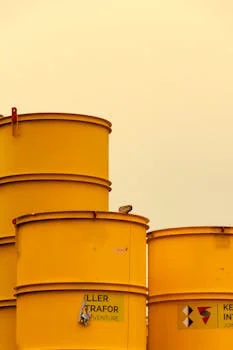
Dissolved Air Flotation (DAF) systems achieve 92–97% TSS removal and up to 99% FOG reduction, making them the standard for food processing pretreatment in the St. Joseph County industrial corridor. The high-efficiency DAF system for FOG and TSS removal is specifically engineered for flow rates between 4 and 300 m³/h. By introducing micro-bubbles into the wastewater, the system attaches to suspended particles and lifts them to the surface for mechanical skimming. This is particularly effective for dairy, meat processing, and metalworking industries where heavy oils and fine particulates are prevalent.
For facilities requiring higher effluent quality—perhaps for process water reuse or to meet stringent nitrogen limits—the Membrane Bioreactor (MBR) is the preferred technology. An compact MBR system for high-quality effluent and reuse combines biological treatment with ultrafiltration. This technology delivers a footprint 60% smaller than conventional clarifiers while producing effluent with turbidity less than 1 NTU. MBRs are capable of handling 10 to 2,000 m³/day, providing a scalable solution for growing manufacturing plants.
In scenarios where space is at a premium or the installation must be unobtrusive, the WSZ Series A/O Integrated Sewage Treatment unit offers a versatile alternative. This buried package unit for 1–80 m³/h utilizes an anoxic/aerobic (A/O) process to remove nitrogen and organic matter. Because these units can be installed underground, they are ideal for facilities in cold climates like Michigan, as the soil provides natural insulation for the biological processes during winter months.
| System Type | Primary Application | TSS Removal Efficiency | Standard Flow Range | Footprint Requirement |
|---|---|---|---|---|
| DAF | Food Processing, Oily Waste | 92–97% | 4–300 m³/h | Medium (Skid-mounted) |
| MBR (Integrated) | Water Reuse, High COD | >99% | 10–2,000 m³/day | Small (Compact) |
| A/O (WSZ Series) | General Industrial, Mixed Waste | 85–90% | 1–80 m³/h | Very Small (Underground) |
Compliance Standards for Industrial Dischargers in Constantine
Industrial users connecting to the Constantine municipal system must adhere to Michigan Department of Environment, Great Lakes, and Energy (EGLE) regulations and EPA National Pollutant Discharge Elimination System (NPDES) mandates. These permits define the maximum allowable concentrations of pollutants that can be discharged into the sewer. While specific local limits are set by the Constantine POTW, typical industrial effluent thresholds include COD below 300 mg/L, BOD below 150 mg/L, and FOG strictly under 50 mg/L.
Disinfection is another critical compliance pillar, especially for industries dealing with biological waste. The Chlorine Dioxide Generator is an essential component for meeting EPA and WHO disinfection standards. Unlike traditional chlorine, ClO₂ is highly effective at a broad pH range and does not produce harmful chlorinated byproducts, achieving a 99.9% pathogen kill rate. This is vital for facilities that may have sanitary waste mixed with industrial streams or those seeking to maintain a sterile discharge environment. Information on the ClO₂ Generator reveals its utility in complex chemical environments where traditional bleach fails.
The regulatory landscape for 2025 is increasingly focused on "forever chemicals." Operators must stay informed on 2025 PFAS testing and compliance for industrial dischargers, as Michigan remains at the forefront of PFAS monitoring. New testing protocols may require industrial users to implement specialized carbon filtration or ion exchange stages if PFAS is detected in their process water, ensuring that these contaminants do not reach the municipal biosolids stream.
Comparison of Treatment Systems for Constantine Industries
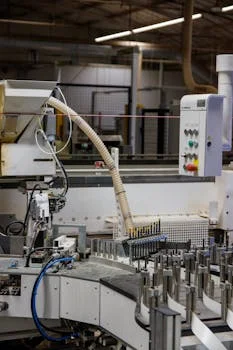
Selecting the appropriate industrial effluent treatment in Constantine requires balancing initial capital expenditure (CAPEX) with long-term operational costs (OPEX). In 2025, B2B pricing trends indicate that A/O systems remain the most cost-effective for general organic waste, with treatment costs ranging from $6 to $9 per m³/h. However, for industries with high grease loads, the DAF system is indispensable despite a slightly higher cost of $8 to $12 per m³/h, as it prevents the catastrophic pipe clogging and municipal surcharges associated with FOG violations.
MBR systems represent the high-end of the performance spectrum, with costs ranging from $15 to $20 per m³/h. The investment is justified for facilities where land is expensive or where the effluent must be of high enough quality to be recycled back into the plant's cooling towers or wash-down systems. When reviewing a comparison of DAF vs alternatives, plant managers often find that the automation level of MBR and DAF systems significantly reduces labor costs, which can offset the higher initial price point over a 5-year ROI period.
For many Constantine facilities, modularity is the key to managing 2025 budgets. A 2025 cost guide for modular industrial treatment plants shows that containerized solutions allow for rapid deployment and easy scaling. This is particularly useful for manufacturers who anticipate production increases following the village’s infrastructure upgrades. A modular approach allows a facility to start with a primary DAF unit and add a secondary MBR module later as discharge permits become more stringent.
| Feature | DAF System | MBR System | A/O Integrated |
|---|---|---|---|
| 2025 Est. Cost (per m³/h) | $8 – $12 | $15 – $20 | $6 – $9 |
| COD Reduction | 70–85% | >95% | 80–90% |
| Automation Level | High (PLC Controlled) | Very High | Moderate |
| Maintenance Frequency | Monthly Skimmer Check | Bi-annual Membrane Clean | Quarterly Sludge Removal |
| Best For | FOG-heavy streams | Water reuse/Tight space | General manufacturing |
Frequently Asked Questions
What systems are approved for food processing wastewater in Constantine?For food processing, DAF (Dissolved Air Flotation) is the standard for removing FOG and TSS. MBR systems are also approved and preferred if the facility intends to reuse treated water or must meet very low BOD limits for discharge into the new municipal plant.
How much does a 50 m³/h industrial treatment plant cost in 2025?Based on current 2025 B2B data, a 50 m³/h DAF-based system typically ranges from $400,000 to $600,000 for equipment, while an MBR system of the same capacity can range from $750,000 to $1,000,000, depending on the complexity of the influent.
Do I need pretreatment if discharging to Constantine’s new plant?Yes. Every industrial user is required to meet local limits set by the POTW. The new plant in Constantine is designed for municipal waste; excessive industrial loads of grease, metals, or high-strength organics must be pretreated on-site to avoid fines and system damage.
What is the TSS removal efficiency of a DAF system?A properly calibrated DAF system (HydropureWater field data, 2025) achieves between 92% and 97% removal of Total Suspended Solids, often reducing influent levels of 1,000 mg/L down to well under the 100 mg/L municipal limit.
Can MBR systems be installed underground in cold climates?While MBRs are usually skid-mounted in enclosures, the biological tanks can be insulated or partially