What Are the Current PFAS Testing Requirements for Industrial Wastewater?
PFAS testing requirements for industrial wastewater under NPDES and pretreatment programs center on EPA Method 1633 by LC-MS/MS for aqueous, solid, and biosolids matrices. No method is yet approved under 40 CFR Part 136. EPA recommends Method 1633 or 1633A for permit and industrial-user monitoring. Industrial users may receive pretreatment sampling or reporting orders under 40 CFR 403 even when a permit does not list PFAS.
Do not confuse that wastewater framework with the EPA Unregulated Contaminant Monitoring Rule 5 (UCMR5). UCMR5 requires public water systems—not POTWs—to monitor 29 PFAS compounds plus lithium in drinking water during the 2023–2025 cycle. Earlier industry summaries often framed UCMR5 as a major-POTW wastewater mandate. EPA’s rule applies to community and non-transient non-community water systems using drinking-water Methods 533 and 537.1. Separately, POTWs and industrial users discharging to them may still face PFAS sampling through NPDES permits or how 40 CFR 403 applies to industrial users under POTW monitoring.
UCMR5 builds a national drinking-water occurrence dataset that supports future SDWA decisions. In parallel, EPA is using wastewater monitoring data to shape future effluent limitation guidelines (ELGs). Facilities in organic chemicals, plastics, textiles, and metal finishing should treat their sector as high-priority for upcoming CWA rulemaking. These are the categories the agency has flagged in scoping documents.
State-Specific PFAS Testing Rules You Must Know
State-level PFAS rules are often stricter and faster-moving than federal wastewater rules. That patchwork matters for multi-state operators. Federal UCMR5 sets a drinking-water monitoring floor. States add numeric limits, reporting triggers, and sector investigations that reach industrial dischargers through POTW local limits.
New Jersey (NJDEP) enforces drinking water Maximum Contaminant Levels (MCLs) for PFOA at 14 ppt, PFOS at 13 ppt, and PFNA at 13 ppt. Those standards indirectly pressure industrial dischargers. POTWs must keep effluent from compromising downstream drinking water sources. California’s State Water Resources Control Board, through Order WQ 2023-001, requires industrial facilities to investigate and report discharges containing 23 PFAS compounds at levels as low as 10 ppt. Texas has taken a more targeted approach. The Texas Commission on Environmental Quality (TCEQ) has opened PFAS investigations for landfills and chemical manufacturers but has not enacted statewide effluent limits.
Michigan’s EGLE has implemented drinking water standards and a broad wastewater testing initiative. Maine has passed legislation banning non-essential PFAS use by 2030. That ban will change industrial discharge inventories before it takes effect.
| State | Governing Body | Key PFAS Requirements | Enforcement Status |
|---|---|---|---|
| New Jersey | NJDEP | MCLs for PFOA (14 ppt), PFOS (13 ppt), PFNA (13 ppt) | Active |
| California | State Water Board | Order WQ 2023-001; reporting for 23 PFAS @ 10 ppt | Active |
| Texas | TCEQ | Targeted investigations for high-risk industries | Investigatory |
| Michigan | EGLE | Drinking water standards & broad wastewater testing | Active |
For a full overview of U.S. wastewater discharge regulations in 2025, review our comprehensive guide.
Best Practices for Sampling and Analysis of PFAS in Wastewater
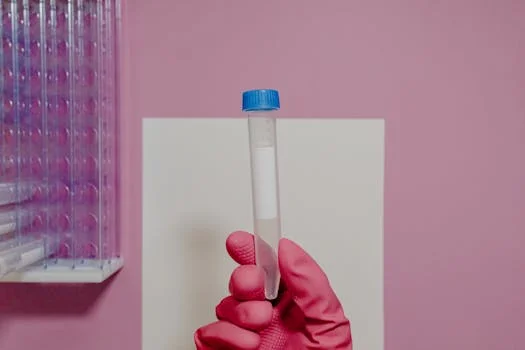
Cross-contamination is the single greatest risk during PFAS sampling. A single false positive can trigger an unnecessary enforcement response. Defensible data starts with materials, preservation, and blanks, not the laboratory instrument.
Sample containers must be polypropylene or glass. Exclude Teflon-lined caps, fluoropolymer materials, and any plastic not pre-screened for PFAS because of leaching risk. Per EPA Method 1633 guidance, preserve samples with hydrochloric acid (HCl) to a pH below 2 and chill them to 4 °C for transport. Complete analysis within a 14-day holding time. Field blanks and trip blanks are non-negotiable. They catch contamination from equipment prep, transport, or handling, and labs flag data sets that lack them.
Field crews also need training on everyday PFAS sources. Waterproof clothing such as Gore-Tex, some insect repellents and sunscreens, food wrappers, and certain permanent markers all matter. Most plants we work with issue a dedicated PFAS-free sampling kit. Crews change into it on site, which alone removes the most common false detections.
6 Action Steps to Prepare for PFAS Compliance
Turning mandates into an operational plan means sequencing site knowledge, lab work, and treatment evaluation before deadlines arrive. These six steps build a defensible PFAS compliance file.
- Conduct a Site Audit: Identify all potential sources of PFAS entering the wastewater stream. Common sources include firefighting foams (AFFF), metal plating additives, waterproof coating agents, and certain cleaning products. Don’t overlook indirect sources like raw materials or parts supplied by vendors.
- Estimate Sampling Costs: Budget for PFAS analysis. EPA estimates $1,500–$3,000 per sample for the full suite of 29 UCMR5 compounds using Method 1633. Plan multiple sampling events so you see a trend, not a single point.
- Engage an Accredited Lab: Partner with a laboratory proficient in EPA Method 1633 that can reach parts-per-trillion (ppt) detection. Confirm accreditation and ask for method detection limits (MDLs) compound by compound. A lab that hits 5 ppt for PFOA may only hit 50 ppt for short-chain GenX.
- Update SPCC and SWPPP Plans: If PFAS-containing materials are stored on-site, update the Spill Prevention, Control, and Countermeasure (SPCC) plan and the Stormwater Pollution Prevention Plan (SWPPP). Cover PFAS spill scenarios and mitigation. Stormwater transport to a POTW is a frequent compliance trigger.
- Evaluate Pretreatment Options: If initial sampling detects PFAS above background levels or anticipated limits, begin evaluating industrial reverse osmosis systems for PFAS removal or other technologies to mitigate discharge concentrations.
- Document Chain-of-Custody: Document all sampling procedures, chain-of-custody forms, and quality assurance data. This file is the first line of defense in an enforcement action or permit challenge. Reviewers will look at it before the analytical result.
For more on the permitting process, see our guide on wastewater discharge permit application steps.
PFAS Removal Technologies for Industrial Wastewater
Conventional biological treatment does not destroy PFAS. Plants chasing low-ppt effluent limits are buying advanced tertiary capacity. The choice between GAC, ion exchange, and RO turns on influent speciation, brine handling, and total cost of ownership—not headline removal percentages.
Granular Activated Carbon (GAC) can achieve 85–95% removal for long-chain PFAS such as PFOA and PFOS. Effectiveness drops for shorter-chain compounds. Operating cost is driven by carbon change-outs and spent-carbon disposal as hazardous waste. Ion Exchange (IX) resins offer high selectivity and can exceed 90% removal across a broader PFAS spectrum. The constraint is spent brine regenerant, which concentrates captured PFAS and needs secure disposal. Reverse Osmosis (RO) rejects over 99% of PFAS compounds. The brine or reject stream still holds the removed PFAS and typically needs deep-well injection or high-temperature incineration.
Emerging destructive technologies such as electrochemical oxidation and supercritical water oxidation aim to break PFAS molecules rather than move them to another phase. They are not yet widely deployed at commercial scale for industrial wastewater flows.
| Technology | Mechanism | Typical Efficiency | Key Operational Consideration |
|---|---|---|---|
| Granular Activated Carbon (GAC) | Adsorption | 85-95% (long-chain) | Frequent media replacement; spent carbon is hazardous waste |
| Ion Exchange (IX) Resin | Ion Exchange | >90% (broad spectrum) | Brine regenerant requires disposal; high capital cost |
| Reverse Osmosis (RO) | Size Exclusion | >99% | Produces concentrated waste stream; high energy consumption |
Integrating these technologies often requires automated dosing systems for coagulant or resin regeneration support to ensure consistent performance.
Who This Is For, and the Next Step
This guide is written for plant engineers, EHS managers, and procurement staff at industrial facilities discharging to POTWs in PFAS-priority sectors. That list includes organic chemicals, plastics and synthetic fibers, textiles, metal finishing, and any site with AFFF history. It is less useful for drinking water utilities, which follow SDWA rather than NPDES. It is also less useful for sites whose only PFAS exposure is stormwater with no process contribution.
If your facility expects a pretreatment sampling order, send your influent/effluent profile and flow rate to our applications team. We will size a PFAS treatment train around your actual matrix. Request a PFAS treatment quotation with your flow and target limits, and we will return a preliminary mass-balance and capex range within a few business days.
Frequently Asked Questions
What is the EPA-approved method for PFAS in industrial wastewater?
Currently, no method is officially listed in 40 CFR Part 136 for wastewater matrices. EPA recommends Method 1633 or 1633A, which use LC-MS/MS, for NPDES permitting and pretreatment monitoring. Permit writers and control authorities treat these methods as the practical standard for the low-ppt limits that state and POTW programs require.
Do industrial users need to test for PFAS even if not directly permitted?
Yes. If your facility discharges to a POTW under state PFAS rules or local-limits work, the control authority can issue a sampling directive under 40 CFR 403. That order identifies significant industrial users contributing PFAS. These directives often come from a POTW’s Sludge Management Plan or Local Limits study, not from UCMR5 itself.
What PFAS compounds are required for testing under UCMR5?
UCMR5 requires monitoring for 29 specific PFAS compounds, including PFOA, PFOS, PFHxS, PFNA, and GenX chemicals such as HFPO-DA, plus lithium. The complete compound list and reporting tables are in the UCMR5 Laboratory Manual published by the EPA for public water systems.
How much does PFAS testing cost for industrial wastewater?
Comprehensive testing for the full suite of 29 compounds using EPA Method 1633 typically costs $1,500–$3,000 per sample. Cost varies by laboratory and wastewater matrix. Complex industrial wastes that need extra cleanup or dilutions run higher. Plan budgets on the upper end until you confirm the matrix.
Can standard wastewater treatment remove PFAS?
No. Conventional biological treatment processes do not degrade PFAS. Effective removal requires advanced treatment such as granular activated carbon, ion exchange, or reverse osmosis. For a comparison of advanced disinfection options, see our guide to chlorine dioxide systems.