Which Disinfectant Fits Industrial Wastewater Duty?
A ClO₂ disinfection system typically delivers 4-log E. coli kill at 0.5–2 mg/L in 10 minutes, forms far fewer THMs and HAA5 than free chlorine, and leaves a 2–4 hour residual. Chlorine costs less to install but raises DBP risk. Ozone kills faster yet needs high power and a secondary residual. Copper-silver ionization is not EPA-approved as a primary disinfectant.
A Midwest food-processing plant lost 45 days of production in 2023 after Legionella grew in its cooling-tower loop, at about $3.2 million in lost revenue. Persistent biofilm can raise Legionella risk by 5–7 times, as reported in the CDC Waterborne Disease Outbreak database. Non-compliance with the Clean Water Act now attracts an average fine of $28,000 per violation under the 2025 Penalty Inflation Act. These stakes make disinfectant selection an engineering decision, not a catalog purchase. For permit context, see the EPA Clean Water Act requirements 2025 compliance guide.
Most plants we size for high-organic food or textile effluent start with a biofilm map, not a chemical bid. ATP-luminescence surveys that locate thick biofilm zones let operators pulse ClO₂ where risk is highest and cut overall chemical use by up to 20% while still meeting pathogen-kill targets.
A 2022 survey of 120 wastewater operators found chlorine plants averaged 3.4 DBP-related corrective actions per year versus 0.8 for ClO₂ users. That gap shows up as fewer permit amendments and less unplanned downtime.
How a ClO₂ Disinfection System Controls Pathogens
Chlorine dioxide oxidizes microorganisms by direct electron transfer, so it largely bypasses the chlorination pathways that form trihalomethanes (THMs) and haloacetic acids (HAA5). Compared with chlorine, ClO₂ can cut THM and HAA5 formation by over 90% under Washington State Department of Health DBP guidance conditions.
At 0.5–2 mg/L ClO₂ and a 10-minute contact time, plants commonly achieve a 4-log (99.99%) E. coli kill, consistent with WHO drinking-water disinfection practice. Because ClO₂ reacts slowly with the organic matrix of biofilm, it penetrates up to three times deeper than free chlorine and disrupts established layers (AWWA Journal, 2023).
Industrial sites generate ClO₂ on demand with a Chlorine Dioxide (ClO₂) Generator for Water Disinfection rated 50–20,000 g/h, which removes bulk ClO₂ storage and lowers handling exposure.
The oxidative potential of ClO₂ (1.28 V) is high enough to break disulfide bonds in extracellular polymeric substances (EPS). University of Illinois laboratory work showed a 70% drop in EPS viscosity after a single 5-minute ClO₂ exposure, which eased downstream filtration and cut membrane fouling by up to 35% in that study.
Chlorite is the inorganic by-product to watch. Earlier plant notes often cited a 0.5 mg/L chlorite limit; the EPA National Primary Drinking Water Regulations set the chlorite MCL at 1.0 mg/L and the chlorine dioxide MRDL at 0.8 mg/L as ClO₂. According to WHO Guidelines for Drinking-water Quality (2022 fact sheet), provisional guideline values are 0.7 mg/L for chlorite and 0.7 mg/L for chlorate, and typical final ClO₂ doses normally leave chlorite below 0.2 mg/L. Real-time electrochemical sensors tied to the generator loop keep chlorite inside those bands.
Chlorine and Sodium Hypochlorite: Cost vs Compliance Risk
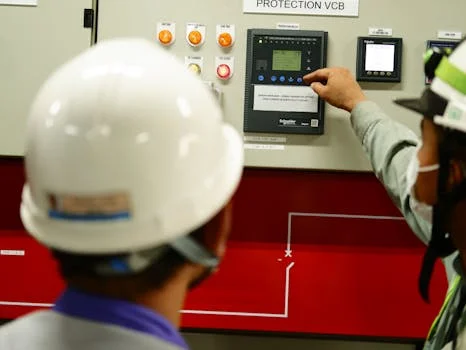
Sodium hypochlorite packages for 100–500 g/h capacity usually cost $15,000 to $50,000 in capital, so they look attractive on a tight CAPEX sheet.
At a standard 2 mg/L free-chlorine dose, many high-organic streams still form up to 100 µg/L THMs and 60 µg/L HAA5. Those levels can breach EPA Stage 2 DBP limits of 0.080 mg/L TTHM and 0.060 mg/L HAA5. Corrosive liquid storage also triggers OSHA 1910.1200 hazardous-materials duties and about $12,000 per year in safety-audit cost on plants we review.
Engineers chasing generator faults can use the guide to solve ClO₂ generator operational issues.
A Midwest textile mill switched from sodium hypochlorite to low-dose ClO₂ in 2021. Within six months TOC fell about 45%, which cut THM formation potential. The $30,000 CAPEX premium paid back in roughly 18 months through lower chemical spend and avoided DBP fees.
If NaOCl remains in service, keep inline pH between 6.5 and 7.5. That window maximizes free chlorine and can trim dose volume 10–15%, though it does not remove the DBP pathway.
Can UV Disinfection Cut Chemical DBP Formation?
UV disinfection forms no THMs or HAA5 because it inactivates microbes with photons rather than halogen chemistry, so it is a strong option when organic precursors are high and chemical DBP headroom is thin. Low-pressure UV suits clear, low-UVT streams; medium-pressure and UV-LED units handle wider spectra or smaller footprints. Advanced oxidation that pairs UV with peroxide or ozone targets recalcitrant organics, not just microbes.
UV leaves no lasting residual. Cooling towers, long reuse headers, and dead legs still need a secondary chemical residual—often a low ClO₂ dose—after the reactor. Most reuse skids we commission therefore treat UV as the primary kill step and ClO₂ or chlorine as the distribution residual, not as competing sole solutions.
How Do You Compare Compact UV Reuse Units?
Compact UV units for onsite water reuse should be scored on UV transmittance (UVT) at the design wavelength and validated reduction equivalent dose for the target organism. Also compare lamp or LED power in kWh per 1,000 m³, reactor headloss, and how the skid pairs with a residual disinfectant. Small-scale reuse trains also need sleeve-fouling access, spare lamp lead time, and a clear plan for sensor calibration under the plant’s turbidity and iron profile.
When UVT is chronically low, chemical disinfection or hybrid UV-plus-ClO₂ usually beats oversizing the reactor. Spec sheets that omit design UVT and residual strategy are not ready for EPC bid comparison.
Ozone: High Efficiency but Limited Industrial Scalability
Ozone can reach a 5-log kill in 2–4 minutes under optimal dissolved-ozone and contact conditions.
Its short half-life of 20–30 minutes in water drives energy use of about 15–20 kWh per kilogram of O₃, versus roughly 5–8 kWh/kg for ClO₂ (IEA Water Treatment Energy Report, 2024). Ozone provides no residual, so a secondary agent is required for distribution loops, which adds piping, controls, and OPEX.
Those constraints make ozone less practical for continuous, high-throughput industrial loops even when log-kill performance looks excellent on paper. Pairing ozone with a low-dose ClO₂ post-treatment can keep the fast kill while supplying residual. Petrochemical pilots have shown about 30% lower total energy than ozone-only trains because ClO₂ needs less power per kilogram of active agent.
Material compatibility is another budget item. Ozone attacks many elastomers and some stainless alloys. PTFE seals and 316L stainless can add $5,000–$12,000 per 10 kW module—costs often missed in early estimates.
Copper-Silver Ionization: Niche Use with Critical Limitations
Regulatory bodies have not approved copper-silver ionization as a primary disinfectant under EPA’s Alternate Disinfectants List.
The method fails to break mature biofilm, with less than 60% remediation success in established cooling-tower systems under ASHRAE Guideline 12-2020 conditions. Copper above 1.3 mg/L can plate onto heat-exchange surfaces, raise corrosion rates, and cut heat-transfer efficiency, which conflicts with the EPA Lead and Copper Rule action level of 1.3 mg/L.
Field data from a 2022 study of 27 HVAC cooling-tower sites showed ionization units needed about 2.8 maintenance visits per month. Teams recalibrated current and replaced fouled electrodes, adding roughly $1,200 per year per 5,000 ft² of tower surface.
If ionization stays as a supplemental tool, combine it with high-pressure flushing and a low-dose ClO₂ boost. That hybrid can lift biofilm removal toward 80% while holding copper below 1.3 mg/L.
Head-to-Head: ClO₂ vs Alternatives Performance Table
The table below uses typical industrial design criteria. For a broader equipment view, compare chlorine dioxide vs ozone systems.
| Disinfectant | Log Kill (E. coli) | Contact Time | DBP Formation | CAPEX Range (USD) | OPEX ($/kg) | Biofilm Penetration | Residual Protection | Regulatory Status |
|---|---|---|---|---|---|---|---|---|
| ClO₂ | 4-log | 10 min | <0.5 mg/L THM | $20K–$100K | $6.20 | High (3× deeper than chlorine) | 2–4 h residual | EPA, EU, WHO approved |
| Chlorine (NaOCl) | 3-log | 30 min | 80–100 µg/L THM | $15K–$50K | $4.80 | Low | 6–8 h residual | EPA approved |
| Ozone | 5-log | 3 min | 0 THM | $50K–$200K | $18.50 | Medium | None (requires secondary) | EPA approved |
| Copper-Silver Ionization | 3-log | 24 h | 0 THM | $30K–$75K | $12.00 | None | Continuous (no residual) | Not EPA-approved as primary |
Interpretation notes:
- Contact time vs operational flow: In high-velocity cooling-tower recirculation loops, a 10-minute CT for ClO₂ is achievable with a simple static mixer, while chlorine’s 30-minute CT often requires larger contact chambers that increase footprint.
- Energy intensity: Ozone’s OPEX reflects electricity costs; when renewable power contracts are available, the effective OPEX can drop 15% but still remains higher than ClO₂.
- Regulatory risk: Selecting a non-approved primary disinfectant like copper-silver can trigger permit revisions, potentially adding $8,000–$12,000 in legal and engineering fees.
Total Cost of Ownership: ClO₂ vs Alternatives in 2025
ClO₂ chemical utilization often reaches about 90% efficiency, which supports an OPEX near $6.20 per kilogram of active agent. Chlorine’s lower unit cost ($4.80/kg) is offset by roughly $12,000/yr in storage-safety compliance plus DBP mitigation upgrades when Stage 2 limits are exceeded.
Ozone trains carry about three times the electricity cost of ClO₂ and about 15% more unplanned downtime for lamp and cooling maintenance (DOE WaterTech, 2024). Copper-silver installs look moderate on CAPEX yet accumulate corrosion-management cost and permit risk because they lack primary-disinfectant acceptance.
A 10-MGD food-processing plant model put five-year spend at $1.84 M for ClO₂ and $2.07 M for chlorine, including $120 k DBP mitigation. Ozone reached $2.65 M on energy, and copper-silver reached $2.31 M on corrosion and permit fees. Lowest first cost was not the lowest life-cycle cost in that scenario.
Selection checklist before you freeze the P&ID:
- Measure TOC, UVT, and biofilm ATP at the actual dose point, not only at the plant influent.
- Confirm residual need in every loop longer than the contact chamber.
- Budget chlorite (and chlorate) monitoring if ClO₂ is selected.
- Price energy at local industrial tariffs for ozone or UV primary trains.
- Verify materials of construction against the oxidant, not just against water chemistry.
- Model five-year TCO with DBP fees, safety audits, and spare-parts lead time included.
- Decide primary versus residual roles when UV or ozone is in the train.
Who This Is For / Next Step
This comparison is for plant engineers, EPC leads, and procurement managers sizing disinfection for industrial wastewater, cooling water, or onsite reuse. Teams that only need a municipal drinking-water residual with no biofilm duty may stay on chlorine if DBP headroom is proven. When CAPEX, residual demand, and DBP risk all matter on a ClO₂ disinfection system decision, request duty-specific generator sizing through our ClO₂ system inquiry form.
Frequently Asked Questions
What is a disadvantage of using chlorine dioxide for disinfection?
ClO₂ must be generated on site and dosed with tight control so chlorite stays within limits. EPA sets the chlorite MCL at 1.0 mg/L and the ClO₂ MRDL at 0.8 mg/L; WHO uses provisional 0.7 mg/L guideline values for chlorite and chlorate. Without sensors and generator tuning, plants can overshoot those bands or waste precursor chemicals.
Why is bleach often replaced in sensitive facilities?
Sodium hypochlorite forms THMs and HAA5 when organics are present, controls mature biofilm poorly, and loses residual faster in warm loops. Hospitals and food plants with Legionella or DBP pressure therefore move to ClO₂, UV-plus-residual, or ozone hybrids. Bleach remains workable only where precursors are low and contact time is generous.
Which disinfection method is most effective for industrial loops?
Ozone posts the highest log kill in short contact time, but ClO₂ usually wins for continuous industrial duty because it pairs strong kill with biofilm penetration and a usable residual. UV matches chemical-free primary disinfection when UVT is adequate, yet still needs a residual partner. Choose on CT, residual need, energy, and permit constraints together.
Does UV remove the need for chemical disinfection entirely?
UV does not replace chemical residual in long distribution or cooling loops. It minimizes THM and HAA5 formation at the reactor, then a low ClO₂ or chlorine dose protects downstream piping. Compact reuse skids should be compared on UVT, validated dose, power per 1,000 m³, and residual strategy—not reactor wattage alone.
How should buyers compare ClO₂ generators on total cost?
Compare precursor chemical cost, power per kilogram of ClO₂, chlorite compliance hardware, spare ejectors or reactors, and five-year maintenance labor—not only nameplate g/h. In the 10-MGD food-plant model above, ClO₂’s $1.84 M five-year total beat chlorine, ozone, and copper-silver once DBP and energy costs were included.