What Are Industrial Pretreatment Program Requirements?
Industrial pretreatment program requirements under 40 CFR 403 compel dischargers to POTWs to meet categorical standards, local limits, and bans on pass-through or interference. POTWs above 5 million gallons per day (mgd) design flow generally must operate approved programs. Significant Industrial Users often face 25,000 gallons per day process-flow thresholds plus self-monitoring and reporting.
The EPA National Pretreatment Program protects Publicly Owned Treatment Works from pollutants that damage sewers, upset biology, or pass untreated to receiving waters. Any industrial facility tied to a covered POTW falls under 40 CFR 403 enforcement. Earlier guidance often cited fines near $60,000 per day; the inflation-adjusted Clean Water Act civil judicial maximum under 33 U.S.C. 1319(d) is $68,445 per day for violations assessed on or after January 8, 2025 (40 CFR Part 19).
Willful violations can also bring criminal exposure, forced upgrades, and sewer cutoffs.
Core Regulatory Requirements Under 40 CFR 403
40 CFR 403 sets the federal pretreatment framework that Control Authorities apply through permits, local ordinances, and enforcement response plans. Section 403.3 defines an Industrial User as any non-domestic source introducing pollutants into a POTW. The strictest duties fall on Significant Industrial Users (SIUs).
Categorical Pretreatment Standards are technology-based numeric limits for defined sectors in 40 CFR Parts 413–471, covering metals, COD, cyanide, and pH among other parameters. General Prohibitions in 40 CFR 403.5 ban discharges that cause fire, explosion, corrosion, obstruction, interference, or pass-through. POTWs also set Local Limits from treatment capacity, sludge quality goals, and water-quality standards; those limits may be stricter than federal categorical numbers and remain legally binding. For how pretreatment sits inside broader Clean Water Act duties, see the 2025 EPA Clean Water Act compliance guide.
How to Identify and Classify Your Facility’s Pretreatment Obligations

Facility classification under 40 CFR 403 drives monitoring frequency, permit terms, and enforcement risk. Self-screening against SIU criteria should come before equipment selection. An SIU includes any user subject to categorical standards. It also includes users discharging an average of more than 25,000 gallons per day of process wastewater.
Users with a substantial POTW impact, for example TSS above 275 mg/L, or users designated by the Control Authority, also qualify.
Categorical plants such as metal finishing or food processing must run self-monitoring and submit reports on the schedule in the User Permit. That permit lists effluent limits, sampling points, and reporting frequency. Checking SIC or NAICS codes against Subchapter N is the practical first screen for categorical coverage.
What do Chicago IEPA pretreatment rules require?
Chicago-area industrial dischargers must satisfy both federal 40 CFR 403 rules and Illinois EPA (IEPA) NPDES-linked pretreatment program conditions issued through the local Control Authority. In practice that means an industrial user permit, local limits for metals and conventional pollutants, slug-control planning where required, and periodic self-monitoring reports. Facilities should confirm whether they are SIUs under the 25,000 gallons per day process-flow test or categorical listing before sizing pretreatment hardware.
What are Nashville Metro pretreatment discharge rules?
Nashville Metro Water Services applies industrial and commercial pretreatment discharge requirements that implement 40 CFR 403 through local sewer-use rules and user permits. Dischargers must meet local limits, prohibited-discharge rules, and sampling schedules stated in the Metro control mechanism. Food processors, metal finishers, and other SIUs typically need documented FOG, TSS, pH, and metals control before sewer connection approval.
Pollutants Targeted by Pretreatment Standards and Typical Removal Goals
Pretreatment standards focus on pollutants that threaten POTW function, so treatment design starts from the regulated parameter list in the User Permit. Common local targets include Total Suspended Solids often held below 30 mg/L; Fats, Oils, and Grease typically limited below 100 mg/L; copper below 1.4 mg/L; and nickel below 0.7 mg/L. pH usually must stay between 5.0 and 9.0 standard units at the compliance point.
Categorical rules add sector-specific duties. Metal finishing under 40 CFR Part 433 often requires cyanide destruction and hexavalent chromium reduction. Food processors under 40 CFR Part 409 face BOD5 below 360 mg/L and TSS below 290 mg/L where those categorical numbers apply.
Best Management Practices such as spill plans and operator training sit alongside numeric limits. Nutrients and toxic organics also matter when local limits or sludge quality goals are tight.
| Pollutant | Common Regulatory Limit | Primary Industrial Sources |
|---|---|---|
| Total Suspended Solids (TSS) | < 30 mg/L | Food Processing, Textiles, Pulp & Paper |
| Fats, Oils, & Grease (FOG) | < 100 mg/L | Food Processing, Rendering, Restaurants |
| Copper (Cu) | < 1.4 mg/L | Metal Finishing, Electronics Manufacturing |
| Nickel (Ni) | < 0.7 mg/L | Metal Finishing, Electroplating |
| pH | 5.0 – 9.0 SU | Chemical Manufacturing, Pickling Operations |
Pretreatment Equipment That Meets Regulatory Performance Standards
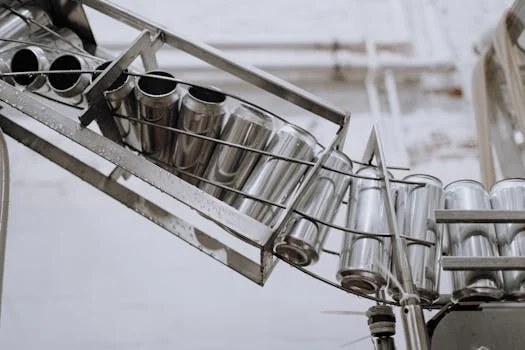
Pretreatment equipment selection succeeds when each unit reliably meets the permit limit under peak hourly flow, not only average day conditions. For headworks solids, a fine screening system for suspended solids removal captures solids larger than 6 mm at over 90% efficiency for flows from 10–10,000 m³/h. For emulsified oils, fats, and fine solids, a high-efficiency DAF system for FOG and TSS removal typically achieves 92–98% removal at 4–300 m³/h.
Automated chemical dosing supports pH control and metal precipitation when local limits are low. Lamella clarifiers deliver 85–95% TSS removal at surface loading rates of 20–40 m/h and can cut footprint by about 50% versus conventional settling tanks. Where the site also needs compact biological polishing after solids and FOG removal, an Underground Package Sewage Treatment Plant (WSZ Series) can finish BOD and ammonia within a small buried footprint. Membrane UF or RO is reserved for the strictest dissolved-solids or ion limits.
| Technology | Target Pollutants | Typical Removal Efficiency | Flow Capacity Range |
|---|---|---|---|
| Rotary Mechanical Bar Screen | TSS, Large Solids | >90% (solids >6mm) | 10–10,000 m³/h |
| Dissolved Air Flotation (DAF) | FOG, TSS, Colloids | 92–98% | 4–300 m³/h |
| Chemical Dosing & pH Adjustment | Dissolved Metals, pH | 99%+ for metals | All flows |
| Lamella Clarifier | TSS, Settleable Solids | 85–95% | 10–500 m³/h |
What Should Industrial Waste Compliance Programs Cover?
Industrial waste compliance programs should cover waste characterization, technology selection, peak-flow sizing, monitoring hardware, and reporting SOPs tied to the User Permit. A practical sequence keeps regulators and EPC teams aligned from audit to startup.
Step 1: Conduct a Waste Audit. Sample every 2 hours over a 24-hour period to build composite baselines for flow, pH, TSS, BOD, and metals. That pattern captures shift and washdown peaks.
Step 2: Match Pollutants to Technologies. Map audit results to unit processes—DAF for FOG, screening or clarification for TSS, chemical reduction for Cr(VI)—and confirm acceptance with the POTW before purchase.
Step 3: Size Equipment for Worst-Case Conditions. Use peak hourly flow, often about 1.5× average flow, and required hydraulic retention time such as 20–30 minutes for DAF. Undersizing remains a common compliance failure mode.
Step 4: Install Compliance Monitoring Infrastructure. Provide accessible pre- and post-treatment sampling ports as required by 40 CFR 403.12 so samples represent the regulated discharge.
Step 5: Document and Report. Write SOPs, train operators, and file periodic reports on the permit schedule. If performance slips after startup, the troubleshooting guide for failed wastewater systems lists common root causes and fixes.
Selection Checklist and Cost Drivers
Plant engineers comparing bids should score vendors against a short, permit-linked checklist rather than brochure claims alone.
- Confirm SIU or categorical status and the controlling local limits.
- Size for peak hourly flow and stated HRT or surface loading.
- Prove FOG/TSS/metals removal with data at your expected loading.
- Include sampling ports, flow measurement, and pH control in the scope.
- Budget chemicals, sludge hauling, power, and operator labor as operating cost drivers.
- Verify slug-discharge controls and spare-parts lead times.
- Align reporting formats with the Control Authority’s submittal rules.
Who this is for: plant engineers, EPC contractors, and procurement managers discharging process wastewater to a POTW under 40 CFR 403. Who should look elsewhere: sites that haul all process wastewater offsite under RCRA instead of sewer discharge. Next step: send your flow, pollutant, and permit data for a sizing review before freezing the equipment list.
Frequently Asked Questions
What triggers categorical pretreatment requirements?
Operating in an EPA categorical industry under 40 CFR Subchapter N triggers categorical pretreatment standards regardless of discharge volume. Control Authorities map SIC or NAICS codes to Parts such as 433 for metal finishing or 409 for certain food processors. Once listed, the facility must meet those technology-based limits plus any stricter local limits in the User Permit.
Can small businesses be subject to pretreatment?
Yes. Facility size alone does not exempt a business from pretreatment duties under 40 CFR 403. A small shop that discharges regulated pollutants, exceeds the SIU process-flow threshold, or is designated by the POTW must comply. Many Control Authorities offer guidance for small industrial users, but the permit limits still apply.
How often must pretreatment systems be monitored?
Monitoring frequency is set in the User Permit, not by a single national calendar. Significant Industrial Users commonly sample at least quarterly, and many POTWs require monthly sampling when compliance history or pollutant toxicity is high. 40 CFR 403.12 also governs report content, sample type, and record retention for audits.
What happens if my discharge exceeds local limits?
The POTW may issue a notice of violation, demand a corrective action plan, and assess surcharges often in the $10 to $20 per pound range for excess pollutant mass. Repeated violations can escalate to permit revocation or sewer service termination. Federal Clean Water Act civil penalties may also apply for serious or willful cases.
Is pretreatment required if we truck wastewater offsite?
No. 40 CFR 403 covers indirect discharges into a POTW sewer system only. Wastewater hauled offsite is regulated under the Resource Conservation and Recovery Act (RCRA) and related hazardous or non-hazardous waste rules, not the federal pretreatment program. Confirm both sewer and hauling pathways before changing disposal methods.