Symptom: Low Flow Rate or System Back-Up
Hydraulic flow issues are primarily mechanical, with 40% of flow problems stemming from clogged inlet screens or pumps (Biotornado, 2024). Your first diagnostic step is a visual inspection of the headworks. Check the GX Series rotary bar screen for jammed rags or fibrous debris; its automatic clean cycle should run every 15–30 minutes to prevent build-up. If the screen is clear, assess the pipe network. A slope of less than 1% significantly increases sedimentation risk in gravity-fed lines, requiring more frequent flushing. For persistent blockages downstream, particularly in pipes under 150 mm diameter, a CCTV inspection is essential to locate and identify the obstruction without excavation.
A common but often overlooked cause of reduced flow is pump wear. Impeller clearances can widen over time, especially when handling abrasive grit, reducing pumping efficiency by up to 20%. Regularly checking the pump's performance curve against its actual flow and pressure output can help identify this gradual degradation before it leads to a complete back-up. For lift stations, ensure that the lead and lag pumps are alternating correctly to prevent one pump from bearing the entire load and wearing out prematurely. Implementing a routine inspection and maintenance schedule for all mechanical components is the most effective strategy for preventing flow-related emergencies.
Symptom: Poor Effluent Quality or High TSS
Total Suspended Solids (TSS) exceeding 30 mg/L typically indicates a failure in solid-liquid separation, often due to clarifier overload or a rising sludge blanket. Immediately measure the Sludge Volume Index (SVI); a reading over 150 mL/g confirms poor settleability, commonly caused by a low food-to-microorganism (F/M) ratio or filamentous bacteria bulking. For lamella clarifiers, verify the surface loading rate is within the design range of 20–40 m/h; exceedance causes solid washout. Finally, confirm the sludge recirculation pump is operating at 50–100% of the influent flow rate to maintain proper blanket depth.
Beyond mechanical checks, investigate the biological health of your system. A microscopic examination can quickly identify the presence of filamentous bacteria, which are a primary cause of bulking. If these are found, strategies like adding a selector zone to the aeration basin or temporarily increasing the sludge wasting rate can help restore a healthy biomass. Nutrient deficiency is another frequent culprit; aim for a BOD:N:P ratio of 100:5:1. If the ratio is off, supplementing with nitrogen or phosphorus can dramatically improve floc formation and settling characteristics, leading to a clearer effluent.
| Parameter | Target Range | Corrective Action if Out of Range |
|---|---|---|
| Effluent TSS | <30 mg/L | Check clarifier loading and sludge blanket |
| Sludge Volume Index (SVI) | 50-150 mL/g | Adjust F/M ratio or add selectors for bulking |
| Clarifier Surface Loading | 20-40 m/h | Reduce inflow or add polymer aid |
| Sludge Recirculation Rate | 50-100% of Qin | Inspect pump and calibrate flow meter |
For persistent issues, a high-efficiency sedimentation tank with optimized plate settlers can enhance capture rates.
Symptom: Sludge Build-Up or Thickening Failure
Excess sludge production, defined as more than 5% of the daily influent volume, suggests biological overproduction from over-aeration or high BOD loading. If the issue is mechanical, assess your thickener. A Dissolved Air Flotation (DAF) thickener’s efficiency plummets if the recycle ratio falls below 15% or air saturation is less than 80%. For dewatering, a plate and frame filter press should produce cake solids between 30–50%; results below 20% indicate poor sludge conditioning. The optimal polymer dose for conditioning is typically 3–8 mg/L for every 1% of solids concentration. For a full comparison of thickening technologies, see our guide on gravity versus DAF thickeners.
Effective sludge management begins with proper characterization. Conduct regular tests for sludge age (or MCRT), aiming for 5-15 days depending on temperature and process goals. An MCRT that is too short can lead to pin floc and poor settling, while one that is too long promotes the growth of nitrifying bacteria and can consume excessive oxygen. When conditioning sludge for dewatering, the mixing energy during polymer addition is just as critical as the dose itself. Inadequate mixing leads to large, weak flocs that break apart, while excessive shear destroys the flocs. Jar testing with a variable-speed mixer is the best way to determine the optimal mixing intensity (G value) for your specific sludge.
Symptom: Greasy Scum Layer or Foaming
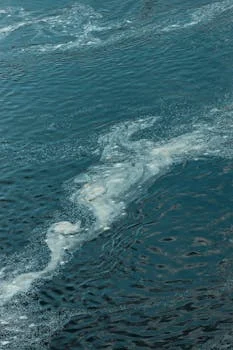
A thick, greasy scum layer is a direct indicator of low dissolved oxygen (DO <2 mg/L) or excessive Fats, Oils, and Grease (FOG) loading exceeding 100 mg/L. White, frothy foam suggests an actinomycetes bloom, often triggered by low pH (<6.5) or a nutrient deficiency (e.g., nitrogen or phosphorus). First, verify your aeration system: fine bubble diffusers must maintain a DO level of 2–4 mg/L in the mixed liquor. For influent with high FOG, a DAF system is designed to achieve 85–95% removal efficiency at flow rates from 4–300 m³/h.
For sudden foaming events, short-term control measures may include spraying a fine mist of water or a diluted anti-foam agent directly onto the foam layer. However, these are only temporary fixes. Long-term control requires addressing the root cause. If nutrient deficiency is suspected, a simple test can be performed: add a small amount of ammonium chloride and phosphoric acid to a sample of mixed liquor and observe if foaming subsides over 24 hours. If FOG is the issue, consider installing or optimizing a dedicated FOG removal system at the headworks to prevent these compounds from entering and disrupting the biological process.
Symptom: Membrane Fouling or MBR System Failure
A flux decline greater than 30% within 30 days signals severe membrane fouling, commonly caused by upstream TSS levels over 10 mg/L. Immediately check the scouring aeration rate; DF Series MBR modules require 0.1–0.2 Nm³ of air per m² of membrane per minute to prevent solids deposition. Monitor Transmembrane Pressure (TMP); a sustained reading above 0.5 bar is a critical red flag requiring an immediate backwash or clean-in-place (CIP) procedure. CIP with sodium hypochlorite (1,000–2,000 mg/L) should be performed every 1–3 months, depending on loading.
Fouling can be categorized as reversible (removed by backwashing) or irreversible (requires chemical cleaning). To maximize membrane life, it's crucial to optimize the backwash cycle. The backwash flux is typically 1.5 to 2 times the filtration flux and should last for 30-60 seconds. The frequency is often set based on filtration time (e.g., a 10-minute filter, 45-second backwash cycle). Regularly analyzing the quality of the backwash water can provide early warning of developing fouling. A successful maintenance clean, often performed weekly with a lower chemical dose (200-500 mg/L NaOCl), can significantly extend the time between more aggressive recovery cleans.
| Parameter | Normal Operating Range | Maintenance Trigger |
|---|---|---|
| Flux Rate | 15-25 LMH | Clean if decline >30% from baseline |
| Scouring Air Flow | 0.1-0.2 Nm³/m²/min | Inspect blowers and diffusers weekly |
| TMP | 0.1-0.4 bar | Backwash if >0.5 bar |
| CIP Frequency | 1-3 months | Initiate based on TMP or flux triggers |
For comprehensive diagnostics, consult our field-tested MBR membrane troubleshooting guide for your integrated MBR system.
Symptom: Chemical Dosing Inefficiency or pH Swings
pH swings outside the optimal range of 6.5–8.5 inhibit biological activity and cripple coagulation efficiency. Conduct jar testing weekly to determine the optimal coagulant dose, which typically falls between 10–50 mg/L for raw water turbidity of 100–500 NTU. Manual dosing is prone to error; an automatic chemical dosing system with PLC control uses real-time feedback from online pH and turbidity sensors to maintain precision. For disinfection issues, a ClO₂ generator achieves a 99% pathogen kill rate at a dose of just 0.5–2.0 mg/L.
When troubleshooting chemical systems, always verify the condition and calibration of the sensors. A pH probe with a fouled electrode or old buffer will provide inaccurate readings, leading the automated system to make incorrect dosing adjustments. These sensors should be cleaned and calibrated on a strict schedule, at least once per month. For coagulant dosing, remember that the "optimal dose" is not a fixed number but varies with changes in influent quality, temperature, and flow rate. This is why continuous monitoring and feedback control are so valuable, as they can adjust the dose in real-time to match current conditions, preventing both under-dosing and costly chemical overuse.
Preventive Maintenance Checklist by System Type

Data-driven maintenance prevents over 80% of common failures. Adhere to manufacturer-specific schedules to maximize equipment lifespan and minimize unplanned downtime. A well-maintained logbook is invaluable for tracking trends and anticipating failures before they occur.
| System Type | Key Maintenance Task | Frequency |
|---|---|---|
| WSZ Package Plants | Inspect submersible pumps; replace diffusers | Pumps: quarterly; Diffusers: every 5 years |
| DAF Systems | Clean saturator vessel; check skimmer blade tension | Vessel: quarterly; Skimmer: monthly |
| MBR Systems | Monitor MLSS; clean membranes | MLSS: weekly (target 8,000–12,000 mg/L); CIP: 30–90 days |
| Sludge Presses | Inspect filter cloths; replace cloths | Inspect: every 2 weeks; Replace: every 1–2 years |
For WSZ Series package plants, detailed protocols are available in our article on step-by-step diagnostics for common package plant issues. Creating a spare parts inventory for critical components like seals, gaskets, and sensors can drastically reduce downtime when a failure does occur.
Frequently Asked Questions
What happens if a wastewater treatment plant fails?
Untreated effluent discharge risks significant environmental fines, operational shutdowns by regulators, and public health violations. The financial and reputational damage can be severe and long-lasting.
How often should sludge be removed?
Sludge removal frequency varies: every 3–6 months in package plants, but it is a continuous process in DAF or MBR systems. The key is to monitor the sludge blanket height and waste based on maintaining a target Sludge Age (MCRT).
Can I fix membrane fouling without replacing modules?
Yes—approximately 90% of fouling cases are resolved with a CIP procedure using sodium hypochlorite (NaOCl) for organic foulants and citric acid for inorganic scaling. Module replacement is typically a last resort after chemical cleaning fails to restore performance.
Why is my aeration system loud?
Excessive noise usually indicates blower overpressure (>0.6 bar) or clogged diffusers, which should be inspected weekly. Other causes can include bearing wear in the blower itself or loose mounting bolts causing vibration and resonance.
What is the life expectancy of a treatment plant?
The core infrastructure lasts 15–25 years with proper maintenance, though consumables like MBR membranes typically need replacement every 5–7 years. The lifespan is heavily dependent on the quality of the preventative maintenance program.
Further Reading
Explore these in-depth articles on related wastewater treatment topics for further reading and advanced troubleshooting techniques: