Why Pakistan Needs Reliable WWTP Suppliers in 2026
Around 2,800 industrial wastewater treatment plants were installed across Pakistan as of 2024, yet an estimated 60% of operating units fail to meet the National Environmental Quality Standards (NEQS) on at least one of the 32 monitored parameters (S.R.O. 549(I)/2000). Textile wet processing alone generates roughly 40% of Pakistan's industrial effluent load, and the Sindh Environmental Protection Agency has intensified Karachi industrial discharge inspections through Q1 2026. In Punjab, the EPA's 2024–2026 enforcement wave against tanneries in Kasur has triggered retrofit demand for sulfide stripping, chromium precipitation, and DAF pre-treatment at 70–120 facilities. The financial exposure is concrete: NEQS non-compliance penalties range from PKR 100,000 first-offence fines to plant closure orders under Section 11 of the Pakistan Environmental Protection Act 1997, and a single Karachi export-zone shutdown can cost a mill USD 40,000–80,000 per day in lost orders.
The core procurement problem is that academic and encyclopedic pages dominate the search results for WWTP suppliers in Pakistan, leaving buyers with no defensible framework to compare vendors. The sections below give you NEQS numeric limits, a process-by-influent decision matrix, and 2026 CAPEX benchmarks in USD CIF Karachi so you can shortlist with confidence.
NEQS Discharge Limits Your Supplier Must Hit
Pakistan's NEQS (S.R.O. 549(I)/2000) specifies 32 monitored parameters, with the municipal/inland surface water receiving body set as the binding target for most industrial emitters. The headline limits are BOD ≤30 mg/L, COD ≤150 mg/L, TSS ≤200 mg/L, total nitrogen ≤50 mg/L, and oil & grease ≤10 mg/L. Industrial discharge into municipal sewers is permitted at higher thresholds (BOD ≤250 mg/L, TSS ≤400 mg/L) under the same instrument, but the receiving treatment works can impose tighter contract terms. A supplier who cannot produce third-party effluent test data at these concentrations should be removed from the shortlist immediately — verbal performance claims have no place in an EPC award document.
| Parameter | NEQS (S.R.O. 549(I)/2000, inland surface water) | NEQS (sewer discharge) | World Bank EHS (textile) | EU UWWTD 91/271/EEC |
|---|---|---|---|---|
| BOD₅ | ≤30 mg/L | ≤250 mg/L | ≤30 mg/L | ≤25 mg/L (2,000–10,000 PE) |
| COD | ≤150 mg/L | ≤400 mg/L | ≤160 mg/L | ≤125 mg/L |
| TSS | ≤200 mg/L | ≤400 mg/L | ≤50 mg/L | ≤35 mg/L (large plants) |
| Total Nitrogen | ≤50 mg/L | — | ≤10 mg/L | ≤15 mg/L |
| Oil & Grease | ≤10 mg/L | — | ≤10 mg/L | — |
| pH | 6–9 | 6–9 | 6–9 | — |
| Temperature | ≤40 °C | ≤40 °C | ≤3 °C above ambient | — |
The practical engineering point: any WWTP you procure must demonstrably hit the inland surface water column if your final discharge goes to a drain or nullah, which is the common case in Karachi, Lahore, and Faisalabad. Suppliers quoting only to the looser sewer-discharge line are setting you up for downstream liability. For effluent suspended solids, the comparative framework used in Nigeria's NESREA 2026 standards applies the same ≤200 mg/L logic that NEQS uses, and the engineering hardware (DAF, MBR, clarifier) is identical.
Process Selection by Influent Type
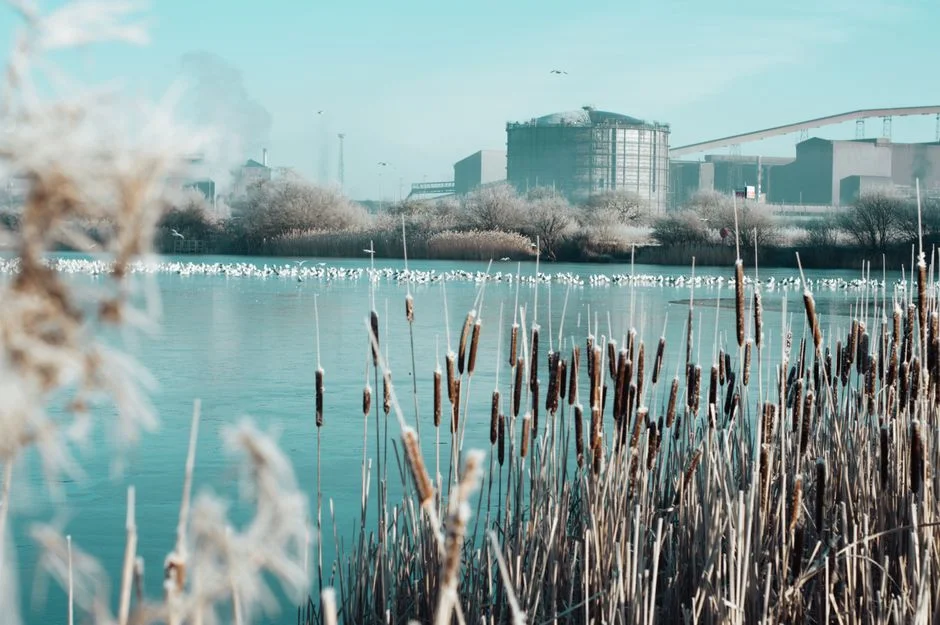
Process selection must precede supplier selection. The five dominant influent profiles in Pakistan each map to a distinct treatment train, and choosing the wrong unit operation is the single largest cause of underperforming WWTPs in the field (HydropureWater field data, 2025–2026). Use the table below to lock your process train before issuing an RFQ.
| Industry | Key Influent Parameters | Recommended Treatment Train | Target Effluent |
|---|---|---|---|
| Textile (dyeing/finishing) | COD 800–3,000 mg/L, color 500–2,000 Pt-Co, TDS 2,000–8,000 mg/L, pH 9–12 | Fenton oxidation → DAF pre-treatment → MBR with PVDF membrane (0.1–0.4 μm) | BOD ≤30, COD ≤150, color ≤100 Pt-Co |
| Tannery | Sulfide 50–200 mg/L, total chromium 50–500 mg/L, salinity 3,000–6,000 mg/L | Equalization → sulfide stripping tower → chromium precipitation → DAF → activated sludge with sludge recirculation | BOD ≤30, sulfide ≤1, Cr(VI) ≤0.05 |
| Hospital / clinical | BOD 150–300 mg/L, E. coli 10⁶–10⁸ CFU/100 mL, pharmaceutical residues | Multi-stage filtration → ozone disinfection (≥99.9% kill rate, CT ≥10 mg·min/L) → chlorination backup | E. coli undetectable, COD ≤150 |
| Municipal sewage | BOD 200–400 mg/L, TSS 250–500 mg/L, NH₃-N 20–50 mg/L | WSZ A/O underground package plant (≤500 m³/day) or containerized MBR (>500 m³/day) | NEQS municipal (BOD ≤30, TSS ≤200) |
| Food & beverage | BOD 1,500–5,000 mg/L, FOG 200–800 mg/L, pH variable | DAF → UASB anaerobic → MBR or MBBR (moving bed biofilm reactor) | BOD ≤30, FOG ≤10 |
Two practical points. First, textile effluent without Fenton or ozone pre-treatment will blind a PVDF membrane inside 30–60 days; the color bodies polymerize on the membrane surface. Second, hospital effluent in Pakistan is now under specific Punjab and Sindh EPA guidance requiring log-5 pathogen reduction, which a containerized MBR system for textile and industrial reuse alone cannot deliver — you need dedicated ozone or chlorine dioxide at the end of the train. The DAF pre-treatment unit is the workhorse for 80% of industrial profiles and should be on your RFQ as a default front-end.
Three Supplier Categories Operating in Pakistan
Pakistan's WWTP supply market splits into three categories, and the right answer depends on flow rate, influent complexity, and your documentation requirements. Local fabricators dominate the sub-100 m³/day segment; European system integrators win on >5,000 m³/day municipal tenders; Chinese OEMs occupy the 10–2,000 m³/day industrial mid-market where most of Pakistan's procurement activity sits.
| Category | Typical CAPEX (50 m³/day) | Lead Time | Documentation | Warranty | Best-Fit Flow Range |
|---|---|---|---|---|---|
| Local fabricator (Lahore/Karachi) | $30,000–$120,000 | 8–16 weeks | Basic P&ID, no EN 12255 | 6–12 months | 10–200 m³/day |
| European system integrator | $250,000–$1,500,000 | 18–24 months | Full EN 12255-1 to -15, CE, ATEX | 24 months | 1,000–50,000 m³/day |
| Chinese OEM (HydropureWater) | $45,000–$180,000 | 8–12 weeks build + 4–6 weeks shipping | ISO 9001:2015, EN 12255 statements, CE where applicable, FAT report | 18 months | 10–2,000 m³/day |
The decision rule is straightforward. For flows under 500 m³/day and standard industrial profiles (textile, food, hospital, small municipal), Chinese OEMs offer the best value in 2026: 40–60% lower CAPEX than European integrators, 8–12 week build versus 18–24 months, and EN 12255 documentation that local fabricators cannot match. For flows above 5,000 m³/day or where financing requires multilateral-bank pre-qualification, evaluate European integrators — their documentation depth and local service networks justify the premium. Local fabricators remain a reasonable choice for sub-100 m³/day municipal tenders where budget trumps documentation and the influent is straightforward domestic sewage; in those cases, use them for the civil scope and source the membrane or DAF module from a Chinese OEM.
HydropureWater's Pakistan-Ready Product Line
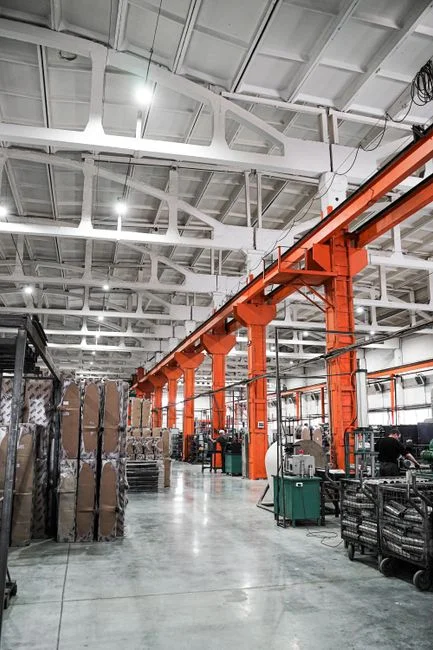
Five product families cover roughly 90% of Pakistan's industrial and small-municipal WWTP demand. Each ships with EN 12255 compliance statements, ISO 9001:2015 certification, FAT reports, and Pakistan-specific electrical documentation (220V/50Hz, 380V/50Hz).
The containerized MBR system for textile and industrial reuse handles 10–2,000 m³/day in standard 20ft or 40ft containers, uses PVDF submerged membranes with <1 μm nominal filtration, and delivers a 60% smaller footprint than conventional activated sludge. Operating flux is 15–25 L/m²·h at 0.1–0.4 MPa TMP, with chemical cleaning intervals of 30–90 days depending on influent. The MBR platform suits textile, food and beverage, hospital reuse, and tannery post-DAF polishing.
The WSZ A/O underground package plant covers 1–80 m³/h for residential colonies, hotels, hospitals, and small industrial sites. It runs fully automatic with no operator required, buries directly to reduce footprint and odor, and is the lowest-CAPEX option in the lineup at $65K–$90K for a 100 m³/day unit (FOB).
The DAF pre-treatment unit ships in 13 standard models from 4 to 300 m³/h, with micro-bubble generation (20–50 μm bubble diameter), automatic skimming, and polymer dosing integration. DAF is the default front-end for textile, tannery, and food processing where TSS, FOG, or color body removal is required before biological or membrane stages.
Sludge handling sits at the back end of every treatment train, and the sludge dewatering filter press covers 1–500 m² filtration area with automatic plate shifting and cloth washing. Typical cake dryness for biological sludge is 22–28% DS, reducing hauling volume by 75–80% versus liquid sludge. The dedicated hospital effluent system bundles multi-stage filtration, ozone, and chlorine dioxide for log-5 pathogen reduction.
2026 CAPEX and OPEX Benchmarks for Pakistan
The numbers below are defensible ranges for budget challenge against any quote you receive. All CAPEX is USD CIF Karachi unless noted; all OPEX is per cubic meter of treated effluent and includes chemicals, energy at Pakistan grid tariffs, and routine maintenance.
| System | Capacity | CAPEX (USD) | OPEX (USD/m³) | Lead Time |
|---|---|---|---|---|
| Containerized MBR | 50 m³/day | $85,000–$110,000 | $0.18–$0.32 | 10–14 weeks |
| Containerized MBR | 200 m³/day | $180,000–$260,000 | $0.16–$0.28 | 12–16 weeks |
| WSZ underground | 100 m³/day | $65,000–$90,000 FOB | $0.10–$0.18 | 8–12 weeks |
| Industrial DAF + MBR train | 500 m³/day | $280,000–$420,000 | $0.22–$0.40 | 14–18 weeks |
| Hospital ozone system | 20 m³/day | $28,000–$42,000 | $0.08–$0.14/kWh (electricity dominant) | 6–10 weeks |
| DAF unit only | 50 m³/h | $22,000–$35,000 | $0.04–$0.08 | 6–8 weeks |
Landed cost adds 18–22% to FOB prices for GST (18%), customs duty (5–20% depending on HS code 8421.21), port handling at Karachi or Qasim, and inland transport to Lahore, Faisalabad, or Peshawar. HS code 8421.21 covers filtering or purifying machinery for water and applies to most WWTP skids. The OPEX electricity cost in Pakistan is sensitive to the grid tariff band — industrial consumers paid PKR 38–55/kWh in Q1 2026, and aeration and pumping typically represent 60–70% of total energy load. For budget benchmarking against alternative sourcing options, the 2026 supplier benchmarking for Nigeria uses the same HS code 8421.21 cost structure and confirms 18–22% landed cost as the West Asia / South Asia import corridor norm.
Logistics, Compliance Documentation, and After-Sales
Around 30% of WWTP import projects into Pakistan run into avoidable logistics, documentation, or commissioning problems (industry field data, 2025). The four items that derail the other 30% are: missing EN 12255 compliance statements, no FAT report, unpriced commissioning, and no critical spares plan. Standard shipping from Hangzhou or Ningbo to Karachi takes 22–28 days; to Qasim add 2–4 days for feeder service. A 40ft HC container holds either one 50 m³/day MBR skid or two 25 m³/day WSZ units, which sets your container count and demurrage exposure.
The documentation pack you should require from any supplier, before releasing the 70% balance against B/L copy: EN 12255-1 through EN 12255-15 compliance statement, ISO 9001:2015 certificate, factory acceptance test report with measured effluent parameters, CE marking where applicable, and Pakistan-specific electrical certification for 220V/50Hz and 380V/50Hz operation. Payment terms are 30% T/T advance against proforma invoice, 70% against B/L copy, or LC at sight confirmed through HBL or UBL — both banks have established China-desk operations that handle WWTP shipments routinely. On-site commissioning runs 14–21 days at $8,000–$15,000 plus economy airfare for one engineer, with that cost typically excluded from the unit CAPEX. Critical spares should be stocked at the Karachi agent for 12-month coverage — the rotary mechanical bar screen and the automatic chemical dosing system are the two items most often missing when a plant trips in the first 90 days.
Frequently Asked Questions
What is the import duty on a WWTP into Pakistan in 2026? Customs duty on water treatment machinery (HS 8421.21) runs 5–20% depending on whether the unit is classified as capital plant or spare, plus 18% GST and 3% additional customs duty. Budget 18–22% total landed-cost uplift on FOB price.
How long does shipping take from China to Karachi? Sea freight from Hangzhou or Ningbo to Karachi takes 22–28 days; to Port Qasim add 2–4 days. Air freight is possible for sub-$30,000 skids at 4–5× sea cost.
What is the typical membrane lifespan for a containerized MBR in textile duty? PVDF submerged membranes last 4–6 years in textile application with proper Fenton pre-treatment; without Fenton, expect 18–30 months. CIP chemicals run PKR 800–1,200 per cleaning cycle.
Do you provide on-site operator training? Yes, the standard commissioning package includes 14–21 days on-site with one engineer covering start-up, operator training, and 30-day performance verification; the MBR process training module runs alongside commissioning.
Can the WSZ underground plant handle hospital effluent to NEQS? The WSZ A/O is rated for municipal-strength sewage; hospital effluent with pharmaceutical residues and high pathogen load requires the dedicated hospital effluent system with ozone or chlorine dioxide disinfection to meet NEQS E. coli and COD limits.
What is the smallest MBR unit you ship? The 10 m³/day containerized MBR is the smallest standard skid, priced around $45,000 CIF Karachi, suitable for clinics, small hotels, and remote industrial sites.
Where can I read about market sizing for MBR procurement in 2026? The MBR Market Growth & Size 2026: Industrial Buyer Data, Segments & Forecast report covers global and regional segments. For Balochistan municipal tenders, see the Municipal Sewage Treatment Plant in Balochistan, Pakistan: 2026 Engineering Guide, and for hospital-specific Pakistan compliance the Hospital Wastewater Treatment in Pakistan 2026: Engineering Specs, Compliance & Zero-Risk Equipment Guide covers the full regulatory chain.