What a Wastewater Treatment Plant Supplier in Nigeria Actually Delivers in 2026
A wastewater treatment plant supplier in Nigeria in 2026 is typically a Chinese OEM (Shandong-based packaged plant makers), an Indian turnkey contractor, or a local Nigerian systems integrator offering turnkey STP, ETP, and MBR systems. Effective suppliers must deliver plants sized 1–2,000 m³/day that meet FMEnv effluent limits of BOD₅ ≤ 50 mg/L, COD ≤ 150 mg/L, TSS ≤ 50 mg/L, and oil & grease ≤ 10 mg/L, with bundled SONCAP certification, container shipping to Lagos/Apapa, and on-site commissioning by 2026 standards.
The three supplier archetypes operate very differently. Shandong-based Chinese packaged-plant OEMs — typified by Qingdao Yimei and Qingdao Dongmao, whose Made-in-China 2026 listings show US$4,100–US$20,000 per set for containerized units — ship welded steel or FRP skids with prefitted pipework and ship them FOB Qingdao. Indian turnkey contractors typically arrive through engineering offices in Lagos or Abuja, supply detailed P&IDs and process guarantees, and import the long-lead items while fabricating tanks locally. Nigerian systems integrators like REIPL, who list WTP/WWTP/ETP/RO/STP turnkey delivery as a single scope, are usually the only ones offering both local service vehicles and a stocked spare-parts shelf.
Four deliverables are non-negotiable in 2026. First, a stamped process design with mass balance and P&ID, not just a one-line flow diagram. Second, a factory acceptance test video timestamped within 30 days of shipment — without it, the buyer cannot verify that the unit was actually wet-tested. Third, a SONCAP certificate (SON Conformity Assessment Programme) for customs clearance at Apapa; without it the container sits on the dock accruing demurrage at roughly US$150–US$300 per day. Fourth, on-site commissioning by a process engineer, not a sales rep, who stays through the first 72 hours of steady-state operation.
Scope splits drive the price gap. Equipment-only supply typically lands at the FOB China number, while full turnkey — equipment, civil works, installation, and 12 months of O&M — carries a 15–30% premium over bare equipment. Shipping realities must be in the schedule: 30–45 days container transit from Qingdao to Lagos/Apapa, plus 14–21 days for SONCAP pre-inspection and Nigerian customs release. A 90-day total logistics window from PO to site is realistic in 2026; any vendor quoting under 60 days is either overpromising or skipping SONCAP.
Nigeria FMEnv and NESREA Effluent Limits Every Supplier Must Hit
The Federal Ministry of Environment's National Environmental (Surface and Groundwater Quality) Regulations, enforced through the National Environmental Standards and Regulations Enforcement Agency (NESREA), set the binding discharge targets for any industrial or municipal WWTP in Nigeria in 2026: BOD₅ ≤ 50 mg/L, COD ≤ 150 mg/L, TSS ≤ 50 mg/L, total nitrogen ≤ 40 mg/L, oil & grease ≤ 10 mg/L, and pH 6–9. Every supplier's process design must be sized to meet these numbers in steady state, not as an average.
Two sector overlays tighten the envelope. The Department of Petroleum Resources (DPR) limit for oil & gas produced water pushes chloride and total dissolved solids well below the generic FMEnv industrial band, and any supplier quoting a standard municipal MBR for an upstream ETP will fail on TDS. NAFDAC overlays on food, beverage, and pharmaceutical effluent add microbial and residue constraints that usually require a tertiary disinfection stage (chlorination or UV at 40 mJ/cm²) that basic packaged units do not include.
The cost of failing these limits in 2026 is severe. A NESREA shutdown notice triggers daily fines, a remediation order, and reputational damage that usually costs 3–5× the original plant CAPEX once production losses, legal fees, and retendering are added. For most Lagos industrial estates the realistic exposure on a 500 m³/day plant is ₦450M–₦900M (US$300,000–US$600,000) if the plant is offline for 30 days. That number is what justifies spending the extra 15% on a properly designed unit instead of the lowest FOB quote.
Where oil & grease ≤ 10 mg/L is the binding constraint, pre-treatment sizing must start with dissolved air flotation. Reference units such as the dissolved air flotation system cover 4–300 m³/h in a single skid and routinely bring inlet oil & grease from 300–800 mg/L down to 15–25 mg/L, which then allows the downstream biological stage to hit the 10 mg/L ceiling without overdesign.
| Parameter | FMEnv/NESREA limit (2026) | Typical raw industrial influent | Stage that removes it |
|---|---|---|---|
| BOD₅ | ≤ 50 mg/L | 250–800 mg/L | Biological (MBR, SBR, A2/O) |
| COD | ≤ 150 mg/L | 500–2,000 mg/L | Biological + chemical polishing |
| TSS | ≤ 50 mg/L | 200–600 mg/L | Clarifier / membrane / DAF |
| Total nitrogen | ≤ 40 mg/L | 40–80 mg/L | A2/O nitrification-denitrification |
| Oil & grease | ≤ 10 mg/L | 50–800 mg/L | DAF pre-treatment |
| pH | 6–9 | 5–11 | Equalization + dosing |
Five WWTP Technologies Nigerian Suppliers Offer and Where Each Fits
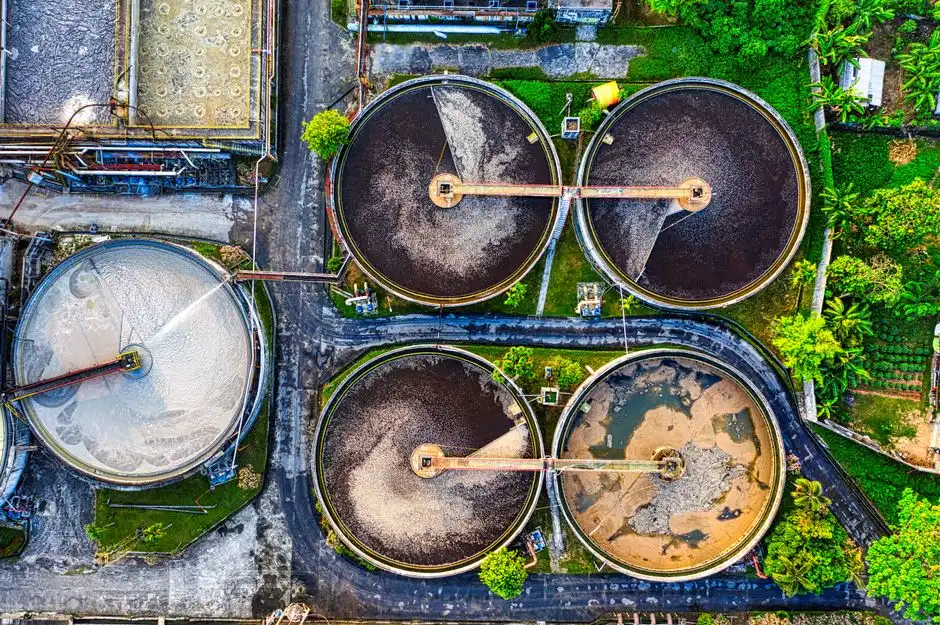
The five process trains a Nigerian buyer will see quoted in 2026 are not interchangeable. Each matches a different influent envelope, footprint, and reuse target, and forcing the wrong one onto a site is the most common reason packaged plants fail FMEnv compliance.
The WSZ underground A/O packaged plant (1–80 m³/h, fully automated, no on-site operator) is the default for residential estates, hotels, hospitals under 200 beds, and rural communities. The whole unit sits below grade, which keeps the footprint off the developer's marketing renderings, and the anoxic-aerobic loop reliably hits BOD₅ ≤ 30 mg/L and TSS ≤ 30 mg/L on domestic sewage. It will not handle high oil & grease or high COD swings, and any supplier proposing it for a brewery or abattoir is mis-sizing the job.
The MBR membrane bioreactor system (10–2,000 m³/day, <1 μm PVDF effluent, 60% smaller footprint than CAS) is the right pick for water reuse, hospitals, food & beverage, and any site targeting zero liquid discharge in 2026. MBR effluent at <1 μm TSS and BOD₅ < 5 mg/L is directly polishable by RO for boiler feed or cooling-tower make-up. Energy sits at 0.4–1.2 kWh/m³ depending on the influent and flux, and membrane replacement at US$35–US$60/m² every 5–7 years must be priced into the lifecycle model.
SBR (sequencing batch reactor) is the flexible workhorse for slaughterhouses, dairies, and small tanneries where influent volume and strength vary hour by hour. Capital cost sits 10–15% below MBR for 100–500 m³/day because there is no membrane module, but it needs a more sophisticated PLC and a trained operator on shift. A2/O (anaerobic-anoxic-aerobic) is required when total nitrogen ≤ 40 mg/L is binding — typical for municipal STPs and large brewery projects with high ammonia. MBBR (moving-bed biofilm reactor) is the retrofit option: existing Nigerian activated-sludge plants that need 30–50% capacity uplift without new tankage can drop in carrier media and gain the equivalent of an extra aeration lane.
| Technology | Flow range | Effluent BOD₅ / TSS | Energy (kWh/m³) | Best Nigerian application |
|---|---|---|---|---|
| WSZ A/O packaged | 1–80 m³/h | ≤ 30 / ≤ 30 mg/L | 0.3–0.6 | Estates, hotels, small hospitals |
| MBR | 10–2,000 m³/day | ≤ 5 / ≤ 1 mg/L | 0.4–1.2 | Hospitals, F&B, reuse, ZLD |
| SBR | 100–500 m³/day | ≤ 20 / ≤ 25 mg/L | 0.2–0.5 | Slaughterhouses, dairies, tanneries |
| A2/O | 500–50,000 m³/day | ≤ 20 / ≤ 20 mg/L; TN ≤ 40 | 0.25–0.5 | Municipal STP, large breweries |
| MBBR | Retrofit any | ≤ 25 / ≤ 30 mg/L | +0.1–0.2 vs CAS | Capacity uplift in existing tanks |
2026 CAPEX and OPEX Benchmarks for Nigerian WWTP Projects
The cheapest quote is rarely the best quote, but it should still sit inside a defensible band. Small packaged plants (1–50 m³/h, WSZ-type) are listed on Made-in-China at US$4,000–US$20,000 per set FOB Qingdao in 2026. Once SONCAP, marine freight, 7% import duty, and last-mile delivery to site are added, the same unit lands in Lagos at roughly US$8,000–US$35,000 CIF. Anything below US$5,000 all-in should trigger a process-design audit — at that price the membrane area, tankage, or blower duty has almost certainly been cut.
Mid-scale MBR turnkey projects at 200–2,000 m³/day sit in the US$180,000–US$1.2M all-in band in 2026, including civil works, equipment, install, and commissioning. The wide spread reflects influent variability: a brewery at 1,000 m³/day with high COD will sit near the top, a packaged-food plant with low oil and steady flow will sit near the bottom. Above 2,000 m³/day the cost per m³ drops sharply, and at municipal scale (10,000+ m³/day) buyers should expect US$250–US$450 per m³/day of installed capacity.
OPEX is dominated by energy. Industrial electricity in Nigeria runs US$0.08–US$0.14/kWh in 2026, and MBR plants consume 0.4–1.2 kWh/m³ while SBR plants consume 0.2–0.5 kWh/m³. Chemical cost for coagulant, polymer, and disinfection sits at US$0.02–US$0.08/m³ depending on influent; an automatic chemical dosing system typically reduces chemical use 15–25% by holding the dose at setpoint instead of operator-titration. At the 2026 exchange-rate band of ₦1,500–₦1,800 per USD, a 500 m³/day MBR running at 0.8 kWh/m³ costs roughly ₦600,000–₦1,000,000 per month in power alone — a number every Lagos operations manager should walk through with finance before signing.
| Plant size class | CAPEX band (USD, 2026) | CAPEX band (NGN, 2026) | Main OPEX driver |
|---|---|---|---|
| Packaged 1–50 m³/h | US$8,000–US$35,000 CIF Lagos | ₦12M–₦63M | Chemical + sludge haulage |
| MBR turnkey 200–2,000 m³/day | US$180,000–US$1.2M | ₦270M–₦2.16B | Electricity (60–70% of OPEX) |
| Municipal A2/O >10,000 m³/day | US$250–US$450 per m³/day | ₦375K–₦810K per m³/day | Electricity + sludge management |
How to Compare Wastewater Treatment Plant Suppliers in Nigeria
A 10-vendor longlist is useless without a weighted score. Nine criteria, applied identically to a Chinese OEM, an Indian turnkey contractor, and a local Nigerian integrator, will compress the list to a defensible shortlist of three within a single working session. Process fit (20%) is the most heavily weighted: if the proposed technology does not match the influent envelope, the rest of the score is irrelevant. FMEnv effluent track record (15%) is verified by reference plants with at least 12 months of operating data, not glossy brochures.
The remaining seven criteria each carry 5–10% weight. Nigeria reference list (10%) confirms the vendor has cleared Nigerian customs and survived a Nigerian site. SONCAP and pre-shipment documentation (10%) — covered in the earlier logistics section — is the single most common cause of stalled projects. Lagos service agent or partner (10%) and West-Africa spare-parts inventory (10%) are the difference between a 48-hour fix and a 6-week waiting period. Warranty terms (10%), commissioning-team credentials (10%), and payment terms (5%) round out the matrix.
Four red flags should auto-disqualify a vendor regardless of score: no Nigerian reference on a comparable plant, an FOB-only quote with no SONCAP offer, no commissioning engineer willing to travel to site, and a price more than 30% below the median. The same framework has been applied to the sewage treatment plant supplier in Kampala guide and the wastewater treatment plant manufacturer in Bangkok guide, so the scoring logic is portable across African and Southeast-Asian procurement.
| Criterion | Weight | Chinese OEM | Indian turnkey | Nigerian integrator |
|---|---|---|---|---|
| Process fit to influent | 20% | Medium | High | High |
| FMEnv track record | 15% | Low–Medium | Medium | High |
| Nigeria reference list | 10% | Low | Medium | High |
| SONCAP / documentation | 10% | Medium (via agent) | Medium | High |
| Lagos service agent | 10% | Low | Low–Medium | High |
| Spare-parts in West Africa | 10% | Low | Low | High |
| Warranty terms | 10% | High | Medium | Medium |
| Commissioning team | 10% | Medium (travel cost) | Medium | High |
| Payment terms | 5% | Low (TT in advance) | Medium | High (LC / milestone) |
10-Point Supplier Qualification Checklist Before You Sign the PO
Ten items, each verifiable in writing, separate a defensible PO from a six-month dispute. 1) ISO 9001 factory audit certificate issued within the last 12 months, not a generic corporate cert. 2) CE marking on electrical panels and SONCAP certificate named for the Nigerian importer of record. 3) Signed Nigerian NDA covering process design and pricing, with Lagos jurisdiction — without it, your process design ends up in a competitor's RFQ. 4) Factory acceptance test video dated within 30 days of shipment. 5) Reference-plant visit or live video walkthrough at a comparable Nigerian installation. 6) Container-loading photo with seal number, sent on the day of stuffing. 7) Pre-shipment inspection report from a third-party agency (SGS, Bureau Veritas, or local Cotecna). 8) Commissioning engineer CV with at least two Nigerian projects in the last 24 months. 9) Spare-parts price list locked for 3 years — blower filters, membrane modules, UV lamps, and DO probes priced at fixed USD. 10) 12-month remote monitoring offer with defined response time and escalation path.
Four of these ten are skipped by roughly 80% of Nigerian buyers and cause the majority of post-handover disputes. SONCAP pre-inspection, signed NDA, locked spare-parts pricing, and a remote monitoring option. Each is inexpensive to request and very expensive to add after the PO is signed. The same checklist applies whether the bid on the table is from a Chinese OEM shipping from Qingdao, an Indian turnkey office in Lagos, or a local Nigerian integrator — that equivalence is the point.
Frequently Asked Questions About Wastewater Treatment Plant Suppliers in Nigeria
Q1: How much does a wastewater treatment plant cost in Nigeria in 2026?
Packaged plants 1–50 m³/h land at US$8,000–US$35,000 CIF Lagos including SONCAP and duty. Mid-scale MBR turnkey projects at 200–2,000 m³/day sit at US$180,000–US$1.2M all-in. Drivers are influent strength (high COD needs more tankage), effluent target (reuse needs MBR + RO), and scope split (equipment-only vs full turnkey). At ₦1,500–₦1,800/USD in 2026, the same packaged unit costs ₦12M–₦63M.
Q2: Which WWTP technology is best for Nigerian industrial estates?
MBR for sites that need water reuse, hospital-grade disinfection, or zero liquid discharge. SBR for variable-strength influent from slaughterhouses or dairies in the 100–500 m³/day band. A2/O is mandatory when total nitrogen ≤ 40 mg/L is binding, which is typical for municipal STP and large brewery effluent. MBBR is the right answer when an existing activated-sludge plant needs capacity uplift without new civil works.
Q3: Do Nigerian suppliers handle SONCAP and NAFDAC documentation?
Local Nigerian integrators usually handle SONCAP in-house and have an existing relationship with the destination inspection body. Chinese OEMs typically pass SONCAP to a third-party agent (Cotecna, SGS, or Bureau Veritas) and the buyer should confirm who pays the fee and who is named as the consignee. NAFDAC is only relevant for food, beverage, and pharmaceutical effluent and is handled separately.
Q4: What is the typical delivery time from China to Lagos?
30–45 days sea transit from Qingdao to Lagos/Apapa, plus 14–21 days for SONCAP pre-inspection, Nigerian customs release, and last-mile delivery. A 90-day total window from PO to site is realistic in 2026; any vendor quoting under 60 days has either skipped SONCAP or is not counting customs clearance time.
Q5: Can a packaged WWTP meet FMEnv discharge limits?
Yes for small municipal and domestic flows where the influent is within the standard range (BOD₅ 200–400 mg/L, TSS 200–400 mg/L, oil & grease < 50 mg/L). Industrial sites with high COD, high oil & grease, or variable pH need a custom process train with DAF pre-treatment, equalization, and biological polishing — a packaged unit alone will not hit COD ≤ 150 mg/L on brewery or refinery wastewater. For hospital applications, the same logic is documented in the hospital wastewater treatment in Yaoundé guide.