Why Warsaw Hotels Need a Dedicated Wastewater System in 2026
A 4-star hotel in central Warsaw with municipal sewer access pays roughly 8–12 PLN/m³ in combined sewer discharge fees, while a comparable property in Wilanów or Białołęka discharging via a package plant faces both treatment OPEX and a tanker-removal surcharge of 25–40 PLN/m³ when peak flows exceed reception capacity. The economics alone justify a properly sized STP — and the regulatory framework in 2026 makes undersized systems non-viable. Discharge to the Vistula catchment is regulated by Wody Polskie / RZGW Warszawa, the same authority that governs industrial sites, and the same Polish Rozporządzenie effluent limits apply whether you run a 200-room conference hotel or a 30-room boutique.
Hydraulic peaks are the second pressure point. A typical 4* Warsaw property running 200 L/guest-day sees a morning surge (07:00–10:00) of 2.5–3.0× the daily average when guests shower, breakfast service runs at full capacity, and laundry shifts start. A banquet block of 150 covers can push instantaneous flow to 4× average over a 90-minute window. Sizing to daily average — a common shortcut in scope-of-work documents from non-specialist contractors — guarantees shock loads that kill biomass and breach permit. The defensible approach treats the peak factor as a primary design input, not a margin note.
EU Directive 91/271/EEC sets the secondary treatment baseline for agglomerations above 2,000 PE, and most Warsaw hotels above 60 rooms exceed that threshold, triggering full biological treatment requirements. Tourism-driven sites also need to plan for a 30% occupancy swing between low and high season — winter MICE weeks and summer leisure peaks — which the biological stage must absorb without operator intervention.
Influent Characteristics of a Warsaw Hotel or Resort
Hotel sewage is more concentrated than municipal wastewater, and FOG loading is the single largest variable between a stable plant and one that foams, washes out biomass, and breaches permit. The numbers below are the working range a design engineer should plug into the BOD, COD, and TSS load calculations before sizing aeration or membrane area — drawn from the parallel Casablanca hotel wastewater treatment 2026 guide hospitality benchmark dataset, validated against Polish field installations.
| Parameter | Typical range (4* hotel) | Resort / spa property | Conference / MICE hotel |
|---|---|---|---|
| BOD5 (mg/L) | 250–400 | 200–350 | 300–450 |
| COD (mg/L) | 500–800 | 400–700 | 600–900 |
| TSS (mg/L) | 200–350 | 150–300 | 250–400 |
| FOG (mg/L) | 80–150 | 60–120 | 100–180 |
| Total nitrogen (mg/L) | 30–60 | 25–50 | 35–70 |
| Per-guest water use (L/day) | 180–250 | 220–320 (spa/pool) | 160–220 (short stays) |
Per-guest water use in Warsaw's 4* segment sits at 180–250 L/day for the typical business-plus-leisure mix, with spa and pool backwash adding 15–25% to total hydraulic load for resort properties. FOG above 100 mg/L is a flag — it almost always traces to undersized grease interceptors or cleaning chemistry that emulsifies fats before they reach the trap. The biological stage cannot tolerate emulsified FOG; it must be physically removed upstream via a lamella clarifier or DAF before the bioreactor.
Seasonal pattern matters. Resort properties in the Mazowieckie voivodeship see +30% occupancy spikes in summer (June–August) and around the Christmas market window in central Warsaw; winter MICE hotels see weekday peaks Monday–Thursday and troughs on weekends. A control philosophy that adjusts aeration duty based on a flow-paced signal — not a fixed timer — handles both profiles without operator intervention.
2026 Polish Discharge Limits and EU Compliance Baseline
Polish effluent limits are codified in the Rozporządzenie Ministra Gospodarki Morskiej i Żlądowej Śródlądowej concerning substances particularly harmful to the aquatic environment and conditions to be met when discharging sewage into waters or soil (consolidated text 2019, in force 2026). For discharges to receiving waters from hotel STPs sized above 2,000 PE, the parameters in the table below apply, alongside EU Directive 91/271/EEC's secondary treatment baseline for urban waste water.
| Parameter | Polish standard limit (receiving water) | Sensitive area / Vistula tributary | Reuse target (EU 2020/2184) |
|---|---|---|---|
| BOD5 | ≤ 25 mg/L | ≤ 15 mg/L | ≤ 10 mg/L |
| COD | ≤ 125 mg/L | ≤ 80 mg/L | ≤ 50 mg/L |
| TSS | ≤ 35 mg/L | ≤ 20 mg/L | ≤ 10 mg/L |
| Total nitrogen | ≤ 30 mg/L | ≤ 15 mg/L | ≤ 10 mg/L |
| Total phosphorus | ≤ 5 mg/L | ≤ 2 mg/L | ≤ 1 mg/L |
Sites near Natura 2000 zones — common in the Mazowieckie voivodeship around the Kampinos Forest, the Vistula's oxbow lakes, and the Bugo-Narew confluence — fall under the sensitive-area column, where TN ≤ 15 mg/L is enforceable. Wody Polskie issues the discharge permit, and the typical lead time is 6–10 months, which runs in parallel with construction but must be secured before commissioning (per industrial wastewater treatment in Warsaw 2026 guide).
Reuse scenarios — landscape irrigation, toilet flushing, laundry — are governed by EU Directive 2020/2184 on drinking water quality, which Poland transposed in 2023, applying the EU 98/83 parametric values to reused water with human contact risk. Achieving those values consistently requires MBR-grade filtrate plus a polishing disinfection step, typically chlorine dioxide or medium-pressure UV.
Three Process Options Compared: MBR vs WSZ Package Plant vs SBR
The technology choice for a Warsaw hotel STP is driven by three inputs: room count, available footprint, and whether reuse is a project requirement. The comparison below maps the three most common options against those inputs. Pricing reflects 2026 turnkey equipment CAPEX, excluding installation and permitting (covered in the next section).
| Parameter | MBR (DF series) | WSZ underground A/O | SBR |
|---|---|---|---|
| Capacity range (m³/day) | 30–500 | 5–80 | 50–500 |
| Effluent BOD (mg/L) | < 5 | 20–30 | 10–20 |
| Effluent TSS (mg/L) | < 1 | 20–30 | 15–25 |
| Footprint (per 100 m³/day) | ~30 m² | ~45 m² (buried) | ~75 m² |
| Reuse-ready | Yes (irrigation, laundry) | No (irrigation only) | Limited |
| Operator skill required | Low (automated) | Minimal (no daily operator) | Medium (cycle tuning) |
| Membrane / media replacement | 8–12 years | Media 10–15 years | Diffusers 5–8 years |
| Best fit | 4*/5* ≥ 80 rooms, urban site, reuse target | ≤ 60 rooms, landscaping buffer, no reuse | 100–300 rooms, land available, no reuse |
MBR uses submerged PVDF flat-sheet modules with 0.1 μm nominal pore size, producing a near-sterile filtrate that meets reuse thresholds without tertiary filtration. The MBR membrane bioreactor system delivers 60% footprint reduction against an equivalent SBR, which is the decisive factor on tight Warsaw infill sites. The DF series MBR flat-sheet membrane module operates at 10–20× lower energy than cross-flow hollow-fibre designs, with 32–135 m³/day capacity per module depending on configuration (per product spec).
WSZ underground A/O package plants are fully buried, low-profile, and require no daily operator — the right call for a 30–60 room boutique or a resort with a landscaping buffer that absorbs subsurface irrigation discharge. The WSZ underground package sewage treatment plant ships as a factory-tested skid, which compresses on-site installation to 3–5 days.
SBR is the middle path: operational flexibility, good nutrient removal, but tankage-heavy. It fits a 100–300 room property on a site with at least 80 m² of available footprint and no reuse ambition. The decision tree short version: room count below 60 and no reuse → WSZ; 80+ rooms or any reuse → MBR; 100–300 rooms with land but no reuse → SBR.
Pretreatment, Disinfection, and Sludge Handling
A hotel STP fails on auxiliaries as often as on the main bioreactor. The four equipment blocks below are the ones a facilities director or EPC consultant needs to spec into the tender package at scoping stage — skipping any of them either kills the membranes or breaches the discharge permit.
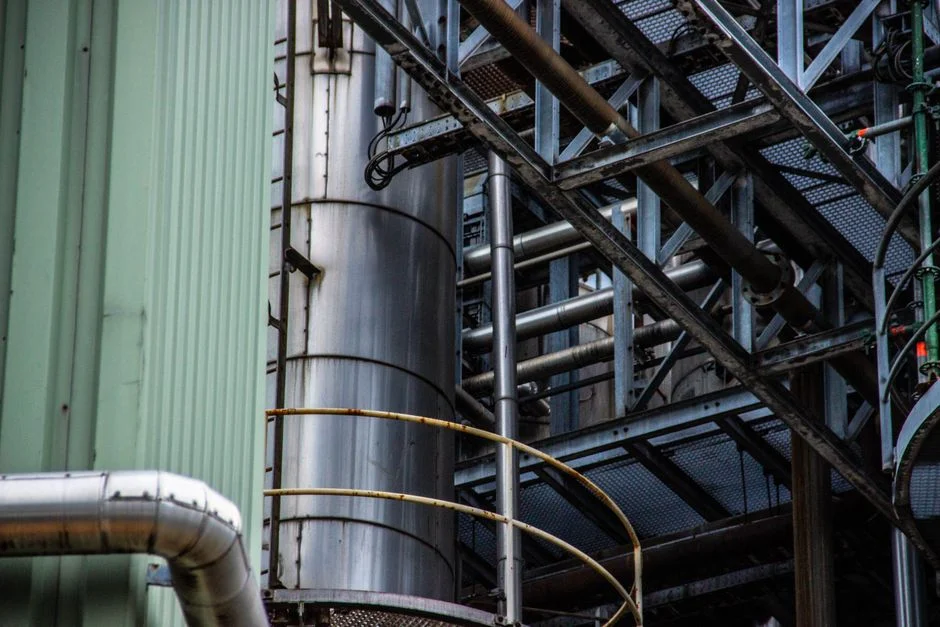
Headworks first. A GX series rotary mechanical bar screen removes rags, fibrous debris, and hygiene products before they reach pumps and the biological stage. Without it, hotel sewage — heavily loaded with wipes, hair, and textile fibres — plugs aeration diffusers and fouls membranes within months. The screen discharges to a compactor bag, and the duty cycle runs 5–15 minutes per hour depending on load.
FOG removal sits upstream of biology. A high-efficiency lamella sedimentation tank at 20–40 m/h surface loading removes 60–85% of influent FOG, cutting coagulant consumption on a downstream DAF by ~30% (per product spec) and protecting the biomass from emulsified fats. For properties with central kitchens producing more than 200 meals per service, an additional DAF stage is the right call.
Disinfection for Polish hospitality should default to chlorine dioxide. A chlorine dioxide generator sized 50–20,000 g/h produces ClO2 on-site from HCl + NaClO2, avoiding the trihalomethane (THM) formation that breaks EU 98/83 parametric values for reuse applications. UV is acceptable for irrigation reuse but does not provide residual disinfection, which most hospitality operators want for downstream safety.
Sludge dewatering closes the loop. A plate-frame filter press in the 1–500 m² filter area range dewars biological sludge to ~20% dry solids cake, suitable for off-site disposal or co-composting with green waste. For a 100 m³/day hotel plant, expect 8–12 m³ of wet sludge per week, dewatered to 1.5–2 m³ of cake.
2026 CAPEX and OPEX Benchmarks for Polish Hotel STPs
The figures below are turnkey equipment CAPEX in EUR for a factory-tested package, FOB or CIF Warsaw, drawn from comparable hospitality projects including the parallel Kuala Lumpur hotel wastewater treatment 2026 guide and the Casablanca benchmark. OPEX includes energy, chemicals, membrane or media replacement amortised, and routine servicing — but excludes labour, which varies by whether the hotel uses in-house engineering or a service contract.
| System | Capacity | CAPEX (EUR) | OPEX (EUR/m³) | Reuse offset |
|---|---|---|---|---|
| WSZ A/O package | 20–80 m³/day | 35,000–70,000 | 0.45–0.70 | None (irrigation only) |
| SBR | 50–200 m³/day | 90,000–180,000 | 0.55–0.85 | Limited (irrigation) |
| MBR (DF series) | 50–200 m³/day | 120,000–250,000 | 0.75–1.10 | 0.30–0.55 (laundry + irrigation) |
Installation, commissioning, and Wody Polskie permitting typically add 18–25% to equipment CAPEX. For an MBR plant in the 100 m³/day class, expect 145,000–310,000 EUR total project cost through handover. The reuse credit line in the table is real money: a 120-room property reusing 40% of treated effluent for laundry and landscape irrigation offsets 30,000–55,000 EUR/year in freshwater purchase and wastewater discharge fees, which improves MBR payback to 4–6 years against WSZ or SBR.
Sizing Worked Example: A 120-Room Warsaw Business Hotel
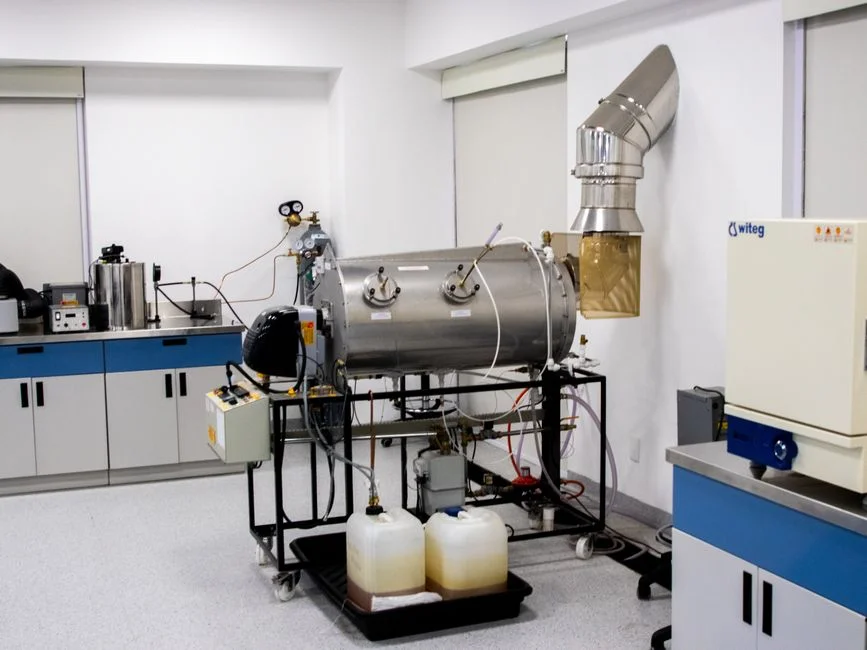
The arithmetic below uses the methodology from the Casablanca hotel wastewater treatment 2026 guide applied to a Mazowieckie business hotel. It is the calculation a design engineer should run before any equipment selection.
Step 1 — average daily flow: 120 rooms × 1.8 occupancy × 220 L/guest-day = 47,520 L/day ≈ 47.5 m³/day. Step 2 — apply peak factor 2.8×: 47.5 × 2.8 = 133 m³/day peak hydraulic load. Step 3 — biological load: at 350 mg/L BOD, 47.5 × 350 / 1,000 = 16.6 kg BOD/day, which fixes the aeration duty. Step 4 — technology selection: 120 rooms + urban site + reuse target → MBR. Step 5 — module count: DF series MBR flat-sheet membrane module at 80 m² per module rated to 80 m³/day → 2 modules, providing 160 m³/day capacity and 20% headroom for occupancy growth or banquet load.
Footprint: two 20 ft containerised MBR skids plus an 8 m² headworks kiosk, total ~45 m² versus ~110 m² for an equivalent SBR. Effluent target after MBR + ClO2 polishing: BOD < 5 mg/L, COD < 30 mg/L, TN < 10 mg/L — reused for landscape irrigation across a 0.4 ha site and laundry make-up water, displacing ~19 m³/day of freshwater.
Frequently Asked Questions
What is the minimum footprint for a hotel STP in Warsaw?
For a small boutique, a buried WSZ A/O package plant handling 20–30 m³/day fits in roughly 25 m² of surface footprint including access lids. For a 120–150 m³/day MBR plant, expect 40–50 m² including headworks kiosk and sludge handling. By comparison, an SBR at the same capacity needs 100–120 m², which is often the deciding factor on tight Warsaw infill sites.
Do Warsaw hotels need chlorine dioxide or UV disinfection?
Chlorine dioxide is the default for Polish hospitality because it avoids trihalomethane (THM) formation, which would breach EU 98/83 parametric values for any reuse application and cause odour issues in guest areas. UV is acceptable for landscape irrigation reuse where residual disinfection is not required, but it does not provide the residual chlorine equivalent that most hotel engineering teams want for downstream safety.
How long does Polish Wody Polskie permitting take?
A discharge permit from Wody Polskie (RZGW Warszawa) typically takes 6–10 months for a hotel STP sized above 2,000 PE, running in parallel with construction but must be issued before commissioning. The application package includes the process design report, hydraulic calculations, effluent quality projections, and the receiving water body assessment. Early engagement with the regulator is the single biggest factor in avoiding delays.
Can a 4* hotel in Warsaw reuse treated water for laundry?
Yes, with MBR-grade treatment plus chlorine dioxide polishing, treated effluent meets EU Directive 2020/2184 requirements for human-contact reuse applications including laundry make-up water. Typical reuse rates run 30–50% of total treated flow, displacing 15–25 m³/day of freshwater for a 120-room property.
What is the typical membrane replacement interval for a hotel MBR?
DF series PVDF flat-sheet modules last 8–12 years in hotel service with proper chemical cleaning (typically once per quarter with NaClO + citric acid). Individual modules are replaceable without taking the full train offline, which is a meaningful operational advantage over hollow-fibre designs that require full cassette replacement. Membrane lifespan depends heavily on consistent FOG removal upstream — a plant that runs hot grease into the membranes will see replacement intervals drop to 4–5 years.