
Why the Top Results Don't Answer the Engineering Question
A query in 2026 for "Kuala Lumpur hotel wastewater treatment" returns TripAdvisor's water-park hotel list, the M Resort & Hotel KL review thread on Trip.com, and the eco-hotelsguide.com directory — three pages that discuss bedding, breakfast buffets, and pool access but contain zero engineering content. None mention BOD limits, the Indah Water Konsortium consent process, membrane flux, or monsoon hydraulic peaking. An engineer sizing a 300-room city hotel or a 150-villa Langkawi resort gets no usable information from them.
The gap is real: hospitality marketing sites dominate the SERP because they attract backlinks, but they answer a different question ("where should I stay") than the one being asked ("how do I treat the sewage this many guests will generate"). A proper 2026 engineering assessment for a Malaysian hotel covers four pillars — the regulatory framework under DOE and IWK, the characteristic waste-stream composition, the process train that delivers compliance, and the reuse economics that convert a cost centre into a sustainability asset. This article provides a technical sequence for each.
Malaysian Regulatory Framework for Hotel Effluent in 2026
Hotel wastewater in peninsular Malaysia falls under the Environmental Quality (Sewage) Regulations 2009, enforced by the Department of Environment (DOE), with sewer connection consents issued by Indah Water Konsortium (IWK), the national sewerage operator. The regulation defines two discharge tiers that determine equipment selection: Standard A applies to direct discharge into receiving waters, and Standard B applies to discharge into a public sewer. Most connected city hotels in KL discharge under Standard B, while standalone island or highland resorts typically must hit Standard A at the final outfall.
| Parameter | Standard A (direct discharge) | Standard B (to sewer) |
|---|---|---|
| BOD₅ | 20 mg/L | 50 mg/L |
| COD | 50 mg/L | 100 mg/L |
| SS | 50 mg/L | 100 mg/L |
| NH₃-N | 5 mg/L | 20 mg/L |
| Oil & grease | 5 mg/L | 10 mg/L |
| pH | 6.0–9.0 | 6.0–9.0 |
SPAN (Suruhanjaya Perkhidmatan Air Negara), the National Water Services Commission, regulates any on-site treatment plant or recycling system and requires a Competent Person (licensed operator) on plants above 500 m³/day — a threshold crossed by any 250-room hotel at typical design flow. For resorts on Langkawi, Tioman, or in the Cameron Highlands where IWK sewer coverage is absent, the DOE issues the standalone discharge approval directly, and the plant must meet Standard A at the discharge point. Designing to Standard A from the outset avoids retrofits if the hotel later decides to abandon sewer connection or pursue reuse.
Hotel and Resort Wastewater Characteristics in Malaysia
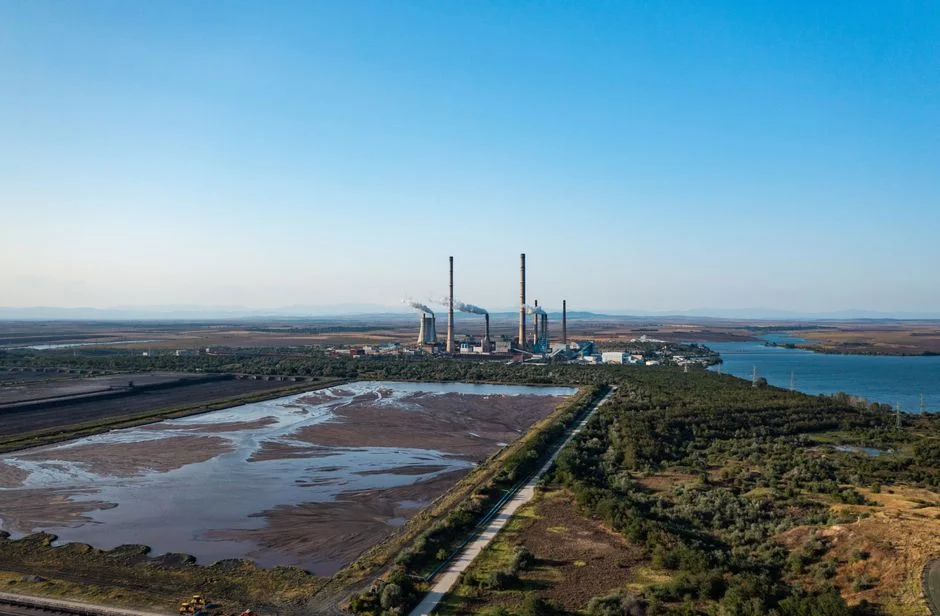
Per-guest water consumption in Malaysian hotels runs 200–300 L/day, driven by tropical climate, longer shower durations, and high laundry turnover from short-stay business travel. Monsoon events push hydraulic loading to 2.0–2.5× average dry-weather flow — KL receives >2,400 mm of annual rainfall concentrated in March–May and September–November, and equalisation tank sizing must assume the full peak rather than a rolling average. The waste stream is a blend of three sources that behave very differently in a biological reactor: blackwater from guest bathrooms, greywater from laundry with high surfactant and suspended-solid load, and kitchen FOG streams that fluctuate sharply with banquet service.
Raw influent to the biological stage typically measures BOD 250–400 mg/L, COD 500–700 mg/L, SS 200–350 mg/L, NH₃-N 20–40 mg/L, and FOG 50–150 mg/L if kitchen streams join without pre-treatment. Operating temperatures of 28–32°C accelerate biological kinetics — nitrification rates roughly double compared to a 20°C European plant — but reduce dissolved oxygen saturation to ~7.4 mg/L, which raises aeration blower power per kilogram of BOD oxidised. Designers should expect FOG shock loads during weekend banquet turnovers and surfactant peaks from daily laundry cycles; both justify dedicated pre-treatment ahead of the membrane tank.
Recommended 2026 Process Train for a KL Hotel STP
The default 2026 process train for a 200–500-room KL city hotel is a packaged MBR (membrane bioreactor) delivering Standard A compliance from a basement or podium footprint. Flow enters through a rotary bar screen headworks with 3–5 mm aperture to capture rags, followed by a grit chamber for sand and food particulate. Kitchen waste lines bypass this stream and feed a dedicated DAF pre-treatment unit with 5–15 minute hydraulic residence and 30–80 m/h surface hydraulic loading — the DAF removes >90% of FOG before the load ever reaches the biology, which prevents filamentous bulking and membrane fouling.
The biological core is an anoxic/aerobic (A²/O) reactor followed by submerged PVDF membrane modules — either flat-sheet or hollow-fibre at 0.1–0.4 μm nominal pore size. Design parameters for 2026: SRT 20–30 days, MLSS 8,000–12,000 mg/L, design flux 15–25 L/m²·h operating at 10–40 kPa transmembrane pressure. The high MLSS enabled by the membrane barrier (vs. ~4,000 mg/L in a conventional clarifier) gives a compact tankage volume roughly 40% smaller than an equivalent activated-sludge plant. A packaged MBR system integrating anoxic, aerobic, and membrane zones in a single skid cuts site installation to civil works and piping.
| Stage | Equipment | Key parameter | 2026 design value |
|---|---|---|---|
| Headworks | Rotary bar screen | Aperture | 3–5 mm |
| FOG removal | DAF unit | Surface loading | 30–80 m/h |
| Biology | A²/O reactor | MLSS | 8,000–12,000 mg/L |
| Biology | A²/O reactor | SRT | 20–30 days |
| Separation | PVDF membrane | Nominal pore | 0.1–0.4 μm |
| Separation | PVDF membrane | Design flux | 15–25 L/m²·h |
| Polishing | Chlorine contact | Free Cl residual | 0.5–1.0 mg/L, 30 min |
Effluent polishing is a residual chlorine contact tank held at 0.5–1.0 mg/L free chlorine for 30 minutes before either sewer discharge or reuse storage. Equalisation upstream of the MBR is sized for 8–12 hours at average flow, which is sufficient to absorb both monsoon peaks and banquet FOG spikes without shocking the biology. An on-line MLSS probe, DO probe, and turbidity meter on the membrane permeate line are the minimum instrumentation for a 2026 plant that runs unattended between daily operator visits.
On-Site Reuse for Resorts: Closing the Water Loop
Resorts pursuing GreenRE or LEED credits — or simply trying to reduce monthly water bills on islands without IWK coverage — can route MBR permeate into a non-potable reuse loop that offsets 60–80% of municipal demand. The four realistic end-uses in a Malaysian resort are toilet flushing (highest indoor demand at 30–50 L/guest-day), landscape irrigation for golf-adjacent or extensive grounds, cooling-tower make-up, and car-wash or housekeeping bays. For a 150-villa Langkawi resort at 250 L/guest-day, reuse for toilet flushing and irrigation alone can displace ~180 L/guest-day, which on a 70% occupancy profile returns the reuse capex premium within 4–6 years at current commercial water tariffs.
SPAN's Guidelines for Water Reuse govern non-potable applications and typically require turbidity <2 NTU, BOD <5 mg/L, E. coli <1 CFU/100 mL for unrestricted reuse. The polishing train downstream of the MBR is: multi-media filter → UV disinfection at 40 mJ/cm² dose → chlorine dioxide residual maintenance in a storage tank → distribution. A multi-media filter ahead of the UV step protects the lamps from fouling and ensures the dose is actually delivered. Direct potable reuse is not permitted in Malaysia as of 2026; the highest tier remains indirect potable reuse via an environmental buffer such as a golf-course irrigation network.
For high-end properties in Langkawi, Penang island, or Sabah where IWK sewer coverage is absent, reuse is more than a sustainability credit — it is the only way to avoid large on-site storage lagoons for treated effluent. A 150-villa resort generates roughly 80 m³/day of permeate; without reuse, that volume must be evaporated, infiltrated, or trucked, all of which carry ongoing operating cost and regulatory risk.
System Selection: Which Plant Fits Your Project?
Three 2026 options realistically cover the Malaysian hotel market: full MBR for city hotels and any resort pursuing reuse; the WSZ underground package plant for budget-driven projects on Standard B discharge; and septic-tank-plus-constructed-wetland hybrids, which are increasingly rare for hotels above 200 rooms. The decision pivots on three site variables: whether IWK sewer is present, how much footprint is available (basement versus open land), and whether the developer will pursue a green-building rating that requires quantified reuse credits.
| Option | Footprint per m³/day | Discharge target | Reuse ready | CapEx relative |
|---|---|---|---|---|
| Packaged MBR | ~0.25 m² | Standard A | Yes (permeate <1 NTU) | 1.3–1.5× baseline |
| WSZ underground package | ~0.4 m² (buried) | Standard B | No (needs tertiary) | 1.0× baseline |
| Septic + wetland | ~3.0 m² | Variable | No | 0.8× baseline, but high land cost |
For a 300-room KL city hotel discharging to IWK sewer under Standard B, the WSZ underground package plant delivers compliant effluent at the lowest installed cost where land for burial is available and reuse is not pursued. For a Langkawi or Penang resort that must meet Standard A, will apply for GreenRE certification, and has limited land area, MBR is the only realistic option — the 60% footprint reduction versus conventional activated sludge is what makes a basement or podium installation feasible. Constructed-wetland systems should be ruled out for hotels above 200 rooms: they require >10× the MBR footprint, fail to consistently meet Standard A in monsoon peaks, and cannot provide the permeate quality needed for reuse credits. The one-line selection rule: MBR if Standard A or reuse is in scope, WSZ if Standard B sewer discharge is the only target and land is available for burial.
Frequently Asked Questions
What is the IWK consent process for a new hotel in KL?
The developer submits a sewerage connection application to IWK with plant design drawings, influent/effluent parameters, and flow calculations. IWK issues a Letter of Approval and connection consent specifying Standard A or B discharge limits, typically within 60–90 days for a compliant design.
Is kitchen FOG pre-treatment mandatory for Malaysian hotel STPs?
Yes, in practice. FOG >100 mg/L in the biological feed causes filamentous bulking and rapid membrane fouling; a DAF unit ahead of the MBR drops FOG below 20 mg/L and protects the downstream biology.