Why Casablanca hotels need a purpose-built wastewater system in 2026
Casablanca is one of the most water-stressed major cities in the Mediterranean basin: only 8% of Morocco's water resources go to domestic use nationally, and within Casablanca urban demand sits well above that average because the city hosts 56% of national industrial labor and roughly 20% of the population (Current Urban Studies, 2023). The national water mix itself exposes the constraint — 31% groundwater, 69% surface water drawn from seven major rivers — none of which run through Casablanca at a usable yield. The Greater Casablanca Sewerage Project of 1987 ended the practice of raw ocean discharge, but the country-wide wastewater treatment rate only reached 56% by 2020, up from 7% in 2006 (HCP, Feb 2021), and Morocco has committed to 100% treatment and reuse or recovery by 2030. For a hotel developer in 2026 that translates into a hard commercial fact: a grid connection to the Lydec combined sewer is no longer enough to satisfy permitting, ESG reporting, or a project's reuse obligation, because Lydec pretreatment scrutiny plus the national reuse target push every resort above 100 m³/day toward a packaged biological plant with its own polishing step.
What comes out of a hotel drain: BOD, FOG, lint, and temperature swings
Hotel sewage is a 200–400 mg/L BOD stream, with TSS at 150–300 mg/L, FOG at 50–150 mg/L, and COD in the 400–600 mg/L band (HydropureWater field data, 2026). Each fraction points to a different upstream source: kitchen prep lines drive FOG and emulsified oils, guest-room discharges contribute the bulk of BOD and suspended solids, laundry effluent adds lint and warm water (40–60 °C) that shifts the biology, and pool backwash brings elevated TDS and occasional chlorine residual. A 200–400 room resort therefore loads roughly 200–450 L of sewage per guest-night, plus 50–100 L per F&B cover when the restaurants are open to the public. The peaking factor of 2.0–3.0× at breakfast and dinner service means design flow = average × 1.5–2.0, a margin that is the difference between a stable MBR and a plant that spills during high season. Lint from on-site laundries is the most under-designed contaminant in Mediterranean hospitality — install a rotary fine bar screen for hotel headworks at 1–3 mm aperture, and put a DAF ahead of the biological stage to strip FOG before it coats the membranes.
| Parameter | Typical hotel sewage range | Primary source |
|---|---|---|
| BOD5 | 200–400 mg/L | Guest rooms, kitchen prep, food waste |
| COD | 400–600 mg/L | Combined kitchen + laundry |
| TSS | 150–300 mg/L | Guest rooms, pool backwash, food solids |
| FOG | 50–150 mg/L | Kitchen fryers, dishwash, food waste disposers |
| Temperature | 25–40 °C (laundry spikes to 60 °C) | Laundry, kitchen |
| Hydraulic load | 200–450 L/guest-night | All uses |
| Peaking factor | 2.0–3.0× | Breakfast and dinner service |
The 2026 process train: screening → DAF → MBR → disinfection → reuse
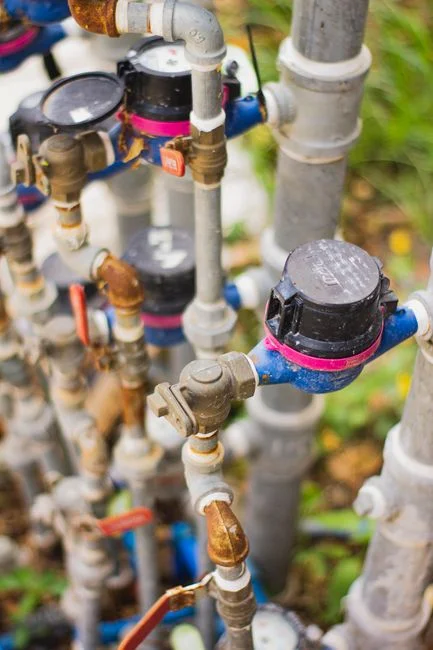
A Casablanca hotel treatment train is a five-block sequence, and each block has a defensible reason to be there. Stage 1 is a rotary mechanical bar screen, GX series, with 1–3 mm aperture, sized to protect the downstream MBR cassettes from rags, hair, and the lint that laundry discharge carries. Stage 2 is a DAF for hotel FOG removal (4–300 m³/h capacity range), which strips free and emulsified oils, drops FOG below 10 mg/L, and removes a large fraction of colloidal COD that the biology would otherwise oxidize slowly. Stage 3 is the biological reactor — either an integrated MBR membrane bioreactor for hotel reuse or a buried A/O package — running an anoxic/aerobic cycle; submerged PVDF membranes at 0.1 μm pore size produce an effluent of TSS <1 mg/L and turbidity <1 NTU, which is essentially reuse-grade. Stage 4 is disinfection, and a ClO₂ generator for reuse water disinfection (50–20,000 g/h) is preferred over sodium hypochlorite because ClO₂ stays biocidal across pH 6.5–8.5 and tolerates the salinity signature of Casablanca's coastal groundwater blend; UV is acceptable as a secondary barrier. Stage 5 is sludge handling, and a plate-and-frame filter press for hotel sludge at 1–500 m² area drops sludge cake to 18–25% DS, cutting haul-off trips and disposal cost for a resort that has no on-site incinerator.
MBR vs SBR vs buried A/O package: which fits which hotel
The technology choice for a 2026 Casablanca hotel collapses to one question: is reuse in scope? If yes, MBR wins on effluent quality and footprint. An MBR plant typically takes 60% less land than a conventional activated-sludge system running at the same load, holds stable under the 2–3× peaking factor that defines hospitality flows, and produces an effluent that qualifies for unrestricted landscape irrigation under the WHO/FAO 2006 guidelines once disinfection is in line. The cost is membrane CIP every 6–12 months and a CAPEX premium of roughly 30–50% over a sequencing batch reactor. SBR is the budget option — no membranes, simpler controls, lower CAPEX — but the effluent sits around BOD ≤30 mg/L / TSS ≤30 mg/L, which is discharge-grade, not reuse-grade, and the reactor volume is large enough to make SBR a poor fit for dense urban Casablanca. A buried WSZ A/O package plant (1–80 m³/h, fully buried, factory-built) is the lowest-CAPEX option for small resorts, runs unattended, and discharges BOD ≤30 mg/L to a Lydec manhole without operator intervention. The decision rule: ≤100 m³/day or no reuse → WSZ; 100–500 m³/day with reuse → MBR; 500–2,000 m³/day with full reuse → MBR + RO polishing for laundry make-up water.
| Criterion | MBR | SBR | WSZ buried A/O package |
|---|---|---|---|
| Capacity range | 10–2,000 m³/day | 50–5,000 m³/day | 1–80 m³/h (≈24–1,920 m³/day) |
| Footprint | ~60% less than CAS | Large (batch basins) | Smallest — fully buried |
| Effluent BOD | ≤5 mg/L | ≤30 mg/L | ≤30 mg/L |
| Effluent TSS | <1 mg/L | ≤30 mg/L | ≤30 mg/L |
| Reuse eligibility | Yes, unrestricted | Only with tertiary filter | Limited, landscape only |
| Operator skill | Medium (membrane CIP) | Medium | Low (unattended) |
| CAPEX index | 1.3–1.5× SBR | 1.0 (baseline) | 0.4–0.6× SBR |
2026 compliance: ONEE, Lydec, and the National Reuse Program
Casablanca's delegated water and sanitation operator is Lydec, a subsidiary under ONEE oversight, and any hotel discharging more than 10 m³/day needs a pre-connection discharge authorization from Lydec plus a conformity file for the ONEE inspectorate. Indirect-discharge limits that Lydec typically applies at the connection mirror Moroccan urban concession standards: BOD ≤500 mg/L, TSS ≤400 mg/L, FOG ≤100 mg/L, pH 6.5–8.5, with temperature ≤30 °C at the manhole. Confirm the exact values against the project's Lydec spec — these are representative, not a regulatory quotation. Where the hotel plans to reuse treated effluent for landscape irrigation, the controlling standard switches to WHO/FAO 2006 microbial quality: E. coli <10 CFU/100 mL for unrestricted irrigation (parks, lawns, hotel gardens with public access), and <100 CFU/100 mL for restricted irrigation. Hitting the discharge limits with a packaged MBR is materially cheaper than paying Lydec's pollution surcharge and is the qualifying condition for the next round of EU-funded reuse grants that ONEE channels through the National Sanitation Plan.
| Compliance target | Threshold | Driver |
|---|---|---|
| Discharge BOD (Lydec connection) | ≤500 mg/L | Lydec discharge authorization |
| Discharge TSS (Lydec connection) | ≤400 mg/L | Lydec discharge authorization |
| Discharge FOG (Lydec connection) | ≤100 mg/L | Lydec discharge authorization |
| Reuse E. coli (unrestricted irrigation) | <10 CFU/100 mL | WHO/FAO 2006 |
| Reuse E. coli (restricted irrigation) | <100 CFU/100 mL | WHO/FAO 2006 |
| National reuse target | 100% by 2030 | Morocco National Sanitation Plan |
2026 CAPEX and OPEX benchmarks for Casablanca hotels
Budget envelopes for 2026 procurement sit in three bands (HydropureWater field data, 2026, indicative industrial range, not a binding quotation). A buried WSZ A/O package sized for 50–150 rooms runs $40,000–$120,000 in CAPEX with OPEX dominated by power (typically 0.8–1.2 kWh/m³) and quarterly sludge haul-off. An MBR for 150–400 rooms sits at $150,000–$450,000 CAPEX, with OPEX of $0.20–$0.50/m³ once membrane cleaning chemicals, periodic CIP, and sludge dewatering are included. A luxury resort that targets full reuse — landscape irrigation plus laundry make-up water — adds RO polishing, which lifts CAPEX by 25–40% over the MBR base, but the offset is a 30–60% reduction in fresh-water purchase from Lydec, payback inside 4–7 years for a resort consuming more than 200 m³/day. Engineers should treat these as sizing envelopes, not contract numbers, and request a site-specific quote once design flow, influent profile, and reuse targets are fixed.
| Hotel segment | Recommended system | CAPEX range (USD) | OPEX (USD/m³) | Reuse capable |
|---|---|---|---|---|
| 50–150 rooms, no reuse | WSZ buried A/O package | $40,000–$120,000 | $0.10–$0.25 | Limited |
| 150–400 rooms, partial reuse | MBR + DAF + ClO₂ | $150,000–$450,000 | $0.20–$0.50 | Yes (irrigation) |
| Luxury resort, full reuse | MBR + RO + plate press | $250,000–$650,000 | $0.35–$0.70 | Yes (irrigation + laundry) |
Choosing the right system for three Casablanca hotel archetypes
For a 100–180-room urban 3–4 star in central Casablanca with a constrained lot and no on-site wastewater engineer, specify an MBR + DAF + ClO₂ train packaged into a skid-mounted container, footprint 30–45 m², discharge to the Lydec combined sewer at BOD ≤30 mg/L — the same package also covers the property's irrigation of any internal courtyard green space. For a 200–400-room beach resort on the Atlantic coast with mandatory landscape irrigation under Morocco's 2030 reuse target, the train is MBR + ClO₂ + RO polishing, with a plate-and-frame filter press for sludge dewatering; this combination takes fresh-water demand off Lydec and qualifies the project for ONEE reuse credits. For a 20–40-room boutique riad-hotel with a staff of three, the right call is a buried WSZ A/O package with gravity discharge to Lydec after disinfection, no reuse infrastructure, no full-time operator. The one-line decision rule, to pin on the project whiteboard: reuse or >100 m³/day → MBR; otherwise → WSZ package. For comparable European case studies, the Budapest hotel wastewater engineering guide and the Athens hotel wastewater guide run through similar logic for cities with comparable Mediterranean hospitality loadings.
Frequently Asked Questions
What wastewater treatment system does a hotel or resort in Casablanca, Morocco need in 2026?
A packaged biological treatment system — typically an MBR membrane bioreactor for resorts above 100 m³/day, or a buried WSZ A/O package for smaller properties — sized at 200–450 L per guest-night. Effluent must hit BOD ≤30 mg/L, TSS ≤30 mg/L, FOG ≤10 mg/L to satisfy Lydec and to qualify for the National Reuse Program (target 100% reuse by 2030). See the integrated MBR membrane bioreactor for hotel reuse for a 2026-spec skid option.
How much does a hotel wastewater treatment plant cost in Casablanca?
2026 indicative CAPEX sits at $40,000–$120,000 for a WSZ package (50–150 rooms) and $150,000–$450,000 for an MBR (150–400 rooms). Adding RO polishing for full reuse adds 25–40% to CAPEX, offset by a 30–60% reduction in Lydec fresh-water purchases. OPEX runs $0.20–$0.50/m³ for an MBR once membrane cleaning and sludge handling are included (HydropureWater field data, 2026).
Can a small riad or boutique hotel in Casablanca use a buried package plant?
Yes. The buried WSZ A/O package plant covers 1–80 m³/h, is fully buried so it does not consume buildable area, runs unattended, and delivers BOD ≤30 mg/L — sufficient for Lydec discharge. Reuse is limited to landscape irrigation without an MBR upgrade, and the plant needs no dedicated operator.
What are Lydec's discharge limits for hotels in Casablanca?
Representative Lydec indirect-discharge limits at the connection are BOD ≤500 mg/L, TSS ≤400 mg/L, FOG ≤100 mg/L, pH 6.5–8.5, temperature ≤30 °C. These are typical Moroccan urban concession values; confirm against the project's specific Lydec discharge authorization. For reuse, the controlling standard becomes WHO/FAO 2006: E. coli <10 CFU/100 mL for unrestricted irrigation.